Americans abroad · Bologna Italy · Emilia Romagna · European travel · ex-pat life · Firenze Italia · Florence Italy · international travel · Italy · Parma Italy · Travel

La Bella Figura

“The Creator made Italy from designs by Michaelangelo.”
Mark Twain
lbf1

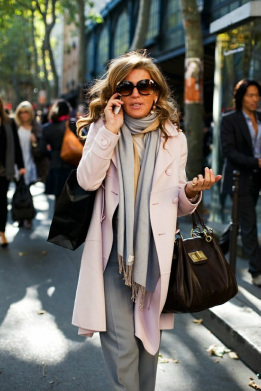
This is the quintessential Italian woman. Elegant, stylish, understated and fare la bella figura.

Fare la bella figura” literally means “to make a beautiful figure.” The phrase refers to the Italian ideal of looking your best at all times. For this casual Californian this ideal may be the biggest challenge that I’ve faced living in Italy.

Northern Italy is the home of Milano, the seat of fashion houses and world famous designers. People are stylish here.  Then, among Italians, Parma is known to be a very fashion conscious community.

The first week of school, I was jet lagged and coming down off of an emotional roller coaster of a year.  I was unaccustomed to humidity and was sopping wet every time I stepped outside.  Because of the humidity I was also carrying around water, which I stated earlier is a big no-no.  So there I am the first day of school in Italy, bedraggled, exhausted and definitely not stylish. I hardly felt the need to dress up for the ten minute walk to school when I was just going home to unpack dirty, dusty boxes.  I was feeling good about myself because I had put on some makeup and my fancy Taryn Rose flip flops.

I arrived at school, looked at all the Italian mothers and thought “uh oh.”  Not only were they thin and beautiful, they all looked very stylish in an understated, elegant way. Northern Italian women don’t wear a lot of makeup. They don simple, but high quality and finely tailored clothes. They wear dresses, skirts and lots and lots of stilettos. And boots – year round. And scarves – year round.  I stood on the sidewalk, hair in a ponytail in casual, (almost exercise) clothes. Needless to say, I stood out like a sore thumb.

I had a conversation with my friend Diana who is English about the Italian women’s seemingly effortless style. Diana noted that if you went to the supermarket in England dressed like an Italian woman does, everyone would think, “what is she trying to prove?”  I thought about how people would react if you showed up at Safeway in stilettos, a dress, a scarf – Diana was right.  Americans too would think you were putting on airs. The only reason you would wear high heels to the supermarket in America was if you were on your way to or from work or an event. In Italy, however, it a common occurrence.

From my American (and casual Californian) perspective, it seems like a lot of work to get dressed up just to run to the supermarket, go to the gym or walk the kids to school. But dress up they do. I was no longer in California and if I didn’t want to stand out I was going to have to make some changes. Wearing exercise clothes on the street is just not done here and flip flops (my shoe of choice in California) are reserved for the pool or the health club.  If I continued my disregard for la bella figura, I may offend someone or at the very least confuse them.  My American friend Sarah told me that once she went out in her “tuta” or her exercise suit with no makeup. She ran into her landlady who promptly contacted Sarah’s Italian in-laws to inquire if Sarah was feeling ill since she had been out of the house looking so casual.  In Italy, being ill is the only excuse for failing fare la bella figura.

The first week here I sat back and observed. I saw one woman ride up to school on her bicycle in a tight pencil skirt, gorgeous blouse and stilettos. There was a light summer rain. She rode her bicycle while holding an umbrella, one child on the back of her bike and another in the front.  She arrived, floated off of her bike, got the kids out of their seats, grabbed her Louis Vuitton bag and glided into school. Not a hair out of place. I watched – mouth agape. She couldn’t be a real mother of two small children. She looked like a super model. I looked around for a film crew. This had to be fake.

I soon came to accept that not only are Italian women stylish, they don’t seem to be affected by weather. Italian women’s hair is never out of place. The weather reeks havoc on my style regularly. In the summer the humidity leaves my body and head wet and it renders my hair a wet, frizzy, wonky mess. In the spring, the pollen makes my eyes water and my nose run constantly leaving me looking like W.C. Fields. The wet winter rain and fog makes my eyes water resulting in black raccoon eyes from runny mascara. And again, my hair becomes a frizzy wonky mess. Why don’t Italian women suffer as I do? Is it genetics? How do they do it?

Fare la bella figura is not limited to young women either.  I have seen many an old women dottering along, holding on to her companion for support in stilettos! Stilettos!  They can barely walk anymore, but damn it if they aren’t going to look good. I can no longer navigate a flat surface in high heels, let alone the cobblestones. The older women also love their hats, fur coats, scarves and handbags. I particularly like to watch the older ladies during the Christmas season as Italians dress up to do their Christmas shopping. At the beginning of December, the older Italian women put on their finest attire as they stroll around the main piazza and shopping streets showing off their coats, hats and handbags  It is a far different atmosphere than the images you see of people clawing and fighting over items at WalMart.  This is slow deliberate shopping experience.  Another difference between Italy and the USA, no one in Italy is afraid of PETA.. Fur and leather abound, particularly among the older crowd. Fur hats, fur coats, fur trimmed scarves, fur lined leather gloves, fur lined leather boots, leather pants and leather skirts are commonplace.

The Italian women are not alone in pursuing la bella figura. Italian men spend an equal amount of time on their appearance. Italian men’s clothes are often tailored. It is unusual to see baggy clothes on men here. Italian men also wear sweaters quite a bit. Not just pullover sweaters, but cardigans. And they like to roll up the cuffs of their pants, jeans, shorts.  Italian men also wear scarves as often as women do and they pay a lot of attention to their shoes. They also carry bags made of beautiful leather – or what we would call a man purse, a murse. Older men frequently wear suits, bow ties, fedoras and a scarf. They dress this way all the time – just to go to the post office or the vegetable market.  And where the Italian women tend to be understated, Italian men have a flare for bold style. They are not afraid to wear colors and patterns. Lord knows they love a brightly colored pant.

I have observed the Parmigiani women for almost three years now. I still don’t fully understand how they pull it off. They make being stylish and elegant look effortless and easy.  I will never understand how they navigate cobblestones in stilettos. After 2.5 years it still seems like a lot of work just to run your errands, but it is part of the Italian culture. And it is expected. And now I have come to appreciate it. The attention to style makes one feel a bit better when you are out and about. And it makes for great people watching.

The Italian author Beppe Severgnini summed it up best.  “Being Italian is a full-time job. We never forget who we are, and we have fun confusing anyone who is looking on.”

============================================================

Below are some photos of Italian stye. These are not my photos. I got these off of the internet, but I assure you that I have seen some version of each of these outfits on a regular basis.

This slideshow requires JavaScript.


European travel · Honeymoon travel · international travel · Travel

Honeymoon Travel – Quick Tips

honeymoon

The wedding is over. The stress of the big day has passed and all you can do is dream of your honeymoon. On average, the honeymoon trip is one of the most expensive trips a couple will make together. It would be a shame not to enjoy it.  Here are a few tips to help make sure that you can relax and savor your honeymoon.

Everybody’s Talking At Me.

Tell everyone that you come into contact with that you are on your honeymoon. I mean everyone! Your cab driver, the airline representative at the check in counter and the flight attendant, the hotel staff, the guy taking you on your sunset cruise, the restaurant hostess. People love to celebrate love with you. In addition to possible upgrades and freebies, you will be surrounded by good will which can only bode well as you start your life together.

Locals Only.
Contact the local Visitors and Convention Bureau (or request that your travel agent do so) for your destination(s) and let them know you will be on your honeymoon in their area. They can recommend romantic restaurants, dates, activities. In addition to getting the inside scoop, you may end up with some nice perks as well.

In addition to buying a guide book on the area you are visiting, have your wedding planner send out an email or card to your guests telling them of your honeymoon destination and asking them to pass on any tips regarding the area if they have been to your destination. You can save the responses in a book as your own personal insider’s guide to the area.

E.T. Phone Home.
Put your contact information for your home and your destination inside your bags as well as on your luggage tag. This helps any lost luggage find it ways to you as quickly as possible. Pack a carry on bag of necessities like a bathing suit if you’re headed to a resort and one change of clothing for each of in case of lost luggage. Take medicines and toiletries you will need for the trip. Do not rely on finding them easily in a foreign country.

It’s All In The Details.
Electronics will not be covered by travel insurance if lost by an airline unless you have a receipt and the purchase was with a certain time frame. It’s in the fine print.

You Better Shop Around.
Pack an extra expandable duffle bag in your suitcase so that you can easily pack purchases for the return trip. It will also remind you of the amount of space you have when shopping.

Ask and You Shall Receive.
Unless you AND your spouse are comfortable winging it when you travel, don’t leave anything to chance. This is your honeymoon. A trip you will remember and refer to many times over the years so take the time to be specific about your room preference, your bed preference, your optimal thread count. Don’t be afraid to speak up and request a room change if the room is not what you asked and paid for. Before you unpack check to see that your requirements and desires were met.

===============================================

Niche Travel Design and Consulting is dedicated to designing custom itineraries for individuals, families, business organizations and small groups. We understand that designing your perfect trip is as much an art as designing a home’s interior or a garden’s landscape.
Find Your Niche In The World!

Americans abroad · European travel · ex-pat life · international travel · Malmö Sweden · Skåne Sweden · Sweden · Travel

Where The Unexpected Meets The Traditional

I went for coffee today with my daughter and discovered my new favorite cafe/store/space in Malmö, Sweden.

Hard to describe, but oh so inviting, AbSmåland is a “lifestyle concept where the unexpected meets the traditional.” It is a gardening and plant store, a cafe, a furniture store, a home design store, a space for creating and a baby store. It takes up 1450 square meters. It is a big, luscious space. And it smells reeeaally good.

We started in the cafe. AbSmåland’s café is organic and fair trade. They have the best cardamom roll in Sweden. Unfortunately, as it was not gluten free, I could only have a nibble and appreciate it from afar.


My daughter and I both had pretty decent cappuccinos (after Italy it is hard to be impressed) but the nicest bit was free regular coffee refills.We were there long enough that the lunch crowd starting wandering in. The lunch smells began wafting out of the kitchen. Did I mention that it smells really good in there? The cafe serves soup, salad, and the famous Swedish smörgås (open faced sandwiches).

After coffee and buns, we wandered around the rest of the space. I read that the space wants to invite creativity and curiosity. As such, throughout the space, there have placed windows, plants and bright colors.  


This slideshow requires JavaScript.

They also offer bedding, clothing and baby items for the ever so modern and stylish Swedish babies.

IMG_0083

IMG_0072

As I was leaving I asked one of the employees what was upstairs. “Go explore and find out” was his response. Challenge accepted. I discovered that the upper floor houses a workshop that offers creative endeavors.

At the workshop one can create: your own textile to upholster the furniture that you purchased downstairs;  your own spring bouquets with a professional florist as your teacher; spring macrame baskets; your own hanging garden and påskmys or Easter atmosphere and coziness. The workshop also facilitates sessions with local artists from time to time. 

AbSmåland’s website says that their ambition “is to offer an inspiring venue with a creative atmosphere where everyone feels welcome.” I would say that they have succeeded. I, for one,  cannot wait to return.

You can find AbSmåland at:
Södra Förstadsgatan 25/27
211 43 Malmö
072-248 89 20
hej@absmaland.com

Americans abroad · Emilia Romagna · European travel · ex-pat life · international travel · Italy · Parma Italy · Travel

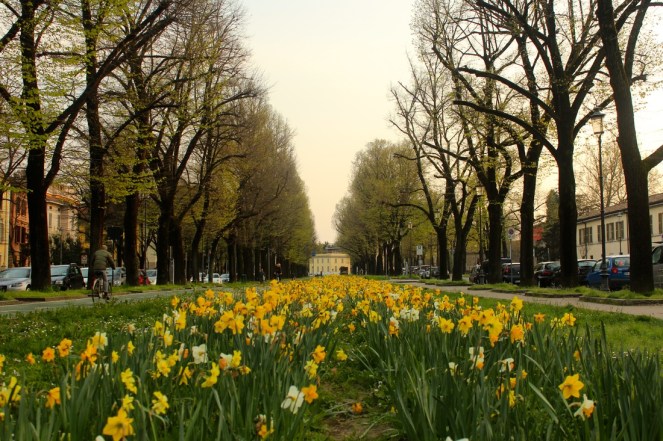
Spring. Parma, Italia.

spring

Americans abroad · Emilia Romagna · European travel · ex-pat life · international travel · Italian food · Italy · Parma Italy · Travel

Cibo Americano


Not long after arriving, my son had had enough pizza and pasta.

Aleks: “Can we have American food for dinner tonight?”
Me: “What would you like?”
Aleks: “Mexican.”

Italian food is fantastic. It is fresh. It is simple. It is full of flavor, bbbuuuutttut . . .  after living in California where you are exposed to such diversity of cuisine, it is difficult to limit yourself to one style. We could not help missing some different flavors and styles of cuisine. And, let’s face it,  Mexican food is a staple of the California lifestyle.  And, Mexico is part of North America, so technically it is American food.

And mama misses her margaritas – as in the drink, not the pizza.

margarita

Americans abroad · Bologna Italy · Emilia Romagna · European travel · ex-pat life · Gelato · international travel · Italian food · Italy · Parma Italy · parmigiano-reggiano · Prosciutto di Parma · Travel

A Theme Park for Foodies? Italians Say Bologna.

Eataly
Customers dine at the original Eataly in Torino which opened in 2007.


By Sylvia Poggioli.

Italy has more UNESCO world heritage sites than any other country in the world, and its art and cultural riches have drawn visitors for centuries.

It also prides itself on being a culinary mecca, where preparing, cooking and serving meals is a fine, even sacred, art. And now that the country is in the deepest and most protracted recession since World War II, why not cash in on its reputation as a paradise for visiting gourmets and gourmands?

In late February, Oscar Farinetti, who founded the Eataly chain of food emporiums, announced a new plan to help rescue economy: “Fico Eataly World,” a theme park devoted entirely to food and wine.

The project is a joint venture between Eataly and the municipality of Bologna, which is providing 86,000 square feet of land with warehouses to be transformed into food labs, grocery stores and, of course, restaurants. The price tag for the park is estimated at $55 million.

Eataly, which has over two dozen branches around the world, was founded in Turin in 2007 by Farinetti, who is CEO and owns a 60 percent share. The other 40 percent is owned by cooperatives of the COOP group of supermarkets.

The cooperatives have their roots in the Communist Party that was powerful in the Emilia-Romagna region that surrounds Bologna in the post-war period. The founder of the Slow Food Movement, Carlo Petrini, is also left-leaning, and another example of the ties between the left and the contemporary gastronomy movement.

The location for the Eataly theme park could not be more appropriate. Italy has many very different cuisines, but Bologna and Emilia-Romagna are widely, if grudgingly, recognized as the gastronomic capital of Italy.

The region is the home of Parmesan cheese, prosciutto di Parma, balsamic vinegar, and lasagna, among many other delicacies. Since the Middle Ages, the city was known as Bologna La Grassa, Bologna the fat – as in, affluent and epicurean.

Today, Bologna is also home to the world’s only University of Gelato, as I in 2013.

The foreign media has referred to the planned food theme park as a “Disneyland of Food.”

But when I mentioned the “Disneyland for foodies” to people shopping at two well-known Roman outdoor markets, everyone grimaced in disgust.

“Sounds like something for tourists,” Simona Vitali, a middle-aged woman shopping for groceries in Piazza San Cosimato, told me. “We Italians have no need for such a theme park.”

Farinetti the online English language service ANSA he hopes the park will draw annually 10 million visitors who will “play with this magical thing, Italian food.”

Eataly World is scheduled to open Nov. 1, 2015.

http://www.npr.org/blogs/thesalt/2014/03/09/286939246/a-theme-park-for-foodies-italians-say-bologna

Americans abroad · Emilia Romagna · European travel · ex-pat life · international travel · Italian food · Italy · Parma Italy · parmigiano-reggiano · Travel

Parmigiano-Reggiano

pr1

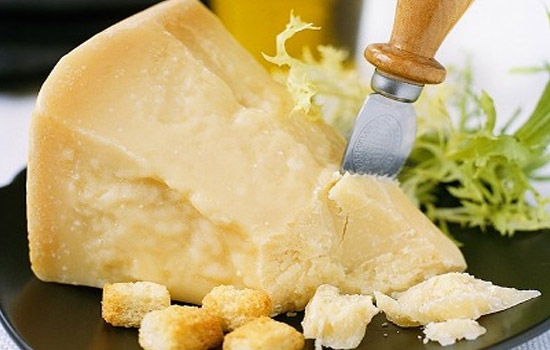
So it has happened.  After 2.5 years of living in Italy I am becoming a bit of a food snob.  Last Sunday I was discussing cheese with my friend Giuseppe – specifically Parmigiano-Reggiano cheese (or Parmesan cheese as it is commonly known in the USA). Giuseppe’s family has been producing Parmigiano-Reggiano for over 130 years.  In the course of our discussion, Giuseppe told me that there are no protections for his product in the USA. I was shocked.

Then, this morning, my aunt sent me an article about how producers of European cheese are requesting said protections in the American market. The European Union wants to ban the use of European names like Parmesan, Feta and Gruyere on cheese made in the United States. This has American producers in a tizzy. I don’t know about the other cheeses, but I have to say, when you compare Parmigiano-Reggiano to its American counterpart, one is cheese and the other is . . . something else. And as we Have recently learned it may be sawdust.

Unless you have purchased Parmesan cheese from an Italian import specialty shop, I assure you, you haven’t really tasted Parmesan cheese if you are eating Parmesan made in America. The American versions taste nothing like the original.

Parmigiano-Reggiano was created in the Middle Ages in the Northern Italian province of Reggio Emilia. Historical documents show that in the 13th and 14th centuries, the Parmigiano-Reggiano that was made was very similar to the cheese produced today. Ya’ know the old adage, “if it ain’t broke, don’t fix it.”  Why mess with something that has an 800+ year proven record of consistently being delicious? This cheese has been around so long that the use of the nickname “Parmesan” predates the existence of the United States by about 250 years.  Originally, Italians from other regions of Italy began calling the cheese Parmesano, which means “of or from Parma.” This nickname was later shortened to Parmesan by the French.

Under Italian law, Parmigiano-Reggiano can only be produced in Parma, Reggio Emilia, Modena, Bologna and Mantova, Italy.  European law classifies the name, and the nickname “Parmesan”, as a protected designation of origin (PDO), like champagne from France. Thus, in the European Union, “Parmigiano-Reggiano”  refers to cheese manufactured exclusively in limited cities. And, in 2008 a European Union court determined that the name “Parmesan” cannot be used for imitation Parmesan made or imported into Europe. Therefore, if Kraft imports its powdered version into Europe, it must declare that it is imitation Parmesan cheese.  And believe me, the Kraft stuff is an imitation. It tastes nothing like the real stuff.  Authentic Parmigiano-Reggiano cheese has three variations of flavor according to how long it has aged. It can be: mild and smooth; full-flavored, sharp and crumbly; or nutty and spicy with an almost gritty or crystalline texture.  After tasting the real stuff, I don’t think I will ever buy the Kraft version again.

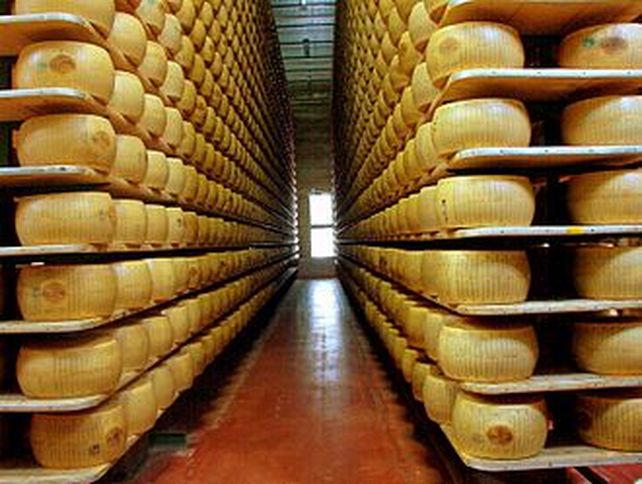
The first distinction between the authentic and imitation versions is the strict method of production. Like Prosciutto di Parma, production of Parmigiano-Reggiano follows strict guidelines and regulatory inspections by the Consorzio Parmigiano-Reggiano. The Consorzio inspects each and every cheese wheel produced. Every. single. one. Typically the region produces over 3 million wheels of cheese annually! Thatsalotta’ cheese.

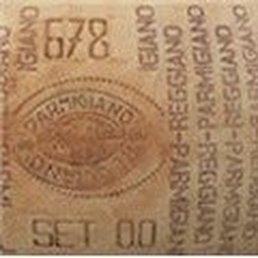
pr2Further, Parmigiano-Reggiano bears a special seal identifying it as authentic. A stenciled seal indicates which dairy the milk came from, the month and year of production, and a code indicating the length of aging.
Another distinction is that the milk used for Parmesan comes from grass or hay fed cows only. And Italian cows are not subjected to antibiotics, hormones, and chemicals. The result is a creamier, fattier, delicious milk. I tasted some fresh unpasteurized milk from a dairy farm near Lake Como and I have to say I felt like I’d never really tasted milk before.

Also, Parmigiano-Reggiano is all natural and made from raw cow’s milk. The cheese starter is natural whey culture with calf rennet.  The only additive allowed in production is salt. You will never find cellulose powder, potassium sorbate or cheese cultures in Parmigiano-Reggiano – they are illegal in the production. You will find all three ingredients (if you can call them that), however, in most imitation Parmesan cheese sold in the USA.

The whole milk is mixed with naturally skimmed, or separated milk resulting in a part skim mixture. The mixture is then is pumped into copper vats and whey is added.  It is cooked at a temperature of 91–95 °F. Next, calf rennet is added. Rennet is is an enzyme derived from the stomachs of the calves before they consume anything but milk. Rennet causes the proteins in the milk to form a curd.  The curd is broken into small pieces about the size of rice grains. The temperature is raised to 131 °F and is carefully monitored by the cheese-maker. After settling, the curd collected in a piece of muslin and divided in half and placed in molds. The process uses 291 lbs. of milk to produce two cheese wheels. The curd of one cheese wheel weighs around 100 lbs. Interestingly, the left over whey is used to feed the pigs from which “Prosciutto di Parma” is made.

Finally, after production, each wheel is aged for a minimum of 12 months. Then a tester from the Consorzio Parmigiano-Reggiano tests the wheels using only a hammer and his ear. The tester taps each wheel at various points, identifying cracks and voids within the wheel. Cracks and voids in a cheese wheel means that wheel does not pass inspection. If a cheese fails inspection, the rind is marked with lines or crosses all the way around the wheel to indicate to consumers that the cheese is not up to snuff.

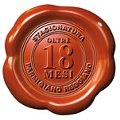
Cheese that passes inspection is further identified with one of three stamps to indicate the maturity and variation of flavor for each cheese. As you can see, this is not your green cylinder of powdered cheese-like substance.

pr3The red seal indicates that the cheese has aged for more than 18 months. The Consorzio describes the red seal cheese as having a “distinctive milk base, with vegetable notes such as grass, cooked vegetables and at times flowers and fruit” and they recommend that it is served “with aperitifs, and in particular dry white wines, and as an accompaniment to fresh fruit such as pears and green apples.” Kinda’ sounds like a description of a wine doesn’t it?
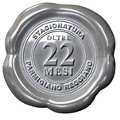
pr4The silver seal indicates cheese that has aged for 22 months.  The flavor is “distinctive, with notes of melted butter, fresh fruit and citrus fruits as well as overtones of dried fruit. The cheese has a balanced mild yet full-flavoured taste, with a crumbly, grainy texture. It is an ideal accompaniment to quite firmly structured red wines and excellent when served as Parmesan petals in fruit salad drizzled with Aceto Balsamico Tradizionale di Modena or di Reggio Emilia. This Parmesan may also be served with any dried fruit and is superb with prunes and dried figs.”
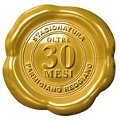
There’s that wine like description again.

pr5The gold seal indicates cheese that has aged for 30 months or more. This cheese, has the highest nutritional value and has a dry, crumbly, at times, grainy texture. It has the strongest flavor.For such a distinctive cheese, full-bodied, firmly structured red wines, white dessert wines from partially dried grapes and sipping wines are ideal.”

Wowza!  I am telling you, this is serious cheese.

I have never seen any Parmigiano-Reggiano sold with the lines or crosses on the rinds. Given the price I wonder if consumers here would buy it with the imperfection of a mere crack?  Particularly since this “king of cheese” is not cheap.  It sells for approximately 15 euros per kilo or 11 dollars per pound. And that is without any import fees.

The way I see it, there is no problem with the US giving the EU their protections and designations for Parmigiano-Reggiano. The American consumer will decide for themselves if the “king of cheese” is worth the price. And the producers of the imitation stuff can keep on producing their products knowing that the American consumer will keep on buying it, out of preference, habit, patriotism and price. My husband is a perfect example. After regaling the wonders of Parmigiano-Reggiano last Sunday, he said that although he loves and appreciates Parmigiano-Reggiano, he still gets nostalgic for the powdered Kraft product. I think Giuseppe threw up a little bit in his mouth when he heard that.

Americans abroad · Emilia Romagna · European travel · ex-pat life · international travel · Italian food · Italy · Parma Italy · Travel

Digestion

digestion

Just like one must pay attention to the air in Italy, one must also pay attention to proper digestion.  Unlike, the USA, digestion is a very common and accepted topic of conversation in Italy. Proper digestion is very important to one’s health.

To insure proper digestion. you must not have cappuccino after 11:30 – milk is bad for digestion. I have no idea why milk is ok for digestion before 11:30 a.m.

The traditional Italian meal is designed specifically to aid in proper digestion. First is the antipasti made up of cured meats and cheeses. This course is designed to get your digestive juices flowing. Second is the pasta. Third is the meat course. These are two separate courses.  You will not see spaghetti and meatballs served together in an authentic Italian restaurant. If you see it on the menu, you are in a tourist restaurant.  You don’t see them served together because eating the meat with the pasta is bad for digestion.

Next is the contorno or the vegetable course. The logic behind eating your vegetables last is that the fiber will help you digest your meal.  I completely understand this logic and it seems reasonable to me, but I still like to eat my veggies first.

After your meal, and in case the vegetables didn’t work, you really should have an espresso to aid in proper digestion. And the final stage of an Italian meal are the alcoholic digestivi. These regional liqueurs are made from herbs, plants or nuts.  Grappa and Limoncello are the most famous digestivi, but here in Parma it is common to have a nocino after dinner. Nocino is made from unripe green walnuts.  Nocino is quite tasty, but in my experience, a nocino or grappa after dinner does anything but aid in my digestion.  In fact, the sugar content actually leaves me feeling ill, but that is probably because I am not Italian.

Also, to aid your digestion, a meal is to be eaten slowly and enjoyed. One reason that fast food is not very popular here is because eating on the go is not good for digestion.  Similarly, drinking on the go is not good for digestion and you will not see people walking around with paper cups adorned with their first name scribbled in black sharpie ink.  The first week we were here it was unGodly hot and humid. Not being used to such weather, I took to walking to and from school with a hard plastic reusable glass of ice water.  People were staring at me. Really staring at me.  Imagine someone “tsk tsk”ing  you with their eyes cuz’  that is what was happening.  I screwed up my courage and asked an Italian mom. “Oh, you really should not walk with a drink.  If you are going to have a drink, you should sit down and enjoy it.” Thing is, I WAS enjoying it.  It was like a life raft in the humid hell that is August in Italy.  And as for my digestion, it was too damn hot to eat anyway.

Speaking of drinking, one should not drink ice in your beverages or drink cold beverages too quickly when in Italy. Cold drinks are bad for digestion. During the aforementioned unGodly hot and humid summer months, cold water is necessary to rehydrate. And at times I admit I tend to gulp the ice cold water down like a prisoner on the chain gang since I feel like I am literally melting. It is refreshing to get the cool water inside my body.  I can’t help myself.  And Italian women cannot help themselves either.  I have been scolded many times for drinking my cold water too quickly.  “Senora, basta! Mio dio! Non beva veloce. non veloce!”

With the exception of ice cold drinks and veggies at the end of the meal,  the Italians have rubbed off on me. I have learned to stop and enjoy. i have learned that people “go for a coffee.” They take a break, leave work and go to the bar for 15 minutes to sit and enjoy a hot espresso in a real ceramic cup and saucer at a table with a tablecloth.  When we first arrived we made an appointment with the bank to have accounts set up, get a debit card, etc.  We arrived at the bank at our appointed time. We were ushered inside and taken to the desk of the person who would be helping us. We were introduced and sat down. Then the clerk disappeared for 20 minutes. When I asked where he had gone the response was “Oh, he went for a coffee” as if it is the most normal thing in the world to head out for a coffee when your client has arrived.  It was then that I realized that coffee is like a religious experience here. You don’t mess with a person’s coffee as it may well mess with that person’s digestion.  And that is, well, unforgivable.

The final bit of digestive advice from Italy – one must never eat with your shirt off or your belly exposed. This has not been an issue for this 51 year old overweight woman, but it is something one must consider when planning a trip to Italy. No belly shirts and no eating poolside or at the beach. A covered stomach insures proper digestion.  After an outdoor party one evening, an American friend pulled his shirt up exposing his stomach and shouted “Look all you Italians. My stomach is exposed and I am not going to get sick!”  I didn’t follow up with him to see what happened, but I saw him around town and he seemed fine.

I guess we Americani are a resilient bunch.

Americans abroad · ex-pat life · Italy · Parma Italy · Travel

“Toto, I’ve A Feeling We’re Not In Kansas Anymore.”

toto

Today my poor daughter did what I long to do most days. She burst into tears when the tutor asked her what the correct article was for her sentence in Italian.

I have always loved words.  I like reading. I like researching the origin of words. I like learning about colloquialisms. I like learning the difference between a colloquialism and an idiom.  I like to keep lists of words that appeal to my ear.  Words like verdant, flummoxed, phalanges and evanescent.

About a hundred years ago I took a year and a half of French. I was young, I never studied and I rarely paid attention.  Not surprising then, that my French didn’t stick.  Living in California I picked up a smattering (another favorite word) of Spanish – you know, enough to order food and beer and find a bathroom when needed, but I have always felt as if there were a hole in my education because I don’t speak another language other than English.

So, imagine my delight when I learned we were moving to another country where I could immerse myself in another language – a beautiful Romance language no less.  I was naive enough to think it would be easy.  I thought, “First I’ll learn Italian since we will be living there. Then I’ll learn French because the kids are learning it and I certainly don’t want my teenagers to have a whole other language that they can communicate in that my husband and I do not understand. And, besides France will be so close and its a Romance language too so how hard can it really be?” HA!

It has been a year and I still don’t speak Italian, let alone French!  I can get around, I can order food in a restaurant. I have simple conversations with shopkeepers, but I am frustrated at how long it is taking me to really learn Italian.

Learning a new language at age 49 is very difficult for my old brain. Il mio cervello e’ stanco e anziano.  I had always heard (from other Americans) that, “English is one of the hardest languages to learn.” My experience, and discussions with people who speak English as a second or third language does not bear that out, however.  The people in my Italian class and our European friends all tell us that English is simple. In English the articles do not change very often (a, an, the) and our verbs do not change for every person as they do in Romance languages. Granted, English pronunciations and spelling are difficult, but our grammar is relatively simple.

Italian verbs change for every person (I, you, he/she, we, us, you guys, them) that you are speaking of or about. And they have a separate verb tense if you being polite. There are so many articles I need charts and graphs to remember them all. And, there seems to be an exception for every grammar rule that I learn.

I also discovered that Italians don’t believe in silly rules. Rules are mere suggestions.  When I asked a friend  why the grammar rule that I just memorized didn’t apply, her answer was “because it is more poetic to say it this way.”  Now I have to think about the poetry of the language too?   Toto, I have a feeling we’re not in Kansas anymore.

Americans abroad · Emilia Romagna · European travel · ex-pat life · international travel · Italy · Parma Italy · Travel

Italian Air

air

So I am going to discuss some quirks about Italian living.  I don’t want to offend anyone (especially my Italian friends) because while the other ex-pats and I may find these customs quirky and endearing, to an Italian these beliefs are time tested and could mean the difference between life and death. That being said, before living in Italy I was blissfully unaware that the air was lurking around every corner waiting to attack me.

Growing up in northern California, I experienced a change of seasons including rain, frost and the occasional snow flurry. I went out all year round in a just a coat.  I have come to learn from my Italian friends, that while this may have been an acceptable practice in California, the air in Italy is far more vicious and unforgiving.

Upon arrival, I noticed that the Parmigiani are quite an elegant and beautiful bunch. Men, women and children are decked out in their finery every day.  And everyone has a beautiful scarf. I later learned that the scarf is more than a mere fashion statement. The scarf is an essential part of the Italian uniform because it is necessary to cover your neck at all times in order to maintain good health. Every man, woman, child and dog wears a scarf – all year.  The scarf is not optional. The scarf is there to ward off any number of problems associated with “colpo d’aria” or getting hit by air.

Getting hit by air leads to many problems in Italy.  According to Italian mores, a hit of air can cause everything from fever, aching bones, liver problems, headaches, stomach issues, neck pain and the dreaded “cervicale.”  Getting hit by air is not limited to the winter months however. This explains why Italians wear the necessary scarf all year round. It is believed that even during the terribly hot and humid summer months, one must don a scarf.  In the summer months, the scarf wards off getting hit by air after sweating. See if you sweat and then cool off, it will lead to the previously mentioned maladies.

When I told my Italian friends my habit of sleeping with the window open (I like cool fresh air when I sleep), they looked at me askew.  “Hum” they say.  “This is very American.  Here you will get sick. You will get a cold.” I tried to explain that a cold is caused by a virus. A virus that does much better in closed spaces which is why people get more colds during the winter months when things are close up. So actually having the windows open will help to circulate the air and actually help me to ward off a cold.  But the Italians aren’t biting. They don’t believe me.

As you may well imagine, Italians have a hostile relationship with air conditioning because it is a machine designed to literally hit you with air.  Here, I am told, an air conditioner may be used if absolutely necessary during the day, but it must be turned off at night.  If you leave the air conditioner on all night you may well end up with pneumonia and die.  I haven’t had the courage to tell them that we leave the air conditioner off during the day and turn it on at night so that we can sleep.

As mentioned previously, getting hit by air causes a particular illness called “cervicale.” Cervicale translates as “cervical” which made me immediately think of a pap smear.  Cervicale, however, has no relationship to the female anatomy. Cervicale refers to the vertebrae in the neck. Getting hit by air will lead to headaches and stiff necks. Somehow I think this malady was promulgated by Italian chiropractors and scarf makers, but snicker as I do, cervicale is a serious ailment in Italy that many people suffer from. And if you venture out without the appropriate neck wear, you will be scolded by older women on the street, shopkeepers, and cafe owners. Friends will tell you that you must stop this practice immediately. The air in Italy is different and one must adapt.

I had one friend here tell me that the reason that my daughter and I kept getting ill was because we were not properly dressed. I assured her that the allergist and asthma specialist told me that the reason we were sick was because Parma lies in a valley and the air pollution was at fault.  “No,” she told me. The doctor doesn’t know what she is talking about. We are sick because we were not protecting ourselves against the colpo d’aria.   See, in addition to the scarf, I had failed my daughter by not requiring her to also wear a ”maglia della salute” or a shirt of health – commonly known in the USA as an undershirt. This is another protection from the aforementioned hit of air.

Air plays such a big part in Italian health that a doctor once prescribed “a change of air” for my friend’s daughter’s skin rash. She was told that if she took her daughter to the beach for a week, her rash would clear up. She went. The rash cleared up.  Coincidence? Maybe the rash just ran its course? Who cares? The doctor ordered her to spend a week at the beach.  That is my kind of prescription!

Air also plays a vital role at the pool because one must never, and I mean never, go outside with wet hair.  At the pool one must wear a cuffia or a swim cap. After exiting the pool one should dry their hair – even though they may have been swimming all day.  You must dry your hair during the summer when drying your hair is a moot point because once you walk outside your entire body is wet anyway from the humidity. If you don’t dry your hair, you risk getting cervicale or worse.

Speaking of pools – at every public pool one finds a little puddle or foot bath that you have to walk through before entering the  pool. This practice is to cleanse your feet.  Never mind rinsing the rest of your body or that the foot bath is historically a puddle of filthy water due to the hundreds of other people that have gone before you, bare feet are offensive and dirty. Never mind that after the foot bath, one’s feet are actually more dirty than before you started. You must wash your feet.

And you must wait a minimum of 2 or 3 hours after eating before swimming.  If you don’t wait the requisite time, you risk your entire body cramping up and drowning.  Because your body is digesting food, there is no energy to make your limbs work properly and you will drown.  I have assured many Italians that in California we have dinner parties and B.B.Q.’s by the pool. We even have day long swim meets where food is served. Adults and children alike swim, jump out, eat, jump back in . . . all day long. And I have never once experienced this phenomenon of a full body cramp.  It doesn’t matter, here in Italy it is not advised and one must adapt to the local customs.

I have a friend here who is Italian. She is married to an American. She told me that her belief that her children would drown if they went swimming before 2 hours passed after eating was so strong that she and her husband had huge fights over this issue.  They finally went to a pediatrician for his advice.  She told him that the disagreement was causing great strife in her marriage. The pediatrician was the final arbiter.  The pediatrician was Italian. She was sure that he would come down on her side.  The pediatrician told her that it was fine for her kids to swim after they ate.  She still doesn’t believe it.

I had a pool party for my daughter. I served snacks and birthday cake.  The Italian kids would not go back in the pool until the requisite 2 hours had passed. I tried to explain that the party would be over then and that there was a life guard, but no, they were adamant in their belief and steadfast in their refusal to swim again.  Later, their parents told me of the many cases where children have died from swimming before two hours was up. I explained the California swim meet/party/dinner phenomenon.  The answer, “Ah, yes, well, the air is different in California.”

And to an extent they are right – the air in California is different than Italian air, simply because of its geographic location. So, maybe they have a point?  I can say that I have grown very accustomed to wearing a scarf and now I miss it when it is not there. I have even taken to wearing one around the house when no one is looking.  So, ha! Take that colpa d’aria!   Interestingly, I am still having respiratory problems???