Americans abroad · art · European travel · ex-pat life · Holland · Honeymoon travel · Insider Tips · international travel · Modern Art · Off The Beaten Path · The Netherlands · The Unique and Unusual

The Stedelijk – The Goldilocks of Museums

Things Don’t Always Go As Planned

This past February the Beast From The East descended upon Amsterdam just as we arrived to visit. It was cold. Really cold. In fact, it was miserable walking around the city and bikes seemed like it would only make it worse as we would have to cut through the cold wind.

So what to do Amsterdam when it is colder
than a Polar Bear’s toenails outside?

Head inside. Thankfully, my daughter loves art and plans on studying art history, so off we went to the Van Gough Museum. The next day there was a discussion of going to the Rijksmuseum. I opted out. No offense to anyone, but Dutch Masters aren’t my favorite period of art and I’ve seen it. I said I’d find something else to do.  But my mind wandered to the modern building we had seen the day before. Hidden in the shadow of the Rijksmuseum and the Van Gough museum is the Stedeljik.  

The Stedelijk is the Goldilocks of museums. It is not too small, not too big. It is just the right size.

The collection is primarily modern art, but it also houses quite a few paintings from other artistic genres. For a medium sized museum we all agreed that it is packed full of great art.

The Stedelijk Building

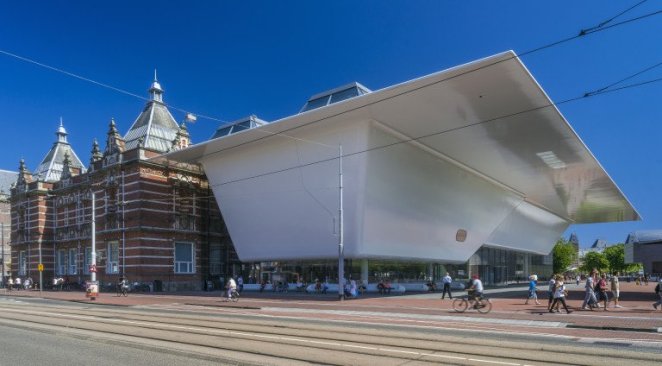
As I mentioned, the Stedelijk can be found tucked behind the Van Gogh Museum and the Rijksmuseums on Museumplein.  The Stedelijk is a contemporary art museum and thus, it is fitting that the building itself,  a modern glass and steel structure, is a stunning piece of architectural art on its own.

Benthem-Crouwel-Architects-Lensvelt-Stedelijk-Museum-Amsterdam
The Stedelijk Museum Amsterdam. Photo credit: http://www.lensvelt.nl
Stedelijk Museum
The Stedelijk Museum Amsterdam. Photo credit: ArchDaily by Jannes Linders

The Original Building

The original collection was made up of art and antiques that were donated to the city of Amsterdam by Sophia Augusta Lopez Suasso de Bruyn, a wealthy widow who wished to have a museum opened in her home and in her name upon her passing. Indeed, the Stedelijk was originally called The Suasso Museum and was housed in her home.

Eventually, Madame Suasso’s home was deemed too small and a new building was designed by A.W. Weissman, a local architect. The new museum building designed by Weissman has a neo renaissance façade with several ornate, figurative sculptures. When the new, modern, wing was added many of the flourishes were lost to modernization and renovations. The Stedelijk´s original and main building was constructed between 1891-1895 at Paulus Potterstraat, at the short walking distance from the Rijksmuseum.

The New Building – aka The Bathtub
Stedelijk Museum Amsterdam
Stedelijk Museum. Photo John Lewis Marshall

A more modern and more functional building was opened in 2012 after almost a decade of renovations. The modern addition, designed by Dutch architects Adriaan Willem Weissman and Benthem Crouwel Architect, is a pretty sharp contrast in style to the Weismann building. After the unveiling of the new addition, many locals thought that the modern aesthetic clashed with the old Stedelijk building, The Concertgebouw, the Van Gogh Museum and the Rijksmuseum. Essentially, they didn’t think the modern style went well with the other buildings in the neighborhood. Locals took to calling the new addition “the bathtub.” In my opinion, the new building fits its purpose of showcasing contemporary art and, an added bonus, it offers amazing views of the Museumplein. I sat and people watched through those big beautiful windows for 40 minutes as I sipped my coffee, warm and toasty away from the cold. It was lovely.

Stedelijk Museum Amsterdam
Overlooking Museumplein

The museum’s purpose has changed many times over the years – going from a private collections of art, collectibles, furniture, and antiques to medical instruments and finally resting on contemporary art and design.

Along with the masters of modern painting genres such as Impressionists, Fauvism, Cubism, Expressionism, the Stedelijk also has a unique collection of furniture, and, photography.

The Collection

The collection includes modern and contemporary art and design from the early 20th century up to the 21st century and features famed masters such as Vincent, van Gough, Wassily Kandinski, Marc Chagall, Henri Matisse, Jackson Pollack, Andy Warhol, Willem de Kooning, and Keith Haring.

Highlights From The Collection

The Stedelijk has everything from quirky artists previously unknown to me . . .

to the masters of the modern movement . . .

The Water Bull. Jackson Pollack. 1946.

to the masters:

And, The Keith Haring Velum

American artist, Keith Haring, began his career in 1980, drawing graffiti in the New York subway.  During a brief, but intense, career that spanned the 1980s, Haring’s work was featured in over 100 solo and group exhibitions. In 1986 alone, he was the subject of more than 40 newspaper and magazine articles.

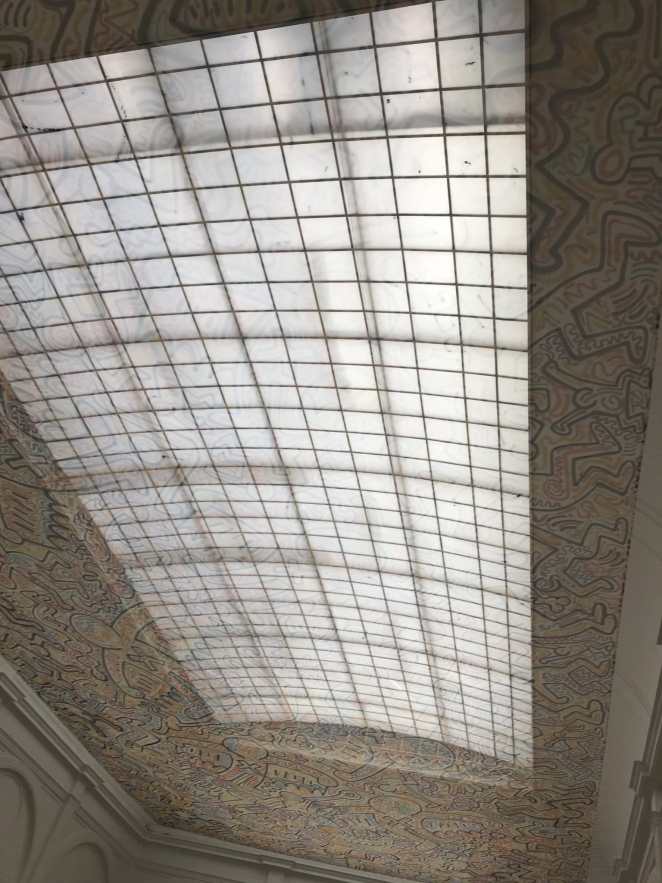
In 1986, at the heigh of his career, Haring agreed to create a special piece for The Stedelijk.  From The Stedelijk website: “The American artist painted the canopy, which filters daylight into the grand hallway, especially for his solo exhibition at the Stedelijk in 1986. For this show, Haring didn’t simply want to present artwork he’d already made – he insisted on making new work. Laying out the velum (which measures almost 40 x 66 feet, 12 x 20 meter) on the floor of one of the museum galleries, he painted it in just one day, using spray paint. Haring turned the event into an energy-fueled performance: while photographers and journalists looked on, he painted rapidly and rhythmically, moving over the canopy, hip-hop playing in the background. He filled the canopy with dancing, waving figures, crawling babies and squirming animals. Known as the ‘Keith Haring velum’, the painting was stretched below the monumental glass cupola above the historic staircase. The painting was an instant hit. Now, more than thirty years later and restored, the velum is back for everyone to enjoy.”

The photos do not do the velum justice. It was beautiful in person with the light slipping through and contrasting the parts untouched by sun.


Keith-Haring-Stedelijk-Museum-Amsterdam
Keith Haring. Stedelijk Museum Amsterdam
Keith-Haring-Stedelijk-Museum-Amsterdam
Keith Haring. Stedelijk Museum Amsterdam
Keith-Haring-Stedelijk-Museum-Amsterdam
Keith Haring. Stedelijk Museum Amsterdam
Keith-Haring-velum-the-Stedelijk-Museum-Amsterdam.
The Keith Haring velum. The Stedelijk Museum, Amsterdam.
Keith-Haring-velum-the-Stedelijk-Museum-Amsterdam.
The Keith Haring velum. The Stedelijk Museum, Amsterdam.

Practicalities

Hours:
Monday – Thursday and Saturday and Sunday:  10:00  – 18:00
Friday:  10:00 – 22:00

Tickets:
You can buy your tickets in person or online at Stedelijk museum tickets.

Adults: €17,50
Children under 18: free
Students (29 yrs or younger),
Cultural Youth pass (CJP)
€9

Address:
Stedelijk Museum
Museumplein 10
1071 DJ Amsterdam
The Netherlands


If you get a chance to visit the Stedelijk, I hope that you enjoy it as much as we did. Maybe because we had not planned on going, in fact none of us had even heard of it, it turned out to be one of those serendipitous moments where things did not go as planned, but we ended up with a lovely surprise. 

Americans abroad · Emilia Romagna · European travel · ex-pat life · ex-pat reality · football · Insider Tips · Italy · Parma Italy · soccer · Travel · world cup

The Most Popular Game In The World

Football match in Italy. Parma vs. Inter Milan
Italian football match. Parma vs. Inter Milan

Italian Passion

Italians are a passionate bunch in general, and their passion for life can be triggered on a dime. Amazingly though, they also seem to make up with one another right away. I have seen them yelling and screaming at each other, faces reddened, spittle flying, arms waving and then shake hands and walk away five minutes later. Given this passionate culture, I was eager to attend a football match because one thing that Italians are very passionate about is football, the most popular game in the world.  You know, what we Americans call soccer.

Football, The Most Popular Game In The World

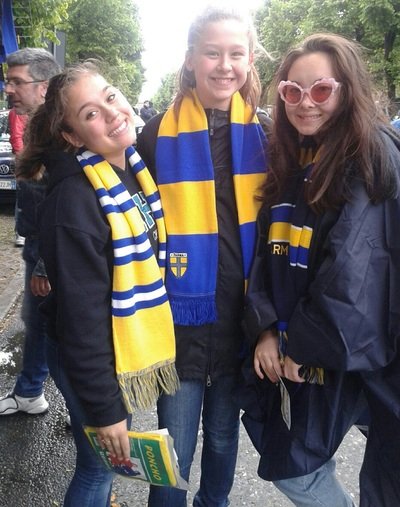
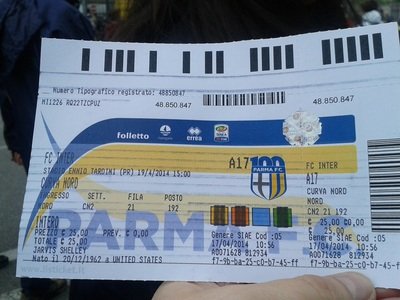
We decided to support our local football team and we went to watch Parma play against Inter Milan. I was a tad nervous because my husband had warned me that when Parma scores the crowd goes a little crazy – their passions are unfurled with yelling, screaming, shoving, running up and down the stands. Joe was actually knocked over at the last game he went to. He was not hurt, but that knowledge made me anxious as neither my daughter, nor I, do well in crowds. I was also anxious because Inter Milan was ranked fifth and Parma was ranked sixth, so tensions were indeed high. Ultimately. my desire to experience Italy to its fullest won out over my fear. We donned our blue and yellow and headed out to the stadium.

soccer2soccer1

Upon arriving, I noticed that there is no alcohol allowed at an Italian soccer game. Now, bear in mind that Italy is a place where one can find a full bar just about everywhere – the park, the movie theater, the shopping mall, the gym. But not at a football stadium. I have to say, that I support this practice.  I think it is a wise idea to prohibit alcohol at sporting events where passion and loyalties are on overdrive. One of my dear friends in California is a sweet, gentle guy unless you encounter him at the UCLA/USC football game. Then, he is a rabid dog. Give him some beer at the UCLA/USC game and he is a rabid bear. It may be a good thing for America to follow the Italian example in this case.

Something else that I noticed was that even stone cold sober, Italian fans are INTENSE about, and loyal to, their football team.  One of our Italian friends welcomed his second daughter into the world on the morning of the game that we attended, but he still made it to the match that afternoon!

Warning – Foul Language Ahead

The intense loyalty that they feel for their team is most often manifested by hurling insults at the other team. Through the entire game, Parma fans were chanting “Inter, Inter, vaffanculo, vaffanculo!” which literally translates as “Inter, Inter, up your a**,” but is used more as Americans use f^%k you.  Imagine half of a stadium chanting “f^%k you!”  Here were some of the antics I was hoping to experience.

Italians are a poetic people. They value the poetry of their art, food, fashion and language.  Given this love of language, a simple vaffanculo would not suffice and the fans occasionally intermixed the vaffanculo’s  with the chanting of an Inter Milan player’s name and then “pezzo di merda.”  As in, for example, “Zanetti piece of shit.”  They also broke into song once or twice singing along to the tune of Guantanamera but replacing the Guantanamera with “pezzo di merda” and then a player’s name so that the tune went something like this – “ pezzo di merda. Zanetti, pezzo di merda. ♪♪ peeeezzzzzo di merdaaa, ♫ Zanetti, pezzo di merda.”  Again, imagine a huge crowd all swearing together in song. Fascinating and entertaining stuff, I tell you.

The most perplexing expression of loyalty for me, however,  was the yelling of “cinesi vai via!”  or “non ci sono cinesi in Italia!”   This translates as “Chinese go away” and “There are no Chinese in Italy.” As factually incorrect, and as racially insensitive, as these comments were, the funny thing to me is that they were yelling these insults at Inter Milan player Yuto Nagatomo . . . who is Japanese.  I swear I saw Nagatomo looking around for the mysterious Chinese guy once or twice.

The final thing that I noticed about Italian football games is that the previously blogged about colpo d’aria – the dreaded hit of air – that Italians feel must be avoided at all times and at all costs for fear of ending up in the hospital –  seems to have a waiver for football matches.

Football match in Italy. Parma vs. Inter MilanFootball match in Italy. Parma vs. Inter Milan

During our game, for example, the weather was rainy and cold and yet scores of fans were without umbrellas or rain gear.  And quite a few were without shirts. In the rain! There they were, standing in the freezing rain, getting hit by air for 2+ hours and not a one seemed to be concerned that they were going to end up in the hospital.  Once again, questions arise in my American mind about the colpo d’aria malady.

soccer6soccer5

Alas, for Parma fans, despite their best insults and choral talent, Inter Milan won.  Parma didn’t score a single goal so I didn’t get to see the post score craze of happy fans that I craved.  And despite the racist epithets, Nagatomo dominated the field.  But, you know what they say . . . karma is a Japanese Inter Milan player.

Americans abroad · Emilia Romagna · European travel · ex-pat life · ex-pat reality · Insider Tips · international travel · Italy · laundry

Do You Iron Your Jeans and Underwear? How To Do Laundry In Italy

laundry1
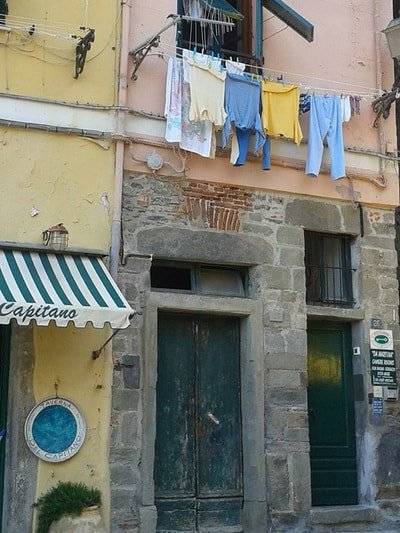
Ok. Each of you Americans out there – I want you to stop what you are doing and go hug your dryer.  Personally I never thought about my dryer before moving to Europe. It was just another appliance. There was the occasional story about a family whose house caught on fire due to too much lint in the vent, and I’d stop and think,”how awful” and “what a tragedy” and I would make a mental note to clean out my venting tube.  And then I’d forget about it again. Then we moved to Italy.In Italy, most people line dry their laundry.  Dryers are available, but we were told they are expensive to run since electricity is costly there.  It is not uncommon to see laundry hanging on lines outside apartments and houses.  It is also not uncommon to visit a friend’s home and see laundry drying in various places. It is not rude. It is simply a way of life. In fact, it is one of the things that Americans find charming when they visit. It can be beautiful and colorful. It evokes a simpler time. Days gone by. ​

When we first arrived in Italy and were in temporary housing Joe told me that the washing cycle took about 2 hours. I scoffed. Surely he must not have understood the instructions. Turns out, he understood better than I did. After all, he had been living there for 6 months.  The wash cycle at the temporary housing did indeed take 2 hours. Thus, when we were looking for a washing machine to buy, I wanted the largest load capacity that we could find. If it was going to take 2 hours per load I wanted to wash as many things as I could in one cycle.  And we found a big one! Unfortunately, it had to be returned. It was too big to fit up our narrow Italian stairs. Eventually, we found one that fit and could run a load in 1 hour.  We were making progress. We were fortunate enough to have a large laundry room so we had the space to line dry laundry out of sight.  And, there was the environmental impact. I knew that if you line dry your clothes HALF OF THE TIME you will save 1150 pounds of CO2 emissions . . .  the work of 23 trees!  I felt good about that. Plus, I was in Italy and as they say, “when in Rome” . . .  I was committed to line drying.

laundry5

What I didn’t realize is that depending on the season, clothes don’t always dry quickly. And, while the laundry room was large, it had no ventilation. In fact, many times the dampness of the laundry room left the clothes smelling musty and moldy and I would have to wash them all over again. I then had to place towels and jeans strategically on radiators all over the house since they take a particularly long time to dry. And all the other items in the living room in front of an open window – even when it was cold out – letting all the warm air escape.  So much for energy efficiency.

laundry6

In some cases, when you combined the length of time that it took to run a load of laundry, with hanging clothes, the actual drying process, then taking them off the hangers, then folding it and putting it away – one load of laundry would take up to three days from start to finish. I was constantly checking laundry. In the winter, if I had to rewash a load, it would be a 4 – 5 day process for each load.  We had a few mishaps.  “Mom, I am out of jeans to wear.”  Ooops. One cannot magically run a load of laundry and guarantee that they’d be dry overnight. Laundry became a strategy. A lifestyle.

While I did feel good about reducing our carbon footprint by line drying,* I grew weary of the process and the resulting crunchy clothing and towels. Italians have these big industrial sized steam irons they use to soften up crunchy clothes. Yup, they iron their towels, sheets, socks, underwear and jeans to make them soft again. The thing was, I was already spending a significant part of my day, every day, on laundry. I did not want to add steam ironing into the mix. Besides, after using a towel once or twice or wearing your jeans for a day, they soften up . . . a bit.

So anyway, imagine my delight when we moved into our house in Sweden and I went down to the basement and discovered that our rental included a dryer! ​​ I ran a load of laundry (30 minutes! Let’s hear it for Swedish efficiency!) and placed it in the dryer.

Now, calling it a dryer is a bit of a misnomer. It doesn’t dry the clothing with heated air producing fluffy warm clothes, towels and sheets. It works by spinning the clothes and wicking the water out into a container at the bottom of the machine. I set it for 90 minutes. I returned 90 minutes later only to realize it had not completed its cycle. The laundry was still soaking wet. I fumbled about trying to figure out why and realized that the machine stops once the container at the bottom is full of water. I emptied the container. The machine started up again. When I checked on it again 30 minutes later, again, the container was full and the cycle had once again stopped. I emptied the container and started the machine again.

This went on for about 3 more hours. I could have taken them out and just line dried them, however, at this point I was in the middle of an experiment. I wanted to find out how long this was going to take. The next morning (yes you heard me correctly) I set it for another 90 minutes. Surely, there could not be enough water left in the clothes to fill the container again. OMG! I was wrong. After 2 more 90 minute cycles including breaks for emptying the water container, the clothes were dry. That particular load took 30 hours start to finish. I guess 30 hours is better than 48 or 72. I don’t know if our dryer is an old crappy one or this is the norm, but I have now resigned myself to line drying the clothes and placing towels and jeans strategically on radiators again. I am back to saving the planet.

And while saving the planet feels good, I have a confession to make . . . truth be told, I miss being able to dry jeans, sweatshirts and towels in a heated wonderland. So my American brethren, heed my tale of woe. Go hug your dryer.  Clean its venting tube, its lint trap and wipe down the exterior. Treat it like the appliance it is.  And give it a kiss from me.

* http://www.simpleecology.com/eco/clothesline.html


Americans abroad · European travel · ex-pat life · international travel · Travel

My Island – Slowly Losing My Mind In The Most Pleasant Place on Earth

I live in what one acquaintance referred to as a “ridiculously cute town.” Another friend said it looked like a town from a Disney movie.

It is clean, safe, the schools are excellent, and there are many parks and greenbelts. We have an old fashioned downtown complete with parades featuring kids, dogs and a group of old men who don oversized pants and call themselves the Balloon Brigade.

The weather is damn near perfect and we can get to the beach, the mountains, wine country, rivers, and lakes within a few hours. We are surrounded by nature’s majestic beauty but we are also a mere 40 minutes by public transportation from San Francisco. They even play pleasant Muzak at the gas station. So given all the wonderment that my town offers, I can’t help but wonder why I feel that I am slowly losing my mind living in one of the most pleasant places on Earth?

Loads of people assure me on a regular basis that “this is the best place to live.” They tell me that they do not wish to ever live anywhere else and hope to live here until they die.

I sigh, bite the inside of my cheek, and quiet the voice in my head that wonders why I don’t feel the same way.

I realized that I was losing my mind because suburban bliss was depleting my gypsy sense of adventure. I agree that our town offers many wonderful benefits, but I don’t share the majority view that this is to be my final town, my end of days. My gypsy spirit is waning under the reality of working full time, raising 2 kids and being a wife. While my life is very enjoyable, I am missing the energy that exploration has always provided me. I need to fuel my curiosity.

Living in a perfect place also makes me feel a bit guilty. I feel guilty that I am restless when I have so much. Stronger than the guilt, though, is the belief that I want more than the trappings of perfection for my children’s lives. I want my children to know that the world is made up of countless amazing places, cultures, people, art, food. I want them to see and experience the underbelly of life – the poverty, trash and homelessness that one sees in a city – because if they never see these things, they will not know that these things are problems that our world faces. If they don’t see these things, they will not know humanity and how to face a problem head on. If they don’t see these things, they may not learn compassion. If they don’t see that their suburban world is an anomaly and that most people do not live as they do, then they may not appreciate their own good fortune. I want my children to learn that you don’t have to be afraid of someone or some culture or some religion that is different than theirs. I want them to be citizens of the world.

I have been pacing my island of suburban perfection for months. I think it is time for a swim.5955444.jpg

Americans abroad · European travel · ex-pat life · Göteborg Sweden · Gothenburg Sweden · international travel · Malmö · Skåne · Skåne Sweden · Travel

Graduation – Swedish Style

American Graduation

June. Summer has arrived and all across America it is time for prom, senior ball, senior ditch day and graduation. High school graduation is a milestone in a young person’s life. 30 some odd years later and I still remember mine.

In the USA students assemble in long dark robes with mortarboard hats on their heads. They are dressed in nice clothes under their robes. Select academic high achievers give speeches about the future. Often a special guest speaker such as a community leader will regale the students with tales of what lies ahead.

American students somberly walk single file on to the stage to be handed their diplomas. Occasionally, a few of the more adventurous students will do something silly during the procession, but in general, the graduation ceremony is a serious affair. While some parents laugh at the students who dare to be silly, most “tsk tsk” because the time for exuberance is after the ceremony. After the ceremony, students move their tassel from the right to the left and then, and only then, they throw their mortarboard hats in the air with “whooo hooos” “whoop whoops” and “yee haws!”

Studenten-The Swedish Graduation Ceremony

Given that this is all I know about graduations, imagine my surprise when I attended a Studenten – the Swedish high school graduation ceremony. Like the USA, Swedish students are dressed up for this important event. Girls wear white dresses and the boys dress in suits. This is where the similarities with America end. In Sweden, high school graduation is a party from beginning to end!

Studentmössa

In addition to their finery, every Swedish graduate wears a white hat called a studentmössa. Typically, the studentmössa is a white cap with a black or dark blue band, and a black peak. It looks like a sailor’s cap to me. I asked many a Swede why the sailor cap. No one was quite sure. The variations on the history of the studentmössa are many. Most agree, however, that in Sweden, the studentmössa was first worn in the mid 1800’s at Uppsala University at a student meeting.

Inside the cap is a lining which varies according to school colors or it may resemble the Swedish flag. Students put their names on the front of the hat. In between the student’s first and last name, there is a gem. There is also a colored band between the white and black part of the hat. The color of the band and  gem tells onlookers what program the student is graduating from. Gymnasium or high school in Sweden is a bit different than the USA in that students choose a course of study in high school to either prepare them for a job upon graduation or to prepare them for what they plan to study at university.

Utspringet

The morning of graduation, most friend gather for champagne. Yes, they start drinking first thing in the morning on graduation day.

Next, each graduate receives a leaving certificate – like a diploma in the USA.  What follows, however, is a joyous running out of school – “utspringet” – with your leaving certificate in hand through a crowd of parents holding placards with the graduates’ baby photos. Some of the parents go for a darling baby photo. Others use an embarrassing photo, but every graduate has one. Each placard has the name of the graduate and with the year and date of the graduation. Most of the placards are decorated with a blue and yellow background representing the national colors of Sweden. Rumor has it that the King and Queen of Sweden participated in utspring for the prince and princesses. That is how important utspringet is.

The graduates run through the crowd and onto a stage where dance music is pumping. The graduates then dance, sing, blow horns, shake noise makers, jump, set off flares and generally have fun. From the evidence on the grounds around the school it seems that a good number of the graduates have fueled their dancing booties with Red Bull and alcohol.

After each group has gone through the run/dance/party on stage portion, they go into the crowd searching for their baby photos and hence, their families.  Well wisher don them with necklaces of blue and gold (again, the national colors of Sweden) from which are hanging flowers, teddy bears, champagne bottles and other things that may represent the student’s personality and interests.

Flaket

From there the graduates move to rented flat bed trucks or fancy cars and continue the dance party. The trucks are decorated and are essentially a mobile dance club which drives through town honking their horns and playing music with graduates hanging off the trucks, singing and dancing. You can literally hear them from miles away. And you hear it all day, every day, for about a couple of weeks as different school have different graduation dates. This mobile party seems completely dangerous to me, but what do I know? It happens all over Sweden every year.

After the mobile disco ends you may see graduates running through the more populated parts of town in groups singing, dancing, yelling, blowing horns and whistles and chanting through megaphones. Some members of the group carry boomboxes and they lead the group like the Pied Piper keeping the party going. I was having lunch in a main square the other day and my friend and I could not hear each other over all the noise. Also common are pranks around town – silly things like jumping in public fountains to cool off (and sober up??).


After the truck ride and run through town, the graduates return home to friends and family waiting to celebrate the student with more festivities well into the night.

During the day I ran into my son who was graduating the following year. I said,”Wow, this is so different than America.” Ever after a good time, he replied with a gleam in his eyes and a smile, “I know!”  For a long time I have felt guilty that he has missed out on so many of the American high school traditions. I think he is ok with embracing this new tradition though. I’ll take it – let’s hear it for small victories.