Americans abroad · European travel · ex-pat life · Honeymoon travel · Insider Tips · international travel · Italy · nature · Off The Beaten Path · Saturnia · spa · The Unique and Unusual · Thermal baths · Travel · Tuscany

Secret Tuscany – The Thermal Baths of Saturnia

Locals Only

A few years ago some Italian friends told me about some natural thermal baths in Saturnia, Tuscany.  They explained that there was a famous spa one could go to, but that there was also a natural occurring, free version very near the expensive spa, “IF you can find it!”

You see, the trick was that the locals will not tell outsiders how to find the natural thermal baths as they don’t want the natural baths overrun with tourists.

Since we lived In Italy I figured we qualified as locals of sorts. I was determined to find the free thermal baths. Unfortunately, at that time, the natural baths were not part of the standard GPS menu. The only information that we had was that they were near the famed Terme di Saturnia Spa and Golf  Resort.  Armed with an old fashioned map, American grit and a stubborn streak, we set out to explore.

It was not easy to find. There were no signs and there are a multitude of country roads to chose from. I am nothing, if not persistent though, and eventually we found it.
IMG_0709
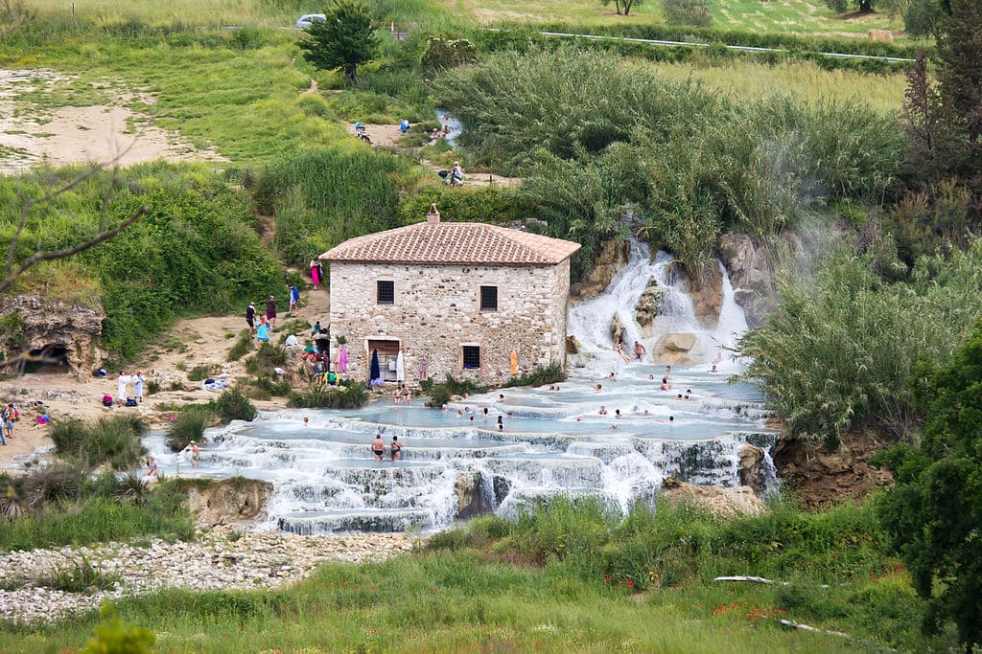
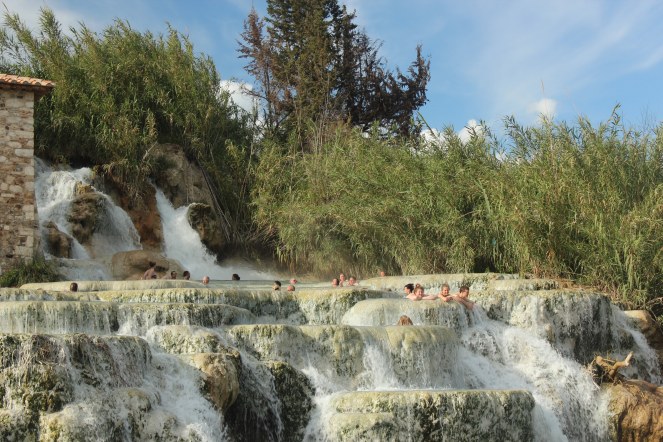
The kids and me in the front pool – Cascate del Mulino

After visiting Cascate del Mulino, I can see why the locals want to preserve this special place. Until now, I have never written about the baths out of respect for the local’s wish to keep it secret and special.  Today, good or bad, what the locals feared has come to pass and one can input the location on your GPS. Back then it was such a local secret that when we asked our hotel for directions and they gave us some vague instructions about the general direction to go. Today they advertise the baths on their website.

Two Very Different Experiences

Luxury

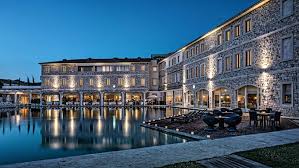
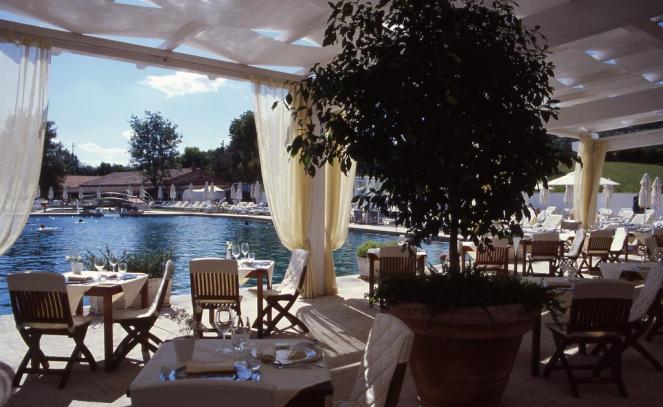
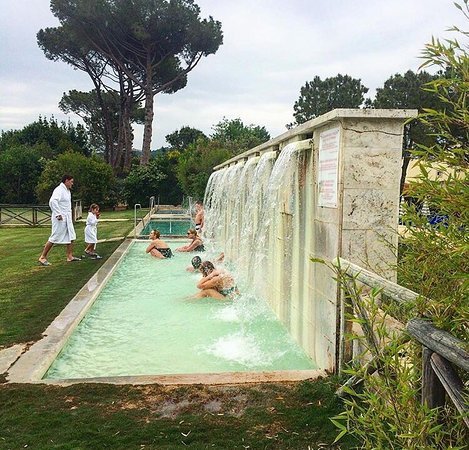
If nature is not your thing, rest assured that one has choices when visiting the thermal baths. The resort, Terme di Saturnia Spa and Golf Resort, offers golf, spa treatments, yoga, massage, restaurants and accommodation in addition to thermal baths. It looked amazing and relaxing. The atmosphere is pure luxury. Room rates start at 300 Euros a night.
termedisaturnia

terme-di-saturnia-spa
Photo Credit: Trip Advisor
tds
Photo Credit: Premium Europe

Rustic

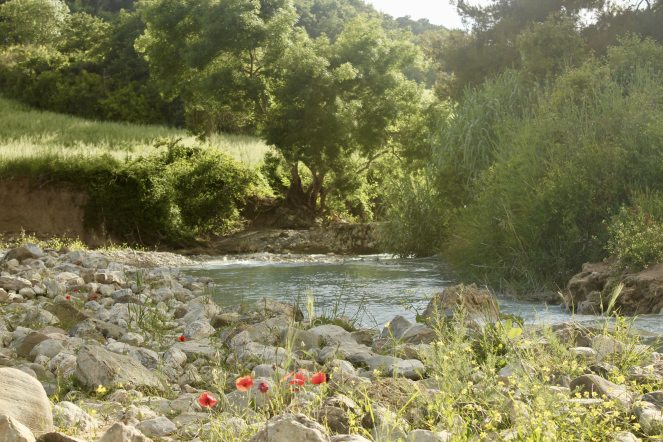
In contrast, the natural (i.e. free) baths, Cascate del Mulino, just down the road, are the complete opposite. At the time that we visited there were no signs and we drove down many a dirt road searching for the mill.  The area is unattended by any staff.  There were no parking attendants, lifeguards or wait staff serving cocktails and sparkling water.  The area was unpaved and dusty. Nearer the mill and falls, it was quite gravely and the actual pools and falls were quite slippery. Water shoes are a must. 

The Legend

According to Italian lore the gods Saturn and Zeus were arguing about mortals’ penchant for fighting each other.

At some point during the argument, Zeus threw a lightening bolt (or a thunderbolt depending on who you ask) at Saturn (or at the mortals depending on who you ask).

The power of this lightening bolt went straight into the Earth and resulted in warm water gushing out, overflowing and enveloping the mortals. Essentially, Zeus gave the mortals a warm bath to calm them down. And it worked, the warm hot springs calmed the mortals, healed their ailments and generally made everyone happier. And it still works today.

The Healing Properties

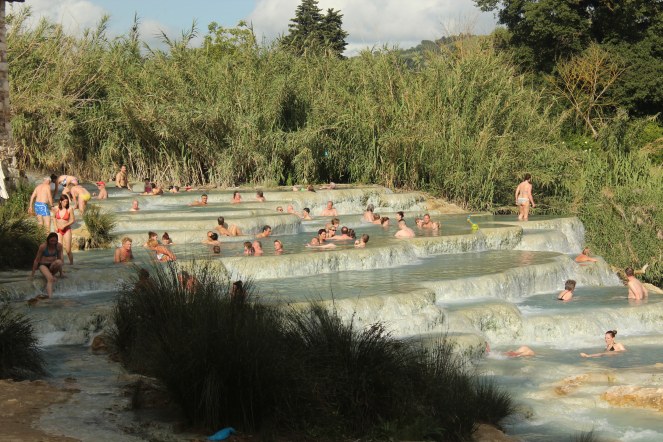
Who wouldn’t want to heal themselves in waters divined by the gods?  These thermal waters have been in use by local Italians since the Etruscan and Roman period.  Natural pools have formed out of travertine as a result of 3,000 years of flowing water. The pools are perfectly formed and comfortable. The pools are so perfectly formed and smooth that my husband did not believe that they were naturally made.
IMG_0698

The water is a consistent 37.5 °C/99.5 °F which may seem like it would be too hot, but trust me, it is not. It was oh.so.nice. We visited in the spring and I couldn’t help thinking that visiting on a crisp autumn or winter evening would be heaven. 

The thermal water contains a myriad of minerals that offer healing powers.  A few of the minerals are sulfur, sulphate, sulfide, carbon, bicarbonate, hydrogen, alkaline, thermal plankton, and 2 gasses – hydrogen sulphide and carbon dioxide. The gases give off a rather pungent smell similar to hard boiled eggs.  We did not mind the smell, but I was told some people do not like it.

The minerals in the water have been used as a natural therapeutic spa since the the Etruscan and Roman periods. The waters were so revered that the Romans built thermal baths in many of the little villages surrounding the falls. Some of those baths still remain.

What can be cured by soaking in the thermal baths? All kinds of ailments including eczema, psoriasis, respiratory infections, and rheumatoid arthritis, to name a few.  The water is also said to detox the body, and improve circulation, cell oxygenation and immune function. For me, the simple relaxation it provided was enough. And an added bonus, the minerals left my skin feeling soft and supple.
monteamiato.JPG
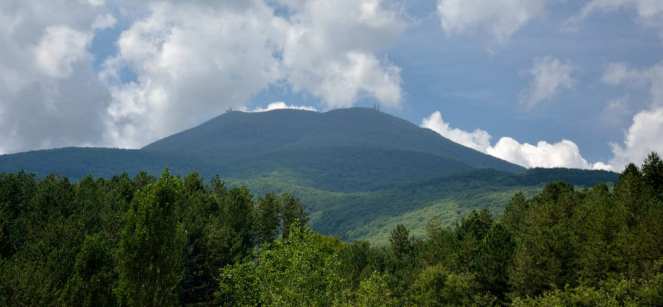
Monte Amiata.  Photo credit: gps-tour.info

The source of the incredible healing water begins at Monte Amiata. Monte Amiata is a dormant volcano, which despite its dormant status, still pumps in excess of  800 litres/211 gallons of water a second from its depths into the falls. The water begins 200 meters/656 feet below the earth and is heated by the thermal activity of the dormant volcano. I am not a geologist. I admit that I don’t understand how a dormant volcano is still generating this much heat and hydraulics, but, who cares why. I am just glad it does. 

Practicalities

  • Parking is limited.  Many people park along the road and in fact that was how we ended up finding the place. There is one small car park at the end of the access road, however, it was jammed packed with cars so don’t count on finding a place.
  • Never leave valuables in your car.
  • Water shoes – you must take water shoes. Not only for your comfort on the rocky shore, but for safety in the slippery pools.
  • The usual bathing suits, towels, a sun umbrella, and sun screen, but you may also want to bring a change of clothes as your bathing suit will smell of sulphur after you get out. Changing occurs under the cover of your towel – again, this is a no frills natural spa and it is Italy where people don’t get hung up about changing on the beach, etc.
  • Food – bring a picnic, snacks, fresh water, etc. as there is only a tiny snack bar that sells things like ice cream, but not a full service restaurant or store in the area. Also, what a fantastic place for a picnic!
fullsizeoutput_b62e.jpeg

Accommodation

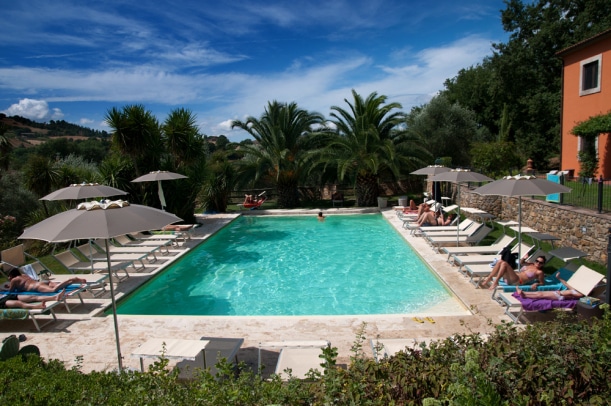
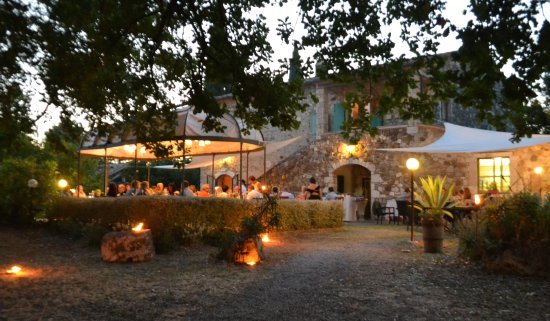
There are many hotels and B&B’s in the area. We stayed at the darling Relais Ciavatta in Maremma and I cannot recommend it more.

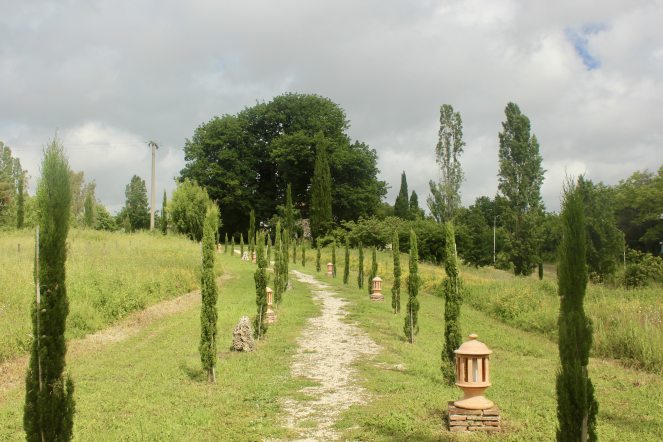
Relais Ciavatta offers beautiful Tuscan grounds,
fullsizeoutput_b629

fullsizeoutput_b631

rooms with traditional Tuscan country decor,

an inviting pool,
rcpool
Photo credit: http://www.czemplik.com

a delicious restaurant on site, Osteria la Frasca,
osterialafrasca

and amazing, friendly staff. One staff member in particular was very attentive and sweet. Luigi, the Jack Russell. 

Our day at Cascate del Mulino remains one of my most treasured memories of living in Italy. I like that we had to work to find it. It made it feel like a treasure at the end of a hunt. Like we had made it into the elite club of locals.

Cascate del Mulino is such a unique place that my heart is torn. I want to share it with others and yet, I really hope it does not end up developed and overrun with people. I am hoping that because the baths are a bit off the beaten path, the majority of tourists will not make the trek and the natural thermal baths may retain their natural allure. 

While I totally appreciate the spa with its services and luxurious treatments, for me, soaking in ancient, naturally carved pools, with the sound of waterfalls that have been flowing for over 3,000 years, the incredible Tuscan countryside all around me, was an experience of a lifetime.

Americans abroad · aperitivo · European travel · ex-pat life · international travel · Italian food · Italy · parmigiano-reggiano · Prosciutto di Parma · Travel

The Classic Italian Summer Cocktail – The Aperol Spritz

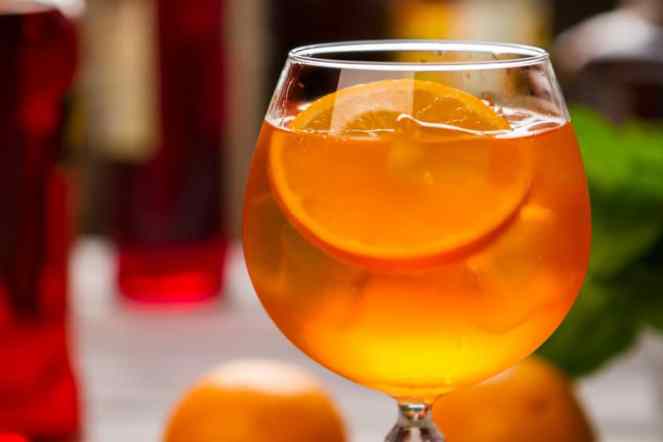
Orange drink in wineglass.

Italian summers are hot. And humid. Some days it feels as if you are melting. So one needs a refreshing drink to get by. And that is where the classic Italian summer cocktail – the Aperol Spritz comes in.

Aperol is an Italian apéritif (aperitvo in Italian) made of bitter orange, gentian, rhubarb, and cinchona among other ingredients. Ok, seriously does anyone know what gentian or cinchona are? I didn’t. So I looked them up. Gentian is a cute little purple flower. Technically it is an herb from the alps, that is commonly used as a digestive aid.  Cinchona, also known as quina, is also a medicinal plant from South America. How it found its way into an Italian drink I have no idea.

Aperol was originally produced by the Barbieri company, based in Padua, but is now produced by the Campari company. While Aperol was originally created in 1919, it did not become successful until after World War II.

campari
Photo credit: Campari.com

It is funny to me that the Campari company bought Aperol since the two drinks taste so  similar to me.  I guess they wanted to eliminate the competition. While they are similar in taste, Aperol has half the alcohol content of Campari.

Speaking of taste, Aperol tastes both bitter and citrusy at the same time. And orange is both the predominant color and flavor.

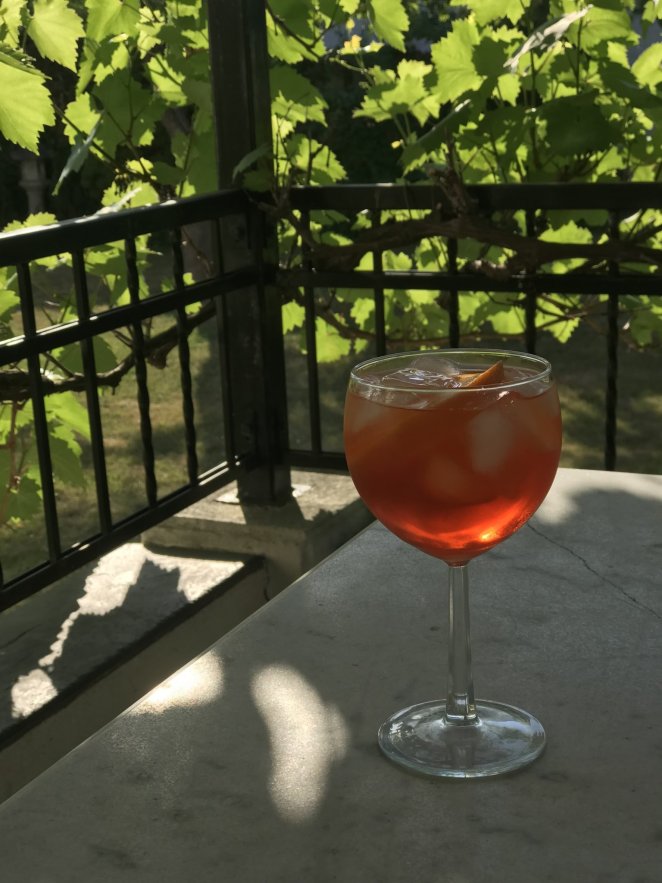
The classic Aperol Spritz cocktail is a combination of Aperol and Prosecco. Truth be told, I took a long time to warm up to The Spritz. I do no like anything to sully my Prosecco and the bitterness of the Aperol was an acquired taste for me. Now that I have acquired the taste however, I really enjoy it on a hot summer day.

While popular in Italy, the Spritz was not an international drink until the last 6 years or so when hipsters started drinking them in New York, London and San Francisco.
IMG_3121

If you fancy yourself a hipster or just like a refreshing drink on hot summer days, here are two recipes to try:

Classic Aperol Spritz

Fill wine glass with about three ice cubes
Fill glass 2/3 with Prosecco
Add 1/3 Aperol
Add a slice of orange

Modern Aperol Spritz

Fill wine glsss with about three ice cubes
Fill glass 2/3 with Prosecco
Add 1/3 Aperol
Add a slice of orange
Add a shot of gin
Add a splash of soda water

Pair with some Prosciutto di Parma, Parmigiano-Reggiano cheese, mostardo and olives and you have a fine aperitvo on hand. Or you could try your hand at this recipe.

Buon appetito a tutti!

Americans abroad · Croatia · European travel · ex-pat life · Honeymoon travel · international travel · national parks · nature · Plitvice Lakes

As Featured In The Plitvice Times

Check out an interview with me about Plitvice in the Plitvice Times:

“Where Unicorns, Rainbows and Fairies Are Born”

Americans abroad · European travel · ex-pat life · Göteborg Sweden · Gothenburg Sweden · international travel · Malmo Sweden · nature · Skåne · Skåne Sweden · Travel · travel

Bonfires, Bulbs and Bursts of Color – Swedish Spring

As many of you know or have read, Scandinavian winters can be long, dark and cold. Here in Sweden, springtime marks the important renewal of light and hope springs eternal. One thing I love is that it feels as if one day you have gone to sleep and the next you awake to a dramatic burst of color as the bulbs begin to flower all over Sweden. It is quite spectacular really.

To mark the momentous occasion when light returns to one’s life,  the beginning of spring in Sweden starts on April 30th on  Walpurgis Eve or Valborgsmässoafton in Swedish. The official holiday is May 1st, but the celebration begins the night before.

Walpurgis (also spelled Walburgis) is celebrated in many countries in Europe, and Sweden is no exception. Valborg (Swedish spelling) has been celebrated in every village and city throughout Sweden since the Middle Ages. Valborg ushers in spring and honors the life and sainthood of an 8th-century nun, St. Walpurga.

st-walpurgis-2-sized
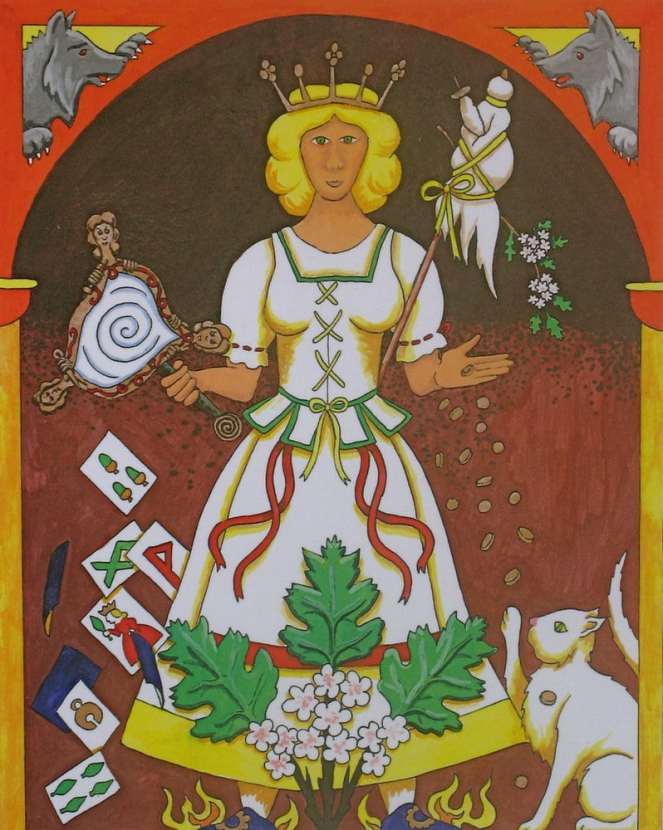
Like many Christian celebrations, Valborg has both pagan and Christian roots.  In the days before Christianity took hold,  farmers were willing to do just about anything to insure a good crop. After all, a failing crop was the difference between life and death. At the beginning of spring each year, farmers attempted to ward off evil, ensure fertility and cleanse the land of winter. Farmers prepared the soil and nurtured it by burning all the dead dry wood, brush and grass to invite new fertile soil to emerge.

Then along came Walpurga.  As with most stories from ancient lore, St. Walpurga’s story is varied depending on who is telling it. From what I could gather,  Walpurga was a nun who is said to have performed 2 miracles during her life, saving a child from starving with 3 sheaves of wheat and calming a rabid dog.  A third miracle, which resulted in her canonization, is said to have occurred after her death.

The story goes that on the day that Walpurga was buried, the rocks making up her tomb started oozing a healing oil.  The oil was seeping from the relics that were buried with her.  The healing oil provided miraculous cures for ill people and became so significant that Walpurga’s body was reportedly removed from the tomb, dismembered and distributed around Europe to help spread the miracle.  I could not find a clear explanation as to why the church would dismember her when the oil was coming from her relics, but I digress . . .

As a result of the healing oils coming from her tomb, Walpurga was canonized on May 1, 870, and became eternally tied to the pagan springtime rituals on April 30th. Today she is considered to be the saint that protects against storms, diseases and plagues, rabies, famine and failed harvests – she is essentially the patron saint of springtime.

walpurga_by_thorskegga-d4z8rl1
Photo credit: Thorskegga

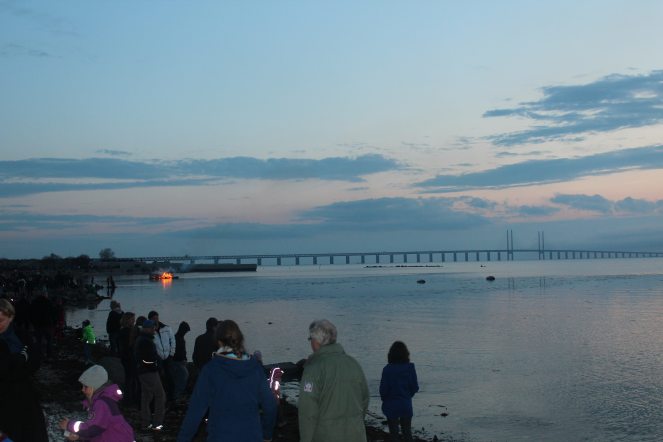
My experience of  Valborg today, is that it feels akin to what we call a block party in the USA.  I have been told that bigger cities celebrations are more like a carnival, and the student cities are like an all out, city wide, drunken party, but the celebrations that I have attended are sweet gathering of family, neighbors, and friends.  People picnic, drink, sing songs. The kids play and then the main event, the bonfire is lit.
IMG_0304

The bonfire may be small, medium or large in size. Some are burned on land, others out on the a barge on the water.  No matter where it is or the size of the fire, the bonfire is the star of the event.  Growing up in California where the grass is often quite dry and prone to brush and forest fires, I had never seen a bonfire up close. They are hot, and powerful, and oddly, a bit enchanting.

IMG_5622.jpg
A bonfire burning out on the water.

What really struck me though as an American, and a lawyer by trade, was the active participation of children of all ages in the lighting and tending of the bonfire.  Children assisted with the initial lighting and then continued to search for things to throw on the blaze. It was like a treasure hunt for flammable items. Not only were they participating, they were playing near and around the fire as it burned. Not a helicopter parent in sight. In the USA not only would each city erect barriers to keep everyone except the expert at bay (and let’s face it, to avoid any liability) but, the majority of parents would not allow their children to lend a hand or play near the fire.

I took comfort though knowing that this celebration and children’s participation in it, have been going on for longer then the USA has been a country. The Swedes seem to know what they are doing. And boy did the kids have fun.

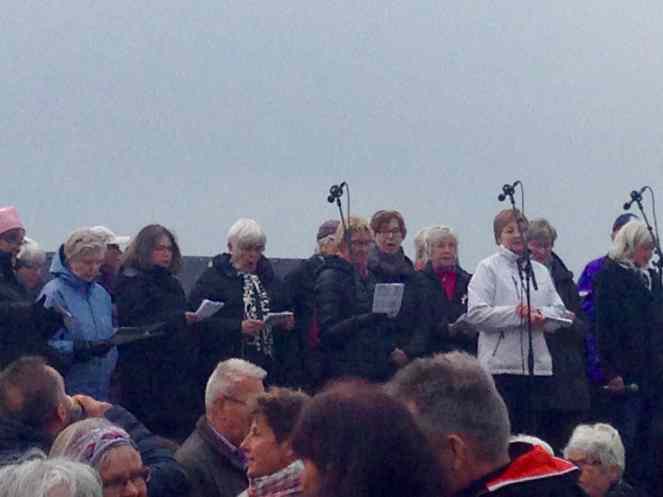
After the fire had burned down, a group of older Swedes began singing odes to spring  – songs inviting spring to please hurry and to bring sun, flowers, hiking. Songs about the joy of being outside after a long dark winter.
IMG_0310
I could not understand many of the words of the folksongs, but it didn’t matter.  The singing lent a nostalgic feel to the event, particularly because it seemed to be an older person’s gig.  It was as if there is a societal code at work. The young people burn away the old and prepare for the newness of the world, while the elders remind everyone that people have been welcoming spring in this way for centuries. It was a perfect ending to a lovely evening.

Americans abroad · Bosnia Herzegovina · European travel · ex-pat life · Honeymoon travel · international travel · Mostar · nature · Travel · travel safety

Lessons Along The Road Of Life

fullsizeoutput_7148
Photo credit: Niche Travel Design

When traveling it is always good to be alert, to be aware of your surroundings, know where your money, your phone and passport are at all times. I admit it, I am on alert by nature, but am on extra alert when traveling to a new place. And truth be told, I have been known to let my imagination get the best of me and assume the worst if I am in unfamiliar territory. You all remember the garbage truck in Parma, Italy, right?  Where I was convinced that we would be murdered by an Italian garbage man.

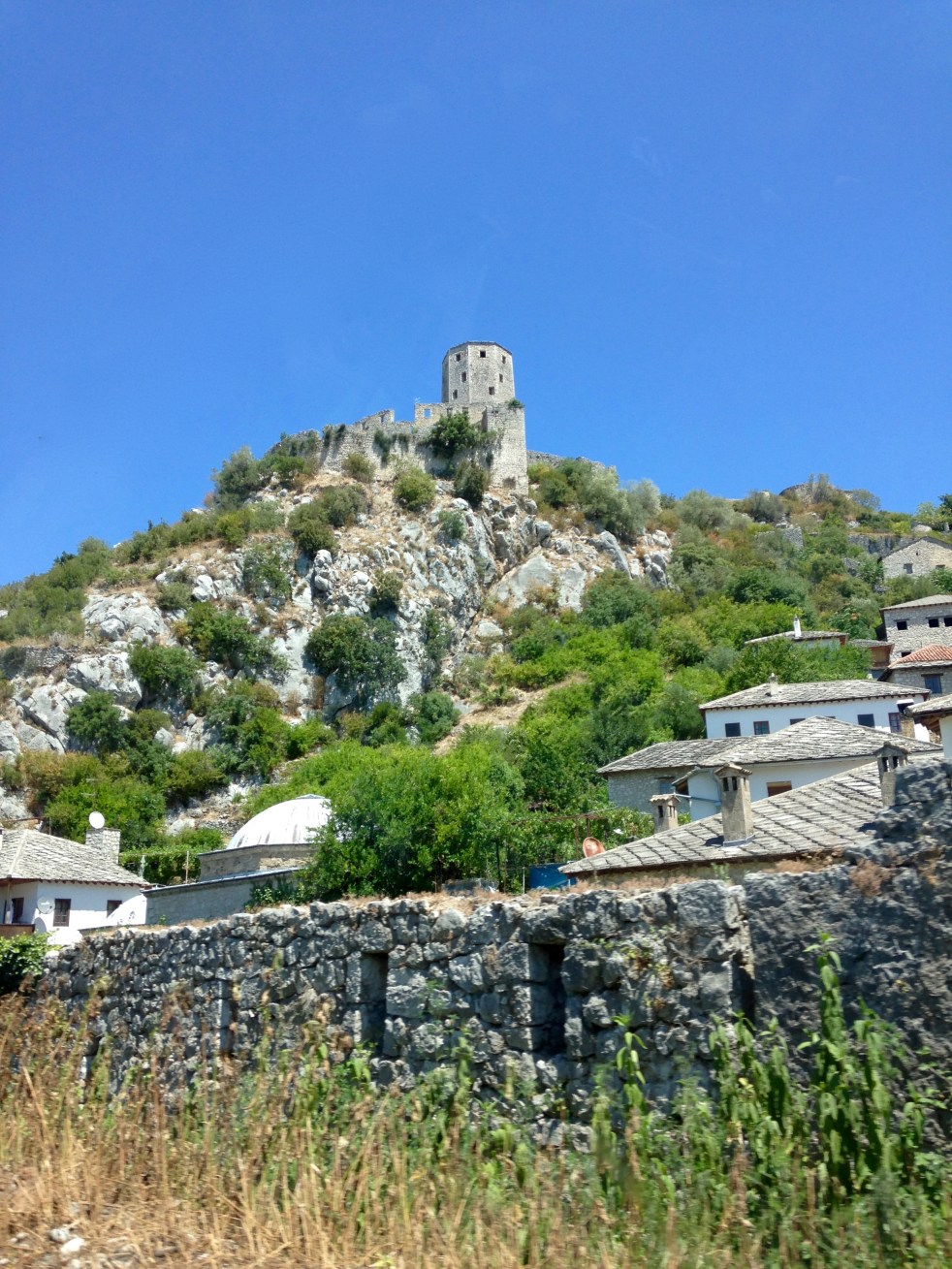
On our trip to Croatia last year we decided to take a day trip to Mostar in Bosnia Herzegovina. We had read that while the main roads are safe, one must not venture off the main roads as there are still active landmines in the countryside left over from the Balkan war in the 90’s.

fullsizeoutput_7154
Photo credit: Niche Travel Design

On our way back, at the end of a long, very hot day, we were cruising along a local road on the way to the main highway. Out of the blue we hear honking. The car behind us is furiously honking and waving at us. A quick scan of the dashboard – nothing looks amiss. Tires and alignment feel ok, but still the couple behind us will not stop honking and waving. We pull over. They pull up next to us in a beat up, older model of an unknown car. The couple themselves appear to be human versions of the car, a bit rusty and rough around the edges.

Through what can only be described as a mixture of sign language and charades we understand that we are not to go any farther down the existing road. Our GPS, whom we have named Pippa in honor of her lovely posh English accent, disagrees. Pippa clearly wants us to continue on the road that we are on. My husband suggests that perhaps the local couple knows something that we don’t. Maybe the road ahead is closed? Maybe it is not safe? I point out that Pippa has never let us down. She always recalculates when there is a closed road – as we found out on the way to Mostar.

The local couple is insistent that we follow them.  We continue to exchange unsure and concerned looks.  The local couple wins. My husband flips a u-turn. We follow them down a small back road for about 10 minutes. We have no idea where we are going. Pippa is insisting that we, “Make a u-turn if possible. Make a u-turn if possible”  I am getting progressively nervous. Who are these people? Where are they taking us? What is their motivation for having us follow them? Are we going to hit a landmine on this country road? Are we going to be ambushed and car jacked in the Balkan countryside? The Swedish plates have given us away as tourists/targets after all.

The local couple is about 200 meters in front of us. I ask Joe how he is feeling about following perfect strangers in a foreign land that still has active landmines to God knows where. He is a bit nervous about the whole encounter too. He pulls over to the side of the road.

The local couple’s car stops ahead of us in the middle of the road and just waits. There is no one else around. The only sound was the rustling of a soft breeze, the chirping of insects and the clicking of the GPS dial as Joe re-calibrates Pippa. Setting the GPS takes a long time under normal circumstances and feels even longer when one is convinced that your whole family is about to be taken out.  Then, ominously, the local car begins to reverse toward us.

pexels-photo-105032.jpeg
Photo credit: Pexel

They back up alongside us once again. They look confused. Why did we stop? They once again indicate that we should follow them. At this point we don’t know which way to go. Should we trust the locals or our nerves? Are they helping us or leading us to our demise? Since we have no idea where are are, we anxiously follow them again.

After about 5 more minutes of driving the local couple slows down and points us to the right. They point us down another road. Another road that we soon discover takes us directly to the main highway and relief.

fullsizeoutput_b55d
Photo credit: Niche Travel Design

The locals turn their car around. They honk, smile, wave and head back the way we just came. They were not thieves, carjackers, or murderers. They were simply really lovely, nice people who went 30 minutes round trip out of their way to help some dumb tourists heading down the wrong road in the Balkan countryside.

To that local couple, thank you. I am grateful to you for restoring my belief that most people in this world are good and kind. I promise to pay it forward and help strangers in need along this journey of life. I will do this in your honor and I will think of you every time.

pexels-photo-424517.jpeg
Photo credit: Pexel
Americans abroad · Croatia · European travel · ex-pat life · international travel · Plitvice Lakes · Travel

Plitvice – Where Unicorns, Rainbows and Fairies Are Born.

exploring-the-plitivce-lakes-705x470.jpg
Photo credit: Getty Images

A few years ago, my brother told me about a national park in Croatia. He showed me some photos online and I could not believe that a place like Plitvice Lakes National Park existed. From the photos it looked fake. It looked like a place where unicorns, rainbows and fairies are born. I had to see it for myself.

fullsizeoutput_b531fullsizeoutput_b537

Listed as Croatia’s most popular tourist attraction, each year more than 1 million visitors head to this UNESCO World heritage site.  Most visit in the summer, but the park is open year round and after experiencing Plitvice, I want to revisit the magic of this place in autumn. The color of the trees set against that water must be incredible.

Plitvice is located in the mountains of central Croatia, near the border with Bosnia and Herzegovina, and, between Croatian capital city Zagreb and Zadar.  We purposefully chose the Dalmatian region for our trip due to its central location to a number of national parks that we wanted to explore. Pltivice was the last park we visited at the end of our stay and we almost didn’t make it. I am so glad that we made the time. The park is a must-see destination in Croatia.

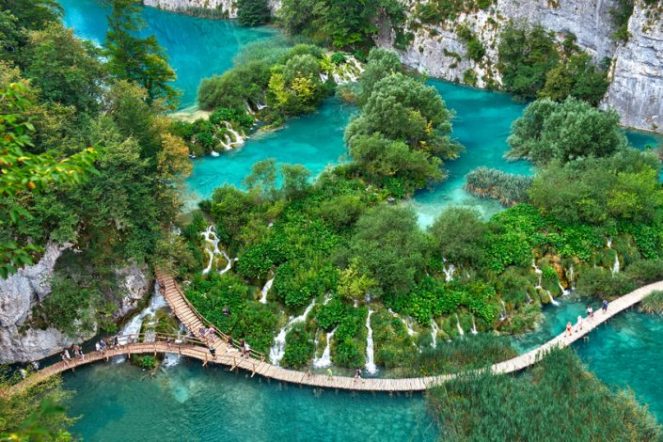
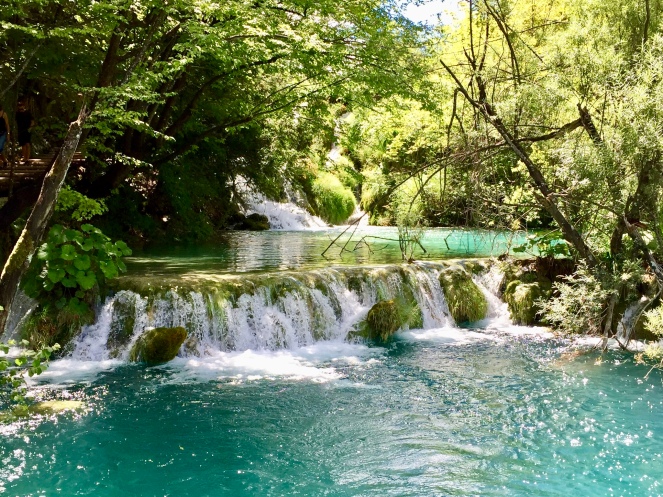
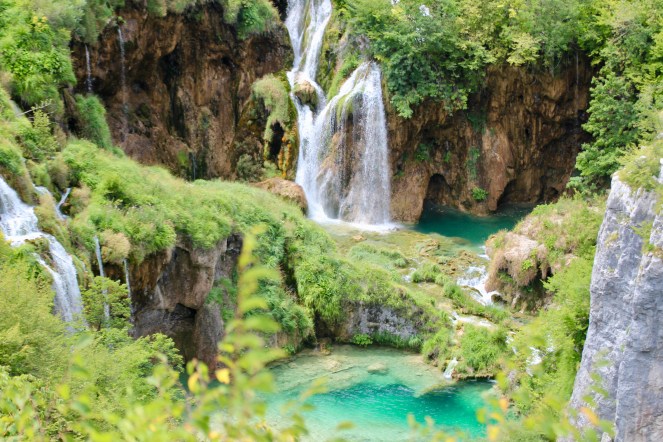
The park is made up of a series of cascading lakes which result from several small rivers flowing into one another. Fortunately, due to the protections provided by its UNESCO World Heritage Site designation, Plitvice has been allowed to flourish and maintain its natural Garden of Eden-esque status. The topography is varied. The flora and fauna, lush.

The origin of the name Plitvice has two incarnations. One version states that a priest named Dominik Vukasović, named the lakes pličina or plitvak, meaning shallow, because the lakes were formed by river water flowing and shaping shallow travertine basins  over time.

Another version of the name stems from the fact that the river Plitvica and the adjacent village of the same name gave origin to the name. It seems most logical to me that the 2 stories are both true. The name may have come from the Croatian word for shallow and then the river and village took on the same name given their proximity. What is interesting, however, is that reference to “shallow” may not be apropos forever. The travertine basins are living entities consisting of bacteria, algae, sediment and minerals which, much like coral in the oceans, are growing continuously. The travertine accumulates and grows at a rate of about 1 cm (0.4 in) per year. Ok, so maybe the “shallow” moniker still stands, but over time the entire area is growing which I find fascinating.

Things To Do
Plitvice has something to offer every outdoor enthusiast. One can leisurely stroll along the planked walkways, hike, boat, canyon climb, cycle or ski and sled in the winter.  The only thing one is not allowed to do at Plitvice, is swim. Sorry to you swimmers out there, but there’s no swimming allowed because of the need to protect the travertine and the plant and animal life which makes the places so enchanting . If you must get as close to the gorgeous water as you can,  small row boats are available to rent for 50kn/hour (7 euros or 8 US dollars ).  You can also take a ride on an electric boat to the 12 upper and 4 lower lakes. The electric boat rides are included with your admission ticket.

There are approximately 300 square kilometers, forest trails, 16 lakes, limestone canyons and waterfalls to explore.  There were so many waterfalls that we lost count.  Many people spend a few days at Plitvice, and there are plenty of accommodation choices available – everything from luxury lodging to camping. Sadly, we were only able to carve out a day trip from Zadar.

Things Not To Do
When visiting the park, it is critical to know that one cannot:

  • Collect plant materials or take any “souvenirs” of natural origin
  • Feed, disturb, touch the animals
  • Swim in the lakes (that part is the most disappointing as it was hot as Hades and the water looks sooooooo inviting).
  • Throw litter along the trails or elsewhere, except in the garbage bins installed throughout the park. It is shocking that this is even something one needs to be reminded of, but . . .
  • Stray off of the marked trails
  • Fish
  • Yell or be loud
  • Cycle or camp within the park’s borders

The Water Really Is That Color
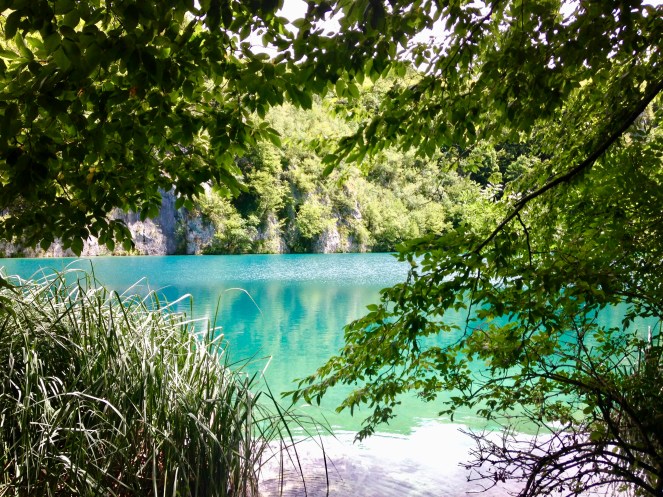
The lakes are renowned for their distinctive bright colors. And, the water color changes from emerald green, turquoise blue, and grey depending on the quantity of minerals, the number of organisms in the water, the season, and, the angle of sunlight.

We saw bright turquoise, emerald green and crystal clear streams. The fact that the water color changes at just about every turn, adds another element of otherworldliness to the place. This park had all my senses engaged and stimulated my imagination. I was imagining children’s books where the places were named for the different locations and colors. The fairies live at Emerald Lake, while the unicorns hide behind the rushing falls of Turquoise Lagoon. And, of course rainbows are made on top of Oštri Medveđak, the park’s highest peak. Silly? Maybe. The magic of Plitvice got me.

Practical Stuff
There are two entrances to the park. When planning your trip, check out the trail options before you go in order to know where to park.

We opted for Entrance 2 (South Gate and Upper lakes) as it was closer to the waterfalls that I wanted to see. When visiting, be advised, the park is crowded, the walkways are simple uneven wooden planks with no railings. I cannot tell you the number of times I almost was jostled into the water. Advice, take a waterproof camera and/or phone case for your smartphone in case of an accidental fall into the water.

From entrance 2, there are 4 trail options to suit every level of difficulty and time.

  • Trail E (2-3 hours – 5.2 km – easy) upper lakes to Proscansko Jezero starting with a short boat ride across the Kozjak Lake.
  • Trail F (3-4 hours – 4.6km – easy) walk the upper lakes and sail across lake Kozjaka, then visit the lower lakes – take shuttle back
  • Trail H (4-6 hours – 8.9km – moderate) starts with a bus ride to your starting point, walk the upper lakes then sail across lake Kozjaka, to the lower lakes – take shuttle bus back.
  • Trail K-2 (6-8 hours – 18.3km -difficult) like Trail K-1 – explore the whole park.

Another option if you are looking for a moderate hike, is Trail C from Entrance No 1. This path starts with an uphill climb and allows you to see both lakes. A stop at the upper lakes is also a perfect spot to rest, drink some water and enjoy a picnic.

If you go in the summer, try arrive early as it gets VERY crowded.  We were told that the majority of tour busses usually arrive between 11:30 – 12:30.  If you get there early enough, you can avoid the majority of the tour bus crowds.  Another option for a visit during the summer, is to arrive in the afternoon when most tour groups have finished their guided walks. Summer days are long with light and a peaceful afternoon in Plitvice would be heavenly.

I would also recommend packing a lunch. We made the mistake of not bringing food and were disappointed with our options. The food inside the park is bland, overpriced and poor quality. It would have been much nicer to have had a nice picnic overlooking this:

fullsizeoutput_b520

My family loved everything about Croatia, but Plitvice was definitely one of the highlights. If you visit Croatia, you simply must visit Plitvice. And, please, let me know if you spot any fairies, unicorns or rainbows.

Americans abroad · art · Copenhagen Denmark · Denmark · European travel · ex-pat life · international travel · Malmo Sweden · Modern Art · Travel

Sun, Sea & Picasso – The First Day of Spring at The Louisiana Museum of Modern Art

We here in Scandinavia have had an unusually long winter – 5 1/2 months to be precise. 5 1/2 months of snow, sleet, rain, cold grey days.  This weekend the spell was broken, however. It was sunny at last. A proper spring day with sun and a chill in the air. All day I kept hearing the Beatles refrain in my head , “Here comes the sun . . .”

In honor of the lovely first day of spring we headed to one of our favorite indoor/outdoor spaces – The Lousiania Museum of Modern Art in Humlebæk, Denmark.

The museum sits on a bluff overlooking the Öresund Strait and enjoys sweeping lawns with an incredible display of sculpture, trees, flowers, sea breezes. Just visiting the grounds are worth it, but then there is the museum itself. Architecturally, the museum structure and grounds evoke Frank Lloyd Wright and his philosophy of bringing nature into the building. The museum is designed with lots of big windows whose function it is to bring nature inside the museum walls. It is a space that simply makes one feel calm, peaceful and good.


The grounds have sculptures scattered throughout. The sculptures are not placed haphazardly, however. The sculptures are specifically positioned in order to interact with the architecture and nature that surround them. The placements are precise and are designed to allow visitors to enjoy a different experience with each visit depending on the weather and the season.

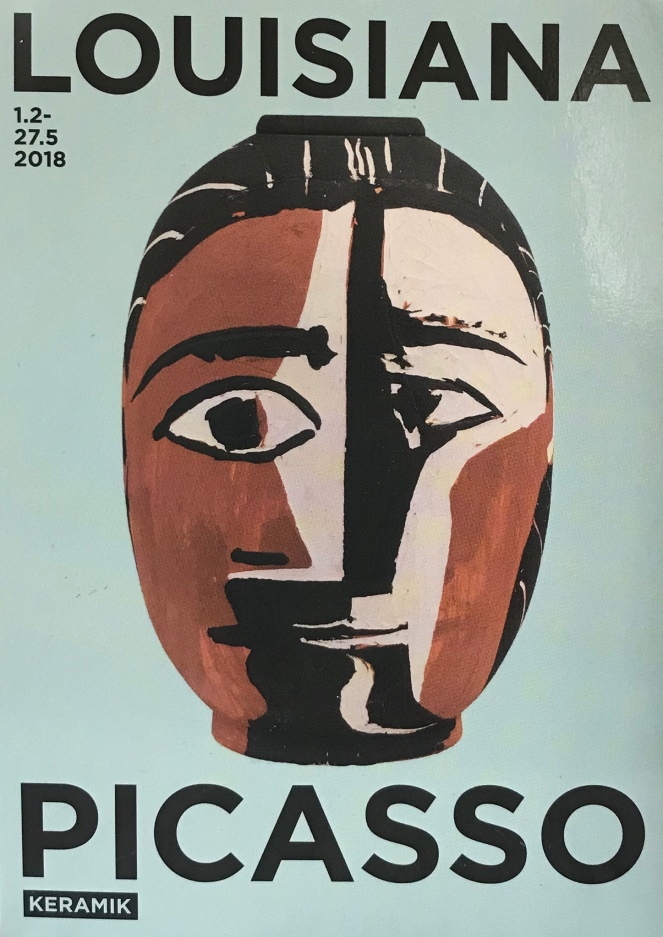
We would have been happy just enjoying the sun and sea that day, but imagine our surprise when we arrived and discovered that there was a Picasso ceramics exhibit going on. This particular exhibit was named one of the top exhibits to see in 2018 by the New York Times and it does not disappoint.

fullsizeoutput_b40b.jpeg

In fact, it was stunning. One of the things I have always loved about Picasso is that his work is so dynamic and prolific –  his work encompasses traditional paintings, the cubists phase, sculpture and then his colorful, whimsical ceramics.  There are over 160 pieces on display and a lovely film offered with English subtitles about this particular creative period in Picasso’s life.

Picasso’s interest in ceramics began in the summer of 1946 when he attended an exhibition in Vallauris, France, an area known for making ceramics since Roman times. After WWII, and at at the height of his success, Picasso returned to Vallauris seeking new artistic experiences. The war had worn him down emotionally and he sought new challenges and inspiration artistically.  In this last period of his life he began to pick up clay and he immediately began experimenting with the materials, glazing techniques and processes. Apparently, Pcasso loved how unpredictable the firing process was on the clay and he enjoyed the resulting surprise of colors that emerged.

All in all, it is estimated that Picasso produced over 4,000 cera­mic objects during this time. It is said that one of the things that inspired him to create ceramics was the desire to put art in the hands and lives of the common man.  By turning utility objects like a platter or a water pitcher into an art piece, it allowed art to enter the every day world. So dedicated to the concept of making art available to all, Picasso created a line of work called Edition Picasso which were created specifically to be affordable. Picasso essentially served as the designer and allowed a ceramic workshop in Madoura, France to actually replicate each piece. This was one of the first (if not the first) times in art history that copies were mass produced based on an original work.  Picasso’s confidants advised him against this idea warning him that the practice would devalue his other works. Picasso soldiered on with the idea and from 1947 – 1971 he designed over 600 editions for the collection. And while initially affordable, once the artist died, the Edition Picasso ceramics went steadily up in price and did no damage at all to the value of Picasso’s other works.


If you are in the Copenhagen area and are looking for a unique museum experience as well as an outstanding collection of art, I highly recommend the Louisiana Museum of Modern Art. And if you are not in the area just now, keep a look out for the Picasso ceramic exhibit coming to a museum near you. You will not be disappointed.

Americans abroad · European travel · ex-pat life · Giethoorn · Holland · international travel · The Netherlands · Travel

The Fairytale Town of Giethoorn, Holland.

Need a city break?
A break from the hustle, bustle and noise of a city? Then head over to Giethoorn, Holland, the picturesque village free from car traffic. Giethoorn is known for its many canals and in the spring and summer, for its colorful flowers. Even in the dead of winter, though, Giethorn will win you over with its charms, namely, its peaceful nature, the charming cottages, the many beautiful boats and the numerous wooden bridges.

This car free village can be seen one of three ways; by boat, foot or bike. Named the Venice of Holland, Giethoorn is a labyrinth of canals. In fact, the village is so dependent on its waterways, that many of the houses cannot be reached by road and the postal service delivers the mail by boat. How cute is that?

Early History of Giethoorn
Located in the municipality of Steenwijkerland, Giethoorn was settled in the 1200’s when refugees  (some say fugitives) from Perugia, Italy founded the village looking for a new place to farm. The land was not conducive to farming however, as it was swampy and damp. While attempting to farm their fields, the settlers unearthed large quantities of goat horns. Yes, goat horns.  These horns were assumed to be the archeological remains of wild goats that drowned in the All Saint’s Flood of 1170. The villagers then began calling the village “Geytenhoren” which eventually became Dutchified in its present form of Giethoorn.

The marshland, while not ideal for farming, was a great source of peat moss which was burned as both a heating source for homes as well as for fires to cook over. It was also used as roofing material to insulate houses. The early villagers began peat mining with gusto and discovered the best way to move the harvested peat around was on the water. Canals were dug for transportation and the town became dedicated to water transportation.

Today the charming brick cottages are still adorned with peat moss thatched roofs and shiny black, forest green or red shutters. The thatched roofs add to the overall charm of the village, evoke days gone by and keep the tourists coming back, however, while originally the thatched roofs were the result of cheap and plentiful peat moss, today, maintaining the thatched roofs is no longer an inexpensive alternative. The roofs cost 150 euros a square meter and need consistent attention due to weather.

Home to less than 3000 people, Giethoorn is a quiet community with four miles of canals. Many of the residents live on private islands with their main means of transportation are with a canoe, kayak, punts or whisper boats (so named for their silent motor that does not disrupt the tranquility). Homeowners with cars park outside the village in a specially designated lot and then use punt boats to get around. One can also traverse the town on a bike or by foot.

The tranquility, coupled with the beautiful homes, the bridges and in the spring and summer, the flowers, make any journey through the Dutch Venice, unforgettable. One feels peaceful and calm while visiting this unique village. At times, the only noise you may hear are the calls of the local birds. Even the boats have been designed to make as little noise as possible. A visit to Giethoorn is about as close to a natural church setting as one can get.

Getting There and Getting Around
Giethoorn is 55 miles northeast of Amsterdam.  You can reach this amazing village via car or train from the city of Amsterdam. If you drive you will be required to park your vehicle near the village centre then walk to the port area where you can rent a whisper boat, a kayak, a punt or take a guided canal tour. The village is small and there are plenty of signs pointing you in the right direction.

It was cold when we visited so we opted to take a covered, guided canal tour that comes with a hot cup of coffee, tea or coco.  Not only were we warm, but we learned the history of the town. I highly recommend the guided canal tour.

If you decide to walk or bike, note that there are approximately 180 wooden bridges connecting the town. For some home owners, the bridges are the only way for them to connect to the rest of the town. 

If we had visited in the summer, I think I would have enjoyed exploration by bicycle. Giethoorn, true to its Dutch heritage, has extensive bike paths throughout the town. After cycling around the canals, one can also cycle around Lake Bovenwiljde and experience the Dutch countryside, complete with farm animals, wildflowers and windmills. There are a number of affordable bike rental places. As we did not rent bikes, I cannot recommend a specific company, however, we were told good things about these guys.

Explore
If you explore Giethoorn by bike or foot you will also discover the many cafes, art galleries and churches tucked into little corners that are not as accessible by boat. From our boat we saw many that I vowed to visit again in warmer months.

There are 2 museums worth nothing as well. The Het Olde Maat Uus Museum takes visitors back to the time when the village was founded and one can experience typical Dutch farm life from years gone by – complete with cooking outside of the house in a special cooking hut. The thatched roofs made cooing indoors too dangerous, so the cooks were relegated to a separate cooking house. Many cooking huts are still on the properties and are visible when touring around.

And, if geology is your thing, you can visit De Oude Arde which touts a large display of rocks.

I, for one, plan on returning to Giethoorn when the weather is better. I want to ride a bike around the village, past the adorable thatched roofed cottages, over the wooden bridges past glorious, colorful  flowers, past the lake and out to the Dutch countryside where I will throw down a blanket and lay out a picnic.

I hope you are able to experience the charm of this quaint Dutch village one day too.

Americans abroad · European travel · ex-pat life · international travel · Italian food · Italy

Mangia, Mangia!

Photo by Getty Images

“Watching Italians eat (especially men, I have to say) is a form of tourism the books don’t tell you about. They close their eyes, raise their eyebrows into accent marks, and make sounds of acute appreciation. It’s fairly sexy. Of course I don’t know how these men behave at home, if they help with the cooking or are vain and boorish and mistreat their wives. I realized Mediterranean cultures have their issues. Fine, don’t burst my bubble. I didn’t want to marry these guys, I just wanted to watch.”
― Barbara KingsolverAnimal, Vegetable, Miracle: A Year of Food Life

Americans abroad · Bologna Italy · Emilia Romagna · European travel · ex-pat life · Firenze Italia · Florence Italy · international travel · Italy · Parma Italy · Travel

La Bella Figura

“The Creator made Italy from designs by Michaelangelo.”
Mark Twain

lbf1

This is the quintessential Italian woman. Elegant, stylish, understated and fare la bella figura.

Fare la bella figura” literally means “to make a beautiful figure.” The phrase refers to the Italian ideal of looking your best at all times. For this casual Californian this ideal may be the biggest challenge that I’ve faced living in Italy.

Northern Italy is the home of Milano, the seat of fashion houses and world famous designers. People are stylish here.  Then, among Italians, Parma is known to be a very fashion conscious community.

The first week of school, I was jet lagged and coming down off of an emotional roller coaster of a year.  I was unaccustomed to humidity and was sopping wet every time I stepped outside.  Because of the humidity I was also carrying around water, which I stated earlier is a big no-no.  So there I am the first day of school in Italy, bedraggled, exhausted and definitely not stylish. I hardly felt the need to dress up for the ten minute walk to school when I was just going home to unpack dirty, dusty boxes.  I was feeling good about myself because I had put on some makeup and my fancy Taryn Rose flip flops.

I arrived at school, looked at all the Italian mothers and thought “uh oh.”  Not only were they thin and beautiful, they all looked very stylish in an understated, elegant way. Northern Italian women don’t wear a lot of makeup. They don simple, but high quality and finely tailored clothes. They wear dresses, skirts and lots and lots of stilettos. And boots – year round. And scarves – year round.  I stood on the sidewalk, hair in a ponytail in casual, (almost exercise) clothes. Needless to say, I stood out like a sore thumb.

I had a conversation with my friend Diana who is English about the Italian women’s seemingly effortless style. Diana noted that if you went to the supermarket in England dressed like an Italian woman does, everyone would think, “what is she trying to prove?”  I thought about how people would react if you showed up at Safeway in stilettos, a dress, a scarf – Diana was right.  Americans too would think you were putting on airs. The only reason you would wear high heels to the supermarket in America was if you were on your way to or from work or an event. In Italy, however, it a common occurrence.

From my American (and casual Californian) perspective, it seems like a lot of work to get dressed up just to run to the supermarket, go to the gym or walk the kids to school. But dress up they do. I was no longer in California and if I didn’t want to stand out I was going to have to make some changes. Wearing exercise clothes on the street is just not done here and flip flops (my shoe of choice in California) are reserved for the pool or the health club.  If I continued my disregard for la bella figura, I may offend someone or at the very least confuse them.  My American friend Sarah told me that once she went out in her “tuta” or her exercise suit with no makeup. She ran into her landlady who promptly contacted Sarah’s Italian in-laws to inquire if Sarah was feeling ill since she had been out of the house looking so casual.  In Italy, being ill is the only excuse for failing fare la bella figura.

The first week here I sat back and observed. I saw one woman ride up to school on her bicycle in a tight pencil skirt, gorgeous blouse and stilettos. There was a light summer rain. She rode her bicycle while holding an umbrella, one child on the back of her bike and another in the front.  She arrived, floated off of her bike, got the kids out of their seats, grabbed her Louis Vuitton bag and glided into school. Not a hair out of place. I watched – mouth agape. She couldn’t be a real mother of two small children. She looked like a super model. I looked around for a film crew. This had to be fake.

I soon came to accept that not only are Italian women stylish, they don’t seem to be affected by weather. Italian women’s hair is never out of place. The weather reeks havoc on my style regularly. In the summer the humidity leaves my body and head wet and it renders my hair a wet, frizzy, wonky mess. In the spring, the pollen makes my eyes water and my nose run constantly leaving me looking like W.C. Fields. The wet winter rain and fog makes my eyes water resulting in black raccoon eyes from runny mascara. And again, my hair becomes a frizzy wonky mess. Why don’t Italian women suffer as I do? Is it genetics? How do they do it?

Fare la bella figura is not limited to young women either.  I have seen many an old women dottering along, holding on to her companion for support in stilettos! Stilettos!  They can barely walk anymore, but damn it if they aren’t going to look good. I can no longer navigate a flat surface in high heels, let alone the cobblestones. The older women also love their hats, fur coats, scarves and handbags. I particularly like to watch the older ladies during the Christmas season as Italians dress up to do their Christmas shopping. At the beginning of December, the older Italian women put on their finest attire as they stroll around the main piazza and shopping streets showing off their coats, hats and handbags  It is a far different atmosphere than the images you see of people clawing and fighting over items at WalMart.  This is slow deliberate shopping experience.  Another difference between Italy and the USA, no one in Italy is afraid of PETA.. Fur and leather abound, particularly among the older crowd. Fur hats, fur coats, fur trimmed scarves, fur lined leather gloves, fur lined leather boots, leather pants and leather skirts are commonplace.

The Italian women are not alone in pursuing la bella figura. Italian men spend an equal amount of time on their appearance. Italian men’s clothes are often tailored. It is unusual to see baggy clothes on men here. Italian men also wear sweaters quite a bit. Not just pullover sweaters, but cardigans. And they like to roll up the cuffs of their pants, jeans, shorts.  Italian men also wear scarves as often as women do and they pay a lot of attention to their shoes. They also carry bags made of beautiful leather – or what we would call a man purse, a murse. Older men frequently wear suits, bow ties, fedoras and a scarf. They dress this way all the time – just to go to the post office or the vegetable market.  And where the Italian women tend to be understated, Italian men have a flare for bold style. They are not afraid to wear colors and patterns. Lord knows they love a brightly colored pant.

I have observed the Parmigiani women for almost three years now. I still don’t fully understand how they pull it off. They make being stylish and elegant look effortless and easy.  I will never understand how they navigate cobblestones in stilettos. After 2.5 years it still seems like a lot of work just to run your errands, but it is part of the Italian culture. And it is expected. And now I have come to appreciate it. The attention to style makes one feel a bit better when you are out and about. And it makes for great people watching.

The Italian author Beppe Severgnini summed it up best.  “Being Italian is a full-time job. We never forget who we are, and we have fun confusing anyone who is looking on.”

============================================================

Below are some photos of Italian stye. These are not my photos. I got these off of the internet, but I assure you that I have seen some version of each of these outfits on a regular basis.

This slideshow requires JavaScript.