Americans abroad · Emilia Romagna · European travel · ex-pat life · international travel · Italian food · Italy · Parma Italy · parmigiano-reggiano · Travel

Parmigiano-Reggiano

pr1

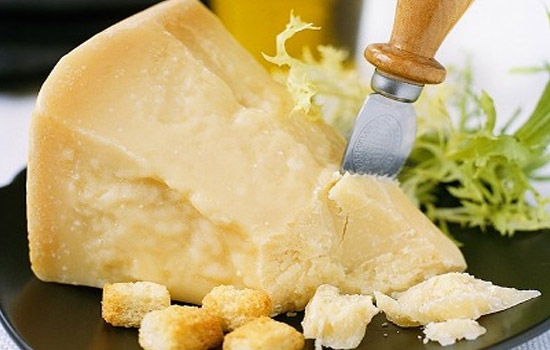
So it has happened.  After 2.5 years of living in Italy I am becoming a bit of a food snob.  Last Sunday I was discussing cheese with my friend Giuseppe – specifically Parmigiano-Reggiano cheese (or Parmesan cheese as it is commonly known in the USA). Giuseppe’s family has been producing Parmigiano-Reggiano for over 130 years.  In the course of our discussion, Giuseppe told me that there are no protections for his product in the USA. I was shocked.

Then, this morning, my aunt sent me an article about how producers of European cheese are requesting said protections in the American market. The European Union wants to ban the use of European names like Parmesan, Feta and Gruyere on cheese made in the United States. This has American producers in a tizzy. I don’t know about the other cheeses, but I have to say, when you compare Parmigiano-Reggiano to its American counterpart, one is cheese and the other is . . . something else. And as we Have recently learned it may be sawdust.

Unless you have purchased Parmesan cheese from an Italian import specialty shop, I assure you, you haven’t really tasted Parmesan cheese if you are eating Parmesan made in America. The American versions taste nothing like the original.

Parmigiano-Reggiano was created in the Middle Ages in the Northern Italian province of Reggio Emilia. Historical documents show that in the 13th and 14th centuries, the Parmigiano-Reggiano that was made was very similar to the cheese produced today. Ya’ know the old adage, “if it ain’t broke, don’t fix it.”  Why mess with something that has an 800+ year proven record of consistently being delicious? This cheese has been around so long that the use of the nickname “Parmesan” predates the existence of the United States by about 250 years.  Originally, Italians from other regions of Italy began calling the cheese Parmesano, which means “of or from Parma.” This nickname was later shortened to Parmesan by the French.

Under Italian law, Parmigiano-Reggiano can only be produced in Parma, Reggio Emilia, Modena, Bologna and Mantova, Italy.  European law classifies the name, and the nickname “Parmesan”, as a protected designation of origin (PDO), like champagne from France. Thus, in the European Union, “Parmigiano-Reggiano”  refers to cheese manufactured exclusively in limited cities. And, in 2008 a European Union court determined that the name “Parmesan” cannot be used for imitation Parmesan made or imported into Europe. Therefore, if Kraft imports its powdered version into Europe, it must declare that it is imitation Parmesan cheese.  And believe me, the Kraft stuff is an imitation. It tastes nothing like the real stuff.  Authentic Parmigiano-Reggiano cheese has three variations of flavor according to how long it has aged. It can be: mild and smooth; full-flavored, sharp and crumbly; or nutty and spicy with an almost gritty or crystalline texture.  After tasting the real stuff, I don’t think I will ever buy the Kraft version again.

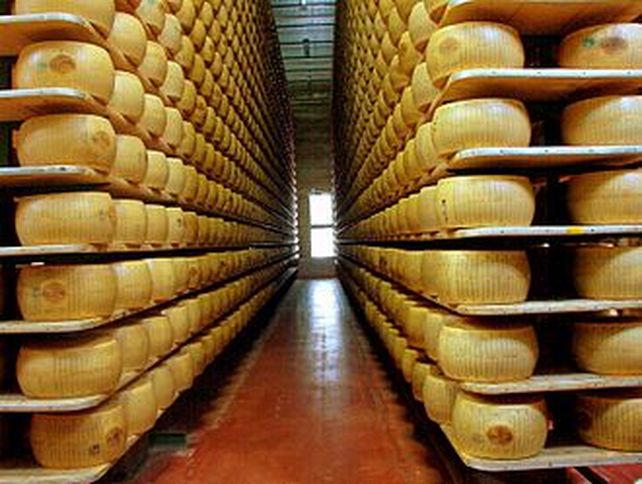
The first distinction between the authentic and imitation versions is the strict method of production. Like Prosciutto di Parma, production of Parmigiano-Reggiano follows strict guidelines and regulatory inspections by the Consorzio Parmigiano-Reggiano. The Consorzio inspects each and every cheese wheel produced. Every. single. one. Typically the region produces over 3 million wheels of cheese annually! Thatsalotta’ cheese.
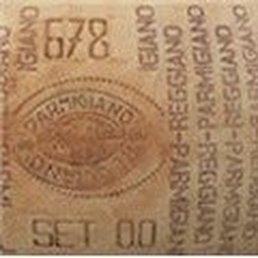
pr2Further, Parmigiano-Reggiano bears a special seal identifying it as authentic. A stenciled seal indicates which dairy the milk came from, the month and year of production, and a code indicating the length of aging.

Another distinction is that the milk used for Parmesan comes from grass or hay fed cows only. And Italian cows are not subjected to antibiotics, hormones, and chemicals. The result is a creamier, fattier, delicious milk. I tasted some fresh unpasteurized milk from a dairy farm near Lake Como and I have to say I felt like I’d never really tasted milk before.

Also, Parmigiano-Reggiano is all natural and made from raw cow’s milk. The cheese starter is natural whey culture with calf rennet.  The only additive allowed in production is salt. You will never find cellulose powder, potassium sorbate or cheese cultures in Parmigiano-Reggiano – they are illegal in the production. You will find all three ingredients (if you can call them that), however, in most imitation Parmesan cheese sold in the USA.

The whole milk is mixed with naturally skimmed, or separated milk resulting in a part skim mixture. The mixture is then is pumped into copper vats and whey is added.  It is cooked at a temperature of 91–95 °F. Next, calf rennet is added. Rennet is is an enzyme derived from the stomachs of the calves before they consume anything but milk. Rennet causes the proteins in the milk to form a curd.  The curd is broken into small pieces about the size of rice grains. The temperature is raised to 131 °F and is carefully monitored by the cheese-maker. After settling, the curd collected in a piece of muslin and divided in half and placed in molds. The process uses 291 lbs. of milk to produce two cheese wheels. The curd of one cheese wheel weighs around 100 lbs. Interestingly, the left over whey is used to feed the pigs from which “Prosciutto di Parma” is made.

Finally, after production, each wheel is aged for a minimum of 12 months. Then a tester from the Consorzio Parmigiano-Reggiano tests the wheels using only a hammer and his ear. The tester taps each wheel at various points, identifying cracks and voids within the wheel. Cracks and voids in a cheese wheel means that wheel does not pass inspection. If a cheese fails inspection, the rind is marked with lines or crosses all the way around the wheel to indicate to consumers that the cheese is not up to snuff.

Cheese that passes inspection is further identified with one of three stamps to indicate the maturity and variation of flavor for each cheese. As you can see, this is not your green cylinder of powdered cheese-like substance.
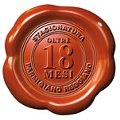
pr3The red seal indicates that the cheese has aged for more than 18 months. The Consorzio describes the red seal cheese as having a “distinctive milk base, with vegetable notes such as grass, cooked vegetables and at times flowers and fruit” and they recommend that it is served “with aperitifs, and in particular dry white wines, and as an accompaniment to fresh fruit such as pears and green apples.” Kinda’ sounds like a description of a wine doesn’t it?
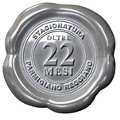
pr4The silver seal indicates cheese that has aged for 22 months.  The flavor is “distinctive, with notes of melted butter, fresh fruit and citrus fruits as well as overtones of dried fruit. The cheese has a balanced mild yet full-flavoured taste, with a crumbly, grainy texture. It is an ideal accompaniment to quite firmly structured red wines and excellent when served as Parmesan petals in fruit salad drizzled with Aceto Balsamico Tradizionale di Modena or di Reggio Emilia. This Parmesan may also be served with any dried fruit and is superb with prunes and dried figs.”
There’s that wine like description again.
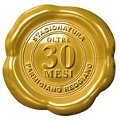
pr5The gold seal indicates cheese that has aged for 30 months or more. This cheese, has the highest nutritional value and has a dry, crumbly, at times, grainy texture. It has the strongest flavor.For such a distinctive cheese, full-bodied, firmly structured red wines, white dessert wines from partially dried grapes and sipping wines are ideal.”
Wowza!  I am telling you, this is serious cheese.

I have never seen any Parmigiano-Reggiano sold with the lines or crosses on the rinds. Given the price I wonder if consumers here would buy it with the imperfection of a mere crack?  Particularly since this “king of cheese” is not cheap.  It sells for approximately 15 euros per kilo or 11 dollars per pound. And that is without any import fees.

The way I see it, there is no problem with the US giving the EU their protections and designations for Parmigiano-Reggiano. The American consumer will decide for themselves if the “king of cheese” is worth the price. And the producers of the imitation stuff can keep on producing their products knowing that the American consumer will keep on buying it, out of preference, habit, patriotism and price. My husband is a perfect example. After regaling the wonders of Parmigiano-Reggiano last Sunday, he said that although he loves and appreciates Parmigiano-Reggiano, he still gets nostalgic for the powdered Kraft product. I think Giuseppe threw up a little bit in his mouth when he heard that.


Americans abroad · Emilia Romagna · European travel · ex-pat life · international travel · Italian food · Italy · Parma Italy · Travel

Digestion

digestion

Just like one must pay attention to the air in Italy, one must also pay attention to proper digestion.  Unlike, the USA, digestion is a very common and accepted topic of conversation in Italy. Proper digestion is very important to one’s health.

To insure proper digestion. you must not have cappuccino after 11:30 – milk is bad for digestion. I have no idea why milk is ok for digestion before 11:30 a.m.

The traditional Italian meal is designed specifically to aid in proper digestion. First is the antipasti made up of cured meats and cheeses. This course is designed to get your digestive juices flowing. Second is the pasta. Third is the meat course. These are two separate courses.  You will not see spaghetti and meatballs served together in an authentic Italian restaurant. If you see it on the menu, you are in a tourist restaurant.  You don’t see them served together because eating the meat with the pasta is bad for digestion.

Next is the contorno or the vegetable course. The logic behind eating your vegetables last is that the fiber will help you digest your meal.  I completely understand this logic and it seems reasonable to me, but I still like to eat my veggies first.

After your meal, and in case the vegetables didn’t work, you really should have an espresso to aid in proper digestion. And the final stage of an Italian meal are the alcoholic digestivi. These regional liqueurs are made from herbs, plants or nuts.  Grappa and Limoncello are the most famous digestivi, but here in Parma it is common to have a nocino after dinner. Nocino is made from unripe green walnuts.  Nocino is quite tasty, but in my experience, a nocino or grappa after dinner does anything but aid in my digestion.  In fact, the sugar content actually leaves me feeling ill, but that is probably because I am not Italian.

Also, to aid your digestion, a meal is to be eaten slowly and enjoyed. One reason that fast food is not very popular here is because eating on the go is not good for digestion.  Similarly, drinking on the go is not good for digestion and you will not see people walking around with paper cups adorned with their first name scribbled in black sharpie ink.  The first week we were here it was unGodly hot and humid. Not being used to such weather, I took to walking to and from school with a hard plastic reusable glass of ice water.  People were staring at me. Really staring at me.  Imagine someone “tsk tsk”ing  you with their eyes cuz’  that is what was happening.  I screwed up my courage and asked an Italian mom. “Oh, you really should not walk with a drink.  If you are going to have a drink, you should sit down and enjoy it.” Thing is, I WAS enjoying it.  It was like a life raft in the humid hell that is August in Italy.  And as for my digestion, it was too damn hot to eat anyway.

Speaking of drinking, one should not drink ice in your beverages or drink cold beverages too quickly when in Italy. Cold drinks are bad for digestion. During the aforementioned unGodly hot and humid summer months, cold water is necessary to rehydrate. And at times I admit I tend to gulp the ice cold water down like a prisoner on the chain gang since I feel like I am literally melting. It is refreshing to get the cool water inside my body.  I can’t help myself.  And Italian women cannot help themselves either.  I have been scolded many times for drinking my cold water too quickly.  “Senora, basta! Mio dio! Non beva veloce. non veloce!”

With the exception of ice cold drinks and veggies at the end of the meal,  the Italians have rubbed off on me. I have learned to stop and enjoy. i have learned that people “go for a coffee.” They take a break, leave work and go to the bar for 15 minutes to sit and enjoy a hot espresso in a real ceramic cup and saucer at a table with a tablecloth.  When we first arrived we made an appointment with the bank to have accounts set up, get a debit card, etc.  We arrived at the bank at our appointed time. We were ushered inside and taken to the desk of the person who would be helping us. We were introduced and sat down. Then the clerk disappeared for 20 minutes. When I asked where he had gone the response was “Oh, he went for a coffee” as if it is the most normal thing in the world to head out for a coffee when your client has arrived.  It was then that I realized that coffee is like a religious experience here. You don’t mess with a person’s coffee as it may well mess with that person’s digestion.  And that is, well, unforgivable.

The final bit of digestive advice from Italy – one must never eat with your shirt off or your belly exposed. This has not been an issue for this 51 year old overweight woman, but it is something one must consider when planning a trip to Italy. No belly shirts and no eating poolside or at the beach. A covered stomach insures proper digestion.  After an outdoor party one evening, an American friend pulled his shirt up exposing his stomach and shouted “Look all you Italians. My stomach is exposed and I am not going to get sick!”  I didn’t follow up with him to see what happened, but I saw him around town and he seemed fine.

I guess we Americani are a resilient bunch.

Americans abroad · Bologna Italy · Emilia Romagna · European travel · ex-pat life · international travel · Italian food · Italy · Parma Italy · parmigiano-reggiano · Prosciutto di Parma · Travel

Botticellis and Berlusconis

This slideshow requires JavaScript.

“First of all, let’s get one thing straight. Your Italy and our Italia are not the same thing. Italy is a soft drug peddled in predictable packages, such as hills in the sunset, olive groves, lemon trees, white wine, and raven-haired girls. Italia, on the other hand, is a maze. It’s alluring, but complicated. It’s the kind of place that can have you fuming and then purring in the space of a hundred meters, or in the course of ten minutes. Italy is the only workshop in the world that can turn out both Botticellis and Berlusconis.”
Americans abroad · Emilia Romagna · European travel · ex-pat life · international travel · Italian food · Italy · Parma Italy · Thanksgiving abroad · Travel

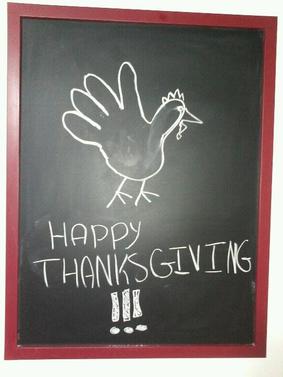
Frankenturkey

HOW TO KEEP TRADITIONS ALIVE WHEN LIVING ABROAD

We had been in Italy for two months.  It was our first Thanksgiving away from home.  We were all homesick.  Everything is difficult to accomplish when you don’t speak the language. Even the simplest of tasks is difficult. We were all emotionally exhausted.

turkey1
In addition to adjusting to a new home, country and language, our 13 year old son was taking classes in English, French and Italian while trying to simultaneously learn French and Italian.  We were all pretty beaten down. I was determined to celebrate Thanksgiving and have a day from home in Italy.

ROUND 1 | PREPARATIONS

Thanksgiving has always been one of my favorites holidays. I like that it is a day of reflection. There is no emphasis on gifts, just food, family and friends. One of Aleksander’s new friends asked him what Thanksgiving was. After Aleks explained it to him he said, “That sounds great. Can I come?”  A friend for dinner – thank you Jesus, yes! Maybe we would see a glimpse of our former son.  That would be something to be grateful for. Aleks’ friend inspired me. I invited some new friends to join us – two American families and one family that is a mix of English and American. I envisioned a day conducted entirely in English for our tired minds and spirits – yay!

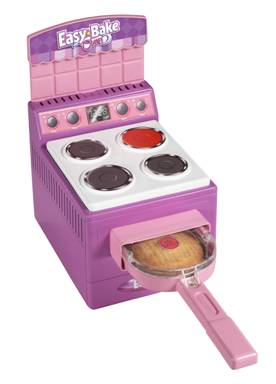
So, how to pull it off?  Turkey is not as popular here. I wondered where I would find a whole turkey.  I figured the rest of the meal would be easy as the ingredients are all common items, but a whole turkey was going to be a problem.  At school one day an Italian mom happened to tell me about a poultry farm that her family had used for decades. I got our neighbor to call and order me a whole turkey.  “7 kilos? Are you sure? That is quite large.” “Yes, I am sure.”  A 7 kilo/15 pound turkey is not big by American standards, but it is huge by Italian standards. We measured the inside of the “Easy Bake” sized oven. We prayed it would fit.

Since Thanksgiving is not a holiday here, we decided to celebrate it on the Sunday after Thanksgiving.  That Friday, Joe went to pick up the turkey on his way home from work.  He called ahead and got directions. He input the information into the GPS.  He drove around for an hour in fog twice as think as San Francisco fog searching for the farm.  He couldn’t find it. He called for directions again. He couldn’t find it.  After the third phone call, the poultry farmer told Joe to stay put. He would come and get him and take him to the farm. Joe arrived at the farm and asked for our turkey. “Your wife already picked it up.” “That is impossible. I have the car.”  “An American woman came and picked it up this afternoon.” Gee, do ya’ think that maybe you could have told Joe that it had been picked up one of the three times he called you? You know, before he drove around for an hour in fog thicker than pea soup looking for you?

What had happened is another American woman had decided that she wanted to have Thanksgiving too.  She had asked me where I was going to get my turkey. I gave her the number to the turkey farm and explained that she needed to call and order her turkey well in advance. She needed to order the turkey because the farm didn’t normally keep turkeys but could get them if ordered.  I ordered mine two weeks in advance. I don’t know where the mix up happened along the way, but, the other American woman got our turkey. There was no second turkey at the farm for us.  Our first Thanksgiving in Italy, three families coming over and no turkey.

ROUND 2 | FRANKENTURKEY

We had Friday afternoon and Saturday morning to try to figure it out as stores are closed Saturday afternoon and Sunday,  Lena had an Italian friend over that Friday afternoon. I dragged that poor girl to every store I could think of asking if they had any turkey.  The butcher across the street had a few pieces.  Joe got a few pieces from the farm and thus, Frankenturkey, was built.

Next, we had a house to clean and a feast to prep. Lo and behold, I woke up Saturday morning sick.  Like in bed with a fever kind of sick.

Oh, and all those ingredients that I thought would be so easy to find. Not so much. Cranberries were no where to be found in the normal supermarkets. I asked in the fruit and vegetable stores. No. I asked in the frozen foods store (yes, there is an entire store devoted to frozen foods). No. On my quest I stopped in a Russian store hoping to find some things for our Polish Christmas celebration. Low and behold, sitting there in the freezer section there was a pack of what looked like whole cranberries. I took a risk and bought them figuring I’d look up what they were when I got home. At home the package title translated as mooseberries – also known as the high bush cranberry! Hallelujah!

Cranberries, check.  Now pumpkin pie.  I went to all the same stores asking for pumpkin (zucca). The Parma region serves quite a bit of pumpkin filled pasta in the fall so this should have been an easy task to find pumpkin.  Yeah, again, not so much. I went to the supermarket armed with my very limited Italian and Google Translate. I found a commessa and tried to explain what I needed for una grande tradizionale festa americana.  “Oh, si, la festa di ringraziamento! mi piace molta la festa di  ringraziamento.”  Great, she has heard of Thanksgiving and she really liked it!  Certainly she would help me. I told her that I need pumpkin for a pie. “Per una dolce?? Per una torta?”  She looked very confused and a bit disgusted. Yes I told her it is a very important part of the meal.  “Per torta?  hum?”  She told me that the pumpkins were last month. They were all gone. OK. I asked if they had pumpkin in a can?  At this point her look tells me that she is not only disgusted, but angry at the thought of pumpkin in a can. “No!”  She turned and walked away.

The other families had offered to bring dishes. I decided to punt the pumpkin pie to someone else who had been living in Italy longer.

ROUND 3 | SOMETHING TO BE THANKFUL FOR

Sunday arrived. I was still sick, but Joe rose to the occasion. He slaved away in the kitchen all morning. The house wasn’t as clean as I would have liked, but it is a small space and when filled with people, it was passable.

Our friends Jan and Steve brought some excellent Italian wines. Julie and Don brought the pumpkin pies and Lisa and John brought the green bean casserole.  I am pretty sure everyone had a good time. I know my family did.

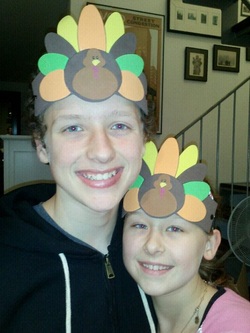
At the end of the day, after all the running around, me getting sick, and, presenting Frankenturkey instead of a whole bird, it was worth it. We had a fun day filled with the company of new friends and a traditional Thanksgiving feast. The thing I was most grateful for that day though, was this – the kids were smiling again.

turkey2

Americans abroad · Emilia Romagna · European travel · ex-pat life · international travel · Italian food · Italy · Parma Italy · parmigiano-reggiano · Prosciutto di Parma · Travel

St. Augustine

sta

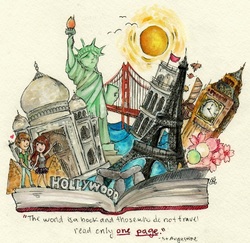
“The world is a book,
and those who do not travel
read only one page.”

~ St. Augustine ~

Americans abroad · Emilia Romagna · ex-pat life · international travel · Italian food · Italy · Parma Italy · parmigiano-reggiano · Prosciutto di Parma · Travel

Prosciutto di Parma

pdp2

Prosciutto translates from Italian into English as “ham.”  This is not an accurate and complete translation, however, as Prosciutto di Parma indicates a dry-cured pork that is unique to Parma, Italy.  To call it ham does not do it justice. This is not the ham one sees in the supermarket that comes in a gelatinous covering. Prosciutto di Parma is the result of culinary artistry and strict guidelines.

pdp1By law ham bearing the name Prosciutto di Parma may only be produced and cured in and around the countryside near Parma, Italy.  And, only Italian pigs are allowed. Each step in the production, from the breeding of the pigs to the final packaging is controlled by the Istituto Parma Qualità (I.P.Q.). Only the I.P.Q. has the authority to brand the finished ham with the seal of Parma’s five-pointed crown, indicating that the meat has cleared the rigorous standards required in production.
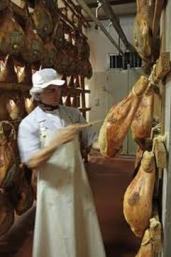
Prosciutto di Parma has been awarded the Protected Designation of Origin by the European Community designating it as a high-quality European food made according to traditional methods in a defined geographic region.

Prosciutto di Parma is all natural and as such, it is one of the first adult foods that babies are given to eat in Italy. There are no additives or nitrates.  Even water is restricted from the process.  The only ingredients are pigs, salt, air and time. And only the hindquarters are used in the curing process. No shoulder meat. No pork bellies.

Producing Prosciutto di Parma is not for the impatient and can take up to 3 years. The process is documented and traceable from the birth of the pig to the market.

The first step requires Italian pig breeders to place a mark on both rear legs of a young pig within 30 days of it’s birth. The mark indicates the pig’s place of birth, month of birth and a breeder’s code. This is to insure that only Italian pigs are utilized.

After slaughter, each leg is marked with a code identifying the slaughter house and a metal seal, attached to each ham during the salting stage, bears the Consorzio’s acronym (CPP) and the date at which processing began.

pdp3To begin the curing process, the legs are salted by a professional salt master or “maestro salatore.”  The “first salt” uses two types of salt depending on the portion of the leg.  After salting, the leg is refrigerated (1°C – 4°C) at a humidity level of 80% for a week.  The “second salt” occurs after the week of cold hanging.  After the second salting the leg hangs in cold storage for another 15 to 18 days depending on the size and weight of the leg. Salt is the only preservative allowed. No chemical additives. No nitrates. No sugar. No water.  Only salt.
After the second salting and curing, the legs are cleaned to remove the excess salt.  The legs are then hung on frames called “scalere” in a drying room for 7 months. The drying rooms must have large windows to allow the outside temperature and humidity to gradually dry the legs. Prosciutto producers will tell you that this open air drying period is crucial to the process. The combination of the Parma area air, temperature and humidity cannot be replicated elsewhere in the world.

The salting process is monitored to insure that the ham absorbs the minimum amount of salt needed to preserve it. At the end of the curing process the ham may loose more than a quarter of its weight through moisture loss. The process helps to concentrate the flavor and leaves the meat tender and aromatic.

In the 7th month, the legs are transferred to the cellars. The reduced air,  light and humidity complete the curing. By law Prosciutto di Parma is cured for a minimum of 1 year from date of the first salting.  Some are cured for as long as 3 years.
pdp4
Every step of the curing process is documented.  At the end of the curing process (400 day minimum) the ham and the documents of production are inspected.

Finally, inspectors test each ham with the horse bone needle to determine whether the appearance, color, and aroma of the final product meets the quality standards.

After clearing the standards, an inspector then brands each leg with the five-pointed crown signifying  the ham as Prosciutto di Parma.

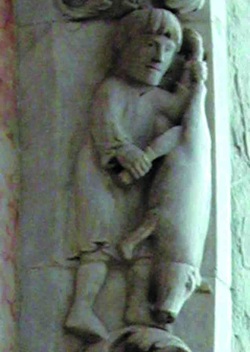
The main door of Parma’s 13th-century cathedral portrays depictions of each month of the year.  The month of November is identified by the slaughtering of a pig. To this day November is known as “November Porc” and all over the Emilia-Romagna region you will find festivals celebrating pork, pork products and particularly, Prosciutto di Parma.

pdp5
Italians serve Prosciutto di Parma in thin slices.  It can be uncooked (dry cured) which is called prosciutto crudo or cooked, called prosciutto cotto.  it is typically served as a starter to the meal. In Parma, it comes with ‘torta fritta,” parmesan cheese, fruit and wine.  It is usually served as a starter to the main meal.  It is delicious and after you have had it, I think it will be difficult to eat any other imposter.

Buon appetito!

This slideshow requires JavaScript.

Americans abroad · Emilia Romagna · European travel · ex-pat life · international travel · Italian food · Italy · Parma Italy · Travel

Be Careful What You Wish For

attenzioneOutside our apartment is a pathway that goes between a park and a mall.  It is a pedestrian street that is hidden from main traffic. It has a nice seating area and it is a perfect place for teenagers and twenty-somethings to hangout, eat, drink, smoke, buy drugs and leave mounds of trash.  It is a constant irritation for me. We live in a nice neighborhood, but this pathway is a problem.
One day on the way home from school, Lena and I took a different route. I thought it may be shorter and I just felt like exploring.  As we were walking along, I noticed a number of women and what appeared to be transvestites hanging around. I heard a few “pshhht, pshhtt’s.”  I looked up and encountered a woman in the window above.  I slowly began to notice a number of men in parked cars talking with other men at their driver’s side windows.

It took me minute to realize that this was Parma’s red light district.  These were ladies (and men) for hire.

Prostitution is legal in Italy, but I still do not want my children around it.  I told Lena that we should not walk that way anymore and explained why.  She replied that she did not feel unsafe at any time and that she actually felt safer on the street with prostitutes than she did outside our apartment when the drug dealers were present.

She went on to say, “Mommy, at least the prostitutes are polite and pick up their trash.  The drug dealers don’t do that.”

I had to laugh. How far she had come from age 10 to 11.  I was reminded of my original post where I discussed how I wanted my children “to see and experience the underbelly of life – the poverty, trash and homelessness that one sees in a city – because if they never see these things, they will never know that these things are problems that our world faces. If they don’t see these things, they will never know humanity and how to face a problem head on.”

Ah, Karma, you got me.

Americans abroad · Bologna Italy · Emilia Romagna · European travel · ex-pat life · international travel · Italian food · Italy · Parma Italy · Travel

Mickey D’s

Fast Food Is Just Not A Thing In Italy

Fast food is almost non existent in Italy. They do have Autogrill which is basically a rest stop. But Autogrill is no Stop-N-Go. Autogrill has delicious panini, brioche, espresso, wine, cheese and bathrooms. And other than the occasional McDonald’s, you don’t see fast food in Italy. The reason is simple. Food is an experience here. Food is not to be hurried. Food is not to be artificial. Food is to be enjoyed, slowly at a table.

Even drinking water is to be enjoyed. Slowly. At a table.  When we first arrived it was so hot and humid that I walked to and from school with an ice water in a reusable hard plastic glass with a lid and straw. I noticed people were staring at me. Really staring and giving me side eye. I could not figure out what possible affront I had inflicted on the Italians with the simple act of walking my kids to school. Finally, an Italian mom explained to me that you simply do not walk and drink in Italy. Nor do you walk and eat.  It is simply not done.  Not even water on an incredibly hot day.  When you want to enjoy a meal or a drink, you must sit and enjoy it. Oh my. I had some things to learn.

Now we were all for tasting all the new wonderful foods we encountered in Italy, but our son was really unhappy about moving. He was down and missing home. He wanted “American food.” He wanted McDonalds. We acquiesed. If a crappy hamburger would bring him a smile, it was worth ingesting the crap.

This Ain’t Your Mama’s Cooking

The first thing we noticed was that Italian McDonalds served beer on tap. They even served it at the drive through window. The corner of Aleks’ mouth lifted slighty. He had cracked a small grin. Progress.

fast Food In Italy
Beer on tap at McDonalds in Italy

The next thing we noticed was that the menu was different. The burgers had names like Manhatten Classic, Chicago Supreme, California Melt and the Mythic Chicken burger.  They also served pizzarotto (little pizza pockets), zucchini bites, Las Vegas fries (basket weaved fries), fried shrimp, Parmesan cheese snacks, baby carrots and kiwi (who knew that Italy is a large kiwi producer?).

Aleks immediately detected something was different about his hamburger. The meat was not as juicy. Not as greasy. We later learned there are strict rules about beef production in Italy that McDonalds adheres to. Thus, the burgers at Italian McDonalds are healthier for you. Unfortunately, Aleks was craving good old American crap quality beef. He was disappointed.

The kids next noticed that something tasted funny about their milkshakes. I did a taste test. “That is a real ice cream product” I say. Lena was happy. Aleks was disappointed in the real food.

Aleks did enjoy one thing about Italian McDonald’s though. They have an entire dessert case with really nice desserts. Desserts like profiteroles, crème caramel, cheesecake, panna cotta and eclairs.

Fast food In Italy
McDonalds in Italy

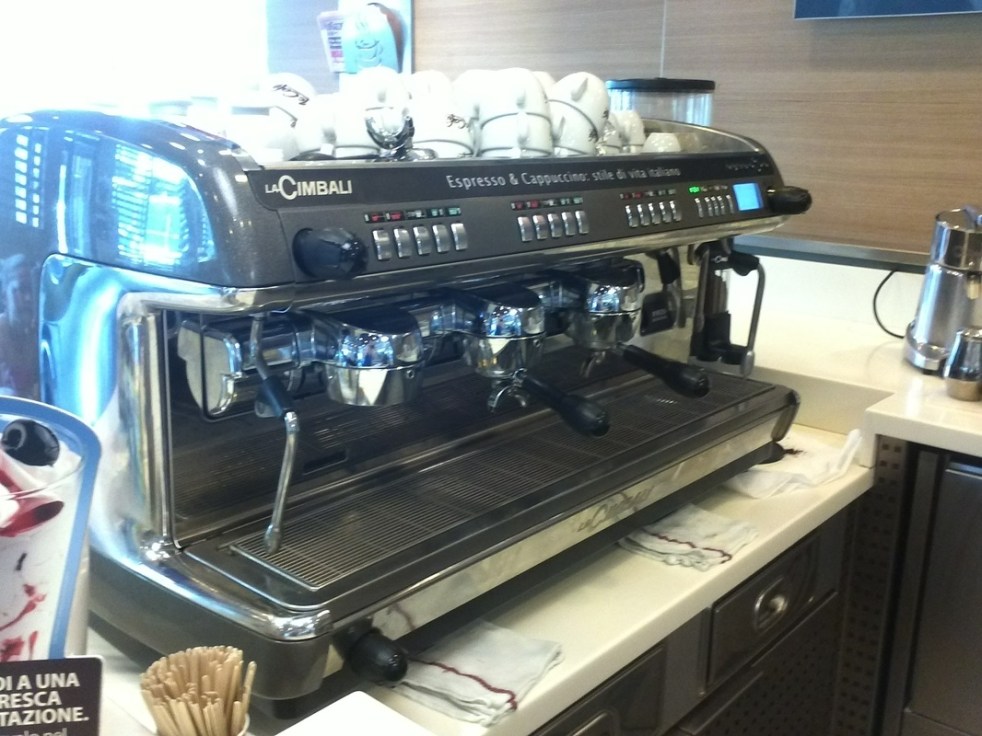
The most Italian thing, though about Italian McDonalds is the ever present, very large, espresso machines. You cannot end your meal in Italy without an espresso – not even a meal at McDonald’s.

Fast food in Italy
McDonalds
Americans abroad · Emilia Romagna · European travel · ex-pat life · Firenze Italia · Florence Italy · international travel · Italian food · Italy · Parma Italy · Travel

Guidos – Driving In Italy

Guidos – Driving In Italy

In the USA, a Guido is a slang (some would say pejorative) word for an Italian American.  In Italy, however, Guido is a boy’s name or when used as a verb it literally means “I drive.”

We had been in Italy for a week when my husband had a work conference in Florence.  Would the kids and I like to come along? School had not started yet. We could not move into our apartment yet and it was Florence, so Hell yeah!  The only hitch, Joe would be taking a bus with the other employees so I would have to drive the hour and half on my own with the kids or take the train. Since I spoke no Italian I figured driving would be easier than trying to buy train tickets, figure out schedules, etc.

Besides, I had been driving around Parma and back and forth to the local Ikea (pronounced hilariously to my children as ‘eee’ kay- yuh‘) with no problems. Plus, we had a GPS in the car.  How hard could it be?  It is only 1.5 hours away.  Driving to Florence was no problem!

Armed with the overconfidence that comes with 30 years of driving, we set out.

THE ITALIAN DRIVER

On the ride down I became acquainted with the Italian driver.

For a large portion of the autostrada (highway) between Parma and Florence, there are only two lanes. One lane is perpetually occupied by semi trucks.  Semi trucks which travel at a very high speed and get right up your bum.  Thus, the only option if you don’t want to be a semi sandwich is to go around them in the other lane.  This is an option equivalent to playing Russian Roulette.

Guidos - Driving in Italy

The cars travel at speeds far faster than the semi trucks.  They also drift across the entire autostrada paying no attention whatsoever to lane lines.  At first I thought they must be drunk they way they were swerving, but it was happening so often that I realized it was just the way they drive here.

Now, I am a responsible driver with my two precious kids in the car so I am going to drive responsibly. Apparently, driving responsibility is a personal affront to Italian drivers.  My driving habits bring on a host of activity from the Italians – honking, fist shaking, lights flashing, swerving to see if they can squeeze their car between me and the semi in the next lane.  At one point the driver behind me was so close to me that when I looked in my rear view mirror I could see the part in her hair.  I can still remember the pink hair clip she was wearing.

So after an hour and a half of pure white knuckle driving we arrived in Florence. Finally, I was going to park the car and relax.  Ha!  It took us 1.5 hours to get to Florence and another 2.5 to find the hotel.

Driving in Italy

The GPS kept trying to send me down one way streets or streets that were blocked off.  I was driving in circles and now the autostrada seemed like the bumper cars at the fair.  Imagine the same speed, drifting and erratic driving but now on ancient narrow streets with people and scooters added to the mix. And no where at all to stop or park.  The streets that I needed to get to the hotel were either blocked or too narrow for a car to fit.

After 1.5 hours of trying to find the hotel on my own, I was in the middle of a full blown, all out, screaming at the kids, nervous breakdown. I pulled over as best I could and simply stopped. I called Joe. He sweetly tried to help and offer suggestions over the phone from the bus. He called the hotel for me. I cried and screamed at him. He didn’t understand how awful it was.

WHEN IN ROME . . . OR FLORENCE

Through my tears I noticed a crowd of police men and women directing traffic. Surely they could help me.  I eased over and once again decided to block traffic like an Italian native.  The police woman thankfully spoke English.  She asked me where I was from. I explained that we had just moved to Italy a week ago and that we were joining my husband for a work trip. She told me that tourists should never drive in Florence. My husband’s work should have told us that.  The hotel should have told us that.  She explained that it is difficult for the locals to drive in Florence because the streets change almost on a weekly basis according to politics. That explained why the GPS was having such a hard time. She asked where my husband was.  I told her he was on the bus with his office mates.  “Hum.” she said with a raised eyebrow.

“Allora” she tells me, “you must drive over that bridge there.  Once you are across the bridge you go straight and your hotel is very close.  Another right turn and there you will find it.”

“I can’t go across the bridge. It is one way traffic going the opposite direction. And the street is blocked with a chain,” I respond.

“Ignore the traffic. It is the fastest way and I will have my colleague meet you at the chain, He will unlock it and you can drive through,” she tells me.

“Huh?!” Did the police woman just instruct me to break the law? I am stricken with terror at the thought, but I am also so close to having a permanent breakdown that I decide it is worth it. Jail would be a welcome relief from Italian drivers.

I grip the steering wheel and proceed to drive against traffic across the Ponte Santa Trinita.  Everyone, justifiably this time, is once again honking, screaming, shaking fists at me, but damn it, we made it across. We pulled up to the chained street. We waited for 30 minutes. No one came.  I negotiated the terrors of Firenze traffic again to wind my way back to the police woman.  She instructs me to do the same thing again. I tell her that I already did what she suggested but no one came to meet us at the chain. She tells me I must be patient.  I cross the Ponte Santa Trinita again. Against traffic. Against all reason and sanity.

This time, however, I noticed a city bus lumbering along. I thought to myself, “if that bus can fit, then so can I.” I threw caution to the wind. I ignored the chain and decided to follow the bus. It worked! I swear I heard angels sing when I finally found the street that our hotel was located on. We were close. All I had to do was find the piazza to park in as the hotel had instructed me.

I pulled up to what is, to this day, the tiniest piazza that I have ever seen. There were a few of the teeny Smart electric cars parked, but even they were parked all akimbo because space was so tight.  I didn’t want to leave the car double parked only to come back and find it towed away.  So I stayed with the car, our luggage, a distraught Lena and the passports while Aleksander ran to the hotel and asked what to do.

Guidos - Driving In Italy

Aleks returned and said that the hotel advised us to just leave the car double parked until we checked in.  What? What was this new world where the rules just do not apply?

But, it was all I needed to hear. We abandoned the car, blocking people in.  At the front desk I asked where the piazza for parking was that they kept telling me about over the phone.

“It is just there. Where your car is.”

“That is the hotel parking? There is nowhere to park in the piazza.”

“We know.  There is never any parking there. Just leave it there with the keys. We will take care of it.”

With pleasure!

Americans abroad · Emilia Romagna · European travel · ex-pat life · Firenze Italia · Florence Italy · international travel · Italian food · Italy · Parma Italy · Travel

Guidos

In the USA, a Guido is a slang (some would say pejorative) word for an Italian American.  In Italy, however, Guido is a boy’s name or when used as a verb it literally means “I drive.”

We had been in Italy for a week when my husband had a work conference in Florence.  Would the kids and I like to come along? School had not started yet. We could not move into our apartment yet and it was Florence, so Hell yeah!  The only hitch, Joe would be taking a bus with the other employees so I would have to drive the hour and half on my own with the kids or take the train. Since I spoke no Italian I figured driving would be easier than trying to buy train tickets, figure out schedules, etc.

Besides, I had been driving around Parma and back and forth to the local Ikea (pronounced hilariously to my children as ‘eee’ kay- yuh‘) with no problems. Plus, we had a GPS in the car.  How hard could it be?  It is only 1.5 hours away.  Driving to Florence was no problem!

Armed with the overconfidence that comes with 30 years of driving, we set out.  On the ride down I became acquainted with the Italian driver. For a large portion of the autostrada (highway) between Parma and Florence, there are only two lanes. One lane is perpetually occupied by semi trucks.  Semi trucks which travel at a very high speed and get right up your bum.  Thus, the only option if you don’t want to be a semi sandwich is to go around them in the other lane.  This is an option equivalent to playing Russian Roulette.

The cars travel at speeds far faster than the semi trucks.  They also drift across the entire autostrada paying no attention whatsoever to lane lines.  At first I thought they must be drunk they way they were swerving, but it was happening so often that I realized it was just the way they drive here.

guido1

Now, I am a responsible driver with my two precious kids in the car so I am going to drive responsibly. Apparently, driving responsibility is a personal affront to Italian drivers.  My driving habits bring on a host of activity from the Italians – honking, fist shaking, lights flashing, swerving to see if they can squeeze their car between me and the semi in the next lane.  At one point the driver behind me was so close to me that when I looked in my rear view mirror I could see the part in her hair.  I can still remember the pink hair clip she was wearing.

So after an hour and a half of pure white knuckle driving we arrived in Florence. Finally, I was going to park the car and relax.  Ha!  It took us 1.5 hours to get to Florence and another 2.5 to find the hotel.

The GPS kept trying to send me down one way streets or streets that were blocked off.  I was driving in circles and now the autostrada seemed like the bumper cars at the fair.  Imagine the same speed, drifting and erratic driving but now on ancient narrow streets with people and scooters added to the mix. And no where at all to stop or park.  The streets that I needed to get to the hotel were either blocked or too narrow for a car to fit.

After 1.5 hours of trying to find the hotel on my own, I was in the middle of a full blown, all out, screaming at the kids, nervous breakdown. I pulled over as best I could and simply stopped. I called Joe. He sweetly tried to help and offer suggestions over the phone from the bus. He called the hotel for me. I cried and screamed at him. He didn’t understand how awful it was.

guido2

Through my tears I noticed a crowd of police men and women directing traffic. Surely they could help me.  I eased over and once again decided to block traffic like an Italian native.  The police woman thankfully spoke English.  She asked me where I was from. I explained that we had just moved to Italy a week ago and that we were joining my husband for a work trip. She told me that tourists should never drive in Florence. My husband’s work should have told us that.  The hotel should have told us that.  She explained that it is difficult for the locals to drive in Florence because the streets change almost on a weekly basis according to politics.  That explained why the GPS was having such a hard time. She asked where my husband was.  I told her he was on the bus with his office mates.  “Hum.” she said with a raised eyebrow.

“Allora” she tells me, “you must drive over that bridge there.  Once you are across the bridge you go straight and your hotel is very close.  Another right turn and there you will find it.”

“I can’t go across the bridge. It is one way traffic going the opposite direction. And the street is blocked with a chain,” I respond.

“Ignore the traffic. It is the fastest way and I will have my colleague meet you at the chain, He will unlock it and you can drive through,” she tells me.

“Huh?!”  I am stricken with terror at the thought but I am also so close to having a permanent breakdown that I decide it is worth it.

I grip the steering wheel and proceed to drive against traffic across the Ponte Santa Trinita.  Everyone, justifiably this time, is once again honking, screaming, shaking fists at me, but damn it, we made it across. We pulled up to the chained street. We waited for 30 minutes. No one came.  I negotiated the terrors of Firenze traffic again to wind my way back to the police woman.  She instructs me to do the same thing again. I tell her that I already did what she suggested but no one came to meet us at the chain. She tells me I must be patient.  I cross the Ponte Santa Trinita again. Against traffic. Against all reason and sanity.

This time, however, I noticed a city bus lumbering along. I thought to myself, “if that bus can fit, then so can I.” I threw caution to the wind. I ignored the chain and decided to follow the bus. It worked! I swear I heard angels sing when I finally found the street that our hotel was located on. We were close. All I had to do was find the piazza to park in as the hotel had instructed me.

I pulled up to what is, to this day, the tiniest piazza that I have ever seen. There were a few of the teeny Smart electric cars parked, but even they were parked all akimbo because space was so tight.  I didn’t want to leave the car double parked only to come back and find it towed away.  So I stayed with the car, our luggage, a distraught Lena and the passports while Aleksander ran to the hotel and asked what to do.

guidos3

Aleks returned and said that the hotel advised us to just leave the car double parked until we checked in.  That was all I needed to hear.  At the front desk I asked where the piazza for parking was that they kept telling me about over the phone.

“It is just there. Where your car is.”

“That is the hotel parking? There is nowhere to park in the piazza.”

“We know.  There is never any parking there. Just leave it there with the keys. We will take care of it.”

With pleasure!