Adventure travel · Americans abroad · European travel · ex-pat life · food · Göteborg Sweden · gothenburg · Gothenburg Sweden · Honeymoon Planning · honeymoon tips · Honeymoon travel · Insider Tips · international travel · lobster · mys · nature · Off The Beaten Path · restaurant · restaurants · Skåne · Skåne Sweden · Sweden · swedish food · The Unique and Unusual · Travel

The Black Gold of Sweden – Sweden’s Unusual Delicacy

Picture
Photo credit: Henrik Trygg

AUTUMN IN SWEDEN | HUNTING FOR BLACK GOLD 

Sweden in the autumn is a beautiful site. The land is painted with a palette of orange, red and yellow palette trees, blustery clouds, and blue skies. Along the incredible Bohuslän coast of Sweden it is hummer season. I know, giggle, giggle, but hummer means lobster in Swedish, so get your mind out of the gutter.

And hummer season in this part of Sweden means one thing – Sweden’s unusual delicacy, Black Gold.


While crayfish festivals mark the summer in Sweden, autumn means lobster. The official start date of lobster season in Sweden is the first Monday after September 20th. The last day of the season is April 30th. After the close of lobster season, lobsters may not be fished or held in any form.

Lobsters found along the Swedish coast are known as Black Gold due to their black color in the wild.


​Last autumn we went in search of fresh lobster only to realize we had ventured out on a national holiday and everything was closed. So on a crisp autumn day this year, and after a bit of calendrical research, we headed to Göteborg in search of fresh Black Gold, hummers, lobster.

GÖTEBORG | THE BOHUSLAN ARCHIPELAGO

For the residents of the Bohuslän coast of Sweden, the start of lobster season is a celebration of the same magnitude as Midsummer, Walpurgisnacht or Christmas. The opening day of lobster season is the main event of autumn along the Swedish west coast stretching from Göteborg all the way to Finland. This a very big deal! ​ The locals are so serious about lobster that in 1996 they established the Swedish Lobster Academy in Hunnebostrand. The academy promotes knowledge about lobsters’ living conditions, distribution, movement patterns, and reproduction. Members focus on sustainability and they collaborate with fishermen to address issues such as trapping and farming opportunities. The academy promotes quality assurance of lobster with respect to size, breed, and appearance.

To give some perspective, remember that people have been fishing this coast since the Stone Age. Fishing has been a source of livelihood for generations. The sea and seafood have a culture all its own and each September the area transforms into a huge seafood party. On the first day of the season, both professional fishermen, as well as locals, head out to the docks long before the 7:00 a.m. start time. Coveted spots are held well in advance. The piers are bustling as everyone readies and waits. At 7 am the water is full. Time to pan for Swedish Black Gold.

If watching from the docks isn’t enough for you and you want to experience lobster trapping up close and personal, you can go on a lobster safari. All along the coast there are numerous outfits offering a true day at sea complete with baiting the lobster traps, hauling the traps and pots around the boat and of course, eating your catch at the end of the day paired with a special release of lobster beer from the Grebbestadsbryggeri brewery.

We opted to explore the archipelago of Göteborg thinking we would wander and stumble upon a lobster restaurant when the mood struck and our stomachs demanded it. As cars are not allowed on most of the islands, travel to, from and about the archipelago is by ferry.

The Göteborg archipelago is a captivating blend of charming fishing villages with Swedish red clapboard houses and granite islands with individual island forests jutting out of the green grey waters. The landscape is stark and lush at the same time. With this topography, it is no wonder that the area is rife with legends of mermen, adopted sea boys, sea witches, and blind sea captains. I was suddenly inspired to write stories and film movies there. The majority of the islands are uninhabited, but occasionally one can spy a lone house on an island. Cold wind, grey skies, granite mounds, the caw of seagulls, lonely clapboard houses, only one way on and off the islands and talk of Black Gold! Murder mysteries were running through my head.

We landed on the island of Styrsö and began our exploration the old fashioned way – walking.

Styrsö appeared to be a summer resort island and we were well past summer. Styrsö is touted as having 1,400 inhabitants, although we only saw about 10 people total, and half of those were tourists like us. The landscape varies from desolate and rocky in the west to wooded and lush in the north near the old church. I read that long ago the island housed a large oak forest. Alas, the forest was cut down to make way for the summer homes of wealthy Göteborgers in the 19th century.

Despite the off-season isolation, hints of the charming village it must be in the summer months were everywhere. Large summer homes, wooded trails winding through town and down to secluded beaches. Even my son, who is usually in his own world, noted how nice the island seemed.

While Styrsö is a lovely little island, we wanted fresh lobster and none was to be found on this deserted island. I was getting hangry. Time for Plan B. We headed back to the dock to catch the ferry to Göteborg. We needed to find a restaurant.

In addition to the stark, Nordic beauty, the Bohuslän coast, and Göteborg specifically, is famous for serving the best shellfish and seafood in Europe. There are countless seafood restaurants to choose from. Göteborg’s most famous chef is Ulf Wagner of the Michelin-starred Sjömagasinet which many Swedes will tell you serves the best fish in all of Sweden.

In an interview with Travel and Leisure, Chef Wagner explained why the Bohuslän seafood is so special.

“The water in northern Europe is colder, so the fish and shellfish grow less quickly, and therefore develop a richer flavor and better texture,’ he said. Wagner explained that the timing of the lobster season is based on protection of the species—making sure it is able to reproduce before being caught—and the time of year when it tastes the best.”

​Since one needs a reservation at Sjömagasinet months in advance, and we were all very hungry at this point, we chose a more affordable and immediately available mid-ranged restaurant. We gorged ourselves on grilled lobster, baked lobster and lobster rolls. It was fresh. It was delicious. It was worth the wait.
 

Adventure travel · Americans abroad · cycle holiday · European travel · ex-pat life · honeymoon · honeymoon tips · Honeymoon travel · Insider Tips · Malmö · nature · Off The Beaten Path · Skåne · Skåne Sweden · The Unique and Unusual · Travel

The Trolley Cycle | Sweden Off The Beaten Path

Sweden | A Commitment To Repurposing and Reusing

Sustainable living is a big commitment in Sweden. Reusing, recycling and repurposing are part of everyday life here. So much so, that communities have even taken to repurposing old railway lines and turning them into tourist routes. If you are looking for an off the beaten path adventure head to Skåne, Sweden’s southernmost region and go on a trolley cycle ride.

Skåne is a quick day trip from Copenhagen and is a landscape rife with farms, forests, creeks, lakes, rivers, streams, beaches, and the Baltic Sea.

Draisine | A Brief History of The Trolley Cycle

Back in the 1800’s rail travel began giving way to the automobile.  As trains routes were abandoned in favor of faster and more convenient cars, the railway tracks fell into disrepair. They became overgrown and rarely used. Enter the environmentally friendly Swedish mentality. In the 1970’s communities along the abandoned train tracks decided to repair them and turn them into trolley cycling routes.

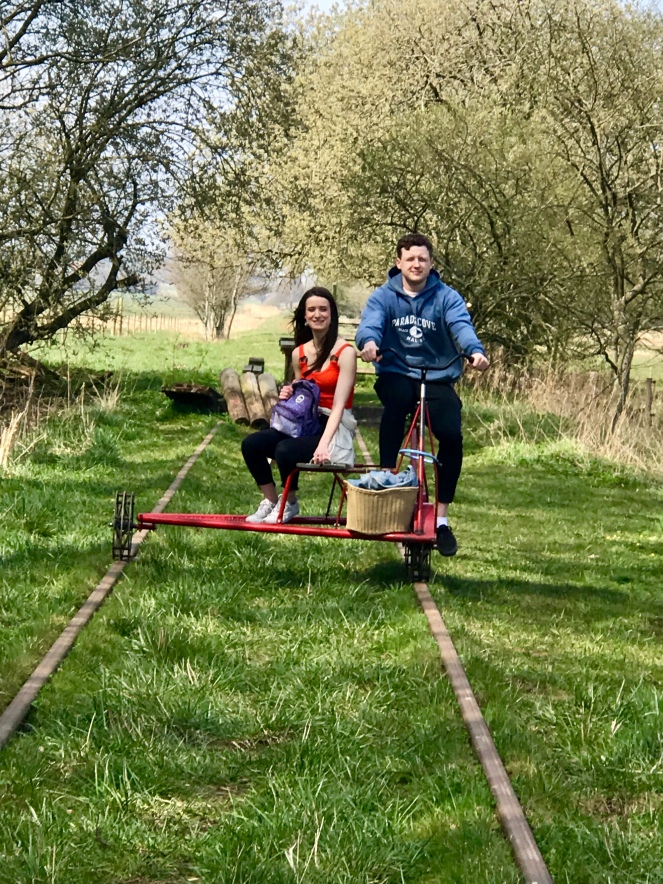
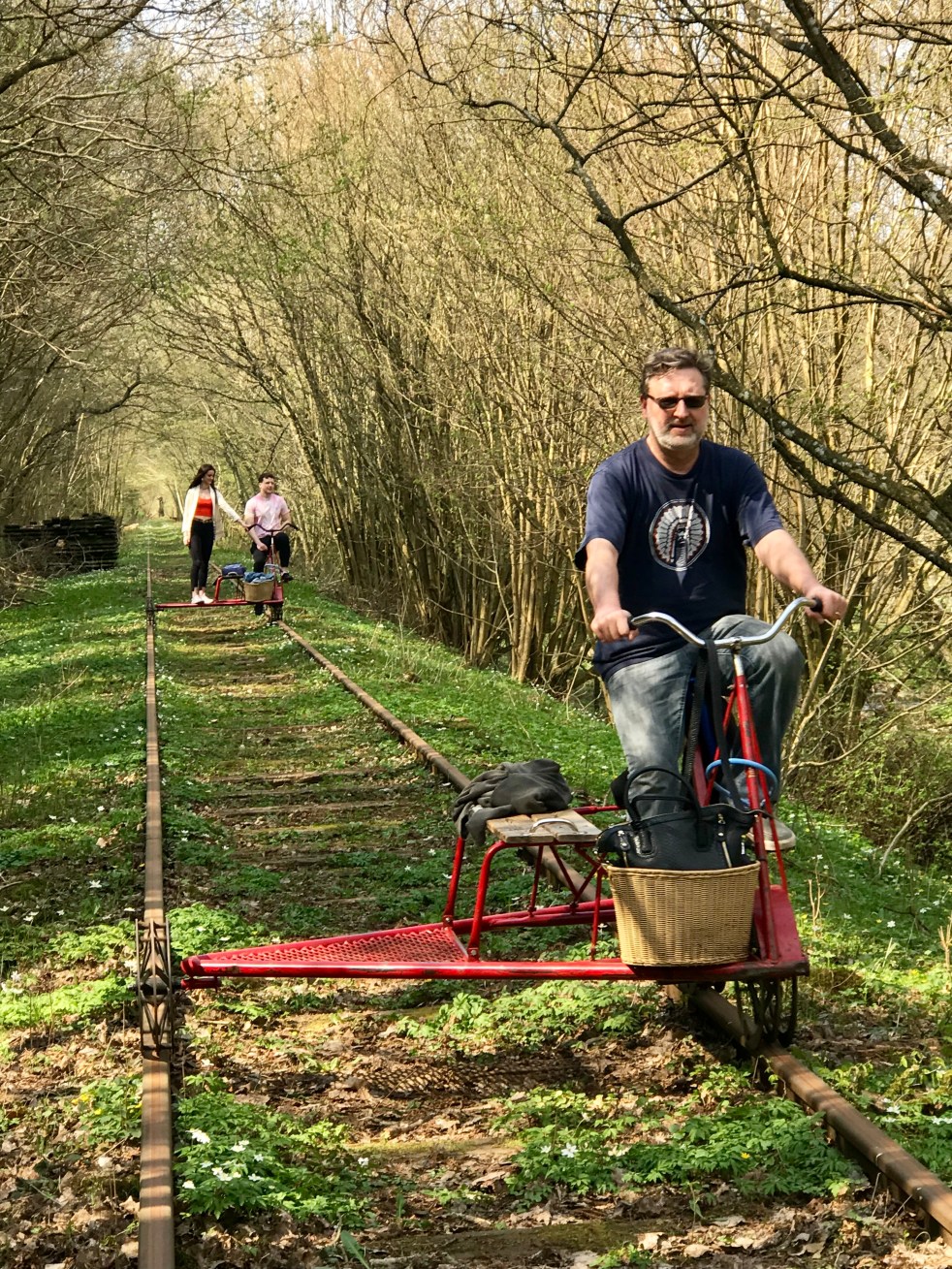
Trolley cycles are bicycles designed specially to ride the train tracks. These bikes are easy to peddle and its virtually impossible to topple over making it safe and fun for people of all ages. Built with a bike seat, peddles and handlebars for one, and a bench seat that fits another adult or child. These special bicycles were modeled after the draisine – an old auxiliary rail vehicle invented by Karl Drais. Draisine were utilized by rail service personnel and transport crew to maintain railway infrastructure.

The draisine is allegedly the first commercially successful two-wheeled, steerable, human-propelled machine.  the draisine is also known as a hobby-horse or dandy horse.

There are many trolley cycle routes to choose from around Skåne. We rode a route beginning in Tomelilla. The ride was sublime. We passed farmland, forests, creeks, and lots of animals.

It was peaceful and we had perfect weather. We stopped for a light picnic snack at the end of the line.


IMG_7855

Practicalities | Where To Find A Trolley Cycle

Trolley cycles can be found in a number of places in Skåne. The routes are varied in topography and length of the route. Trolley cycling is the perfect adventure for friends, families, Mother’s Day or Father’s Day.

http://www.dressincykling.se
http://www.dressin.se
http://www.veteranjarnvagen.se
http://www.routesnorth.com

I hope that you have the chance to discover Skåne via the trolley cycle. It is a day out you won’t soon forget.

Adventure travel · Americans abroad · aperitivo · art · Beauty Essentials · Bologna Italy · Bosnia Herzegovina · celebrity travel tips · Christmas cocktails · cocktails · Color Street · concierge · Copenhagen Denmark · Croatia · Dalsland · Denmark · Emilia Romagna · Emilia Romagna · European Christmas Markets · European travel · ex-pat life · ex-pat reality · favorite recipes · fika · Firenze Italia · Florence Italy · food · France · Göteborg Sweden · Germany · Giethoorn · Gothenburg Sweden · Hamburg · Helsingborg · Holland · Honeymoon travel · Insider Tips · international travel · Italian cocktails · Italian food · Italian recipes · Italy · Krka · laundry · Liebster Award · luxury travel · Maastricht · Malmö · Malmo Sweden · Modern Art · Mostar · mysig · national parks · nature · Off The Beaten Path · Paris · Parma Italy · parmigiano-reggiano · pastel de nata · Plitvice Lakes · Poland · Portugal · Prosciutto di Parma · restaurants · Saturnia · Skåne · Skåne Sweden · spa · Spain · The Netherlands · The Private Suite · The Unique and Unusual · Thermal baths · Tourettes-Sur-Loup · Travel · travel safety · Tuscany · UNESCO World Heritage Site · USA · Wadden Sea

The Liebster Award!

Niche Travel Design has been nominated for The Liebster Award!

I was nominated by A World in Reach for this peer award. For a somewhat new blogger like me, this is a special treat.  It’s always a great feeling to be recognized by your peers. Thank you, Sydney and A World in Reach.

What is the Liebster Award?

The Liebster Award is a peer to peer award, given to bloggers, by bloggers as a way to foster collaboration and support. What a nice idea.

I noticed a message board in my German friend’s house that said “liebe und respekt.”  I asked what liebe or liebster meant.  She told me it means dearest or kindest. Thus, bloggers being dear and kind to one another. This is an award I can get behind. I am always seeking advice from others and I am happy to promote the idea of collaboration. I strongly believe in the theory that what you give comes back to you.  

The Rules of Engagement

Once you’re nominated with the Liebster Award, you have to follow a few rules to celebrate your win and spread the award throughout the blogging community.

1. Thank the person who nominated you, and put a link to their blog on your blog.

2. Display the award on your blog.

3. Write a small post about what makes you passionate about blog posting.

4. Provide 10 random facts about yourself.

5. Answer the questions from your nominator and provide a fresh set of questions for those you nominate.

6. Nominate 5 – 10 blogs that you feel would enjoy blogging about this award.

7. List these rules in your post.

How I Began My Blogging Journey

I began blogging when I first moved from California to Parma, Italy in 2011.

When my daughter was a toddler she frequently made up words that sounded similar to the adult versions. She would say strawbellies instead of strawberries; froggy instead of foggy. One of the words she transposed was Parmesan. In her toddler mind, Parmesan cheese was Purple John cheese. For years our family asked each other to pass the Purple John cheese at the dinner table.

Imagine our surprise when we realized that we were moving to Parma, Italy – the birthplace of Purple John cheese.  Apparently, the universe has a sense of humor. It seemed like serendipity. What we did not know is that an international move is difficult. Life in another country is difficult. It is not all adventure.  I had 2 very sad children who did not want to move and leave the comfort of their home.

[dropshadowbox align=”none” effect=”lifted-both” width=”auto” height=”” background_color=”#ffffff” border_width=”1″ border_color=”#dddddd” ]Read about the reality of an international move here.[/dropshadowbox]

All that being said, life in Italy was often quite funny because things were soooo different than what we were used to. Thus, my original blog, Purple John, began by me just telling friends about the difficulties and the funny stories that we encountered along the way.

[dropshadowbox align=”none” effect=”lifted-both” width=”auto” height=”” background_color=”#ffffff” border_width=”1″ border_color=”#dddddd” ]Read funny stories about life in Italy in the drop-down menu here. [/dropshadowbox]

And of course, just when we were settled into life in Italy, the universe struck again and we had a second move to Malmö, Sweden. Once we moved and settled into Malmö, I toyed with the idea of reworking my past experience as a travel consultant and incorporating the blog as part of the business. The kids were older and they did not need me as much as they did in Italy. This last year I began my existing blog Niche Travel Design using my name and domain name from the travel business that I ran in the USA. So now my travel business has a blog attached to it.
My blog still occasionally includes funny ex-pat tales of excitement and woe, but now I am more focused on the business of travel. The funny thing, though . . . that little toddler that inspired my first blog name, she now works with me on the business.

At Niche Travel Design, our philosophy is that designing the perfect vacation is as much an art form as designing a home’s interior or a garden’s landscape. We curate a unique experience for each of our clients. 

We are experts in finding the best cup of coffee, the most interesting art gallery, the best place to sip Prosecco while watching the sunset, and the best accessories to make your adventure more comfortable.

Niche Travel Design is more than a travel blog. We are a community featuring stories of life abroad, cultural experiences, recipes, ideas, and tips for creating unique memories to last a lifetime. We also recommend products and services.

10 Random Things About Me

  1. I once sort of crashed a funeral. My friend was supposed to go and I was staying with her so I went too because it was celebrity filled. In the end, I felt like a heel and a looky-loo. People (even celebrities) were grieving. I don’t recommend it. Not my best moment.
  2. I always top off my gasoline, despite the warnings.
  3. I love Gene Kelly movies and I got to meet him once and had a conversation with him about his more obscure movies. It was amazing and he was so kind.
  4. I am secretly a Carpenters fan. I guess it is not a secret anymore. 
  5. I sing all the time in public even though I really shouldn’t.
  6. I once got into a car accident on the way home from a car accident and neither one was my fault. I know you don’t believe me, but it is true.
  7. Apparently, according to my family, I say Google incorrectly? Who knew?
  8. I hate, I mean really hate, The Pillsbury Doughboy. His voice makes my skin crawl.
  9. I once stayed at a “pensione” in Barcelona that was actually the host’s children’s room. He was clearing toys out of their bedroom. It was weird, but it was late and there was a train strike so I paid to sleep in a stranger’s kid’s bed.
  10. I generally don’t like chick flicks despite being a chick. I seem to be missing a gene or something.

A World In Reach’s Questions For Me

What is the most important lesson you’ve learned during your travels? That once one strips away all the cultural differences, we are all the same. We all just want safety, family, friends, love, and respect in our lives.

What’s your favorite part of traveling? Exploring and learning about a place. Finding off the beaten path things to do. I am a researcher and enjoy the discovery of new things to do, a great local restaurant, a specialty shop, an unusual experience in a typical tourist spot. Least favorite? The getting there bit. The airports, etc.  Ugh.

Do you collect any souvenirs from your travels? I used to collect art from each place but now I have too much. I had to stop. No more room to hang anything. We have also always collected ornaments for our Christmas tree. It is nice to remember our trips as we put up each ornament every year. Now I collect photographs and memories.

What is the most unique experience you’ve had with a local while traveling? Swimming with horses in Croatia. Just incredible.

[dropshadowbox align=”none” effect=”lifted-both” width=”auto” height=”” background_color=”#ffffff” border_width=”1″ border_color=”#dddddd” ]Read more about swimming with horses here. [/dropshadowbox]

If you could travel with one person you’ve never traveled with before, who would it be? Barack Obama. He is intelligent, funny, has done some cool stuff and met a bunch of interesting people. I’ll bet he has good stories. Plus, he gets V.I.P. treatment and if we were traveling together I’d get V.I.P. treatment too.  

How did you come up with your blog name? It was the name of my travel business in the USA. I focus on niche, unique, unusual travel experiences. I curate and design your trip for you.

What tip would you give to a new blogger? Learn all the technical stuff before you begin.

Is there a book or a movie that has inspired your wanderlust?  No. My wanderlust was developed as a child. Actually, I feel like it has always been there. 

What are the top 3 things on your bucket list? Africa – all of it!  Australia/New Zealand and Asia.

What is your biggest travel regret? I had a chance to go to Africa for a summer. I didn’t go because it wasn’t practical. I should have gone.

My Nominations for The Liebster Award

I have really enjoyed the Liebster Award process. I also enjoyed reading about each of these bloggers that I am nominating. I hope that you each take the time to read up on what they have to offer.

1. Divine Kabwe at beingyourselfblog.wordpress.com 

2. Diana Danciu at ourblindlife.com

3. Jenny Toney Bhatia of travelingpartyof4.com

4. Temeka Flack Green of worklifemommyhood.com

5. Heather Eyre of thefemalefactor.me

6. Jamie Joseph of wearefreeindeed.wordpress.com

7. Samantha Norman of SammiNormanFit.com

8. Louise Emerson of 12books.co.uk

9. Mallory Herrera of mamaonparade.com

10. Megan Henderson of thehendersonhouse.org

Questions For My Nominees

Since I have a travel blog, my questions are all about travel.

  1. Where would you go if money and time were not issues?
  2. What is the best advice you would give to new travelers?
  3. What is the one accessory that you cannot travel without – your phone and/or computer don’t count?
  4. Where is one place you would return over and over again? And why?
  5. Where is one place you’ve been but never want to return to? And why?
  6. What is the funniest travel mishap you’ve had?
  7. What is the scariest travel experience you’ve had?
  8. What is your favorite travel souvenir?
  9. What is your favorite local cuisine?
  10. What is your next destination?

Looking forward to reading my nominees’ answers and getting to know them better.

And once again, a BIG THANK YOU to A World In Reach for my nomination!

Everyone, please be sure to check out Sydney’s blog for ideas on budget travel. A World In Reach can provide you with all sorts of ideas on traveling on a budget.

All Saints' Day · Americans abroad · art · Christmas · European travel · ex-pat life · festival of lights · Helsingborg · Insider Tips · international travel · Malmö · mys · mysig · nature · Skåne · Skåne Sweden · Thanksgiving abroad · Travel

All Saints’ Day – Lighting The Way to The Holidays

 WINTER CELEBRATIONS | ALL SAINTS’ DAY

We Americans love Halloween. Besides the candy filled extravaganza, the fun of dressing up and parties, Halloween also marks the beginning of the winter holiday season. In quick succession it goes, Halloween, Thanksgiving and then Christmas, Hannukah, Kwanzaa . . . In my adopted home of Sweden, however, Halloween is not the hallmark of the winter celebrations. All Saints’ Day, celebrated November 1, holds that title.

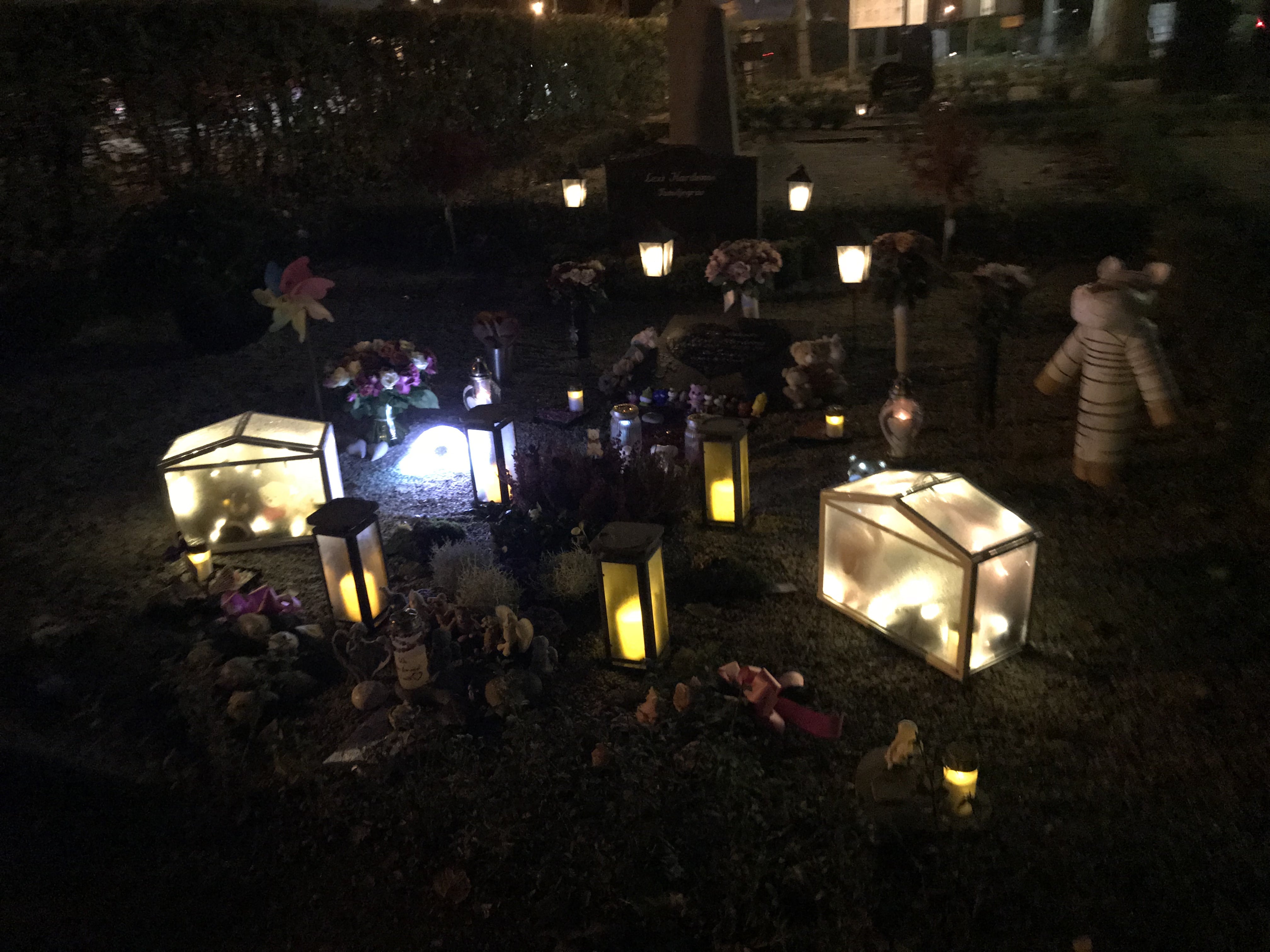
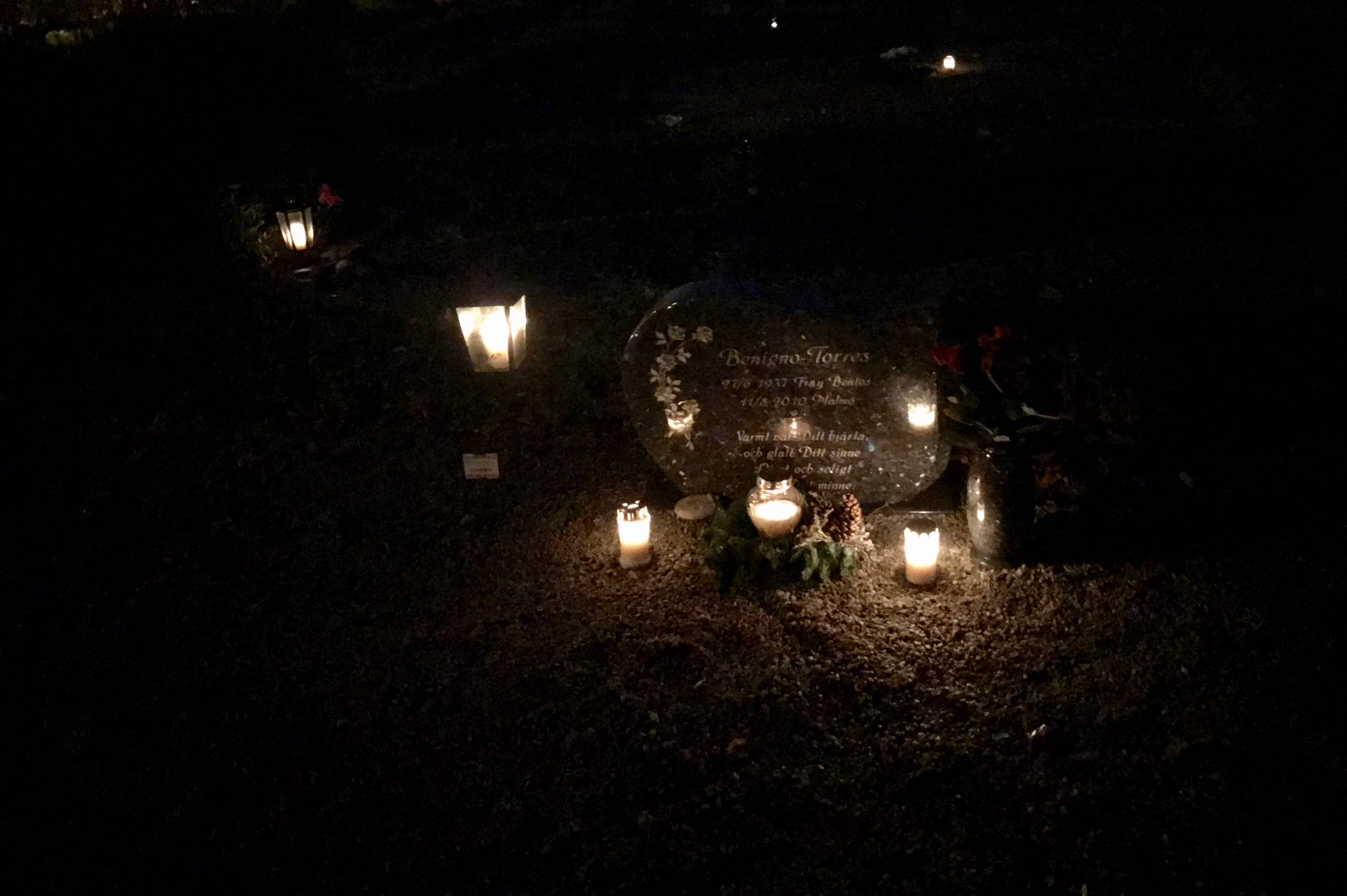
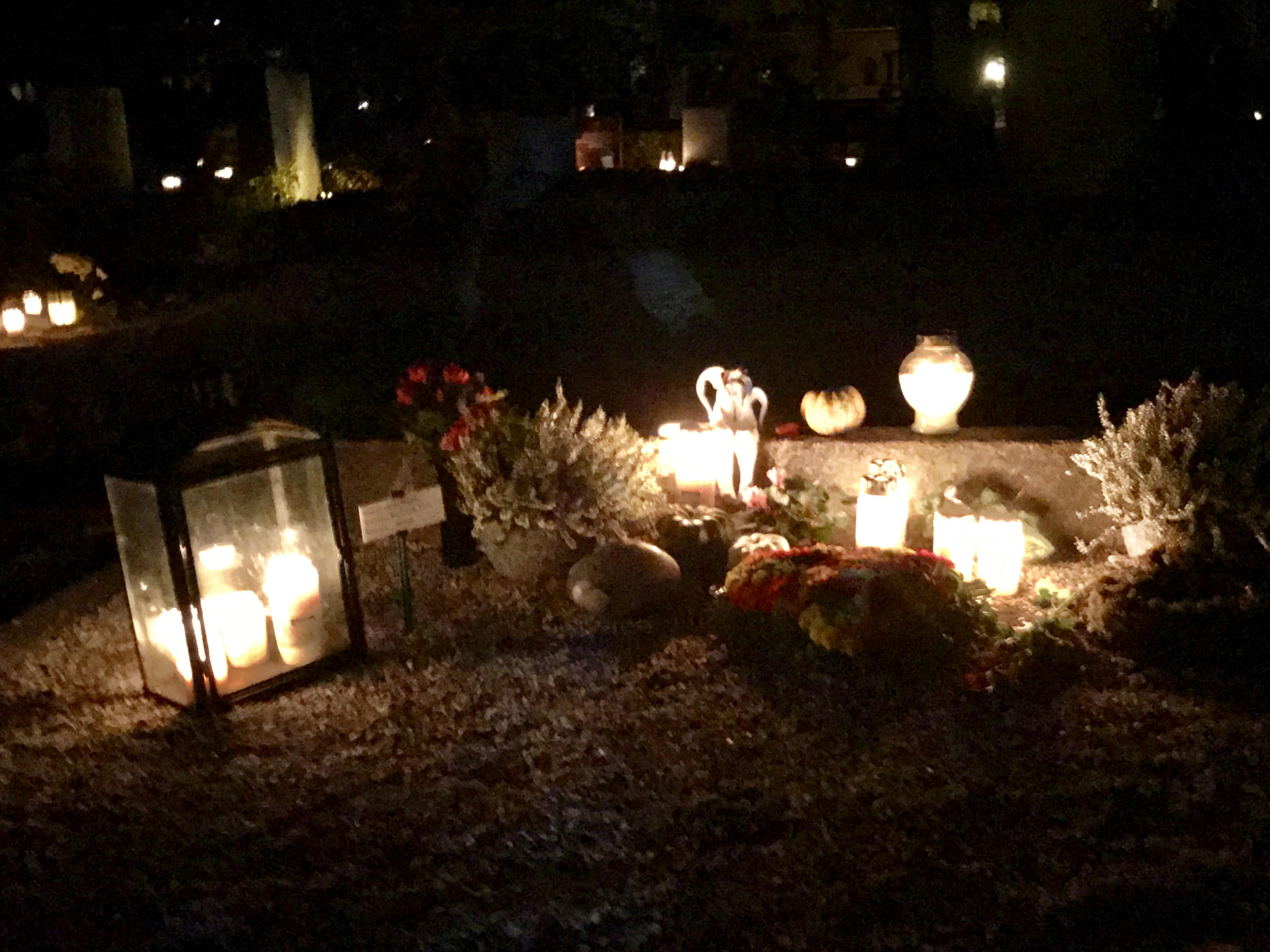
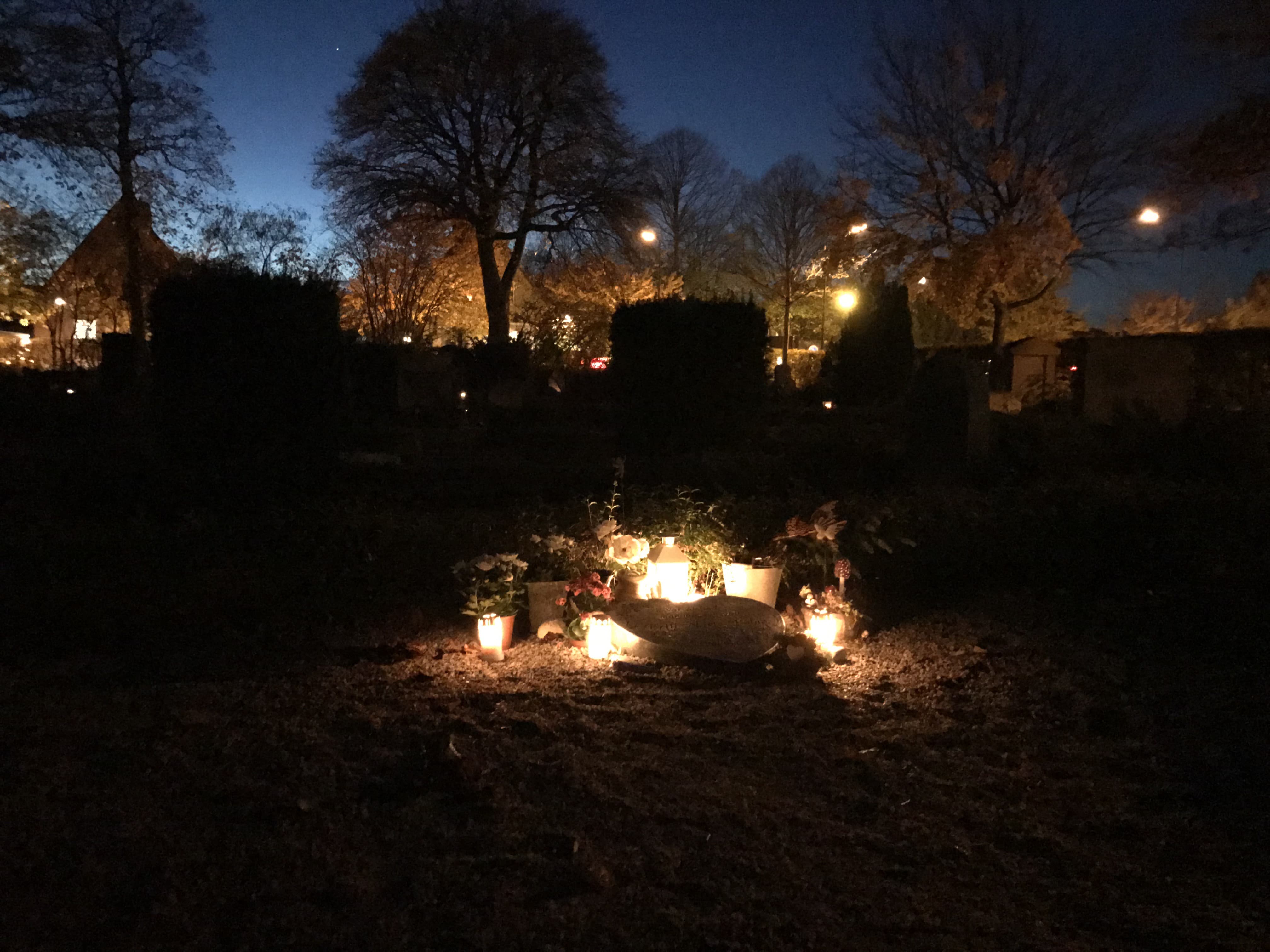
Unlike, Halloween though, All Saints day is a day of respect and reflection. All over Sweden cemeteries are illuminated with candles in remembrance of loved ones. The site is a beautiful one to behold. It is an elegant reminder that life is precious.

All Saints’ Day, also known as All Hallows’ Day, Hallowmas, the Feast of All Saints, is a Christian festival celebrated in honor of all saints and loved ones who have passed away. All Saints’ Day in Sweden also marks the first day of winter.

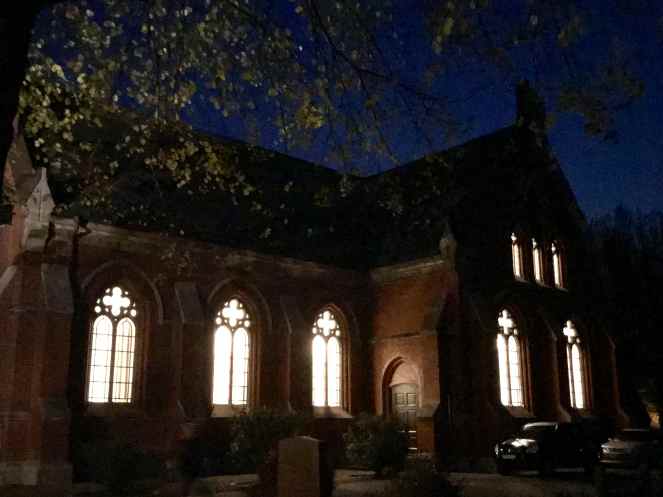
Limhamns Kyrka ready for the All Saints' Day observance mass and concert.
Limhamns Kyrka ready for All Saints’ Day observance mass and concert.

The tradition of lighting loved one’s graves began in Sweden in the 1900’s. Originally though, it was only the wealthy and upper classes who honored their dead on November 1st. For some reason, which I have not been able to track down, the practice slowly made its way to Swedes of all classes after WWII. Eventually, churches began holding services and concerts in conjunction with their flock’s practices and the day became an official holiday and harbinger of winter.

All Saints’ Day is a national Swedish holiday in modern times marked by: a day off of work if November 1 happens to fall on a weekday; a visit to the cemetery for the lighting of candles and the leaving of wreaths and other trinkets: a family gathering; and, a special meal.  

SOFIERO’S WINTER CELEBRATION | A FESTIVAL OF LIGHTS

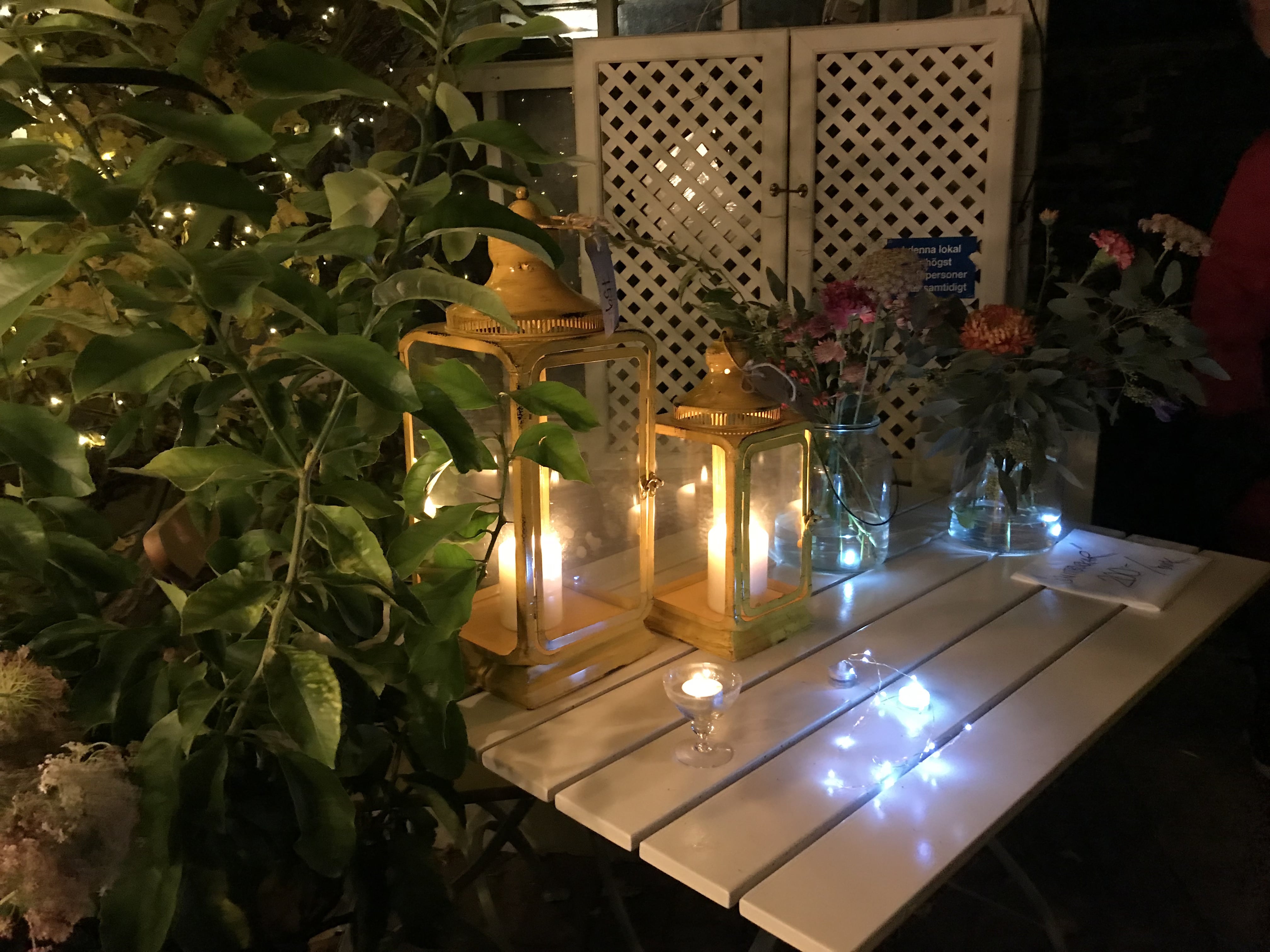
It is no surprise that Swedish winters are dark, damp and cold. So often when Swedes hear that I am a California native they immediately ask me how I am surviving the winters. I tell them, honestly, that I love Swedish winters. I mean, yeah, I have a week of adjusting when the early dark days begin, but I absolutely love how Sweden makes a great effort to achieve mysig or mys. Mysig is the creation of a feeling of coziness and warmth. Swedes use all sorts of tools to achieve mys – blankets, lanterns, fire pits around town, mulled wine, yummy food, and of course, lights and candles. Lights and candles are everywhere during the winter months. And they do indeed make a person feel cozy.

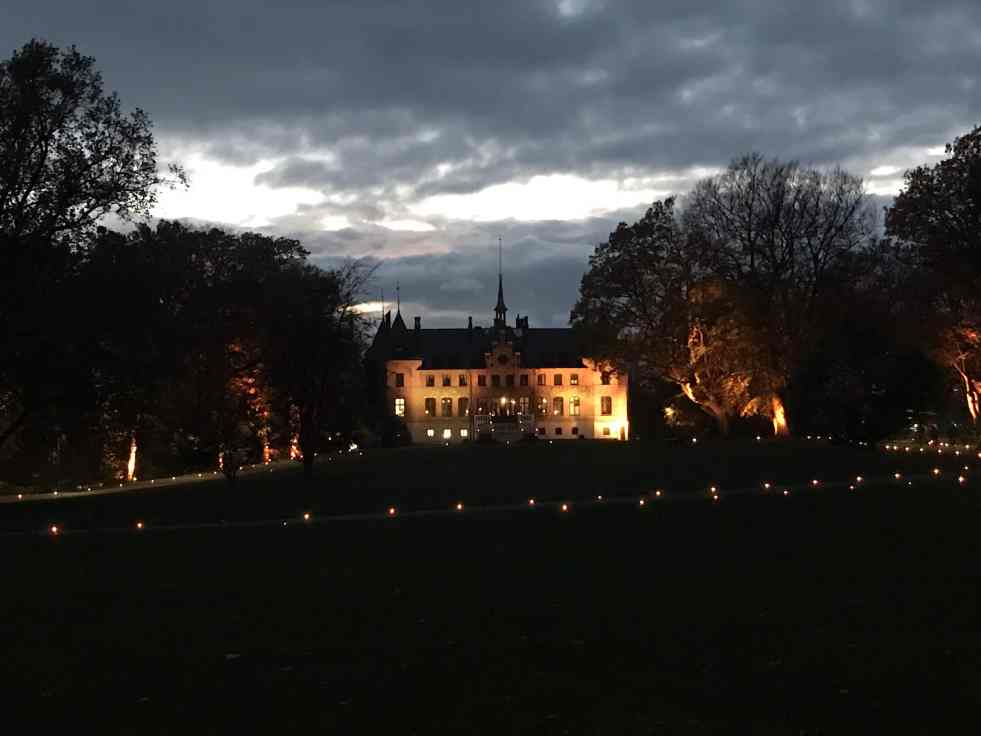
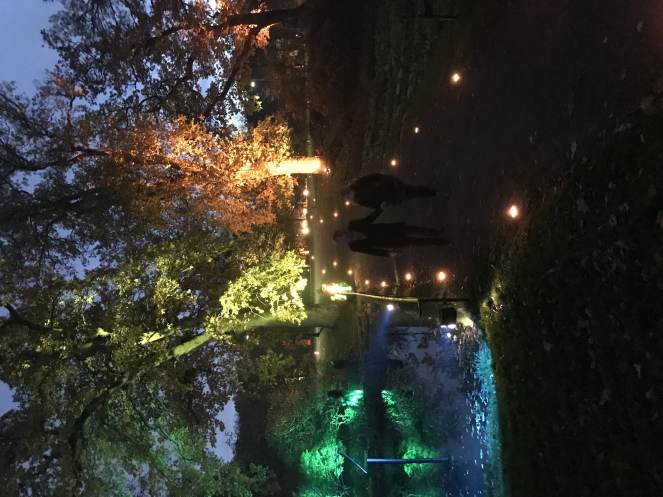
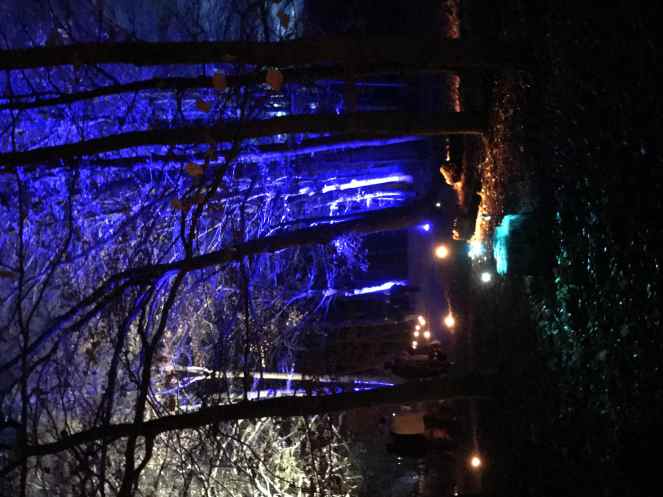
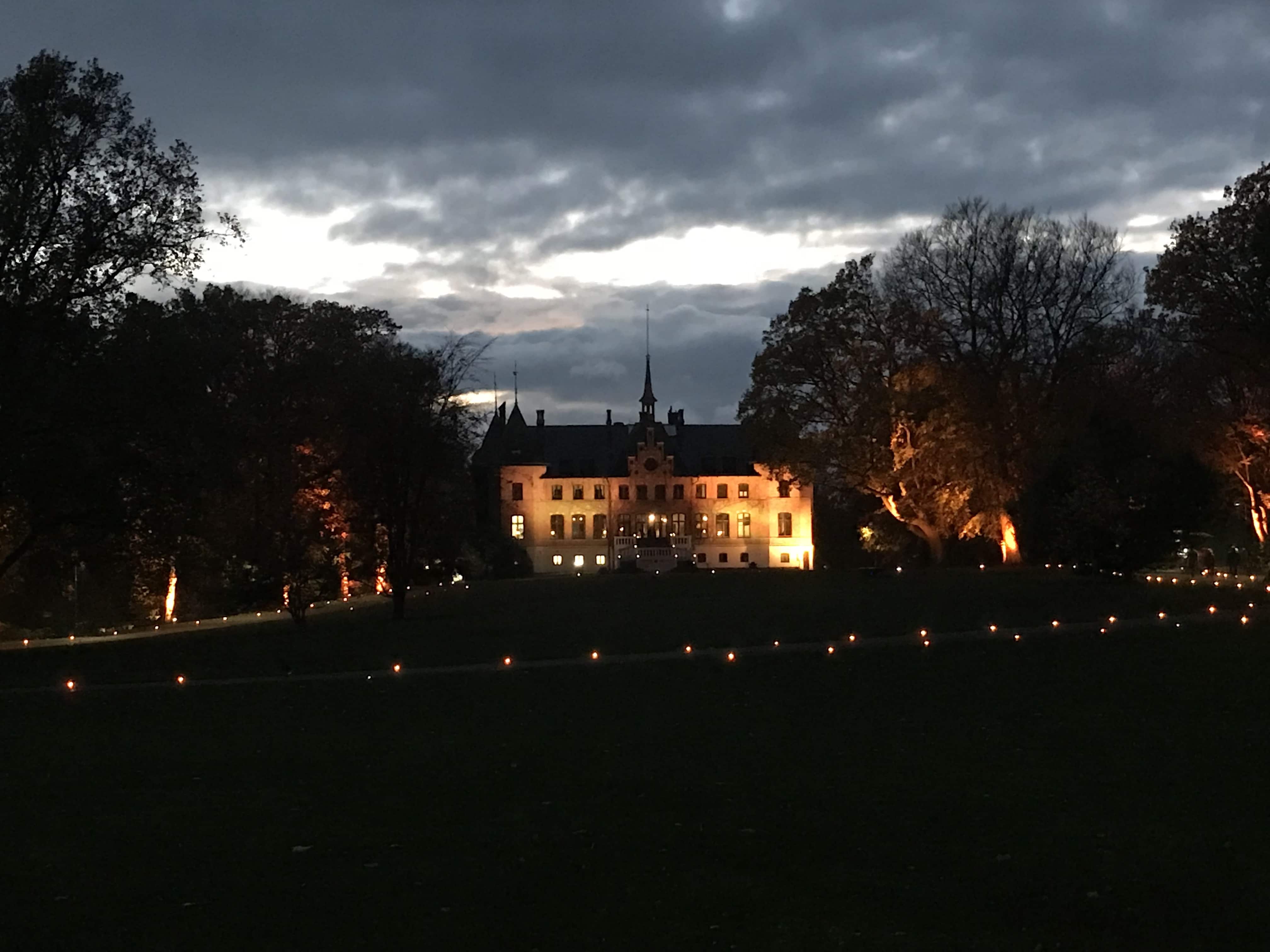
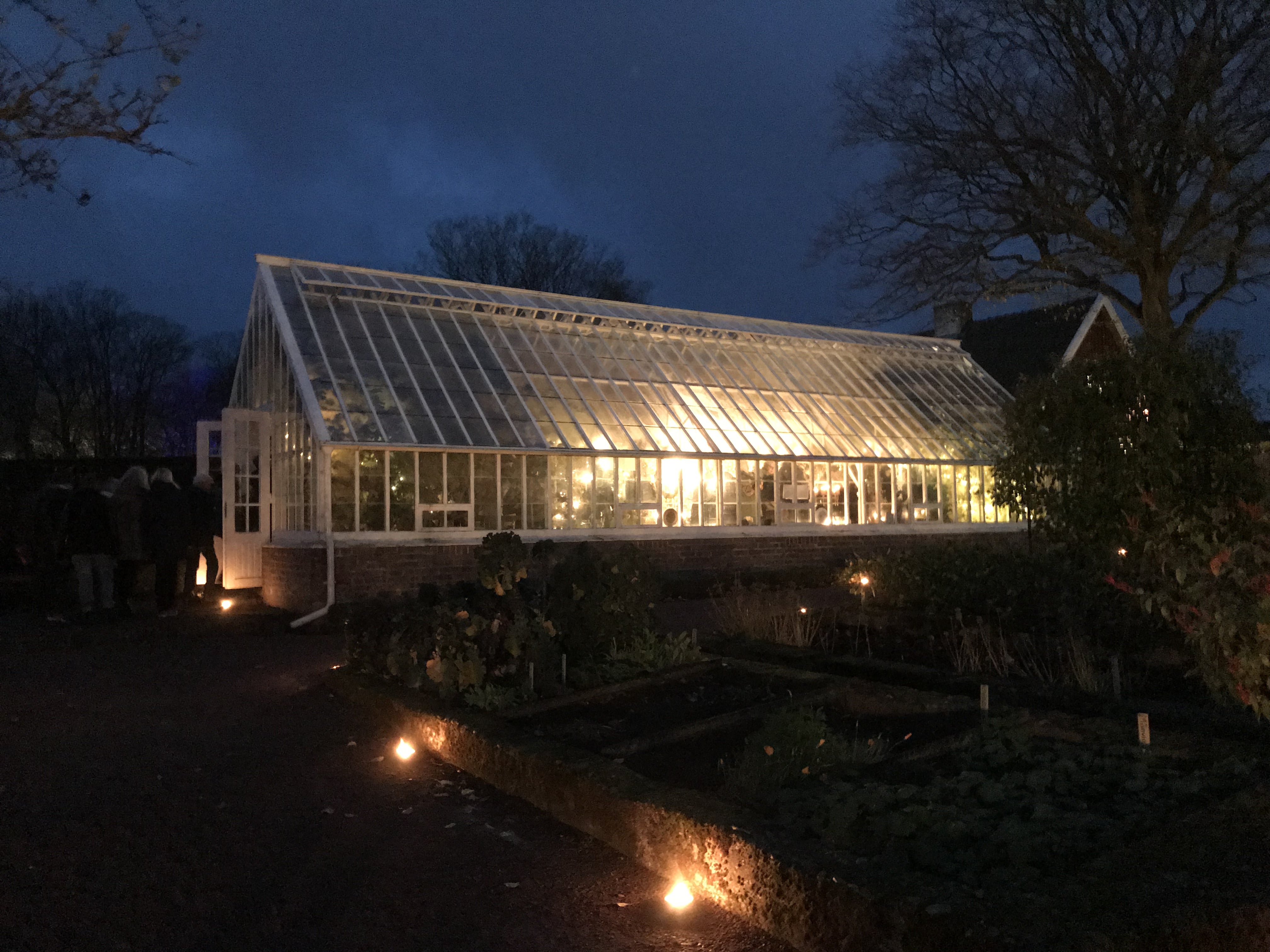
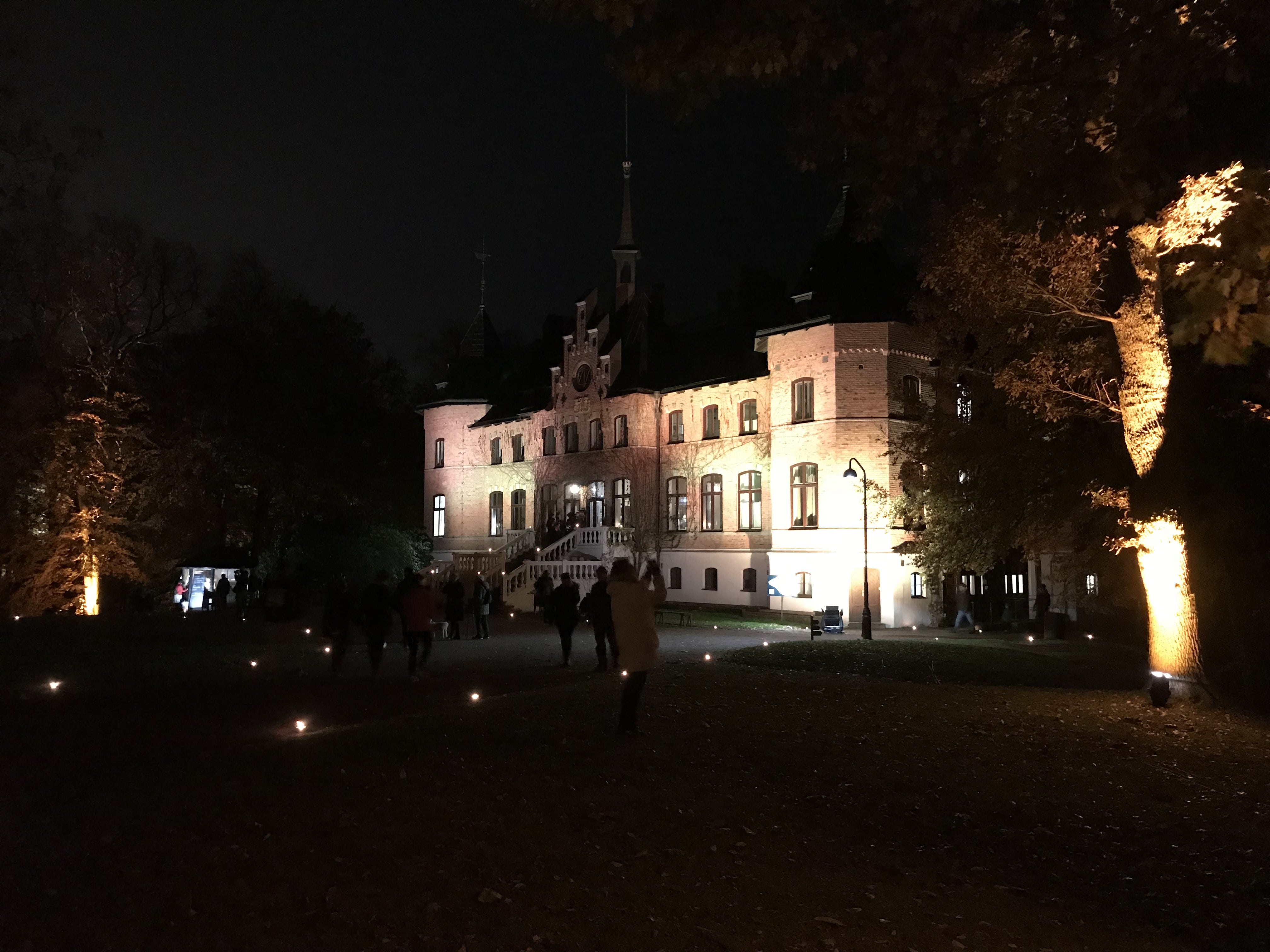
At Sofiero, the Swedish royal family’s old summer cottage in Helsingborg, they celebrate the beginning of winter each year with a festival of lights.

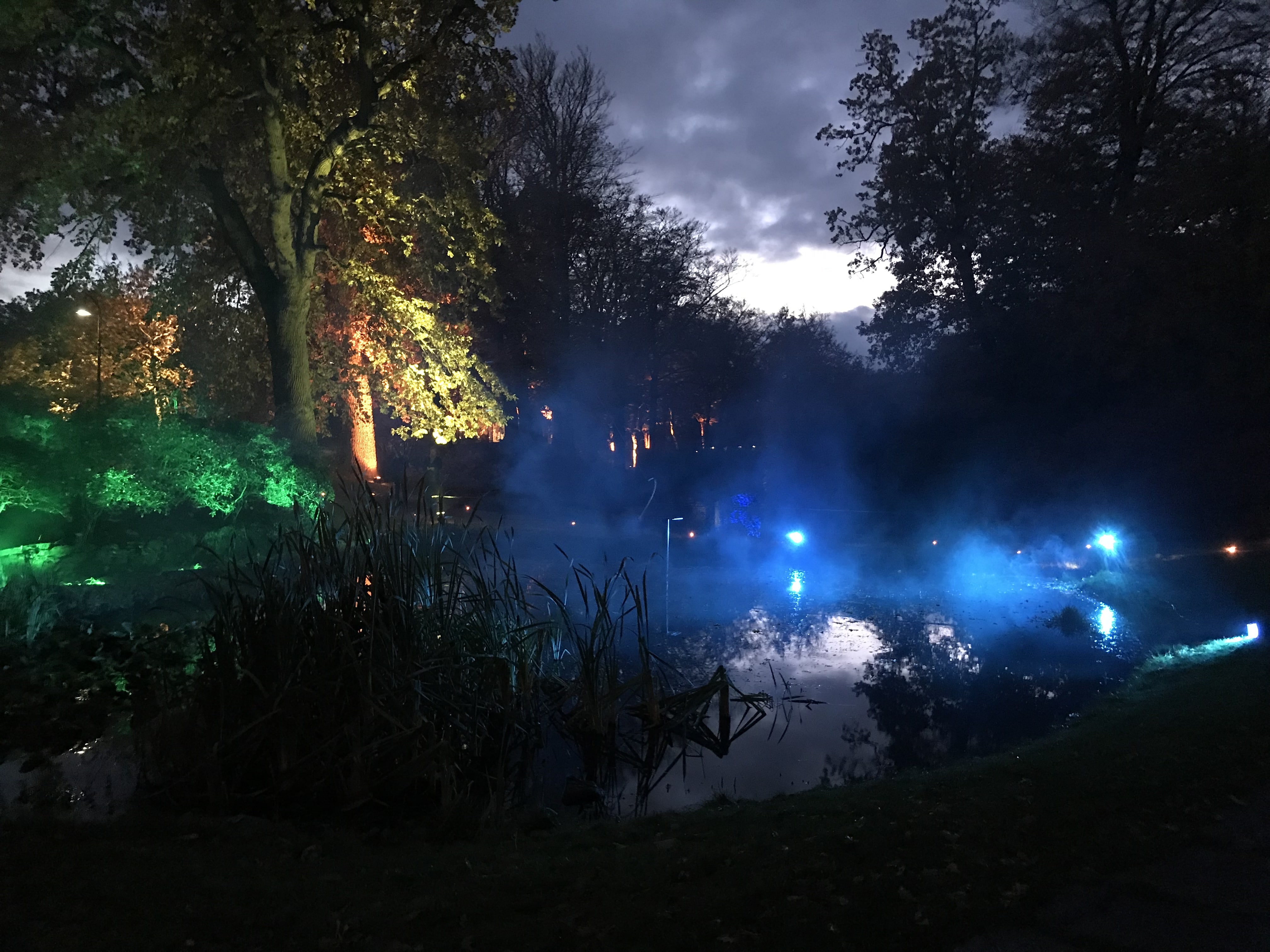
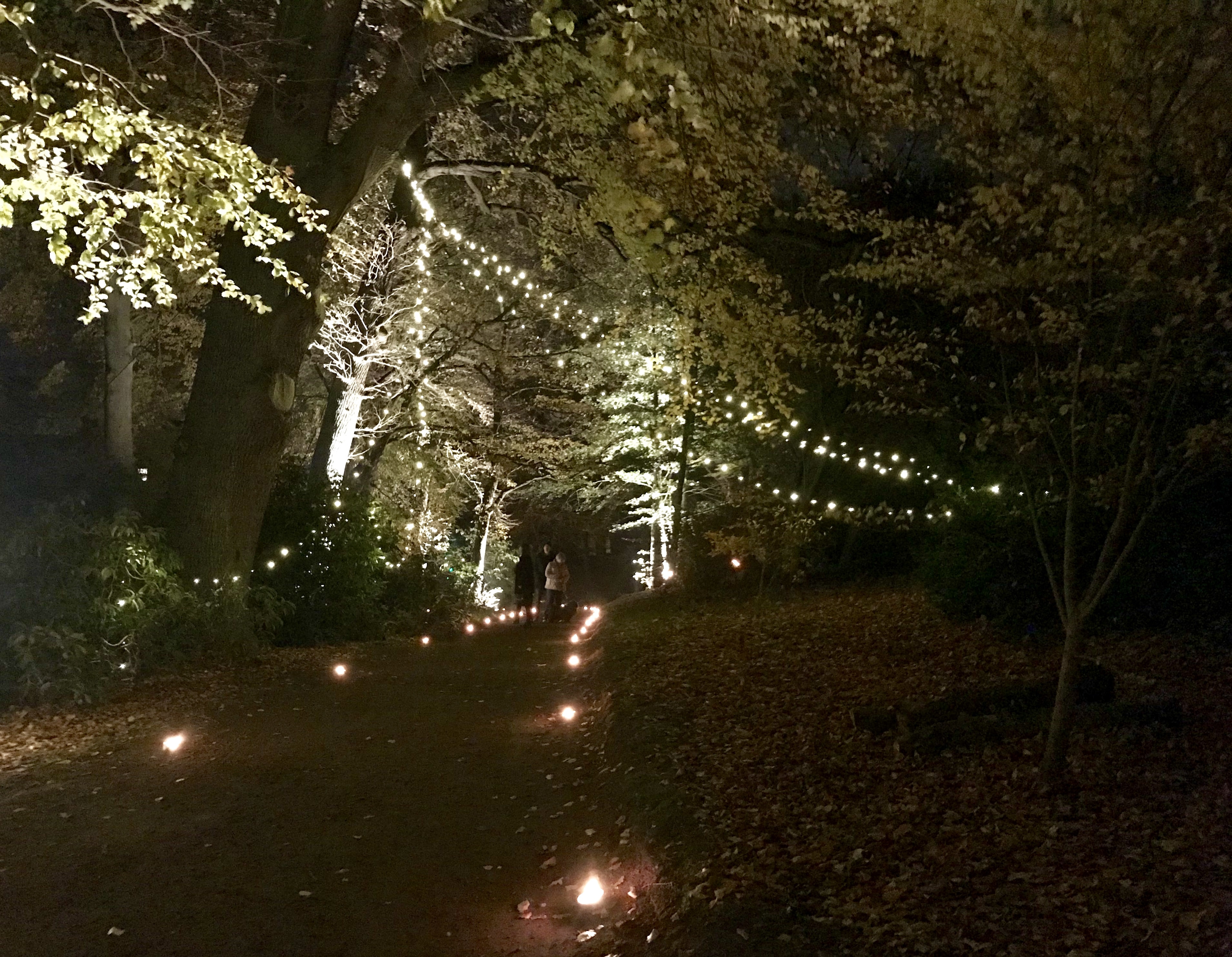
Sofiero is famous for its lovely garden. It is a gardener’s delight when in full bloom in the springtime, but it is just as magical in the winter. During Sofiero’s annual Festival of Lights, the entire grounds are awash with different colored lights and candles creating a mystical canvas. They also offer warm food and drinks at various stations throughout the grounds with everything from a full meal to sweets and warm drinks. If you visit with children (and I would recommend that you do) make sure to avail yourself and your kids of the enchanted forest. Rumor has it, they even have a marshmallow roasting pit.


A visit to Sofiero’s festival of lights is a great way to get your mys on, chase away the winter blues, experience the magic of a lighted forest, and say, “hello darkness my old friend.” 

Americans abroad · Dalsland · European travel · ex-pat life · Honeymoon travel · Insider Tips · international travel · national parks · nature · Off The Beaten Path · Skåne Sweden · The Unique and Unusual · Travel

The Glass Cabins of Sweden

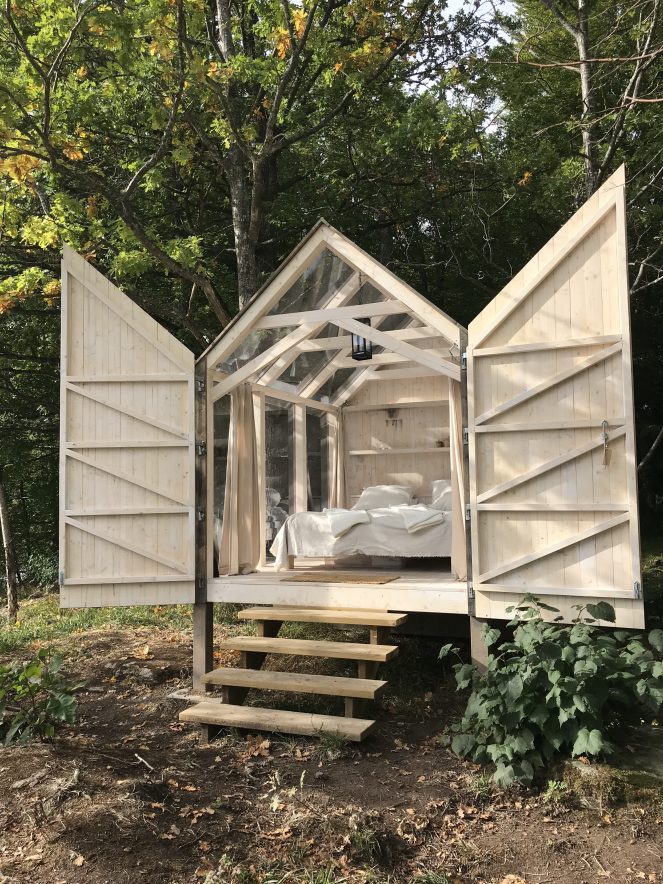
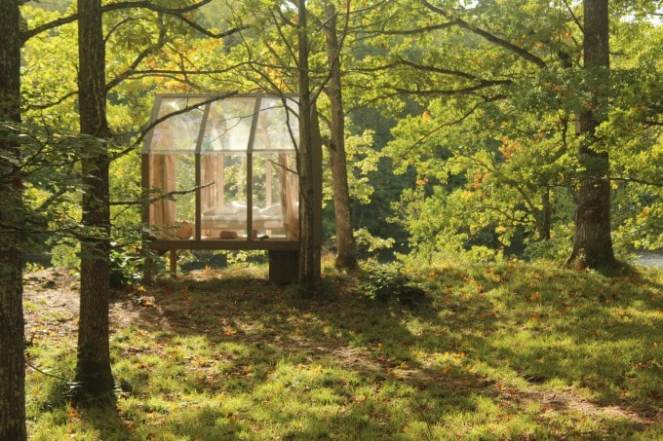
Looking for a place to unwind, recharge, and commune with nature, but still want the comforts of a bed, a down comforter, and a gourmet meal? Look no further than The Glass Cabins at Baldersnäs Herrgård

Afternoon. Glass Cabin at Baldernäs Manor
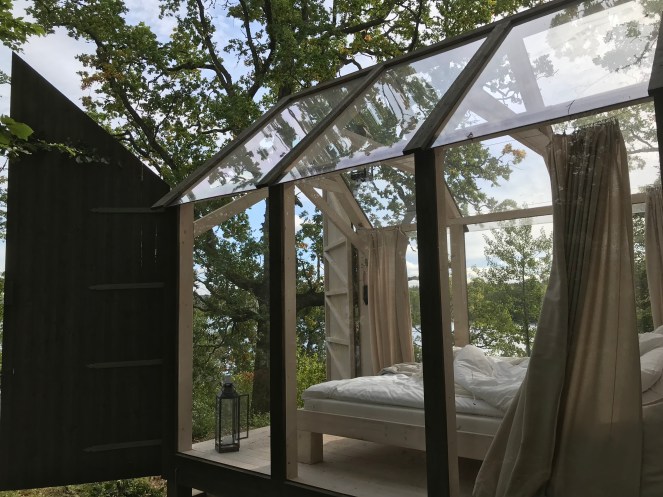
Sunlight peeking through. The Glass Cabins at Baldersnäs Herrgård

THE SECRET TO HAPPINESS

Sweden is often rated as one of the happiest countries in the world. Living a balanced life between work and play is a key factor in that rating. And part of living a balanced life in Sweden has to do with making nature a part of your life. Swedish people love, and appreciate nature. Swedes like to be outside biking, walking, skating, hiking or camping. This connectedness to nature is a significant part of Swedish culture.

This connection to nature is so significant to the Swedish way of life, that in 2017, Swedish researchers decided to try to measure the precise effects of nature on a person’s happiness and health.

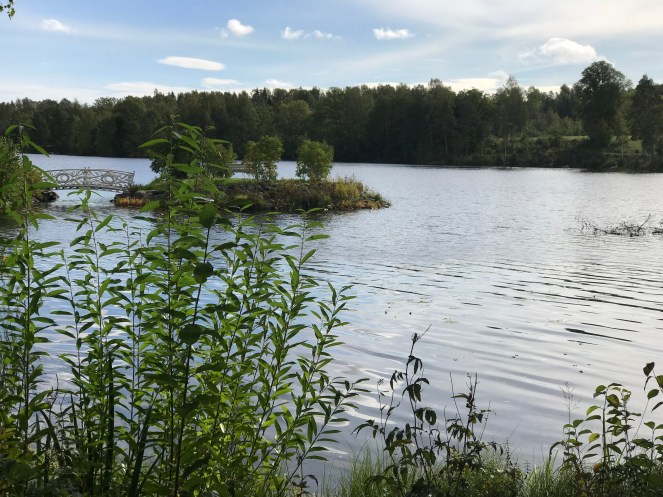
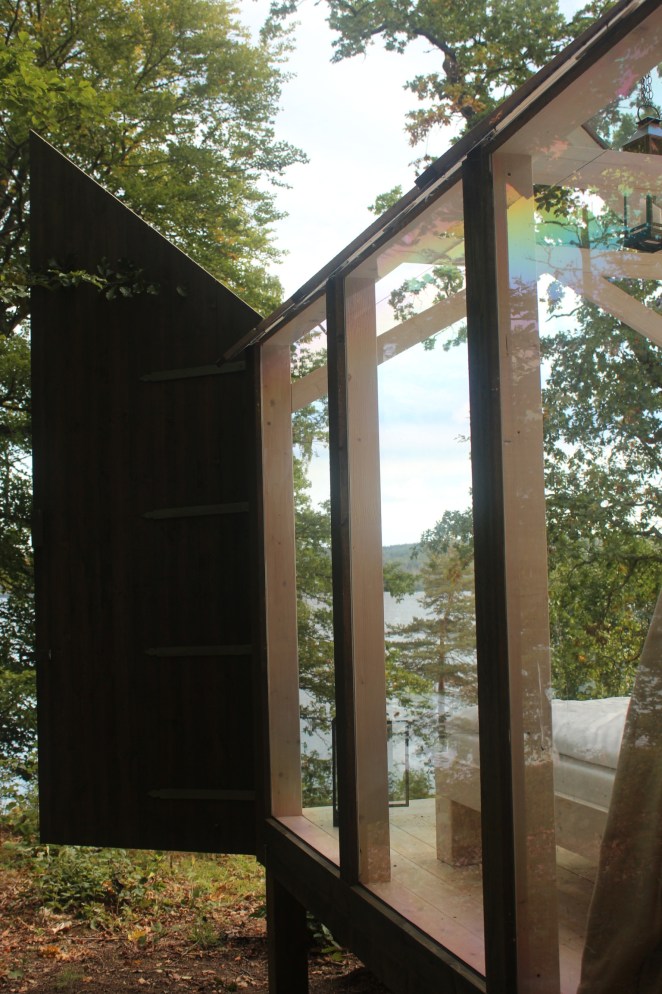
Lake view from the Glass Cabin at Baldernäs Manor.
Lake view from the Glass Cabin at Baldersnäs Manor.

THE 72 HOUR CABINS

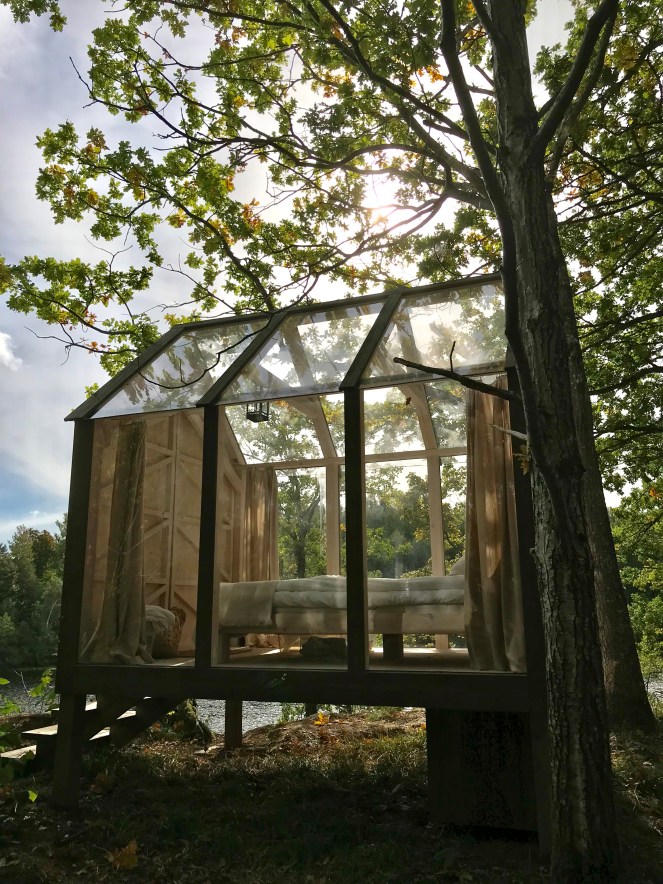
The Glass Cabins (also known as the 72 Hour Cabins), were the brainchild of two researchers in the field of stress management. Walter Osika and Cecilia Stenfors developed a program were they brought together 5 people from different backgrounds, different countries and different stressful jobs. The idea was to place the individuals from all walks of life into nature for 72 hours.

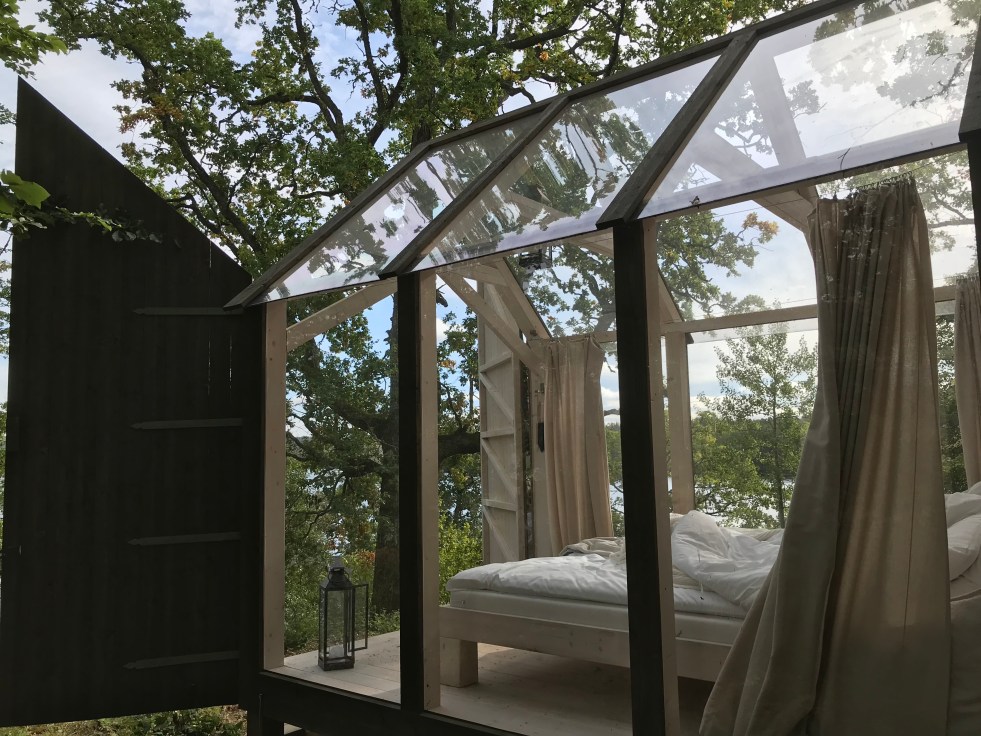
For 3 days, or 72 hours, the subjects lived in cabins made of glass. The subjects  unplugged their technology and engaged in simple outdoor activities, such as skipping stones on the lake, hiking, swimming, fishing and cooking over a fire. The purpose of the glass cabins was twofold – the researchers wanted people to be comfortable enough to relax, but they also wanted to make sure that nature was always present. The comfortable beds inside cabins with glass walls allowed participants to sleep under the stars and wake to the natural rhythms of the Earth.

The Glass Cabin inviting nature inside

THE RESULTS

Good news!  All 5 participants in the 72 hour study demonstrated a decrease in anxiety, blood pressure and heart rates. They relaxed. They de-stressed. Participants reported a better overall sense of well being and peacefulness. Those results alone would be sufficient to render the experiment a success, but in addition, participants also reported an increased feeling of creativity and improved problem-solving.

Incredible right? What fantastic news. It only takes 3 days for each us to become healthier and happier. With a simple prescription of some nature in your life, you too, can reduce stress and find more joy.

I had to see the cabins for myself.

The Glass Cabin
The Glass Cabin

DALSLAND, SWEDEN

I headed up to Dalsland in western Sweden to the Glass Cabins located on the Baldersnäs Herrgård country estate in Dals Långed.

I was met by the lovely and charming, Susanne Björk Jensen who showed me around the estate and then gave me a tour of these amazing, innovative glass cabins.

Baldersnäs Herrgård is a beautiful country estate from the turn of the century that has been transformed into a luxury hotel. It sits on a peninsula surrounded by nature’s bounty.

Lake Låxsjön
Lake Låxsjön

The estate sits adjacent to a nature preserve where The Glass Cabins are located.

The first cabin sits on a small bluff overlooking Lake Låxsjön. The first cabin is a quick jaunt from the country estate offering an easy journey up for a gourmet meal, a massage or a delicious cup of morning coffee in the English garden.

The cabin has many lovely large trees and offers a sweeping view of the lake. My tour guide, Susanne spoke of waking up there with a mist on the lake, the sounds of birds greeting the dawn, a hint of sunlight peeking up from behind the forest trees. It sounded like a little slice of heaven.


Lake view from the Glass Cabin

The property and nature preserve are both spectacular and the cabins ease gently into the landscape. The cabins are inviting with simple decor and muted soft colors. The simplicity evokes a Zen like feeling. Very inviting. Very relaxing. I wanted to jump right in the bed and take a nap. Curtains are provided along the glass walls to allow for privacy. Even with the curtains pulled, however, the glass ceiling still allows nature to envelope you.

The soft relaxing interior of the Glass Cabins
The Glass Cabin. Interior.
The Glass Cabin. Interior

The second cabin is approximately 200 meters away and sits atop a small hill surrounded by trees. The second cabin was more secluded than the first cabin, yet it too sported a lovely view of Lake Låxsjön. The second glass cabin also has the added bonus of being steps away from the sauna on the lake.
gc2

Lakeside sauna. Baldernäs Manor
Lakeside sauna. Baldersnäs Manor.
The Glass Cabins at Baldernäs Herrgård
The Glass Cabins at Baldersnäs Herrgård

The original glass cabins used in the experiment are located on a private island  of Henriksholm, in south-east Dalsland.  These glass cabins are remote, accessible by boat and should be booked well in advance.

A second set of glass cabins can be found in the center of Dalsland region near Lake Iväg.  Those cabins must be booked through Dalsland Activities.

The reason I like the glass cabins at Baldersnäs Manor is that in addition to unplugging and unwinding by inviting nature into your room, one can also relax by golfing, taking a yoga class, enjoying a massage and/or partaking in a gourmet food and wine experience featuring local foods.

The Glass Cabins are just a 2 hour drive from Gothenburg.

The Glass cabins at Baldersnäs Manor can be booked by contacting;

Susanne Björk Jensen
Baldersnäs Manor
Baldersnäs Herrgård
Baldersnäs 22
600 10 Dals Långed
http://www.baldersnas.com
info@baldersnas.com
+46 531 412 13


Americans abroad · aperitivo · European travel · ex-pat life · food · Honeymoon travel · international travel · Malmö · Malmo Sweden · nature · restaurants · Skåne · Skåne Sweden · Travel

Restaurant Kajutan – Surf and Turf in Limhamn

Sun, Surf & Sand in Sweden

fullsizeoutput_b63a
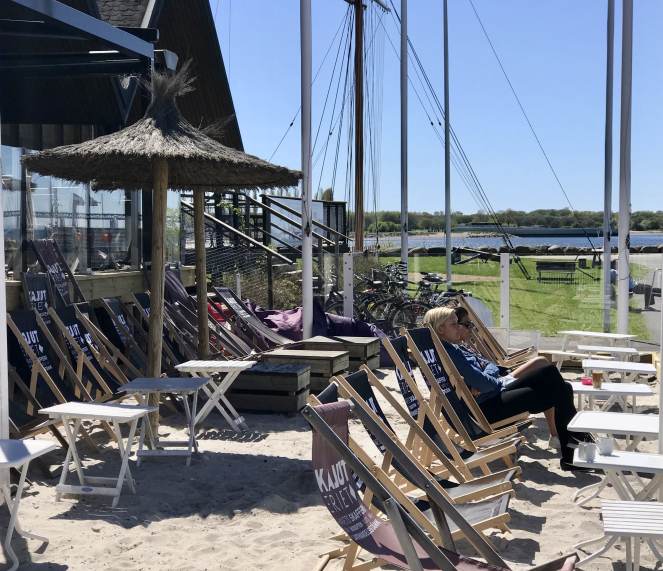
Deck outside Restaurang Kajutan. Limhamn, Sweden.

One of my favorite escapes when the sun comes out is to ride my bike down to the Limhamn harbor. This California girl needs her sun, sea and sand. Fortunately, there is a wonderful restaurant where I can go and feel slightly like I am at home, Restaurang Kajutan.

Restaurang Kajutan offers views of the Öresund Bridge, boats, and even has its own sandy beach lounge complete with beach chairs.

The restaurant has 2 bars – one to serve the outside beach area and another inside. They have a full bar and an impressive wine list.

The food is really good too. They have a menu that offers both seafood and meat. The lunch menu is a great value. The Caeser Salad with chicken is a really good size, and comes with a lot of chicken and a lot of bacon. Paired with a nice white wine and I am one happy camper.

So if you are looking for a place to enjoy some sun, sea air and unwind, head to Kajutan, grab a beach chair, order some lunch and a cocktail.

fullsizeoutput_b63c
Beach. Restaurang Kajutan. Limhamn, Sweden.

Kajutan can be found at Bryggövägen in Limhamn, Sweden.

For reservations, telephone: +46 040 155494 or info@kajuteriet.se

Americans abroad · Croatia · European travel · ex-pat life · Honeymoon travel · Insider Tips · international travel · Krka · national parks · nature · Plitvice · Plitvice Lakes · Travel · travel safety

Krka National Park – More Than Just The Blue Lagoon

DALMATIA

When we visited Croatia we opted to forego the more well known spots like Dubrovnik and Hvar in exchange for visiting Croatia’s many national parks. The biggest concentration of national parks lie in the northern part of the country so we made Dalmatia, namely Zadar, our home base as Zadar was within a few hours drive from each of the parks we wanted to visit. After Plitvice, Krka National Park was next on our Croatian bucket list. 

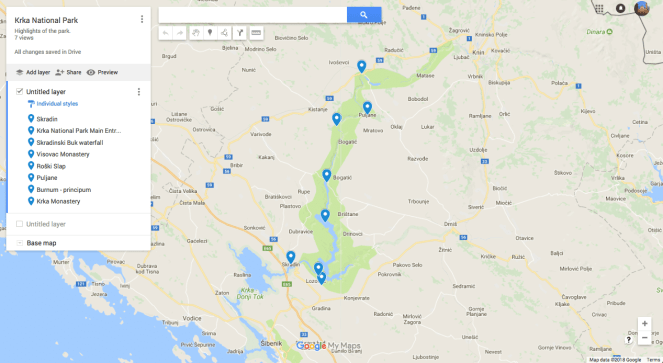
Krka National Park

I will say that in general, when cruising about Croatia and neighboring Bosnia Herzegovina, waterfalls are everywhere. You see them along the side of the road, but a few are standouts and Krka National Park offers 7 waterfalls (buk or slap) in one park. 

The Park

Krka is the second most visited national park in Croatia after Plitvice with over 1 million visitors each year.  Krka has become so popular in recent years that it has begun to limit the number of visitors each day to 10,000. My advice, get there early or book online to reserve space. And bring your swim suit, because unlike Plitvice, at Krka, you are allowed to enjoy the cool, refreshing waters. At least for now.

Even prior to being designated a national park in 1985, the area’s splendor was enjoyed for centuries.  The highlight of the park is its river and 7 major waterfalls. The Krka River, the source of the all the falls, is over 74 kilometers/46 miles long.

The protected flora and fauna is lush. The park is very clean and you will see fish, various birds, butterflies and dragonflies flitting about. 

Within the park, Krka is accessible by a network of planked walkways, hiking trails, cycling trails, roads and boats. One can also add a 5 km/3.1 mile hiking and cycling path from Skradinski Most (Skradin Bridge) to Skradinski buk. Visitors who wish to hike or ride along the trail can purchase their tickets at the reception at Skradinski Most or online.

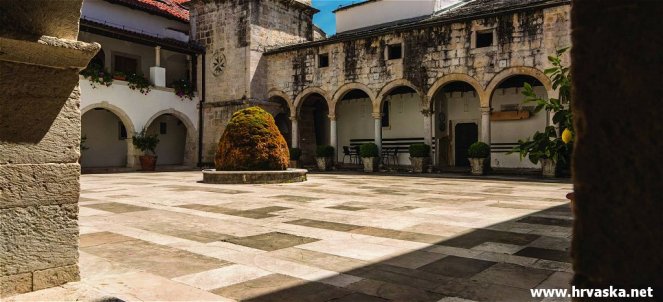
The park is unique in that in addition to its stunning topography, it also houses 2 monasteries and Roman ruins.  Both monasteries, Visovac and the Eastern Orthodox Krka Monastery, date back to the Middle Ages. Burnam, the Roman ruins, date back to 33 BC.

Getting There

From the nearest town along the highway, Šibenik, you will see signs for the park and a specific exit heading to Skradinski Buk.

The road will lead you straight into Lozovac and a large parking area. You will see a ton of tour busses, people, and parking attendants.

After you park, you will find a building where tickets are sold. You cannot miss it. The town is tiny. You will also see a very long line. Leave some of your people in the line and send someone else to get the tickets. The line is for either the bus or the boat (at Skradin) to take you to the falls. As this is one of the most visited sites in Croatia, in high season, the lines can be long so best to have someone saving your spot, while someone else queues for the entrance tickets.

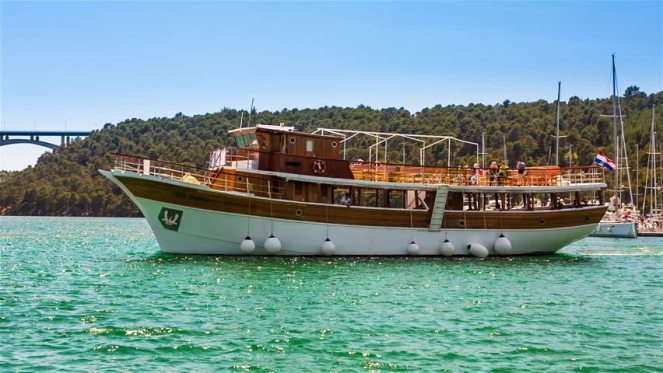
Your entrance ticket includes the bus ride. It does not include the boat ride.  As we arrived late, we opted for the bus but I really wanted to take the boat up the river. If you want to take the boats then stop in the town of Skradin to purchase your tickets and catch your boat.

Once the bus or boat lets you off, you have a short walk to the planked walkway around the park on the Skadinski Buk trail. The trail is a 1900 meter/1.1mile long loop leading you around the most amazing spots, rapids, waterfalls and gorgeous flora and fauna. Bring water. The trail is not suitable fo those with limited mobility. The trail is not that difficult in terms of intensity, it is just crowded, hot, and hilly. And there is water on each side of you and no barriers.

INSIDER TIPIf you really just want to swim and see the falls, you can skip the trail and the crowds and walk in the opposite direction of the trail behind a building there are steps which go directly to the falls and lagoon.

Sites In The Park

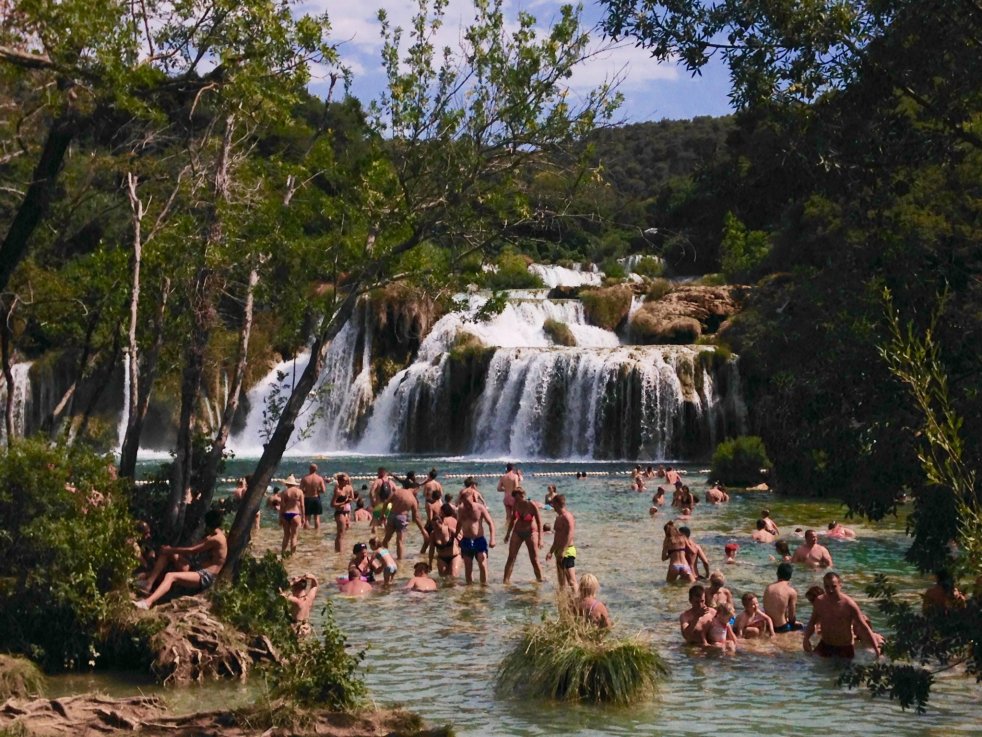
When people talk about Krka, they are usually referring to the famous Skradinski buk also known as Krka’s Blue Lagoon. Skradinski buk and its adjoining lagoon are the falls that you see on all the postcards and in Instagram stories. 

Most people do not explore the other parts of the park. I do recommend that if you have the time, you explore the entire park. To see it all properly plan for a minimum of 2 days.

SKRADINSKI BUK

On the way to the famous falls and lagoon, there is plenty to delight your senses.


The crowds move slowly, but that is ok, it means more time to enjoy your surroundings. After about 30 – 40 minutes you will reach Skradinski buk. Skradinski buk is insanely pretty. Again, it is the stuff of postcards and Instagram moments.

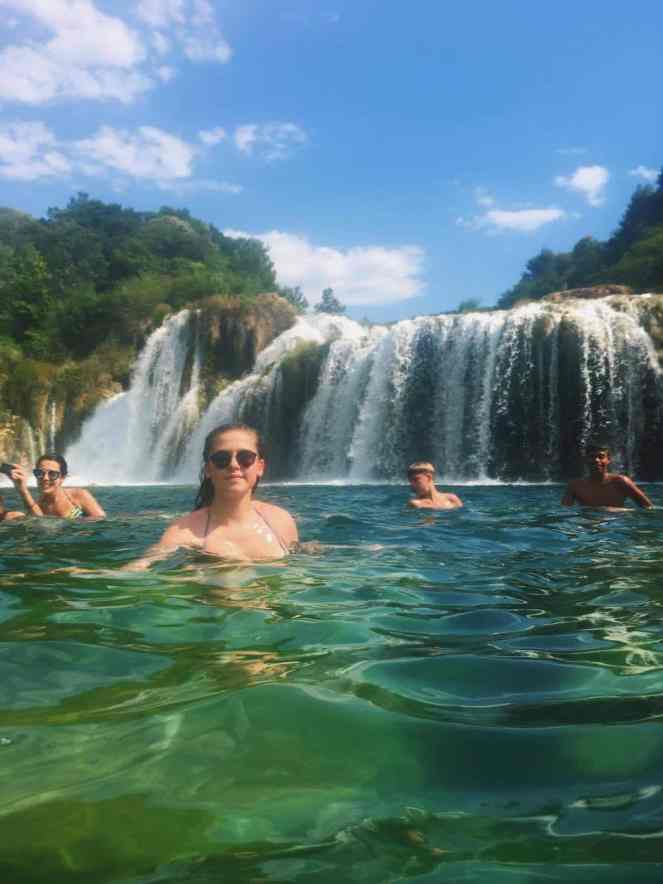
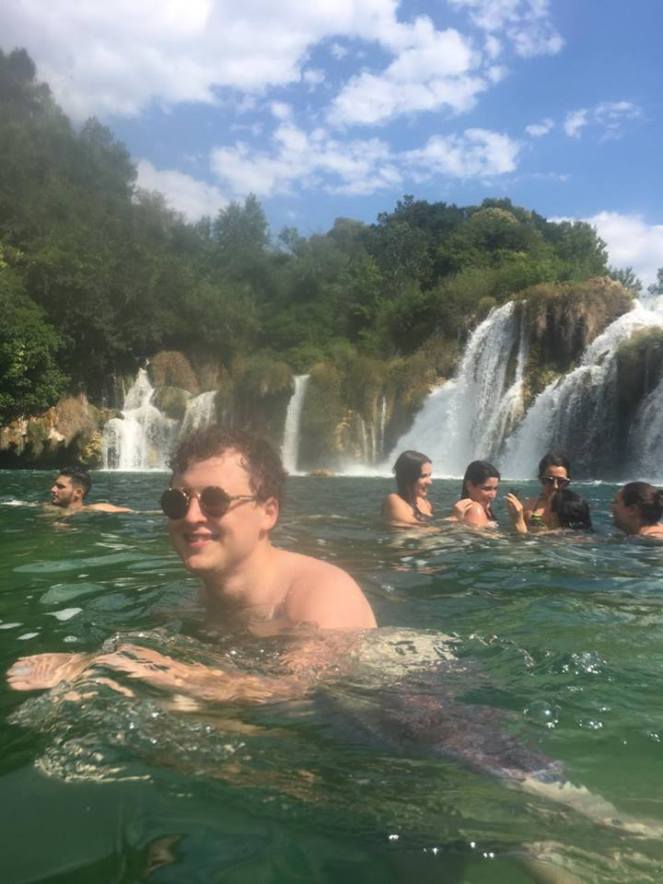
And note that Croatia is hot in the summer and the water is cool, refreshing, inviting. We were so hot that once we reached the falls we cold actually feel the cool air. Believe me, all you want to do is get in that water. But first, you have to carve out a spot among the crowds.

The area as you arrive at Skradinski buk is crowded and dusty. There are a lot of people roaming around and unfortunately on the approach side of the lagoon it is difficult to find a spot to leave your belongings where you can see them while swimming. This means that at least one member of your group must stay behind to watch your valuables. If you are traveling solo I suggest asking someone to watch your belongings. You should not leave valuables while you go for a swim with your group. It stinks that you cannot all go in at the same time, but you risk losing all of your belongings if you do.

INSIDER TIPS:  You will see a bridge where everyone is taking photos. Cross the bridge and on the other side there is a lot more room to carve out your niche and spread out a blanket. The best part, it is in the shade and along the lagoon so you can see your people as they swim in the lagoon and you can take photos.

Also, bring water, water shoes, a blanket, a picnic. They sell all of it there, but you will pay tourist prices. 


VISOVAC MONASTERY

After your swim, you may want to take a boat up river to Visovac Island and monastery. Visovac first welcomed its religious inhabitants in the late 1400’s. At that time Franciscan monks decided the island location was perfect for a hermitage where monks could study in solitude.

By 1576 building of the existing monastery was complete. Over the centuries, the monastery acquired a rich collection of paintings, relics and folk art. The monastery also has a small museum featuring historic church clothes, manuscripts, and rare books, including an illustrated copy of Aesop’s Fables printed in 1487. 

Photo credit: hotelroomsearch.com

Visovac is still an active church and the priests who live there maintain a lovely flower garden worth having a look. They also perform mass if you are there on a Sunday. Mass is held at 11am every Sunday all year long.

Visovac Island is only reachable by boat. You can take the excursion boat from Skradin or special monastery mass boats from Brištane on Sundays.

ROŠKI SLAP

The waterfall Roški slap can be reached by road and by the excursion boats from Skradin. We drove into the park at Roški slap and then made our way down to the famous falls. The drive past Laškovika was stunning.

The natural beauty of Roški slap can be viewed year round.

Photo credit: np-krka.hr

BURNAM

If archeology is your thing, you have 2 sites to visit at Krka. The first, Burnum, was a  Roman military camp. The ruins and archaeological site are located above the canyon and waterfalls.

These Roman ruins officially date back to the year 33 BC, but many archeologists believe the site may be even older. Several Roman legions were located there in succession. the spot was chosen for its vital access to the river which was used for transportation. Also, its gorgeous!  

Today, one can visit the ancient amphitheater which still holds concerts on special occasions and a smaller museum which holds the artifacts found on site.

The closest entrance to Burnum is at the Puljane enterance and one must take a car to get there.

Photo credit: TotalCroatiaNews.com
Photo credit: np-krka.hr

OZIDANA PEĆINA CAVE

The second archeological site in Krka is the Oziđana Pećina cave. The cave is located near the very top of the canyon, on the left bank of the Krka River, just above the Roški slap. I could not get it to show up on Google Maps, but the park will have information on its exact location and whether it is open to the public or not. Because it is a working archeological site, it may be closed to the public at times.

Photo credit: http://www.np-krka.hr

The site displays artifacts and evidence of human settlement – things like ceramic dishes, stone artifacts, and human and animal bones dating back to the Neolitihic period from about 5000 BC to about 1500 BC. The Hvar and Danilo cultures are featured prominently. 

I am claustrophobic, thus, this was not on my list to see even though I’d love to see the artifacts.  The cave is 59 m long/7 m wide/2.5 m high tunnel. No thanks.

KRKA MONASTERY

The Krka Monastery is a Serbian Orthodox monastery dating back to the 12th century. The monastery has had several reincarnations over the centuries, but was originally built on top of a Roman site and has catacombs underneath that can be explored.

The monastery is dedicated to the Archangel Michael and is considered the best known example of the Serbian Orthodox Church in Croatia. The monastery is officially protected as a significant historical site.

Like Visovac, Krka Monastery is still in use, thus, visitors are limited to visiting the catacombs and the church in the company of a national park employee. There are also restrictions on what can be photographed. On site there is a tiny souvenir shop which sells religious artifacts and wine made by the priests.

To reach the Krka Monastery you can take a car or the boats from Skradin. When driving, follow the signs to  Kistanje. From there you will see additional signs for the monastery. Parking is limited.

INSIDER TIP: After your visit, if you head down toward the falls, you can stop at a newly constructed viewpoint stop for cars offering a different view and perspective of the monastery. Great photo op!

Prices

The park entrance ticket includes access to the entire park, including an expert  presentation at Burnum, another presentation at the mills at Skradinski buk, Roški slap and Oziđana Pećina Cave, access to all walking trails in the park, and bus transport from Lozovac to Skradinski buk and return.

Park entrance prices are subject to change so always check the website for the most recent prices.

Boat PricesThe Skradin excursion boats are not included in the price of your park entrance ticket. All visitors must acquire or purchase their tickets in a Krka National Park branch office in Skradin before boarding the boat. Visitors who purchased their tickets online can board the boat directly with their printed ticket or the bar-code on a smart phone.

As with the park entrance ticket, always check the website for the most recent boat prices. Also, your ticket price will vary according to the location within the park that you choose to visit.

Photo credit: Shutterstock

Rules

While swimming is allowed, and is a definite highlight, there are other rules inside Krka that are strictly enforced:

  • One must not stray from clearly marked bathing areas.
  • You are not allowed to dive into the swimming area.
  • You are prohibited from hunting, catching, frightening or disturbing the wild animals.
  • You must not pick or damage indigenous plants.
  • You must not break or damage the travertine.
  • You must not camp or light fires outside of clearly marked areas.
  • You must dispose of waste in clearly marked garbage bins.
  • You must not stray from the clearly marked trails.
  • All dog must be kept on a leash and have a muzzle on at all times. Dogs are not permitted on Visovac Island. 
  • Drones or other unmanned aerial equipment are not allowed in Krka National Park.

As you can see, Krka offers so much more than the one waterfall and lagoon. Skradinski buk is awe inspiring and it seems to stop visitors in their tracks, but it is shame that most people never explore Krka beyond Skradinski buk as there is so much to see and do. If you do visit Krka National Park, I hope that this information may inspire you to look beyond the waterfall.

Americans abroad · European travel · ex-pat life · Honeymoon travel · Insider Tips · international travel · Italy · nature · Off The Beaten Path · Saturnia · spa · The Unique and Unusual · Thermal baths · Travel · Tuscany

Secret Tuscany – The Thermal Baths of Saturnia

Locals Only

A few years ago some Italian friends told me about some natural thermal baths in Saturnia, Tuscany.  They explained that there was a famous spa one could go to, but that there was also a natural occurring, free version very near the expensive spa, “IF you can find it!”

You see, the trick was that the locals will not tell outsiders how to find the natural thermal baths as they don’t want the natural baths overrun with tourists.

Since we lived In Italy I figured we qualified as locals of sorts. I was determined to find the free thermal baths. Unfortunately, at that time, the natural baths were not part of the standard GPS menu. The only information that we had was that they were near the famed Terme di Saturnia Spa and Golf  Resort.  Armed with an old fashioned map, American grit and a stubborn streak, we set out to explore.

It was not easy to find. There were no signs and there are a multitude of country roads to chose from. I am nothing, if not persistent though, and eventually we found it.

IMG_0709
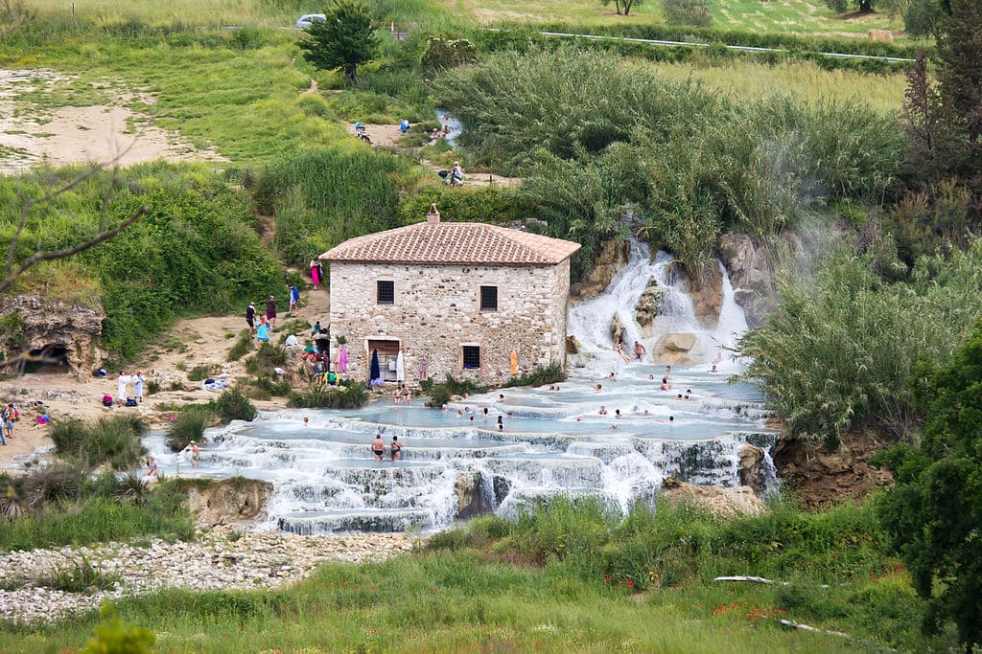
The kids and me in the front pool – Cascate del Mulino

After visiting Cascate del Mulino, I can see why the locals want to preserve this special place. Until now, I have never written about the baths out of respect for the local’s wish to keep it secret and special.  Today, good or bad, what the locals feared has come to pass and one can input the location on your GPS. Back then it was such a local secret that when we asked our hotel for directions and they gave us some vague instructions about the general direction to go. Today they advertise the baths on their website.

Two Very Different Experiences

Luxury

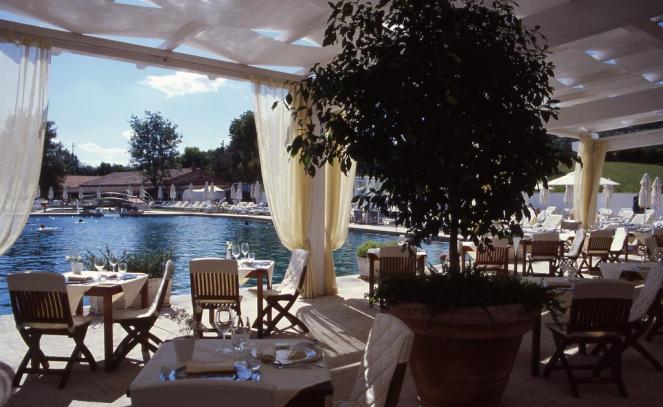
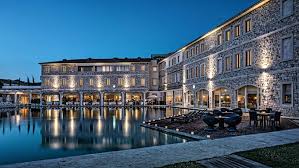
If nature is not your thing, rest assured that one has choices when visiting the thermal baths. The resort, Terme di Saturnia Spa and Golf Resort, offers golf, spa treatments, yoga, massage, restaurants and accommodation in addition to thermal baths. It looked amazing and relaxing. The atmosphere is pure luxury. Room rates start at 300 Euros a night.

termedisaturnia

terme-di-saturnia-spa
Photo Credit: Trip Advisor
tds
Photo Credit: Premium Europe

Rustic

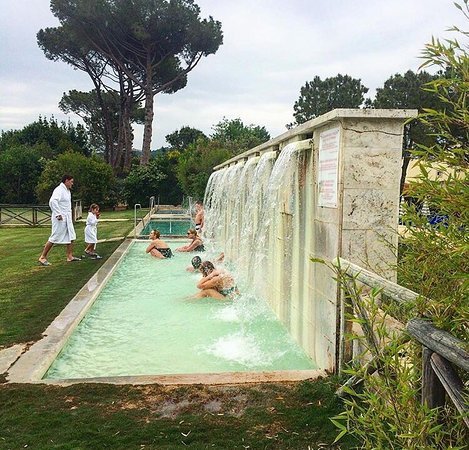
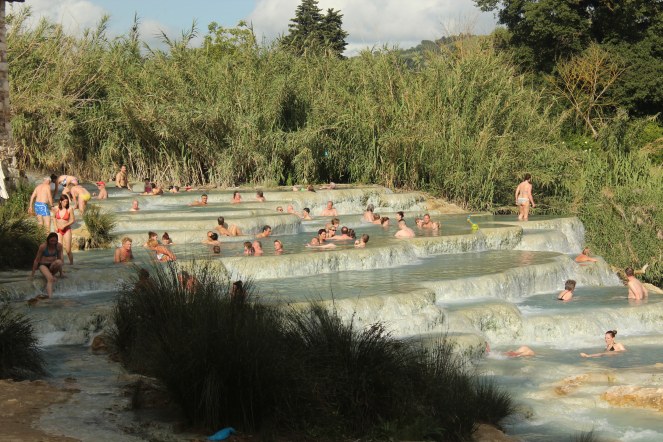
In contrast, the natural (i.e. free) baths, Cascate del Mulino, just down the road, are the complete opposite. At the time that we visited there were no signs and we drove down many a dirt road searching for the mill.  The area is unattended by any staff.  There were no parking attendants, lifeguards or wait staff serving cocktails and sparkling water.  The area was unpaved and dusty. Nearer the mill and falls, it was quite gravely and the actual pools and falls were quite slippery. Water shoes are a must. 

The Legend

According to Italian lore the gods Saturn and Zeus were arguing about mortals’ penchant for fighting each other.

At some point during the argument, Zeus threw a lightening bolt (or a thunderbolt depending on who you ask) at Saturn (or at the mortals depending on who you ask).

The power of this lightening bolt went straight into the Earth and resulted in warm water gushing out, overflowing and enveloping the mortals. Essentially, Zeus gave the mortals a warm bath to calm them down. And it worked, the warm hot springs calmed the mortals, healed their ailments and generally made everyone happier. And it still works today.

The Healing Properties

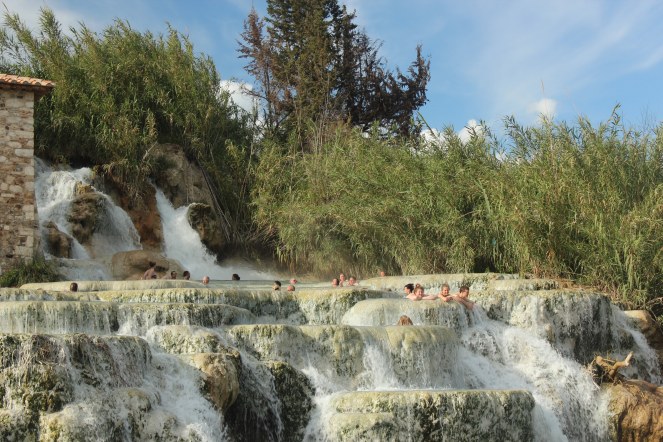
Who wouldn’t want to heal themselves in waters divined by the gods?  These thermal waters have been in use by local Italians since the Etruscan and Roman period.  Natural pools have formed out of travertine as a result of 3,000 years of flowing water. The pools are perfectly formed and comfortable. The pools are so perfectly formed and smooth that my husband did not believe that they were naturally made.

IMG_0698

The water is a consistent 37.5 °C/99.5 °F which may seem like it would be too hot, but trust me, it is not. It was oh.so.nice. We visited in the spring and I couldn’t help thinking that visiting on a crisp autumn or winter evening would be heaven. 

The thermal water contains a myriad of minerals that offer healing powers.  A few of the minerals are sulfur, sulphate, sulfide, carbon, bicarbonate, hydrogen, alkaline, thermal plankton, and 2 gasses – hydrogen sulphide and carbon dioxide. The gases give off a rather pungent smell similar to hard boiled eggs.  We did not mind the smell, but I was told some people do not like it.

The minerals in the water have been used as a natural therapeutic spa since the the Etruscan and Roman periods. The waters were so revered that the Romans built thermal baths in many of the little villages surrounding the falls. Some of those baths still remain.

What can be cured by soaking in the thermal baths? All kinds of ailments including eczema, psoriasis, respiratory infections, and rheumatoid arthritis, to name a few.  The water is also said to detox the body, and improve circulation, cell oxygenation and immune function. For me, the simple relaxation it provided was enough. And an added bonus, the minerals left my skin feeling soft and supple.

monteamiato.JPG
Monte Amiata.  Photo credit: gps-tour.info

The source of the incredible healing water begins at Monte Amiata. Monte Amiata is a dormant volcano, which despite its dormant status, still pumps in excess of  800 litres/211 gallons of water a second from its depths into the falls. The water begins 200 meters/656 feet below the earth and is heated by the thermal activity of the dormant volcano. I am not a geologist. I admit that I don’t understand how a dormant volcano is still generating this much heat and hydraulics, but, who cares why. I am just glad it does. 

Practicalities

  • Parking is limited.  Many people park along the road and in fact that was how we ended up finding the place. There is one small car park at the end of the access road, however, it was jammed packed with cars so don’t count on finding a place.
  • Never leave valuables in your car.
  • Water shoes – you must take water shoes. Not only for your comfort on the rocky shore, but for safety in the slippery pools.
  • The usual bathing suits, towels, a sun umbrella, and sun screen, but you may also want to bring a change of clothes as your bathing suit will smell of sulphur after you get out. Changing occurs under the cover of your towel – again, this is a no frills natural spa and it is Italy where people don’t get hung up about changing on the beach, etc.
  • Food – bring a picnic, snacks, fresh water, etc. as there is only a tiny snack bar that sells things like ice cream, but not a full service restaurant or store in the area. Also, what a fantastic place for a picnic!

fullsizeoutput_b62e.jpeg

Accommodation

There are many hotels and B&B’s in the area. We stayed at the darling Relais Ciavatta in Maremma and I cannot recommend it more.

Relais Ciavatta offers beautiful Tuscan grounds,

fullsizeoutput_b629

fullsizeoutput_b631

rooms with traditional Tuscan country decor,

an inviting pool,

rcpool
Photo credit: http://www.czemplik.com

a delicious restaurant on site, Osteria la Frasca,

osterialafrasca

and amazing, friendly staff. One staff member in particular was very attentive and sweet. Luigi, the Jack Russell. 

Our day at Cascate del Mulino remains one of my most treasured memories of living in Italy. I like that we had to work to find it. It made it feel like a treasure at the end of a hunt. Like we had made it into the elite club of locals.

Cascate del Mulino is such a unique place that my heart is torn. I want to share it with others and yet, I really hope it does not end up developed and overrun with people. I am hoping that because the baths are a bit off the beaten path, the majority of tourists will not make the trek and the natural thermal baths may retain their natural allure. 

While I totally appreciate the spa with its services and luxurious treatments, for me, soaking in ancient, naturally carved pools, with the sound of waterfalls that have been flowing for over 3,000 years, the incredible Tuscan countryside all around me, was an experience of a lifetime.

Americans abroad · Denmark · European travel · ex-pat life · Germany · national parks · nature · Off The Beaten Path · parmigiano-reggiano · The Netherlands · Travel · UNESCO World Heritage Site · Wadden Sea

The Lure of the Wadden Sea – A Guide to Denmark’s Hottest Summer Vacation Spots, Rømø and Esbjerg

fullsizeoutput_b604
Photo credit: Niche Travel Design

The Wadden Sea National Parks

The Wadden Sea National Parks make up the largest system of intertidal sand and mud flats in the world.  Designated a UNESCO World Heritage Site due to their protection of numerous plant and animal ecosystems, the parks stretch from The Netherlands, through Germany and up to Denmark. The Wadden Sea National Parks are home to countless birds, shellfish, fish, harbor and grey seals, and porpoise.

The area is a birdwatcher’s paradise as it is a popular destination for birds to breed, nest  and moult.  The parks are also an important winter home for migrating birds. It has been reported that at times, there are as many as 6.1 million birds in the Wadden Sea sanctuary and approximately 10-12 million migrating birds pass through every year. Without the Wadden Sea sanctuary, many European bird species’ survival  would be in danger.

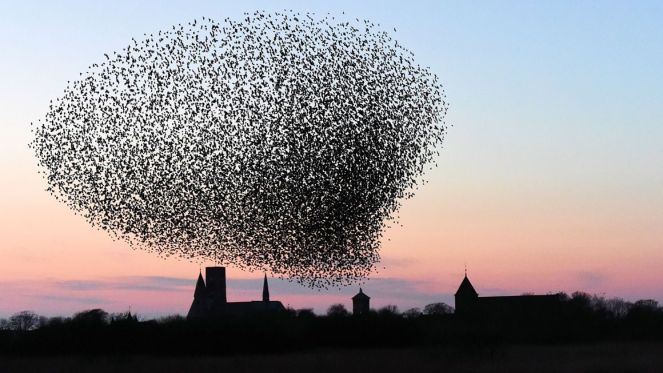
If you like birdwatching, a good time to visit is in the spring and autumn. There are so many starlings on the island of Rømø, that many people make a specific trek to the island to witness the phenomenon called The Black Sun. The Black Sun occurs when thousands of starlings murmurate in such a large number that they actually black out the sun.

murmurating
Starlings murmurating. Photo credit: visitdenmark

The best time for witnessing the Black Sun is early morning and late evening. We were not there at either time but we were able to catch a group of starlings as they prepared for their evening jaunt.

Esbjerg – Things to Do

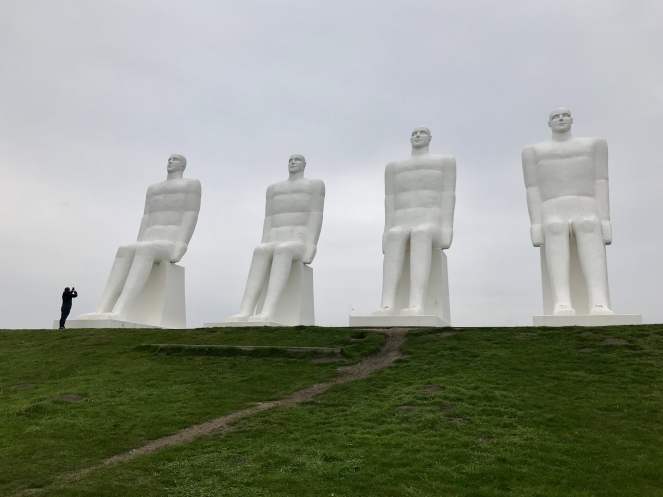
We started out in Esbjerg. Even though it is the fifth largest city in Denmark, Esbjerg, still feels a bit like a sleepy fishing village. Located north of the island of Rømø,  Esbjerg was once Denmark’s biggest fishing harbor. Today it is a popular summer destination for both Danes and Germans. One of the most famous landmarks in Esbjerg is the Svend Wiig Hansen sculpture Mennesket ved Havetor  or Men By The Sea.

Men By The Sea

fullsizeoutput_b603
Photo credit: Niche Travel Design
fullsizeoutput_b602
Photo credit: Niche Travel Design

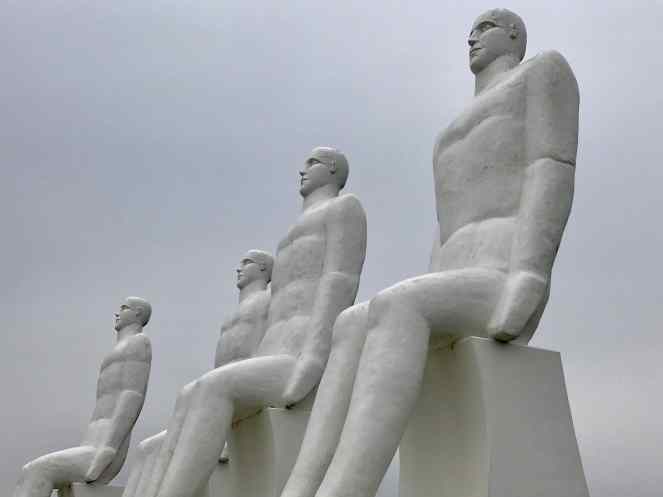
The men are 9 meters tall and constructed of white concrete. Quite imposing, it is said that the men can be seen from 10 kilometers out at sea.  Staring out to the sea, rigid with blank eyes they reminded me of modern incarnations of the heads on Easter Island. They did not evoke happy feelings in me, but instead a feeling of numbness and dread.

According to the artist, they are meant to illustrate the meeting between mankind and nature.  The men are seated to represent a time before man rose up and “got dirt” on their hands. For Wigg Hansen, once men rose up and started creating, that was when where things started to go wrong. I find this to be an odd perspective coming from an artist.

Wiig Hansen decided to make the sculpture with 4 men because he felt 4 was more harmonious then an odd number. Again, that concept feels rigid and controlled to me. I guess I am not the right audience for this particular piece, although its sheer size was impressive.

In addition to public art, Esbjerg offers many active pursuits.

Swimming
A popular destination in Esbjerg is the Svømmestadion Danmark. Svømmestadion is Denmark’s largest bathing and swimming facility. It is an indoor pool and waterpark –  perfect for Scandinavia’s fickle weather.

If you want to spend your days outside, there are a number of options for cycling along the beautiful Jutland coast.

Cycling
The North Sea Cycle Route website can help you plan your perfect cycling adventure. The website offers cycle routes for everyone from beginners to experienced cyclists. There are a total of 1133 km/704 miles of cycle routes to peddle and enjoy the gentle Danish countryside. A popular routes for more experienced cyclers is Cycle Route number 1. Running from the German/Danish border, Cycle Route 1 is 560 km/348 miles.

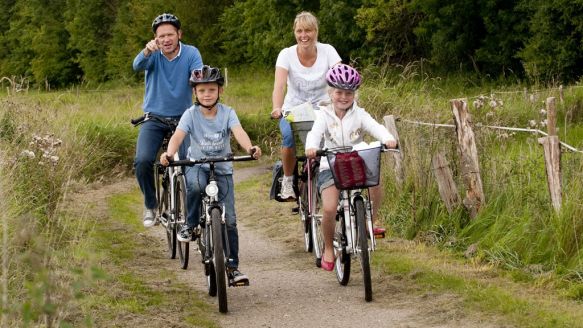
If you are looking for a more relaxed family cycle trip,  the Panorama routes are the way to go. There are 16 routes under the Panorama Route umbrella. The routes are circular and designed to accommodate families.

cykel-tirsbak
Photo credit: hwww.visitvejle.com

Each route is between 20 and 50 kilometers long. Most will take you along the Wadden Sea coastline. These routes are more suitable for beginner cyclers and families and every routes have restaurants along the way.  There are numerous options for bike rentals in Esbjerg, but two that come recommended are PJ Ferie and Fri Bikeshop Fanø.

Boat Races
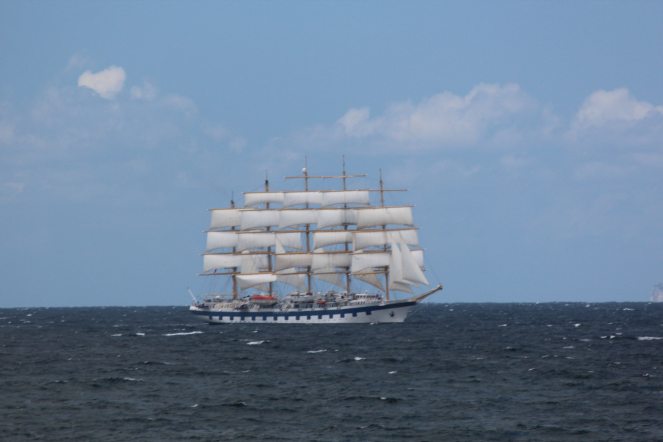
If you happen to be in Esbjerg in July, head to the beach to watch the The Tall Ship Races.  These magnificent ships with their huge white sails look dramatic racing each other on the Wadden Sea. The race starts in Sunderland, England, sails to Esbjerg, Denmark, then on to Stavanger, Norway with the final leg ending in Harlingen, Netherlands.

IMG_9844
Photo credit: Niche Travel Design

Sand Castles Of Sorts
If you are in the area from May to August, a friend told me not to miss the Søndervig Sand Sculpture Festival. Alas, we were too early, but these sand sculptures look unbelievable. More sand sculptures, than castles, these three dimensional sand  masterpieces look worthy of another trip. This year’s theme is Wizardry and Magic. Here are photos from last year’s festival.

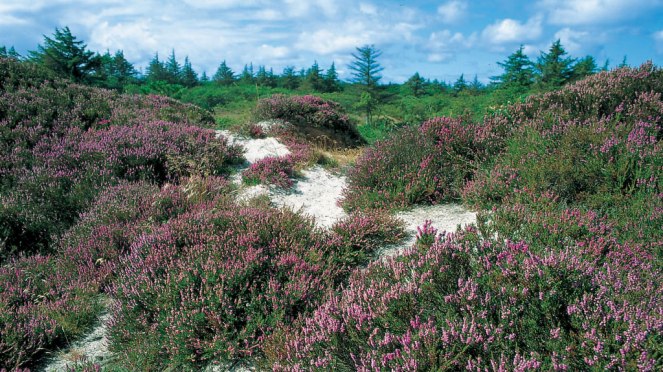
Hiking is a popular activity in the Esbjerg area. Both the Marbæk Nature area and the Kongeåen river area offer many trails to choose from.

maerbeck
Marbæk – Photo credit: visitesbjerg

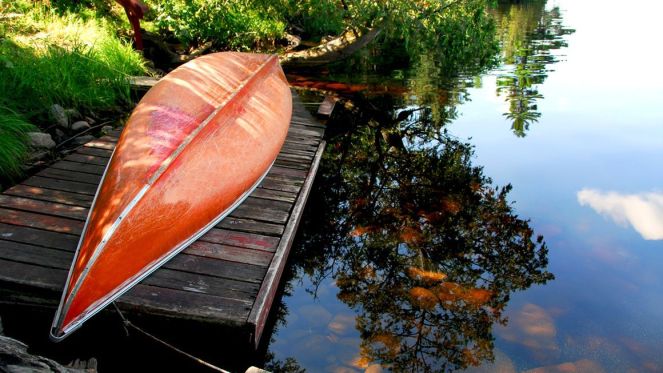
If you want to mix it up after cycling, hiking and site seeing, take a canoe ride.

Canoeing
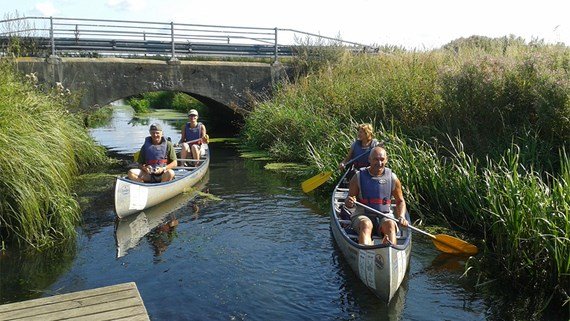
A canoe trip on the Kongeåen, will put you smack dab in the middle of history as the river historically marked the border between Denmark and Germany until the reunification in 1920.

sps-ribe-kano-galleri1

A recommended route for your canoe trip along the Kongeå river begins at Søengevej, just east of Vejen. This is recommended because there is any easy launch pad into the water and the site has ample picnic tables and parking.

kano
Photo credit: Foldingbro Camping

If you launch from Søengevej you will actually begin your trip on the Andst Å river for about 30 minutes cruising past the Knag Mølle (Knag Mill) and then meeting up with the Kongeå river. If you want to take a break and have a picnic, you can stop at Hermansens Høj, just past the Knag Mølle.  Hermansens Høj offers picnic tables and fire pits for cooking if you want to grill your lunch.

There are numerous places along the way to drop off a car if you plan on only going one way on your trip. Most pit stops offer shelter, fire pits for cooking, tables and toilets.
 

Canoe rentals can be found at Kanocenter Syd and Ribe Byferie.

Fishing
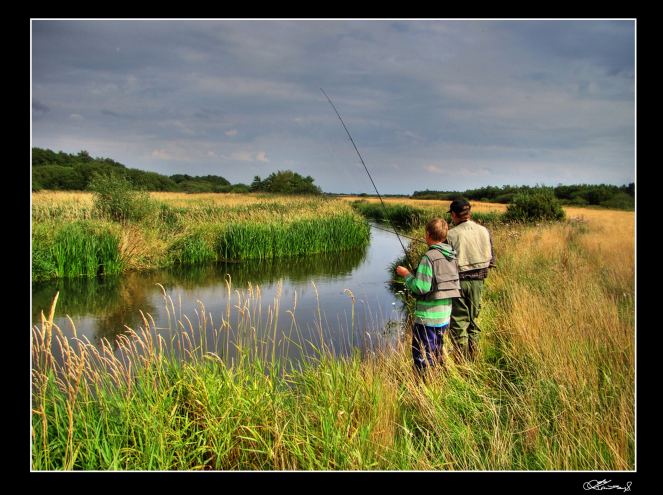
They say that the fish are so plentiful in and around Esbjerg, that no one returns from a day of fishing empty handed.  There are over 15 different type of fish in the Esbjerg area and one can fish for both fresh water and sea fish. Some of the popular fishing spots are Sneum Stream, Varde Å, Ribe Vesterå, If you plan on fishing, you will need a license which can be purchased at www.fiskekort.dk.
Bo og Peter
Photo credit: Lars Lundsgaard

The many options for fishing include fish farms where you can rent equipment.  If you prefer a fish farm, head to Tjæreborg Fiskpark or  Nebel Lake Put & Take


Hjerting Beach Park

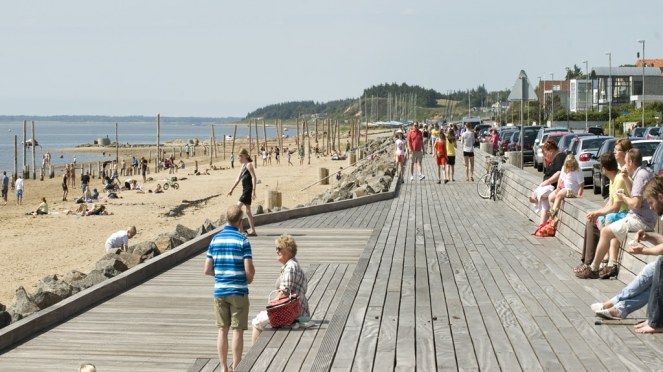
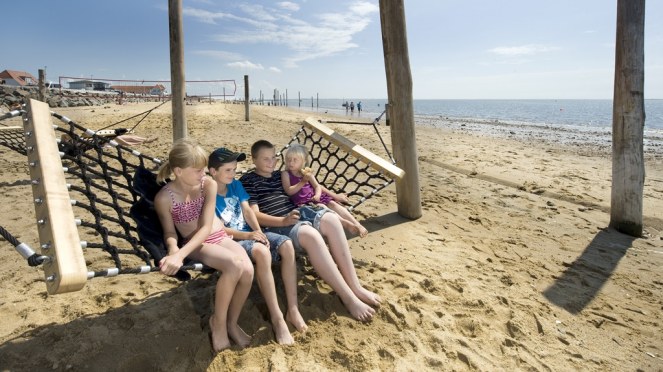
The most popular beach in Esbjerg is by far Hjerting Beach Park. At Hjerting one can swim, play beach volleyball, nap in a hammock, or stroll along the the 660 meter wooden promenade. If the tide is low, you can sit on the sea platform. If you miss the low tide, you can still enjoy the platform but you will have to swim out to it.

Other active pursuits on Hjerting Beach Park – sailing, water-skiing,  golfing, kite surfing, cycling, sea kayaking.

hjerting2
Photo credit: visitdenmark
hjerting3
Photo credit: visitdenmark

The reason that so many Danes and Germans flock to Rømø each summer is obvious. Like Esbjerg, there are many things to do, however, where Esbjerg feels like a cool city summer escape, Rømø feels remote, removed and relaxed. Esbjerg has restaurants and clubs. Rømø has forests, marshlands and a really big beach.

Activities
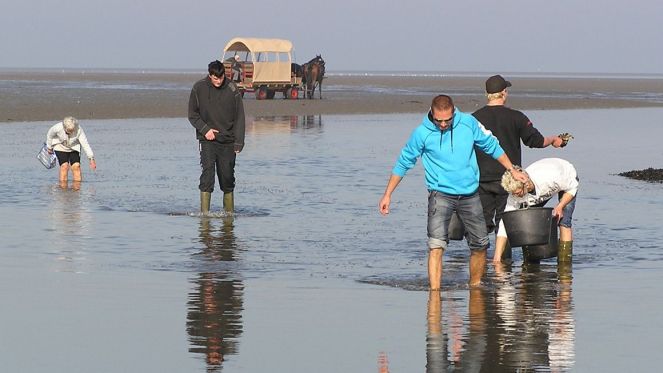
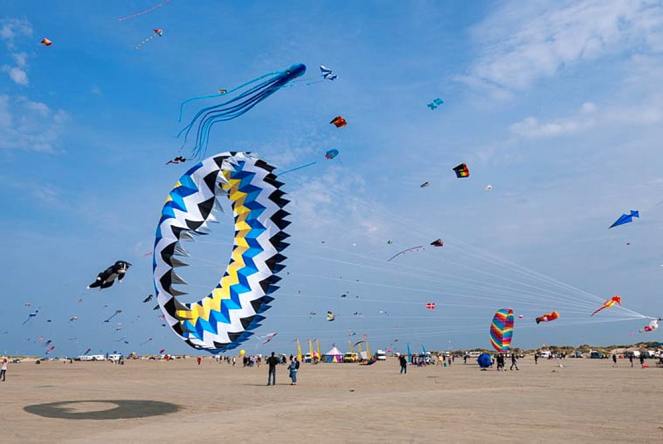
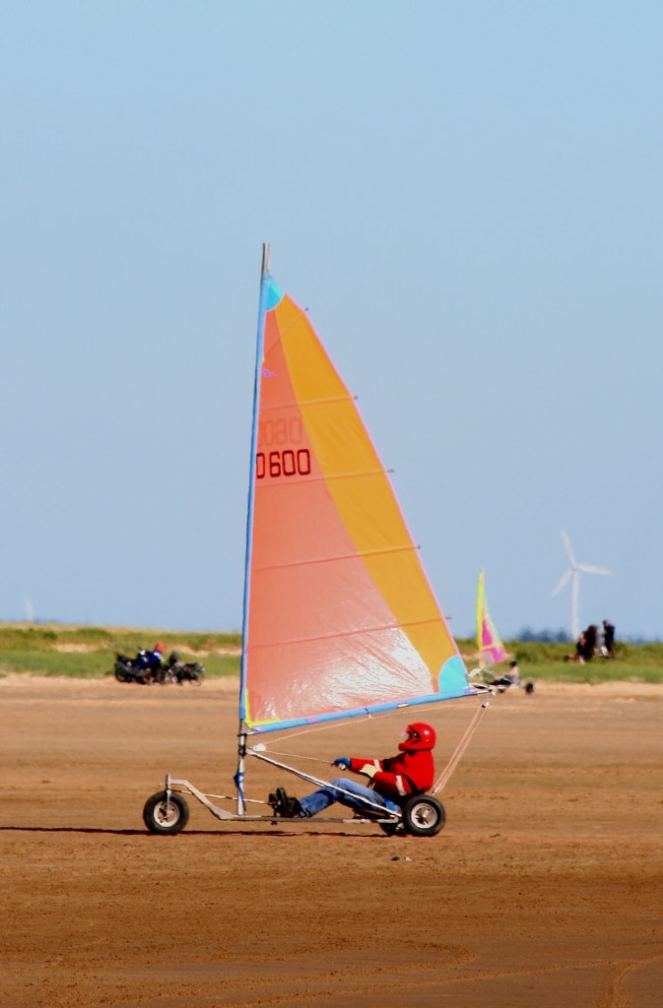
Like Esbjerg, Rømø is chalk full of activities. There is something for everyone to do and enjoy. Activities include cycling, kite surfing, windsurfing, oyster hunting, horseback riding on the beach,  golf and mini-golf, fishing, blokarts, seal excursions.

sps-osterstur-galleri3
Oyster hunting. Photo credit: rømø.dk
Kite festival, Romo, Denmark / Römö
Kite festival. Photo credit: rømø.dk
romo3
Blokarts – Photo credit: rømø.dk

Historic Sites

Hjemsted Oldtidspark
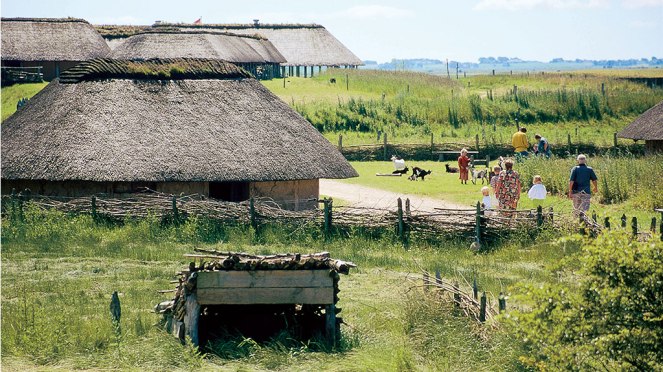
Want to travel back in time with your family? Head to Hjemsted Oldtidspark an historic theme park covering life in the Iron Age.  The park is located on the archeological site of an actual Stone Age village from 2000 years ago.

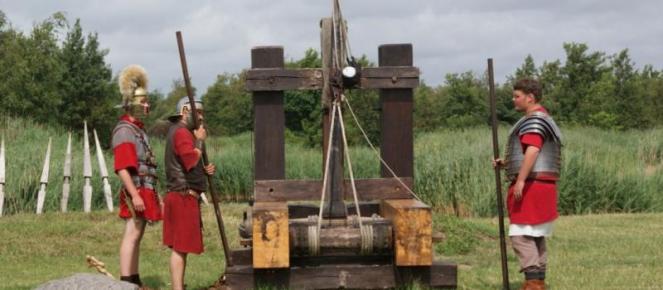
There, one can explore the underground museum with reconstructed graves, the Roman catapults, and a working iron workshop. You can learn crafts, hunting, fishing, agriculture practices and learn about cloth making, weaving and archery.

If you really want to understand life in the Iron Age, Hjemsted Oldtidspark offers longer stays and in one of the park’s houses onsite. These stays fill up quickly in high season so if you are interested, book well in advance.  You can read more about long term stays here.

hjem1
Photo credit: http://www.hjemsted.dk
hjemsted2
Photo credit: http://www.hjemsted.dk
The Sea Captain’s House

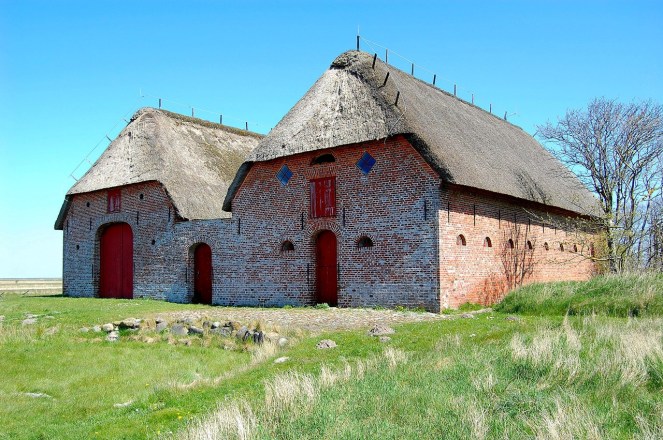
For a bit of history of the island, visit the beautiful Sea Captain’s House. This national museum was a whaler’s home in the 1700s.  Here you will learn about the important whaling industry that dominated the area’s economy in the 18th century.

The house has a breathtaking view of the Wadden Sea and is furnished with typical 18th century furniture and paintings. There is also a gorgeous wall tiled with Dutch tiles from the period. The barn contains an entire whale skeleton and there is a fence built of whale bones up the road from the museum. Interesting, albeit a bit creepy too.

The grounds and the view are quite nice, and weather permitting, it would be a very nice place for a summer picnic. There is also a cafe on site that serves lunch.

secaptainshouse.jpg
Photo credit: rømø.dk

Drøhse’s House
Drøhse’s House is one of  Rømø’s oldest houses dating back to 1672. The baroque house is a well-preserved depiction of life in the 17th century.  The house was a private residence for the upper class of Rømø throughout the 17th, 18th and 19th centuries.

In addition to the whaling industry, lace was a significant contributor to the island’s economic history.  Drøhse’s House provides a peek inside a traditional trading house, and houses a number of exhibitions focusing on lace and lace making, textiles, furniture and glass.  An added bonus, in the summer months, lacemakers can often be found working in the house.

A second bonus, be sure to visit the Lace Garden whose landscape was designed to resemble a 200-year-old Rømø lace pattern.

drohses-hus
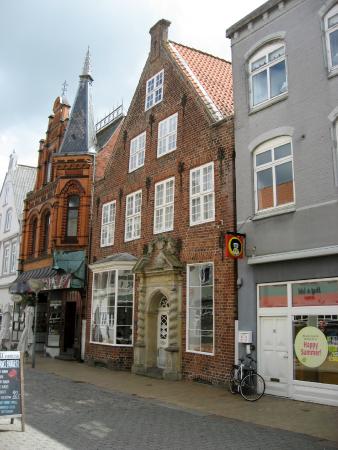
The museum is located on a pedestrian street at Storegade 14 in Tønder.

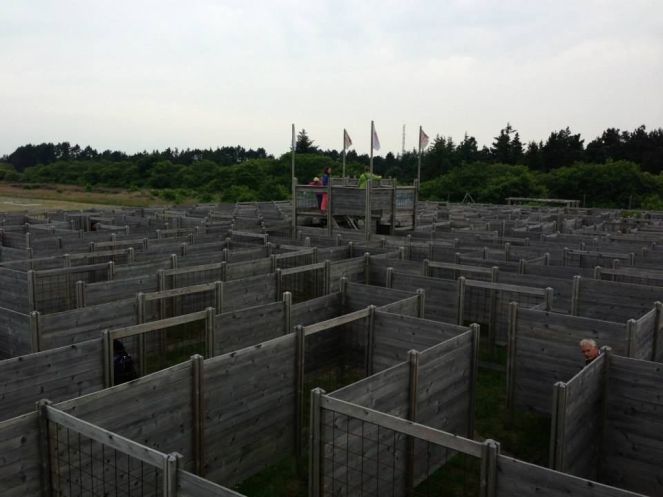
Rømø Labyrinth Park
Looking for something to with tweens and teens, the Rømø Labyrinth Park is fun for teens and adults alike.

labrith2
Photo credit: visitdenmark
labryth
Photo credit: visitdenmark

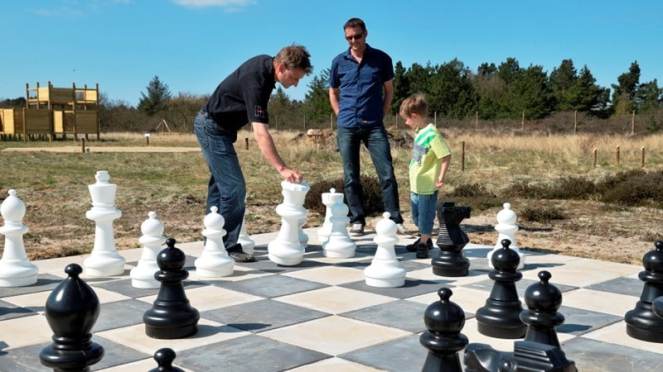
Puzzles, labyrinths and games, the park is designed to encourage teamwork and cooperation.  And you can play their own game krolf – a mix between croquet and golf.

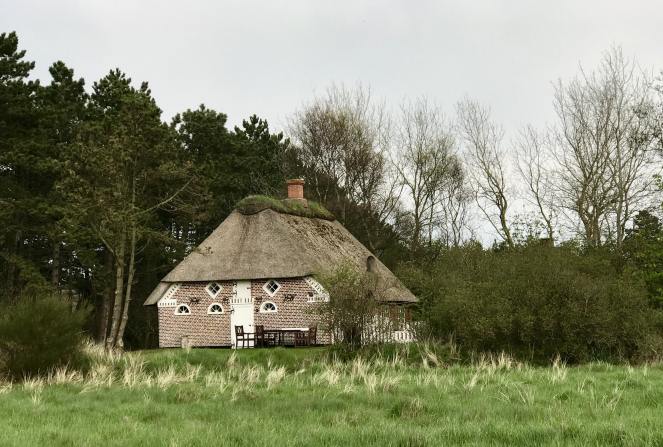
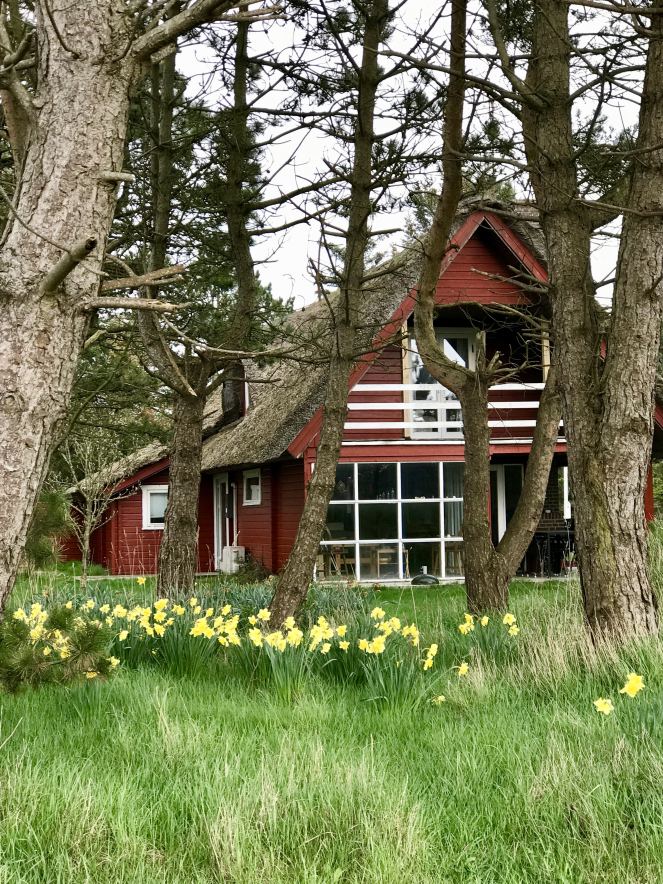
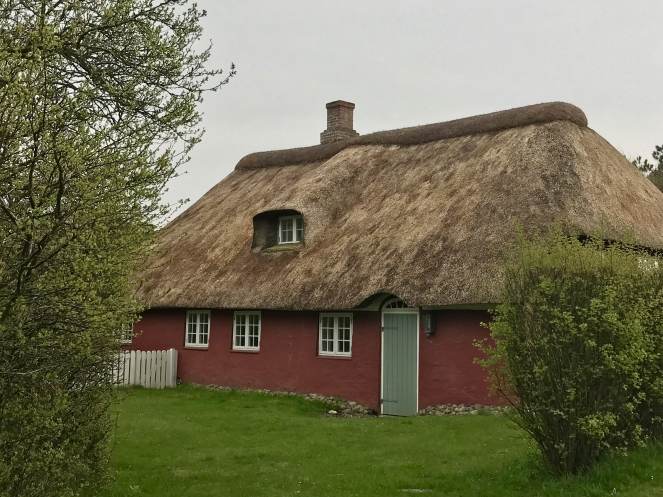
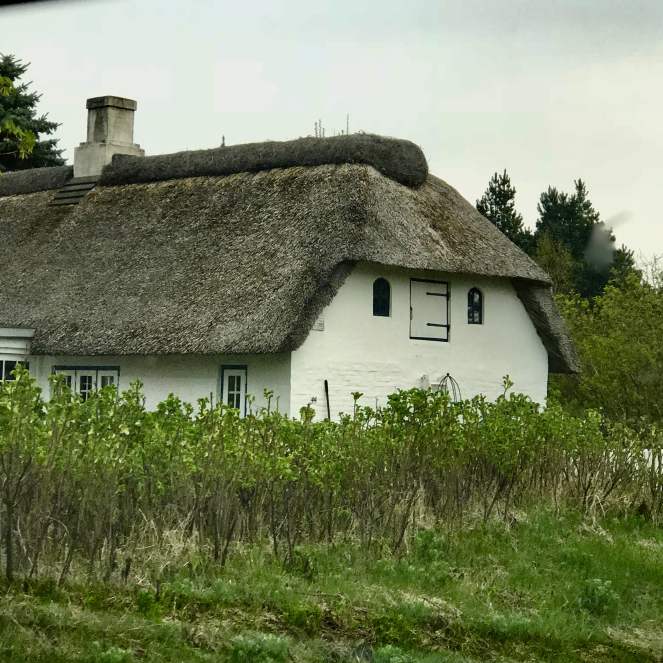
And One of My Favorite Activities: Exploring and Looking For Adorable Cottages

fullsizeoutput_b612
Photo credit: Niche Travel Design
fullsizeoutput_b613
Photo credit: Niche Travel Design
fullsizeoutput_b610
Photo credit: Niche Travel Design
fullsizeoutput_b60f
Photo credit: Niche Travel Design

We visited the area off season. The many cafes, galleries and excursion were not open for the season, yet, we still enjoyed our time and I must say that I understand the pull of the area.

I want to return and rent an adorable thatched roofed cottage in the woods. I envision spending my days walking on the beach, going on an oyster safari, vacillating between all the active pursuits and reading a good book.  In the evenings I’d watch the starlings murmurate and ponder the wonders of nature. It is said that the Waddden Sea casts a spell on its visitors. I, for one, am spellbound.

Americans abroad · Croatia · European travel · ex-pat life · Honeymoon travel · international travel · national parks · nature · Plitvice Lakes

As Featured In The Plitvice Times

Check out an interview with me about Plitvice in the Plitvice Times:

“Where Unicorns, Rainbows and Fairies Are Born”