Americans abroad · Emilia Romagna · European travel · ex-pat life · international travel · Italian food · Italy · Parma Italy · Travel

Cibo Americano


Not long after arriving, my son had had enough pizza and pasta.

Aleks: “Can we have American food for dinner tonight?”
Me: “What would you like?”
Aleks: “Mexican.”

Italian food is fantastic. It is fresh. It is simple. It is full of flavor, bbbuuuutttut . . .  after living in California where you are exposed to such diversity of cuisine, it is difficult to limit yourself to one style. We could not help missing some different flavors and styles of cuisine. And, let’s face it,  Mexican food is a staple of the California lifestyle.  And, Mexico is part of North America, so technically it is American food.

And mama misses her margaritas – as in the drink, not the pizza.

margarita

Americans abroad · Bologna Italy · Emilia Romagna · European travel · ex-pat life · Gelato · international travel · Italian food · Italy · Parma Italy · parmigiano-reggiano · Prosciutto di Parma · Travel

A Theme Park for Foodies? Italians Say Bologna.

Eataly
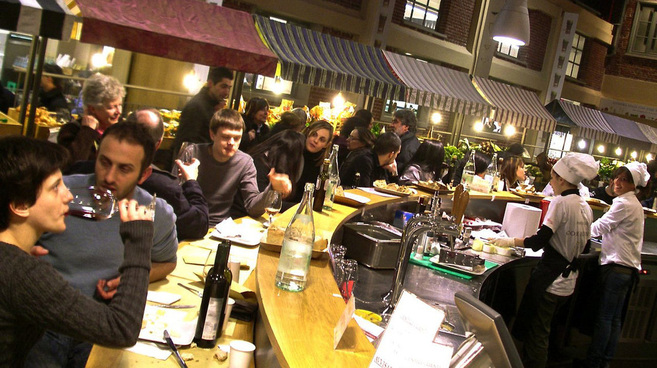
Customers dine at the original Eataly in Torino which opened in 2007.


By Sylvia Poggioli.

Italy has more UNESCO world heritage sites than any other country in the world, and its art and cultural riches have drawn visitors for centuries.

It also prides itself on being a culinary mecca, where preparing, cooking and serving meals is a fine, even sacred, art. And now that the country is in the deepest and most protracted recession since World War II, why not cash in on its reputation as a paradise for visiting gourmets and gourmands?

In late February, Oscar Farinetti, who founded the Eataly chain of food emporiums, announced a new plan to help rescue economy: “Fico Eataly World,” a theme park devoted entirely to food and wine.

The project is a joint venture between Eataly and the municipality of Bologna, which is providing 86,000 square feet of land with warehouses to be transformed into food labs, grocery stores and, of course, restaurants. The price tag for the park is estimated at $55 million.

Eataly, which has over two dozen branches around the world, was founded in Turin in 2007 by Farinetti, who is CEO and owns a 60 percent share. The other 40 percent is owned by cooperatives of the COOP group of supermarkets.

The cooperatives have their roots in the Communist Party that was powerful in the Emilia-Romagna region that surrounds Bologna in the post-war period. The founder of the Slow Food Movement, Carlo Petrini, is also left-leaning, and another example of the ties between the left and the contemporary gastronomy movement.

The location for the Eataly theme park could not be more appropriate. Italy has many very different cuisines, but Bologna and Emilia-Romagna are widely, if grudgingly, recognized as the gastronomic capital of Italy.

The region is the home of Parmesan cheese, prosciutto di Parma, balsamic vinegar, and lasagna, among many other delicacies. Since the Middle Ages, the city was known as Bologna La Grassa, Bologna the fat – as in, affluent and epicurean.

Today, Bologna is also home to the world’s only University of Gelato, as I in 2013.

The foreign media has referred to the planned food theme park as a “Disneyland of Food.”

But when I mentioned the “Disneyland for foodies” to people shopping at two well-known Roman outdoor markets, everyone grimaced in disgust.

“Sounds like something for tourists,” Simona Vitali, a middle-aged woman shopping for groceries in Piazza San Cosimato, told me. “We Italians have no need for such a theme park.”

Farinetti the online English language service ANSA he hopes the park will draw annually 10 million visitors who will “play with this magical thing, Italian food.”

Eataly World is scheduled to open Nov. 1, 2015.

http://www.npr.org/blogs/thesalt/2014/03/09/286939246/a-theme-park-for-foodies-italians-say-bologna

Americans abroad · Emilia Romagna · European travel · ex-pat life · international travel · Italian food · Italy · Parma Italy · parmigiano-reggiano · Travel

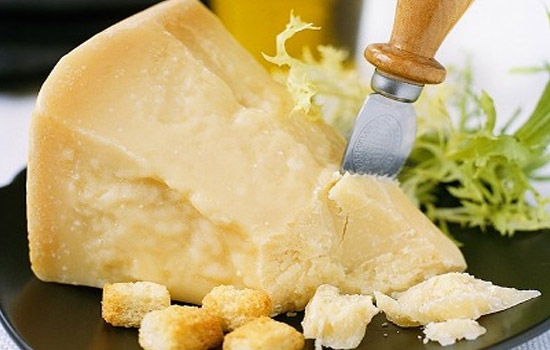
Parmigiano-Reggiano

pr1

So it has happened.  After 2.5 years of living in Italy I am becoming a bit of a food snob.  Last Sunday I was discussing cheese with my friend Giuseppe – specifically Parmigiano-Reggiano cheese (or Parmesan cheese as it is commonly known in the USA). Giuseppe’s family has been producing Parmigiano-Reggiano for over 130 years.  In the course of our discussion, Giuseppe told me that there are no protections for his product in the USA. I was shocked.

Then, this morning, my aunt sent me an article about how producers of European cheese are requesting said protections in the American market. The European Union wants to ban the use of European names like Parmesan, Feta and Gruyere on cheese made in the United States. This has American producers in a tizzy. I don’t know about the other cheeses, but I have to say, when you compare Parmigiano-Reggiano to its American counterpart, one is cheese and the other is . . . something else. And as we Have recently learned it may be sawdust.

Unless you have purchased Parmesan cheese from an Italian import specialty shop, I assure you, you haven’t really tasted Parmesan cheese if you are eating Parmesan made in America. The American versions taste nothing like the original.

Parmigiano-Reggiano was created in the Middle Ages in the Northern Italian province of Reggio Emilia. Historical documents show that in the 13th and 14th centuries, the Parmigiano-Reggiano that was made was very similar to the cheese produced today. Ya’ know the old adage, “if it ain’t broke, don’t fix it.”  Why mess with something that has an 800+ year proven record of consistently being delicious? This cheese has been around so long that the use of the nickname “Parmesan” predates the existence of the United States by about 250 years.  Originally, Italians from other regions of Italy began calling the cheese Parmesano, which means “of or from Parma.” This nickname was later shortened to Parmesan by the French.

Under Italian law, Parmigiano-Reggiano can only be produced in Parma, Reggio Emilia, Modena, Bologna and Mantova, Italy.  European law classifies the name, and the nickname “Parmesan”, as a protected designation of origin (PDO), like champagne from France. Thus, in the European Union, “Parmigiano-Reggiano”  refers to cheese manufactured exclusively in limited cities. And, in 2008 a European Union court determined that the name “Parmesan” cannot be used for imitation Parmesan made or imported into Europe. Therefore, if Kraft imports its powdered version into Europe, it must declare that it is imitation Parmesan cheese.  And believe me, the Kraft stuff is an imitation. It tastes nothing like the real stuff.  Authentic Parmigiano-Reggiano cheese has three variations of flavor according to how long it has aged. It can be: mild and smooth; full-flavored, sharp and crumbly; or nutty and spicy with an almost gritty or crystalline texture.  After tasting the real stuff, I don’t think I will ever buy the Kraft version again.

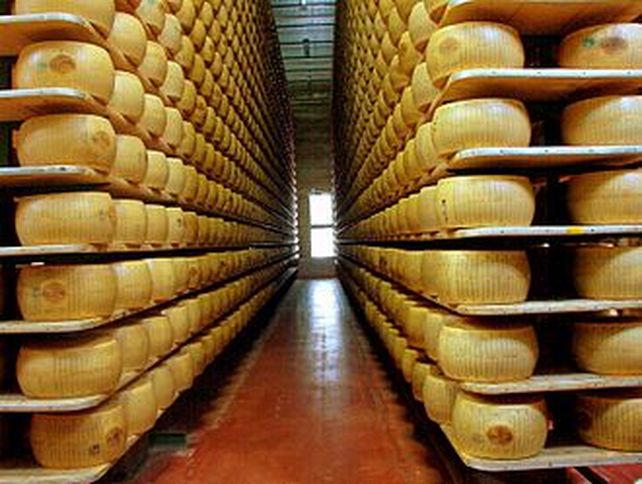
The first distinction between the authentic and imitation versions is the strict method of production. Like Prosciutto di Parma, production of Parmigiano-Reggiano follows strict guidelines and regulatory inspections by the Consorzio Parmigiano-Reggiano. The Consorzio inspects each and every cheese wheel produced. Every. single. one. Typically the region produces over 3 million wheels of cheese annually! Thatsalotta’ cheese.
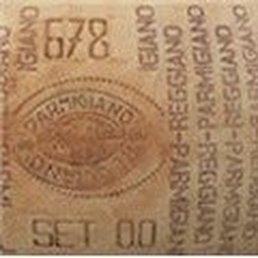
pr2Further, Parmigiano-Reggiano bears a special seal identifying it as authentic. A stenciled seal indicates which dairy the milk came from, the month and year of production, and a code indicating the length of aging.

Another distinction is that the milk used for Parmesan comes from grass or hay fed cows only. And Italian cows are not subjected to antibiotics, hormones, and chemicals. The result is a creamier, fattier, delicious milk. I tasted some fresh unpasteurized milk from a dairy farm near Lake Como and I have to say I felt like I’d never really tasted milk before.

Also, Parmigiano-Reggiano is all natural and made from raw cow’s milk. The cheese starter is natural whey culture with calf rennet.  The only additive allowed in production is salt. You will never find cellulose powder, potassium sorbate or cheese cultures in Parmigiano-Reggiano – they are illegal in the production. You will find all three ingredients (if you can call them that), however, in most imitation Parmesan cheese sold in the USA.

The whole milk is mixed with naturally skimmed, or separated milk resulting in a part skim mixture. The mixture is then is pumped into copper vats and whey is added.  It is cooked at a temperature of 91–95 °F. Next, calf rennet is added. Rennet is is an enzyme derived from the stomachs of the calves before they consume anything but milk. Rennet causes the proteins in the milk to form a curd.  The curd is broken into small pieces about the size of rice grains. The temperature is raised to 131 °F and is carefully monitored by the cheese-maker. After settling, the curd collected in a piece of muslin and divided in half and placed in molds. The process uses 291 lbs. of milk to produce two cheese wheels. The curd of one cheese wheel weighs around 100 lbs. Interestingly, the left over whey is used to feed the pigs from which “Prosciutto di Parma” is made.

Finally, after production, each wheel is aged for a minimum of 12 months. Then a tester from the Consorzio Parmigiano-Reggiano tests the wheels using only a hammer and his ear. The tester taps each wheel at various points, identifying cracks and voids within the wheel. Cracks and voids in a cheese wheel means that wheel does not pass inspection. If a cheese fails inspection, the rind is marked with lines or crosses all the way around the wheel to indicate to consumers that the cheese is not up to snuff.

Cheese that passes inspection is further identified with one of three stamps to indicate the maturity and variation of flavor for each cheese. As you can see, this is not your green cylinder of powdered cheese-like substance.
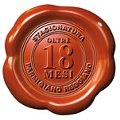
pr3The red seal indicates that the cheese has aged for more than 18 months. The Consorzio describes the red seal cheese as having a “distinctive milk base, with vegetable notes such as grass, cooked vegetables and at times flowers and fruit” and they recommend that it is served “with aperitifs, and in particular dry white wines, and as an accompaniment to fresh fruit such as pears and green apples.” Kinda’ sounds like a description of a wine doesn’t it?
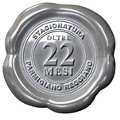
pr4The silver seal indicates cheese that has aged for 22 months.  The flavor is “distinctive, with notes of melted butter, fresh fruit and citrus fruits as well as overtones of dried fruit. The cheese has a balanced mild yet full-flavoured taste, with a crumbly, grainy texture. It is an ideal accompaniment to quite firmly structured red wines and excellent when served as Parmesan petals in fruit salad drizzled with Aceto Balsamico Tradizionale di Modena or di Reggio Emilia. This Parmesan may also be served with any dried fruit and is superb with prunes and dried figs.”
There’s that wine like description again.
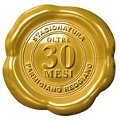
pr5The gold seal indicates cheese that has aged for 30 months or more. This cheese, has the highest nutritional value and has a dry, crumbly, at times, grainy texture. It has the strongest flavor.For such a distinctive cheese, full-bodied, firmly structured red wines, white dessert wines from partially dried grapes and sipping wines are ideal.”
Wowza!  I am telling you, this is serious cheese.

I have never seen any Parmigiano-Reggiano sold with the lines or crosses on the rinds. Given the price I wonder if consumers here would buy it with the imperfection of a mere crack?  Particularly since this “king of cheese” is not cheap.  It sells for approximately 15 euros per kilo or 11 dollars per pound. And that is without any import fees.

The way I see it, there is no problem with the US giving the EU their protections and designations for Parmigiano-Reggiano. The American consumer will decide for themselves if the “king of cheese” is worth the price. And the producers of the imitation stuff can keep on producing their products knowing that the American consumer will keep on buying it, out of preference, habit, patriotism and price. My husband is a perfect example. After regaling the wonders of Parmigiano-Reggiano last Sunday, he said that although he loves and appreciates Parmigiano-Reggiano, he still gets nostalgic for the powdered Kraft product. I think Giuseppe threw up a little bit in his mouth when he heard that.

Americans abroad · Emilia Romagna · European travel · ex-pat life · international travel · Italian food · Italy · Parma Italy · Travel

Digestion

digestion

Just like one must pay attention to the air in Italy, one must also pay attention to proper digestion.  Unlike, the USA, digestion is a very common and accepted topic of conversation in Italy. Proper digestion is very important to one’s health.

To insure proper digestion. you must not have cappuccino after 11:30 – milk is bad for digestion. I have no idea why milk is ok for digestion before 11:30 a.m.

The traditional Italian meal is designed specifically to aid in proper digestion. First is the antipasti made up of cured meats and cheeses. This course is designed to get your digestive juices flowing. Second is the pasta. Third is the meat course. These are two separate courses.  You will not see spaghetti and meatballs served together in an authentic Italian restaurant. If you see it on the menu, you are in a tourist restaurant.  You don’t see them served together because eating the meat with the pasta is bad for digestion.

Next is the contorno or the vegetable course. The logic behind eating your vegetables last is that the fiber will help you digest your meal.  I completely understand this logic and it seems reasonable to me, but I still like to eat my veggies first.

After your meal, and in case the vegetables didn’t work, you really should have an espresso to aid in proper digestion. And the final stage of an Italian meal are the alcoholic digestivi. These regional liqueurs are made from herbs, plants or nuts.  Grappa and Limoncello are the most famous digestivi, but here in Parma it is common to have a nocino after dinner. Nocino is made from unripe green walnuts.  Nocino is quite tasty, but in my experience, a nocino or grappa after dinner does anything but aid in my digestion.  In fact, the sugar content actually leaves me feeling ill, but that is probably because I am not Italian.

Also, to aid your digestion, a meal is to be eaten slowly and enjoyed. One reason that fast food is not very popular here is because eating on the go is not good for digestion.  Similarly, drinking on the go is not good for digestion and you will not see people walking around with paper cups adorned with their first name scribbled in black sharpie ink.  The first week we were here it was unGodly hot and humid. Not being used to such weather, I took to walking to and from school with a hard plastic reusable glass of ice water.  People were staring at me. Really staring at me.  Imagine someone “tsk tsk”ing  you with their eyes cuz’  that is what was happening.  I screwed up my courage and asked an Italian mom. “Oh, you really should not walk with a drink.  If you are going to have a drink, you should sit down and enjoy it.” Thing is, I WAS enjoying it.  It was like a life raft in the humid hell that is August in Italy.  And as for my digestion, it was too damn hot to eat anyway.

Speaking of drinking, one should not drink ice in your beverages or drink cold beverages too quickly when in Italy. Cold drinks are bad for digestion. During the aforementioned unGodly hot and humid summer months, cold water is necessary to rehydrate. And at times I admit I tend to gulp the ice cold water down like a prisoner on the chain gang since I feel like I am literally melting. It is refreshing to get the cool water inside my body.  I can’t help myself.  And Italian women cannot help themselves either.  I have been scolded many times for drinking my cold water too quickly.  “Senora, basta! Mio dio! Non beva veloce. non veloce!”

With the exception of ice cold drinks and veggies at the end of the meal,  the Italians have rubbed off on me. I have learned to stop and enjoy. i have learned that people “go for a coffee.” They take a break, leave work and go to the bar for 15 minutes to sit and enjoy a hot espresso in a real ceramic cup and saucer at a table with a tablecloth.  When we first arrived we made an appointment with the bank to have accounts set up, get a debit card, etc.  We arrived at the bank at our appointed time. We were ushered inside and taken to the desk of the person who would be helping us. We were introduced and sat down. Then the clerk disappeared for 20 minutes. When I asked where he had gone the response was “Oh, he went for a coffee” as if it is the most normal thing in the world to head out for a coffee when your client has arrived.  It was then that I realized that coffee is like a religious experience here. You don’t mess with a person’s coffee as it may well mess with that person’s digestion.  And that is, well, unforgivable.

The final bit of digestive advice from Italy – one must never eat with your shirt off or your belly exposed. This has not been an issue for this 51 year old overweight woman, but it is something one must consider when planning a trip to Italy. No belly shirts and no eating poolside or at the beach. A covered stomach insures proper digestion.  After an outdoor party one evening, an American friend pulled his shirt up exposing his stomach and shouted “Look all you Italians. My stomach is exposed and I am not going to get sick!”  I didn’t follow up with him to see what happened, but I saw him around town and he seemed fine.

I guess we Americani are a resilient bunch.

Americans abroad · ex-pat life · Italy · Parma Italy · Travel

“Toto, I’ve A Feeling We’re Not In Kansas Anymore.”

toto

Today my poor daughter did what I long to do most days. She burst into tears when the tutor asked her what the correct article was for her sentence in Italian.

I have always loved words.  I like reading. I like researching the origin of words. I like learning about colloquialisms. I like learning the difference between a colloquialism and an idiom.  I like to keep lists of words that appeal to my ear.  Words like verdant, flummoxed, phalanges and evanescent.

About a hundred years ago I took a year and a half of French. I was young, I never studied and I rarely paid attention.  Not surprising then, that my French didn’t stick.  Living in California I picked up a smattering (another favorite word) of Spanish – you know, enough to order food and beer and find a bathroom when needed, but I have always felt as if there were a hole in my education because I don’t speak another language other than English.

So, imagine my delight when I learned we were moving to another country where I could immerse myself in another language – a beautiful Romance language no less.  I was naive enough to think it would be easy.  I thought, “First I’ll learn Italian since we will be living there. Then I’ll learn French because the kids are learning it and I certainly don’t want my teenagers to have a whole other language that they can communicate in that my husband and I do not understand. And, besides France will be so close and its a Romance language too so how hard can it really be?” HA!

It has been a year and I still don’t speak Italian, let alone French!  I can get around, I can order food in a restaurant. I have simple conversations with shopkeepers, but I am frustrated at how long it is taking me to really learn Italian.

Learning a new language at age 49 is very difficult for my old brain. Il mio cervello e’ stanco e anziano.  I had always heard (from other Americans) that, “English is one of the hardest languages to learn.” My experience, and discussions with people who speak English as a second or third language does not bear that out, however.  The people in my Italian class and our European friends all tell us that English is simple. In English the articles do not change very often (a, an, the) and our verbs do not change for every person as they do in Romance languages. Granted, English pronunciations and spelling are difficult, but our grammar is relatively simple.

Italian verbs change for every person (I, you, he/she, we, us, you guys, them) that you are speaking of or about. And they have a separate verb tense if you being polite. There are so many articles I need charts and graphs to remember them all. And, there seems to be an exception for every grammar rule that I learn.

I also discovered that Italians don’t believe in silly rules. Rules are mere suggestions.  When I asked a friend  why the grammar rule that I just memorized didn’t apply, her answer was “because it is more poetic to say it this way.”  Now I have to think about the poetry of the language too?   Toto, I have a feeling we’re not in Kansas anymore.

Americans abroad · Emilia Romagna · European travel · ex-pat life · international travel · Italy · Parma Italy · Travel

Italian Air

air

So I am going to discuss some quirks about Italian living.  I don’t want to offend anyone (especially my Italian friends) because while the other ex-pats and I may find these customs quirky and endearing, to an Italian these beliefs are time tested and could mean the difference between life and death. That being said, before living in Italy I was blissfully unaware that the air was lurking around every corner waiting to attack me.

Growing up in northern California, I experienced a change of seasons including rain, frost and the occasional snow flurry. I went out all year round in a just a coat.  I have come to learn from my Italian friends, that while this may have been an acceptable practice in California, the air in Italy is far more vicious and unforgiving.

Upon arrival, I noticed that the Parmigiani are quite an elegant and beautiful bunch. Men, women and children are decked out in their finery every day.  And everyone has a beautiful scarf. I later learned that the scarf is more than a mere fashion statement. The scarf is an essential part of the Italian uniform because it is necessary to cover your neck at all times in order to maintain good health. Every man, woman, child and dog wears a scarf – all year.  The scarf is not optional. The scarf is there to ward off any number of problems associated with “colpo d’aria” or getting hit by air.

Getting hit by air leads to many problems in Italy.  According to Italian mores, a hit of air can cause everything from fever, aching bones, liver problems, headaches, stomach issues, neck pain and the dreaded “cervicale.”  Getting hit by air is not limited to the winter months however. This explains why Italians wear the necessary scarf all year round. It is believed that even during the terribly hot and humid summer months, one must don a scarf.  In the summer months, the scarf wards off getting hit by air after sweating. See if you sweat and then cool off, it will lead to the previously mentioned maladies.

When I told my Italian friends my habit of sleeping with the window open (I like cool fresh air when I sleep), they looked at me askew.  “Hum” they say.  “This is very American.  Here you will get sick. You will get a cold.” I tried to explain that a cold is caused by a virus. A virus that does much better in closed spaces which is why people get more colds during the winter months when things are close up. So actually having the windows open will help to circulate the air and actually help me to ward off a cold.  But the Italians aren’t biting. They don’t believe me.

As you may well imagine, Italians have a hostile relationship with air conditioning because it is a machine designed to literally hit you with air.  Here, I am told, an air conditioner may be used if absolutely necessary during the day, but it must be turned off at night.  If you leave the air conditioner on all night you may well end up with pneumonia and die.  I haven’t had the courage to tell them that we leave the air conditioner off during the day and turn it on at night so that we can sleep.

As mentioned previously, getting hit by air causes a particular illness called “cervicale.” Cervicale translates as “cervical” which made me immediately think of a pap smear.  Cervicale, however, has no relationship to the female anatomy. Cervicale refers to the vertebrae in the neck. Getting hit by air will lead to headaches and stiff necks. Somehow I think this malady was promulgated by Italian chiropractors and scarf makers, but snicker as I do, cervicale is a serious ailment in Italy that many people suffer from. And if you venture out without the appropriate neck wear, you will be scolded by older women on the street, shopkeepers, and cafe owners. Friends will tell you that you must stop this practice immediately. The air in Italy is different and one must adapt.

I had one friend here tell me that the reason that my daughter and I kept getting ill was because we were not properly dressed. I assured her that the allergist and asthma specialist told me that the reason we were sick was because Parma lies in a valley and the air pollution was at fault.  “No,” she told me. The doctor doesn’t know what she is talking about. We are sick because we were not protecting ourselves against the colpo d’aria.   See, in addition to the scarf, I had failed my daughter by not requiring her to also wear a ”maglia della salute” or a shirt of health – commonly known in the USA as an undershirt. This is another protection from the aforementioned hit of air.

Air plays such a big part in Italian health that a doctor once prescribed “a change of air” for my friend’s daughter’s skin rash. She was told that if she took her daughter to the beach for a week, her rash would clear up. She went. The rash cleared up.  Coincidence? Maybe the rash just ran its course? Who cares? The doctor ordered her to spend a week at the beach.  That is my kind of prescription!

Air also plays a vital role at the pool because one must never, and I mean never, go outside with wet hair.  At the pool one must wear a cuffia or a swim cap. After exiting the pool one should dry their hair – even though they may have been swimming all day.  You must dry your hair during the summer when drying your hair is a moot point because once you walk outside your entire body is wet anyway from the humidity. If you don’t dry your hair, you risk getting cervicale or worse.

Speaking of pools – at every public pool one finds a little puddle or foot bath that you have to walk through before entering the  pool. This practice is to cleanse your feet.  Never mind rinsing the rest of your body or that the foot bath is historically a puddle of filthy water due to the hundreds of other people that have gone before you, bare feet are offensive and dirty. Never mind that after the foot bath, one’s feet are actually more dirty than before you started. You must wash your feet.

And you must wait a minimum of 2 or 3 hours after eating before swimming.  If you don’t wait the requisite time, you risk your entire body cramping up and drowning.  Because your body is digesting food, there is no energy to make your limbs work properly and you will drown.  I have assured many Italians that in California we have dinner parties and B.B.Q.’s by the pool. We even have day long swim meets where food is served. Adults and children alike swim, jump out, eat, jump back in . . . all day long. And I have never once experienced this phenomenon of a full body cramp.  It doesn’t matter, here in Italy it is not advised and one must adapt to the local customs.

I have a friend here who is Italian. She is married to an American. She told me that her belief that her children would drown if they went swimming before 2 hours passed after eating was so strong that she and her husband had huge fights over this issue.  They finally went to a pediatrician for his advice.  She told him that the disagreement was causing great strife in her marriage. The pediatrician was the final arbiter.  The pediatrician was Italian. She was sure that he would come down on her side.  The pediatrician told her that it was fine for her kids to swim after they ate.  She still doesn’t believe it.

I had a pool party for my daughter. I served snacks and birthday cake.  The Italian kids would not go back in the pool until the requisite 2 hours had passed. I tried to explain that the party would be over then and that there was a life guard, but no, they were adamant in their belief and steadfast in their refusal to swim again.  Later, their parents told me of the many cases where children have died from swimming before two hours was up. I explained the California swim meet/party/dinner phenomenon.  The answer, “Ah, yes, well, the air is different in California.”

And to an extent they are right – the air in California is different than Italian air, simply because of its geographic location. So, maybe they have a point?  I can say that I have grown very accustomed to wearing a scarf and now I miss it when it is not there. I have even taken to wearing one around the house when no one is looking.  So, ha! Take that colpa d’aria!   Interestingly, I am still having respiratory problems???

Americans abroad · Emilia Romagna · European travel · ex-pat life · international travel · Italy · Parma Italy · Travel

La Cittadella

cita1

The Citadel of Parma is a pentagonal fortress with five bastions that was built in the last years of the sixteenth century.  The structure was built at the request of the Duke of Parma and Piacenza, Alessandro Farnese.  It is not a particularly very big structure, which always makes me wonder about the logistics of protecting a city that lay out side the citadel walls? Did everyone from the town scurry inside the pentagonal walls upon hearing the town crier call out that they were under attack? Something I need to investigate more.

The main entrance of the structure is very pretty and consists of a facade of Carrara marble. The main door entrance, designed by Simone Moschino and built by GB Carra in 1596, has been preserved without subsequent additions.

La Cittadella was originally designed for defensive purposes complete with ramparts and moats. The structure was later used as military barracks, a political prison and as a place for capital punishment.

All this testosterone infused purposing makes it a bit ironic that in the late twentieth and early twenty-first century, the fortress was restored and is now used as a public park with space dedicated to sports and activities for children.  I can’t help but hope that all the happy children noise and energy has somehow karmically purged the old bloodthirsty vibes.

citta2
UPDATE: Joe and I saw an old map of the city which showed that all of Parma was walled with La Cittadella  outside the city. Upon further investigation – La Cittadella was the army barracks and training grounds.

Americans abroad · Bologna Italy · Emilia Romagna · European travel · ex-pat life · international travel · Italian food · Italy · Parma Italy · parmigiano-reggiano · Prosciutto di Parma · Travel

Botticellis and Berlusconis

This slideshow requires JavaScript.

“First of all, let’s get one thing straight. Your Italy and our Italia are not the same thing. Italy is a soft drug peddled in predictable packages, such as hills in the sunset, olive groves, lemon trees, white wine, and raven-haired girls. Italia, on the other hand, is a maze. It’s alluring, but complicated. It’s the kind of place that can have you fuming and then purring in the space of a hundred meters, or in the course of ten minutes. Italy is the only workshop in the world that can turn out both Botticellis and Berlusconis.”
Americans abroad · Emilia Romagna · European travel · ex-pat life · international travel · Italian food · Italy · Parma Italy · Thanksgiving abroad · Travel

Frankenturkey

HOW TO KEEP TRADITIONS ALIVE WHEN LIVING ABROAD

We had been in Italy for two months.  It was our first Thanksgiving away from home.  We were all homesick.  Everything is difficult to accomplish when you don’t speak the language. Even the simplest of tasks is difficult. We were all emotionally exhausted.

turkey1
In addition to adjusting to a new home, country and language, our 13 year old son was taking classes in English, French and Italian while trying to simultaneously learn French and Italian.  We were all pretty beaten down. I was determined to celebrate Thanksgiving and have a day from home in Italy.

ROUND 1 | PREPARATIONS

Thanksgiving has always been one of my favorites holidays. I like that it is a day of reflection. There is no emphasis on gifts, just food, family and friends. One of Aleksander’s new friends asked him what Thanksgiving was. After Aleks explained it to him he said, “That sounds great. Can I come?”  A friend for dinner – thank you Jesus, yes! Maybe we would see a glimpse of our former son.  That would be something to be grateful for. Aleks’ friend inspired me. I invited some new friends to join us – two American families and one family that is a mix of English and American. I envisioned a day conducted entirely in English for our tired minds and spirits – yay!

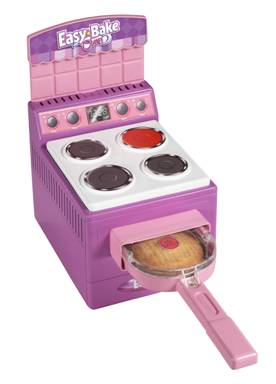
So, how to pull it off?  Turkey is not as popular here. I wondered where I would find a whole turkey.  I figured the rest of the meal would be easy as the ingredients are all common items, but a whole turkey was going to be a problem.  At school one day an Italian mom happened to tell me about a poultry farm that her family had used for decades. I got our neighbor to call and order me a whole turkey.  “7 kilos? Are you sure? That is quite large.” “Yes, I am sure.”  A 7 kilo/15 pound turkey is not big by American standards, but it is huge by Italian standards. We measured the inside of the “Easy Bake” sized oven. We prayed it would fit.

Since Thanksgiving is not a holiday here, we decided to celebrate it on the Sunday after Thanksgiving.  That Friday, Joe went to pick up the turkey on his way home from work.  He called ahead and got directions. He input the information into the GPS.  He drove around for an hour in fog twice as think as San Francisco fog searching for the farm.  He couldn’t find it. He called for directions again. He couldn’t find it.  After the third phone call, the poultry farmer told Joe to stay put. He would come and get him and take him to the farm. Joe arrived at the farm and asked for our turkey. “Your wife already picked it up.” “That is impossible. I have the car.”  “An American woman came and picked it up this afternoon.” Gee, do ya’ think that maybe you could have told Joe that it had been picked up one of the three times he called you? You know, before he drove around for an hour in fog thicker than pea soup looking for you?

What had happened is another American woman had decided that she wanted to have Thanksgiving too.  She had asked me where I was going to get my turkey. I gave her the number to the turkey farm and explained that she needed to call and order her turkey well in advance. She needed to order the turkey because the farm didn’t normally keep turkeys but could get them if ordered.  I ordered mine two weeks in advance. I don’t know where the mix up happened along the way, but, the other American woman got our turkey. There was no second turkey at the farm for us.  Our first Thanksgiving in Italy, three families coming over and no turkey.

ROUND 2 | FRANKENTURKEY

We had Friday afternoon and Saturday morning to try to figure it out as stores are closed Saturday afternoon and Sunday,  Lena had an Italian friend over that Friday afternoon. I dragged that poor girl to every store I could think of asking if they had any turkey.  The butcher across the street had a few pieces.  Joe got a few pieces from the farm and thus, Frankenturkey, was built.

Next, we had a house to clean and a feast to prep. Lo and behold, I woke up Saturday morning sick.  Like in bed with a fever kind of sick.

Oh, and all those ingredients that I thought would be so easy to find. Not so much. Cranberries were no where to be found in the normal supermarkets. I asked in the fruit and vegetable stores. No. I asked in the frozen foods store (yes, there is an entire store devoted to frozen foods). No. On my quest I stopped in a Russian store hoping to find some things for our Polish Christmas celebration. Low and behold, sitting there in the freezer section there was a pack of what looked like whole cranberries. I took a risk and bought them figuring I’d look up what they were when I got home. At home the package title translated as mooseberries – also known as the high bush cranberry! Hallelujah!

Cranberries, check.  Now pumpkin pie.  I went to all the same stores asking for pumpkin (zucca). The Parma region serves quite a bit of pumpkin filled pasta in the fall so this should have been an easy task to find pumpkin.  Yeah, again, not so much. I went to the supermarket armed with my very limited Italian and Google Translate. I found a commessa and tried to explain what I needed for una grande tradizionale festa americana.  “Oh, si, la festa di ringraziamento! mi piace molta la festa di  ringraziamento.”  Great, she has heard of Thanksgiving and she really liked it!  Certainly she would help me. I told her that I need pumpkin for a pie. “Per una dolce?? Per una torta?”  She looked very confused and a bit disgusted. Yes I told her it is a very important part of the meal.  “Per torta?  hum?”  She told me that the pumpkins were last month. They were all gone. OK. I asked if they had pumpkin in a can?  At this point her look tells me that she is not only disgusted, but angry at the thought of pumpkin in a can. “No!”  She turned and walked away.

The other families had offered to bring dishes. I decided to punt the pumpkin pie to someone else who had been living in Italy longer.

ROUND 3 | SOMETHING TO BE THANKFUL FOR

Sunday arrived. I was still sick, but Joe rose to the occasion. He slaved away in the kitchen all morning. The house wasn’t as clean as I would have liked, but it is a small space and when filled with people, it was passable.

Our friends Jan and Steve brought some excellent Italian wines. Julie and Don brought the pumpkin pies and Lisa and John brought the green bean casserole.  I am pretty sure everyone had a good time. I know my family did.

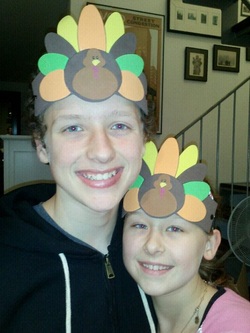
At the end of the day, after all the running around, me getting sick, and, presenting Frankenturkey instead of a whole bird, it was worth it. We had a fun day filled with the company of new friends and a traditional Thanksgiving feast. The thing I was most grateful for that day though, was this – the kids were smiling again.

turkey2

Americans abroad · Emilia Romagna · European travel · ex-pat life · international travel · Italian food · Italy · Parma Italy · parmigiano-reggiano · Prosciutto di Parma · Travel

St. Augustine

sta

“The world is a book,
and those who do not travel
read only one page.”

~ St. Augustine ~