Adventure travel · Americans abroad · European travel · ex-pat life · food · Göteborg Sweden · gothenburg · Gothenburg Sweden · Honeymoon Planning · honeymoon tips · Honeymoon travel · Insider Tips · international travel · lobster · mys · nature · Off The Beaten Path · restaurant · restaurants · Skåne · Skåne Sweden · Sweden · swedish food · The Unique and Unusual · Travel

The Black Gold of Sweden – Sweden’s Unusual Delicacy

Picture
Photo credit: Henrik Trygg

AUTUMN IN SWEDEN | HUNTING FOR BLACK GOLD 

Sweden in the autumn is a beautiful site. The land is painted with a palette of orange, red and yellow palette trees, blustery clouds, and blue skies. Along the incredible Bohuslän coast of Sweden it is hummer season. I know, giggle, giggle, but hummer means lobster in Swedish, so get your mind out of the gutter.

And hummer season in this part of Sweden means one thing – Sweden’s unusual delicacy, Black Gold.


While crayfish festivals mark the summer in Sweden, autumn means lobster. The official start date of lobster season in Sweden is the first Monday after September 20th. The last day of the season is April 30th. After the close of lobster season, lobsters may not be fished or held in any form.

Lobsters found along the Swedish coast are known as Black Gold due to their black color in the wild.


​Last autumn we went in search of fresh lobster only to realize we had ventured out on a national holiday and everything was closed. So on a crisp autumn day this year, and after a bit of calendrical research, we headed to Göteborg in search of fresh Black Gold, hummers, lobster.

GÖTEBORG | THE BOHUSLAN ARCHIPELAGO

For the residents of the Bohuslän coast of Sweden, the start of lobster season is a celebration of the same magnitude as Midsummer, Walpurgisnacht or Christmas. The opening day of lobster season is the main event of autumn along the Swedish west coast stretching from Göteborg all the way to Finland. This a very big deal! ​ The locals are so serious about lobster that in 1996 they established the Swedish Lobster Academy in Hunnebostrand. The academy promotes knowledge about lobsters’ living conditions, distribution, movement patterns, and reproduction. Members focus on sustainability and they collaborate with fishermen to address issues such as trapping and farming opportunities. The academy promotes quality assurance of lobster with respect to size, breed, and appearance.

To give some perspective, remember that people have been fishing this coast since the Stone Age. Fishing has been a source of livelihood for generations. The sea and seafood have a culture all its own and each September the area transforms into a huge seafood party. On the first day of the season, both professional fishermen, as well as locals, head out to the docks long before the 7:00 a.m. start time. Coveted spots are held well in advance. The piers are bustling as everyone readies and waits. At 7 am the water is full. Time to pan for Swedish Black Gold.

If watching from the docks isn’t enough for you and you want to experience lobster trapping up close and personal, you can go on a lobster safari. All along the coast there are numerous outfits offering a true day at sea complete with baiting the lobster traps, hauling the traps and pots around the boat and of course, eating your catch at the end of the day paired with a special release of lobster beer from the Grebbestadsbryggeri brewery.

We opted to explore the archipelago of Göteborg thinking we would wander and stumble upon a lobster restaurant when the mood struck and our stomachs demanded it. As cars are not allowed on most of the islands, travel to, from and about the archipelago is by ferry.

The Göteborg archipelago is a captivating blend of charming fishing villages with Swedish red clapboard houses and granite islands with individual island forests jutting out of the green grey waters. The landscape is stark and lush at the same time. With this topography, it is no wonder that the area is rife with legends of mermen, adopted sea boys, sea witches, and blind sea captains. I was suddenly inspired to write stories and film movies there. The majority of the islands are uninhabited, but occasionally one can spy a lone house on an island. Cold wind, grey skies, granite mounds, the caw of seagulls, lonely clapboard houses, only one way on and off the islands and talk of Black Gold! Murder mysteries were running through my head.

We landed on the island of Styrsö and began our exploration the old fashioned way – walking.

Styrsö appeared to be a summer resort island and we were well past summer. Styrsö is touted as having 1,400 inhabitants, although we only saw about 10 people total, and half of those were tourists like us. The landscape varies from desolate and rocky in the west to wooded and lush in the north near the old church. I read that long ago the island housed a large oak forest. Alas, the forest was cut down to make way for the summer homes of wealthy Göteborgers in the 19th century.

Despite the off-season isolation, hints of the charming village it must be in the summer months were everywhere. Large summer homes, wooded trails winding through town and down to secluded beaches. Even my son, who is usually in his own world, noted how nice the island seemed.

While Styrsö is a lovely little island, we wanted fresh lobster and none was to be found on this deserted island. I was getting hangry. Time for Plan B. We headed back to the dock to catch the ferry to Göteborg. We needed to find a restaurant.

In addition to the stark, Nordic beauty, the Bohuslän coast, and Göteborg specifically, is famous for serving the best shellfish and seafood in Europe. There are countless seafood restaurants to choose from. Göteborg’s most famous chef is Ulf Wagner of the Michelin-starred Sjömagasinet which many Swedes will tell you serves the best fish in all of Sweden.

In an interview with Travel and Leisure, Chef Wagner explained why the Bohuslän seafood is so special.

“The water in northern Europe is colder, so the fish and shellfish grow less quickly, and therefore develop a richer flavor and better texture,’ he said. Wagner explained that the timing of the lobster season is based on protection of the species—making sure it is able to reproduce before being caught—and the time of year when it tastes the best.”

​Since one needs a reservation at Sjömagasinet months in advance, and we were all very hungry at this point, we chose a more affordable and immediately available mid-ranged restaurant. We gorged ourselves on grilled lobster, baked lobster and lobster rolls. It was fresh. It was delicious. It was worth the wait.

 

Americans abroad · Beauty Essentials · Emilia Romagna · European travel · ex-pat life · Insider Tips · international travel · Italian style · Italy · Thanksgiving abroad · The Unique and Unusual · Travel

The Secret To Italian Style – Fare La Bella Figura

“The Creator made Italy from designs by Michelangelo.”
Mark Twain


Have you ever wondered what is the secret to Italian style? How Italians manage stilettos on cobblestones or how they look chic and elegant at all times? After moving to Italy I discovered the secret to Italian style. The secret to Italian style is more than just dressing well. Looking good is a cultural norm learned from birth. In Italy, one learns from an early age the importance of fare la bella figura.

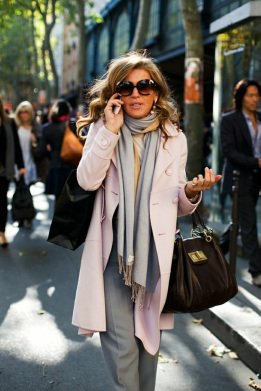
Italian style. A quintessential Italian woman dressed elegantly.
The quintessential Italian woman. Stylish and elegant. Photo credit: https://www.walksofitaly.com/blog/how-to/what-italians-wear-in-spring


FARE LE BELLA FIGURA | A GOOD FIRST IMPRESSION

Fare la bella figura” literally means ‘to make a beautiful figure.’ The phrase refers to the Italian ideal of looking your best at all times, making a good impression and is at the core of the secret to Italian style. For this casual Californian, this concept may be the biggest challenge that I faced living in Italy.  Northern Italy is the home of Milano, the seat of fashion houses and world famous designers. People are stylish there.

After moving to Italy, I was jet lagged and coming down off of an emotional roller coaster of a year. I was unaccustomed to humidity and was sopping wet every time I stepped outside.

There I was the first day of school in Italy, bedraggled, exhausted, and definitely not stylish. I hadn’t felt the need to dress up for the ten minute walk to school when I was just going home to unpack dirty, dusty boxes. I felt good about myself that I had managed to brush my hair, put on some makeup, and don my fancy Taryn Rose flip flops.

I arrived at my children’s school. I looked at all the Italian mothers and thought “uh oh.”  Not only were they thin and physically beautiful, they were stylish in an understated elegant way. Northern Italian women don’t wear a lot of makeup. They don simple, high quality, finely tailored clothes. They wear dresses, skirts and lots and lots of stilettos. And boots – year round. And scarves – year round.  I stood on the sidewalk, hair in a ponytail, wearing California athleisure wear and flip flops. Needless to say, I stood out like a sore thumb.

MUSINGS AND OBSERVATIONS | HOW DO THEY DO IT?

I pondered the secret to Italian style. Was the secret to Italian style simply having enough money to buy the best clothes? Was the secret to Italian style some special hair product that stopped your head from sweating all day long and looking like one just got out of the shower? I was determined to find out the secret to fare la bella figura.

I had a conversation with my English friend Diana about the Italian women’s seemingly effortless style. Diana noted that if you went to the supermarket in England dressed like an Italian woman does, everyone would think, “what is she trying to prove?”  I thought about how people would react if you showed up at Safeway in stilettos, a dress, a scarf – Diana was right.  Americans too would think you were putting on airs. The only reason you would wear high heels to the supermarket in America was if you were on your way to or from work or an event. In Italy, however, it a common occurrence.

I will admit, from my California perspective, it seems like a lot of work to get dressed up just to run to the supermarket, go to the gym, or walk the kids to school. But dress up Italians do. I was no longer in California and if I didn’t want to stand out I was going to have to make some changes. Wearing exercise clothes on the street is just not done in Italia, and flip flops (my shoe of choice in California) are reserved for the pool or the health club.  If I continued my disregard for la bella figura, I may offend someone or at the very least confuse them.  My American friend Sarah told me that once she went out in her “tuta” or her exercise suit with no makeup. She ran into her landlady who promptly contacted Sarah’s Italian in-laws to inquire if Sarah was feeling ill since she had been out of the house looking so casual.  In Italy, being ill is the only excuse for failing fare la bella figura.

LESSON NUMBER ONE | KNOW THY SELF

The first week I sat back and observed. I saw one woman ride up to school on her bicycle in a tight pencil skirt, gorgeous blouse and stilettos. There was a light summer rain. She rode her bicycle while holding an umbrella, one child on the back of her bike and another in the front.  She arrived, floated off of her bike, got the kids out of their seats, grabbed her Louis Vuitton bag and glided into school. Not a hair out of place. I watched – mouth agape. She couldn’t be a real mother of two small children. She looked like a super model. I looked around for a film crew. This had to be fake.

The one thing that stood out to me was her air of confidence. She was comfortable in her own skin.

So, first on the list toward achieving Italian style – feeling confident that you look good and not caring what others think. Now this seems to be incongruent with the concept of fare la bella figura, but it is not. Putting your best face forward means different things to different people. As long as you carry yourself with the confidence of an Italian woman in stilettos on a 1,000 year cobblestone street, all will be fine.

LESSON NUMBER TWO | KNOW THY PRODUCTS

I soon came to accept that not only are Italian women stylish, they don’t seem to be affected by weather. Italian women’s hair is never out of place. The weather wreaks havoc on my hair regularly. In the summer the humidity leaves my body and head wet and it renders my hair a wet, frizzy, wonky mess. In the spring, the pollen makes my eyes water and my nose run constantly leaving me looking like W.C. Fields. The wet winter rain and fog makes my eyes water resulting in black raccoon eyes from runny mascara. And again, my hair becomes a frizzy wonky mess. Why don’t Italian women suffer as I do? Is it genetics? How do they do it?

The second lesson on achieving Italian style, know your hair and powder your face. There are a number of hairstyles that one can wear to combat the weather and a number of hair products that can tame the wildest of manes.  One thing that I noticed is that it is not uncommon for Italian women to don a scarf on their heads while they are traveling. Think Sofia Loren in a convertible on the Amalfi coast. A headscarf can be tied around your hair to protect it from the weather, and then upon arrival, it can be stylishly tied around your neck, shoulders or handbag.

Also, one Italiana informed me that one simply must invest in a high quality face powder to ensure that your makeup does not melt off. And carry face blotting towelettes.

LESSON NUMBER THREE | COMMIT

Fare la bella figura is not limited to young women either. I have seen many an older Italian woman doddering along, holding on to her companion for support in stilettos! Stilettos! They can barely walk anymore, but damn it if they aren’t going to look good. I will admit that I have yet to attain this level of fare la bella figura.

Lesson number three on achieving Italian style, you are never too old to care about how you look. The third secret to Italian style – commit to fare la bella figura for life.

The older women also love their hats, fur coats, scarves and handbags. I particularly like to watch the older ladies during the Christmas season as Italians dress up to do their Christmas shopping. At the beginning of December, the older Italian women put on their finest attire as they stroll around the main piazza and shopping streets showing off their coats, hats and handbags  It is a far different atmosphere than the images you see of people clawing and fighting over items at WalMart.  This is a slow, deliberate shopping experience.  A chance to show off your best face.

Another difference between Italy and the USA, no one in Italy is afraid of PETA. Fur and leather abound, particularly among the older crowd. Fur hats, fur coats, fur trimmed scarves, fur lined leather gloves, fur lined leather boots, leather pants, and leather skirts are commonplace.

LESSON NUMBER FOUR | TEACH THY STUDENTS WELL

Lesson number four on achieving Italian style, teach the males in your life the importance of fare le bella figura as well. Italian women are not alone in pursuing la bella figura. Italian men spend an equal amount of time on their appearance. Italian men’s clothes are often tailored. It is unusual to see baggy clothes on men here. Italian men also wear sweaters quite a bit. Not just pullover sweaters, but cardigans. And they like to roll up the cuffs of their pants, jeans, shorts.  Italian men wear scarves as often as women do and they pay a lot of attention to their shoes. They also carry bags made of beautiful leather – or what we would call a man purse, a ‘murse.’

Older men frequently wear suits, bow ties, fedoras, and a scarf. They dress this way all the time – just to go to the post office or the vegetable market.  And where the Italian women tend to be understated, Italian men have a flair for bold style. They are not afraid to wear colors and patterns. Lord knows they love a brightly colored pant.
I have observed the Italians for over three years now. I will admit that while I have learned a thing or two, I am still amazed at how they pull off la bella figura every single day. They make being stylish and elegant look effortless and easy. I still cannot navigate cobblestones in stilettos and I still do not dress up to run to the supermarket across the street, but, I have improved. I no longer wear flip flops.

Fare la bella figura is part of the Italian culture. It is expected, and I have come to appreciate it. The attention to style makes one feel a bit better when you are out and about. And it makes for great people watching.

The Italian author Beppe Severgnini summed it up best. “Being Italian is a full-time job. We never forget who we are, and we have fun confusing anyone who is looking on.”


The photos of Italian style are not my own. I got these off of the internet because it is not good form to take photos of strangers, but I assure you that I have seen some version of each of these outfits on a regular basis.

Adventure travel · Americans abroad · cycle holiday · European travel · ex-pat life · honeymoon · honeymoon tips · Honeymoon travel · Insider Tips · Malmö · nature · Off The Beaten Path · Skåne · Skåne Sweden · The Unique and Unusual · Travel

The Trolley Cycle | Sweden Off The Beaten Path

Sweden | A Commitment To Repurposing and Reusing

Sustainable living is a big commitment in Sweden. Reusing, recycling and repurposing are part of everyday life here. So much so, that communities have even taken to repurposing old railway lines and turning them into tourist routes. If you are looking for an off the beaten path adventure head to Skåne, Sweden’s southernmost region and go on a trolley cycle ride.

Skåne is a quick day trip from Copenhagen and is a landscape rife with farms, forests, creeks, lakes, rivers, streams, beaches, and the Baltic Sea.

Draisine | A Brief History of The Trolley Cycle

Back in the 1800’s rail travel began giving way to the automobile.  As trains routes were abandoned in favor of faster and more convenient cars, the railway tracks fell into disrepair. They became overgrown and rarely used. Enter the environmentally friendly Swedish mentality. In the 1970’s communities along the abandoned train tracks decided to repair them and turn them into trolley cycling routes.

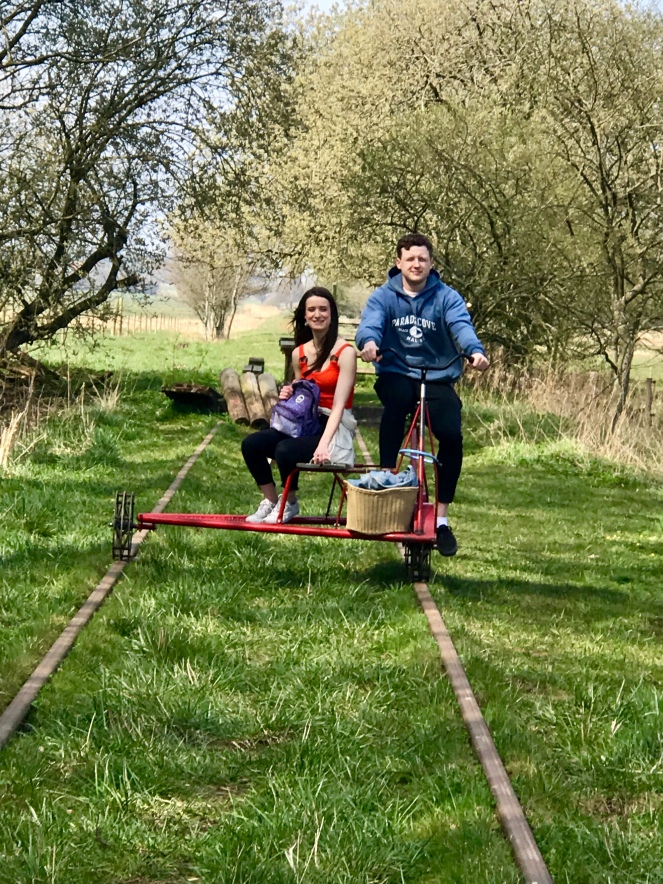
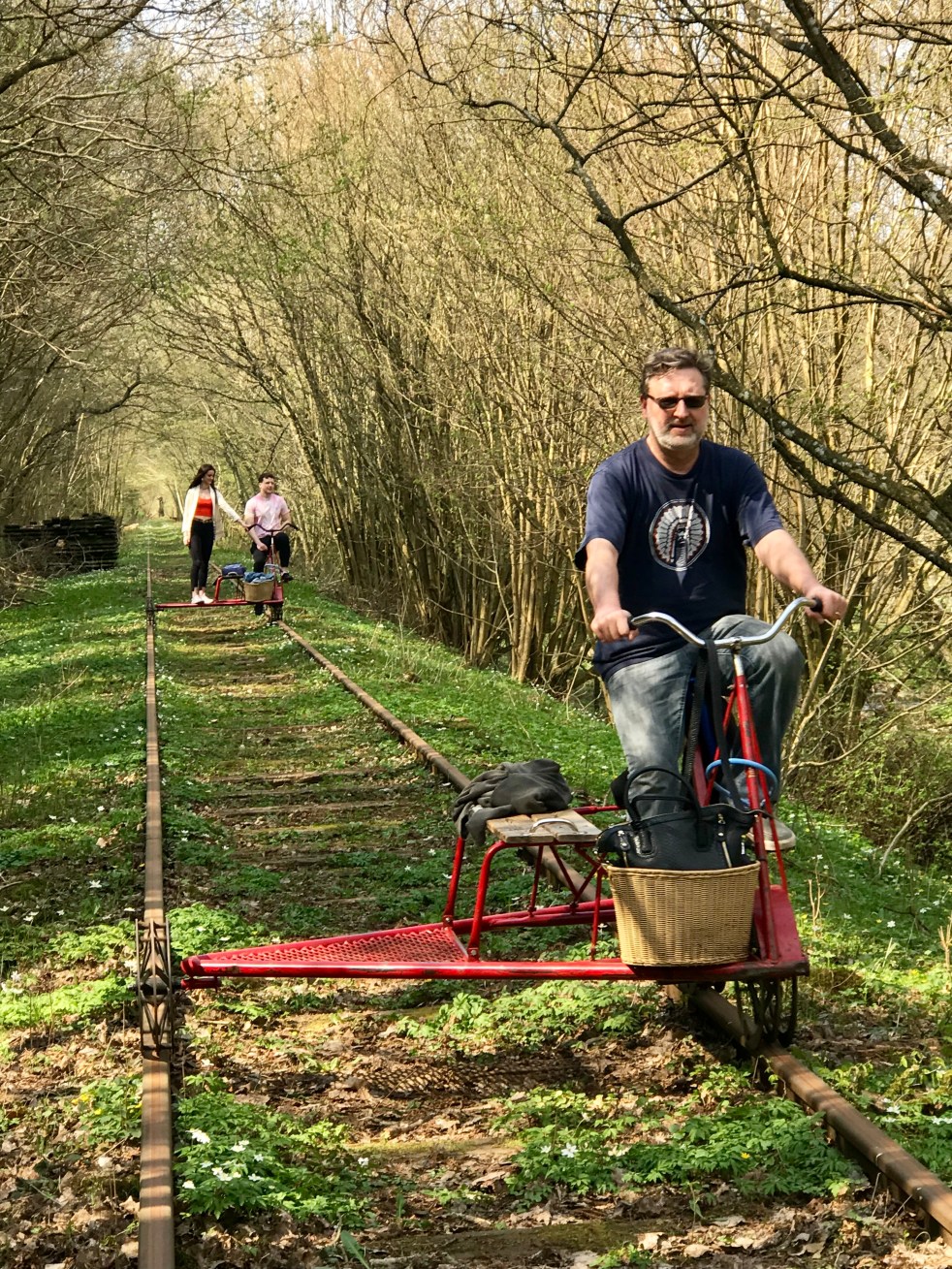
Trolley cycles are bicycles designed specially to ride the train tracks. These bikes are easy to peddle and its virtually impossible to topple over making it safe and fun for people of all ages. Built with a bike seat, peddles and handlebars for one, and a bench seat that fits another adult or child. These special bicycles were modeled after the draisine – an old auxiliary rail vehicle invented by Karl Drais. Draisine were utilized by rail service personnel and transport crew to maintain railway infrastructure.

The draisine is allegedly the first commercially successful two-wheeled, steerable, human-propelled machine.  the draisine is also known as a hobby-horse or dandy horse.

There are many trolley cycle routes to choose from around Skåne. We rode a route beginning in Tomelilla. The ride was sublime. We passed farmland, forests, creeks, and lots of animals.

It was peaceful and we had perfect weather. We stopped for a light picnic snack at the end of the line.


IMG_7855

Practicalities | Where To Find A Trolley Cycle

Trolley cycles can be found in a number of places in Skåne. The routes are varied in topography and length of the route. Trolley cycling is the perfect adventure for friends, families, Mother’s Day or Father’s Day.

http://www.dressincykling.se
http://www.dressin.se
http://www.veteranjarnvagen.se
http://www.routesnorth.com

I hope that you have the chance to discover Skåne via the trolley cycle. It is a day out you won’t soon forget.

Adventure travel · Americans abroad · aperitivo · art · Beauty Essentials · Bologna Italy · Bosnia Herzegovina · celebrity travel tips · Christmas cocktails · cocktails · Color Street · concierge · Copenhagen Denmark · Croatia · Dalsland · Denmark · Emilia Romagna · Emilia Romagna · European Christmas Markets · European travel · ex-pat life · ex-pat reality · favorite recipes · fika · Firenze Italia · Florence Italy · food · France · Göteborg Sweden · Germany · Giethoorn · Gothenburg Sweden · Hamburg · Helsingborg · Holland · Honeymoon travel · Insider Tips · international travel · Italian cocktails · Italian food · Italian recipes · Italy · Krka · laundry · Liebster Award · luxury travel · Maastricht · Malmö · Malmo Sweden · Modern Art · Mostar · mysig · national parks · nature · Off The Beaten Path · Paris · Parma Italy · parmigiano-reggiano · pastel de nata · Plitvice Lakes · Poland · Portugal · Prosciutto di Parma · restaurants · Saturnia · Skåne · Skåne Sweden · spa · Spain · The Netherlands · The Private Suite · The Unique and Unusual · Thermal baths · Tourettes-Sur-Loup · Travel · travel safety · Tuscany · UNESCO World Heritage Site · USA · Wadden Sea

The Liebster Award!

Niche Travel Design has been nominated for The Liebster Award!

I was nominated by A World in Reach for this peer award. For a somewhat new blogger like me, this is a special treat.  It’s always a great feeling to be recognized by your peers. Thank you, Sydney and A World in Reach.

What is the Liebster Award?

The Liebster Award is a peer to peer award, given to bloggers, by bloggers as a way to foster collaboration and support. What a nice idea.

I noticed a message board in my German friend’s house that said “liebe und respekt.”  I asked what liebe or liebster meant.  She told me it means dearest or kindest. Thus, bloggers being dear and kind to one another. This is an award I can get behind. I am always seeking advice from others and I am happy to promote the idea of collaboration. I strongly believe in the theory that what you give comes back to you.  

The Rules of Engagement

Once you’re nominated with the Liebster Award, you have to follow a few rules to celebrate your win and spread the award throughout the blogging community.

1. Thank the person who nominated you, and put a link to their blog on your blog.

2. Display the award on your blog.

3. Write a small post about what makes you passionate about blog posting.

4. Provide 10 random facts about yourself.

5. Answer the questions from your nominator and provide a fresh set of questions for those you nominate.

6. Nominate 5 – 10 blogs that you feel would enjoy blogging about this award.

7. List these rules in your post.

How I Began My Blogging Journey

I began blogging when I first moved from California to Parma, Italy in 2011.

When my daughter was a toddler she frequently made up words that sounded similar to the adult versions. She would say strawbellies instead of strawberries; froggy instead of foggy. One of the words she transposed was Parmesan. In her toddler mind, Parmesan cheese was Purple John cheese. For years our family asked each other to pass the Purple John cheese at the dinner table.

Imagine our surprise when we realized that we were moving to Parma, Italy – the birthplace of Purple John cheese.  Apparently, the universe has a sense of humor. It seemed like serendipity. What we did not know is that an international move is difficult. Life in another country is difficult. It is not all adventure.  I had 2 very sad children who did not want to move and leave the comfort of their home.

[dropshadowbox align=”none” effect=”lifted-both” width=”auto” height=”” background_color=”#ffffff” border_width=”1″ border_color=”#dddddd” ]Read about the reality of an international move here.[/dropshadowbox]

All that being said, life in Italy was often quite funny because things were soooo different than what we were used to. Thus, my original blog, Purple John, began by me just telling friends about the difficulties and the funny stories that we encountered along the way.

[dropshadowbox align=”none” effect=”lifted-both” width=”auto” height=”” background_color=”#ffffff” border_width=”1″ border_color=”#dddddd” ]Read funny stories about life in Italy in the drop-down menu here. [/dropshadowbox]

And of course, just when we were settled into life in Italy, the universe struck again and we had a second move to Malmö, Sweden. Once we moved and settled into Malmö, I toyed with the idea of reworking my past experience as a travel consultant and incorporating the blog as part of the business. The kids were older and they did not need me as much as they did in Italy. This last year I began my existing blog Niche Travel Design using my name and domain name from the travel business that I ran in the USA. So now my travel business has a blog attached to it.

My blog still occasionally includes funny ex-pat tales of excitement and woe, but now I am more focused on the business of travel. The funny thing, though . . . that little toddler that inspired my first blog name, she now works with me on the business.

At Niche Travel Design, our philosophy is that designing the perfect vacation is as much an art form as designing a home’s interior or a garden’s landscape. We curate a unique experience for each of our clients. 

We are experts in finding the best cup of coffee, the most interesting art gallery, the best place to sip Prosecco while watching the sunset, and the best accessories to make your adventure more comfortable.

Niche Travel Design is more than a travel blog. We are a community featuring stories of life abroad, cultural experiences, recipes, ideas, and tips for creating unique memories to last a lifetime. We also recommend products and services.

10 Random Things About Me

  1. I once sort of crashed a funeral. My friend was supposed to go and I was staying with her so I went too because it was celebrity filled. In the end, I felt like a heel and a looky-loo. People (even celebrities) were grieving. I don’t recommend it. Not my best moment.
  2. I always top off my gasoline, despite the warnings.
  3. I love Gene Kelly movies and I got to meet him once and had a conversation with him about his more obscure movies. It was amazing and he was so kind.
  4. I am secretly a Carpenters fan. I guess it is not a secret anymore. 
  5. I sing all the time in public even though I really shouldn’t.
  6. I once got into a car accident on the way home from a car accident and neither one was my fault. I know you don’t believe me, but it is true.
  7. Apparently, according to my family, I say Google incorrectly? Who knew?
  8. I hate, I mean really hate, The Pillsbury Doughboy. His voice makes my skin crawl.
  9. I once stayed at a “pensione” in Barcelona that was actually the host’s children’s room. He was clearing toys out of their bedroom. It was weird, but it was late and there was a train strike so I paid to sleep in a stranger’s kid’s bed.
  10. I generally don’t like chick flicks despite being a chick. I seem to be missing a gene or something.

A World In Reach’s Questions For Me

What is the most important lesson you’ve learned during your travels? That once one strips away all the cultural differences, we are all the same. We all just want safety, family, friends, love, and respect in our lives.

What’s your favorite part of traveling? Exploring and learning about a place. Finding off the beaten path things to do. I am a researcher and enjoy the discovery of new things to do, a great local restaurant, a specialty shop, an unusual experience in a typical tourist spot. Least favorite? The getting there bit. The airports, etc.  Ugh.

Do you collect any souvenirs from your travels? I used to collect art from each place but now I have too much. I had to stop. No more room to hang anything. We have also always collected ornaments for our Christmas tree. It is nice to remember our trips as we put up each ornament every year. Now I collect photographs and memories.

What is the most unique experience you’ve had with a local while traveling? Swimming with horses in Croatia. Just incredible.

[dropshadowbox align=”none” effect=”lifted-both” width=”auto” height=”” background_color=”#ffffff” border_width=”1″ border_color=”#dddddd” ]Read more about swimming with horses here. [/dropshadowbox]

If you could travel with one person you’ve never traveled with before, who would it be? Barack Obama. He is intelligent, funny, has done some cool stuff and met a bunch of interesting people. I’ll bet he has good stories. Plus, he gets V.I.P. treatment and if we were traveling together I’d get V.I.P. treatment too.  

How did you come up with your blog name? It was the name of my travel business in the USA. I focus on niche, unique, unusual travel experiences. I curate and design your trip for you.

What tip would you give to a new blogger? Learn all the technical stuff before you begin.

Is there a book or a movie that has inspired your wanderlust?  No. My wanderlust was developed as a child. Actually, I feel like it has always been there. 

What are the top 3 things on your bucket list? Africa – all of it!  Australia/New Zealand and Asia.

What is your biggest travel regret? I had a chance to go to Africa for a summer. I didn’t go because it wasn’t practical. I should have gone.

My Nominations for The Liebster Award

I have really enjoyed the Liebster Award process. I also enjoyed reading about each of these bloggers that I am nominating. I hope that you each take the time to read up on what they have to offer.

1. Divine Kabwe at beingyourselfblog.wordpress.com 

2. Diana Danciu at ourblindlife.com

3. Jenny Toney Bhatia of travelingpartyof4.com

4. Temeka Flack Green of worklifemommyhood.com

5. Heather Eyre of thefemalefactor.me

6. Jamie Joseph of wearefreeindeed.wordpress.com

7. Samantha Norman of SammiNormanFit.com

8. Louise Emerson of 12books.co.uk

9. Mallory Herrera of mamaonparade.com

10. Megan Henderson of thehendersonhouse.org

Questions For My Nominees

Since I have a travel blog, my questions are all about travel.

  1. Where would you go if money and time were not issues?
  2. What is the best advice you would give to new travelers?
  3. What is the one accessory that you cannot travel without – your phone and/or computer don’t count?
  4. Where is one place you would return over and over again? And why?
  5. Where is one place you’ve been but never want to return to? And why?
  6. What is the funniest travel mishap you’ve had?
  7. What is the scariest travel experience you’ve had?
  8. What is your favorite travel souvenir?
  9. What is your favorite local cuisine?
  10. What is your next destination?

Looking forward to reading my nominees’ answers and getting to know them better.

And once again, a BIG THANK YOU to A World In Reach for my nomination!

Everyone, please be sure to check out Sydney’s blog for ideas on budget travel. A World In Reach can provide you with all sorts of ideas on traveling on a budget.

Adventure travel · Americans abroad · Croatia · European travel · Honeymoon travel · Insider Tips · international travel · luxury travel · Off The Beaten Path · swimming with horses · The Unique and Unusual · Zadar

Swimming With Horses | Zadar, Croatia Off The Beaten Path

Are you looking for a unique travel experience? Something off the beaten path? Swimming with horses in Croatia may be just the thing you are looking for.

STABLES NEAR ZADAR | Riding Club Vencil

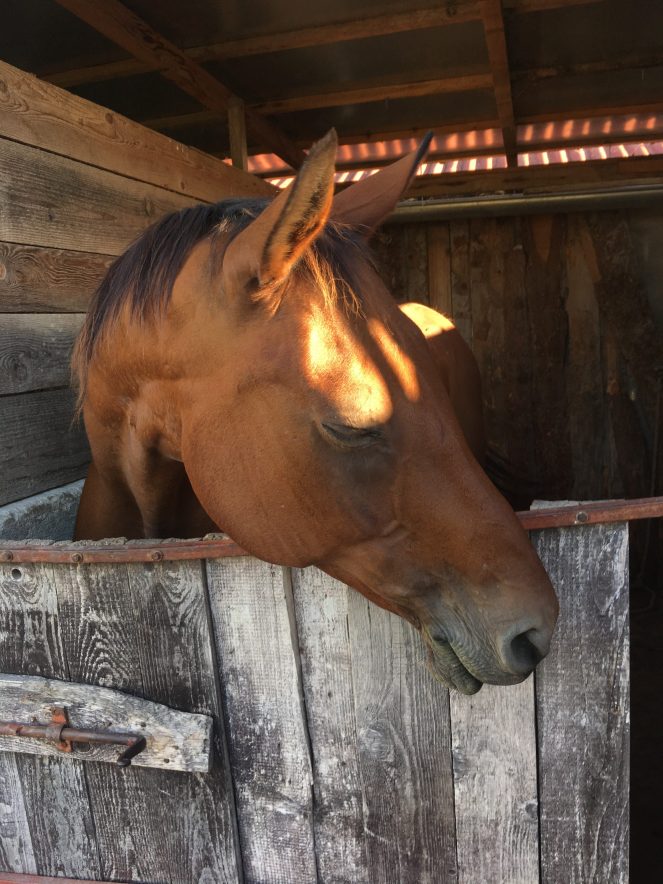
A horse at the stable in Zadar, Croatia. Ready for swimming with horses.
Ready to go swimming.

There are a number of stables throughout Croatia for riding horses in lakes, rivers, and the sea.

We happened to be spending a month in Zadar so we chose Riding Club Vencil located just outside Biograd na Moru.

The whole experience was beyond all of our expectations. We arrived at the stable which was located in the spectacular Croatian countryside. The grass was Jade green. The cerulean sky was spotted with the occasional fluffy white cloud. The sun was shining and the morning surrounded us with a steady drumbeat of nature sounds.   

The owner of the riding club was quite careful with each of us to determine our level of skill and any fears we may have. In the end, they chose the perfect horse for each of us. 

Then our adventure began. We eased into it with an hour long ride through the rolling hills to Lake Vrankso. The ride was mostly a slow walk for the beginners. We did have some more experienced riders in the group and they were allowed to gallop off so long as they stayed within eyesight of the guide.

SWIMMING WITH HORSES | Lake Vransko

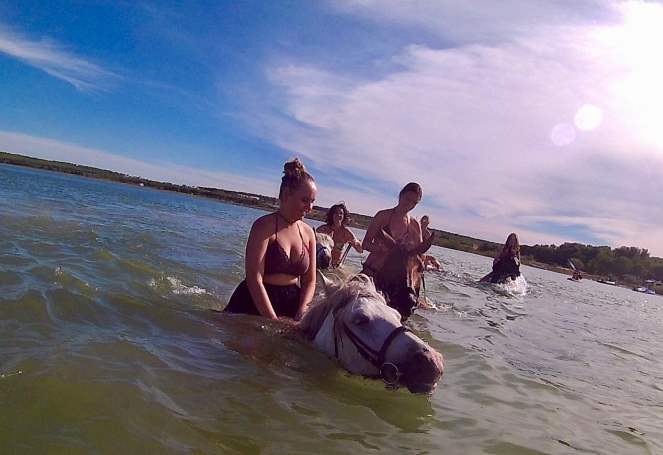
Young women sitting atop horses that are swimming near Zadar, Croatia
The horses are swimming!

As the sun beat down, we eased closer to our swimming spot, Lake Vransko. Summers in Croatia are hot. That day it was 38 C/100 F. We were all ready to cool off. And no creature was more ready than the horses. The lake called to us like a siren of the sea.  The horses began to show their excitement. They had done this journey before and they knew that they were about to cool off.  Each horse began to trot a little faster and they started talking to one another like a group of teenage girls. One horse even did a little dance of excitement. Once in the water, he began to play.


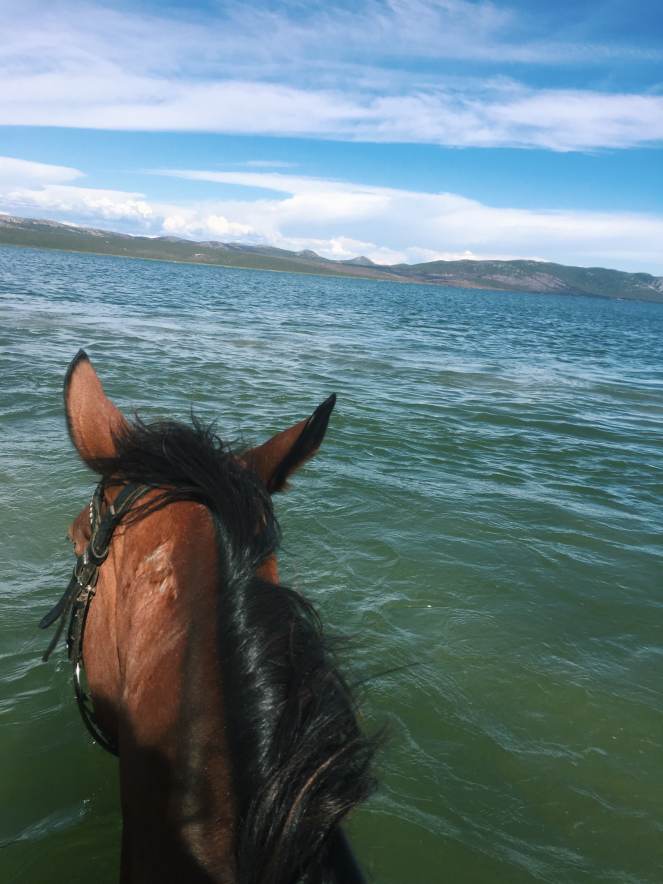
And this is the part where the ride became my favorite experience in Croatia.  Here is where it gets interesting. Where it went from being a simple horse ride to a very unique experience. Sitting there atop our horses, they entered the water. The cool water hit our legs and the horse stopped for a moment to enjoy their respite from the heat. Then, as if guided by an unseen force, they moved farther out into the lake and began to swim. It felt like a cross between floating and being powered by a paddle boat.

This was our chance to bond with animals in a whole new way.

SWIMMING WITH HORSES | What To Expect

Now I have been swimming with dogs in the past, but s
wimming with a dog is just not the same as swimming atop a horse. A dog is, of course, smaller than a horse and a dog swims alongside you. One would never sit atop a swimming dog. And simply put, a dog is not as powerful as a horse. 

I think that was the coolest feeling of the whole experience – feeling the horse’s sheer power. While you sit atop the horse as it swims you feel every one of its powerful muscles engage. It felt like you were united with the horse like some sort of centaur. I was at its mercy and had to give over to its expertise at navigating the waters. 

The horses and our group played in the water for over an hour. Once we tired out, we promptly laid ourselves out on the field of grass and wildflowers to warm up and dry off. Then we enjoyed a picnic of Dalmatian food.  

The entire adventure was about 4 hours round trip. Given the uniqueness of the experience as well as the picnic and photos which were included in the price, we felt that we scored quite the bargain. The entire cost was only 720 HRK or $109/€97 per person. 

About Riding Club Vencil

I highly recommend swimming with horses if you get the opportunity. If you happen to be in Dalmatia, check out Riding Club Vencil. They were ever so helpful and professional.

GPS coordinates:  N43.9622 ° E15.4962 °.


Americans abroad · Buon Natale · Christmas · Christmas cocktails · crèche · European Christmas Markets · European travel · ex-pat life · Frohe Weihnachten · Germany · Hamburg · Insider Tips · international travel · luxury travel · Off The Beaten Path · The Unique and Unusual · Travel · White Christmas

German Christmas Markets – Hamburg, Germany’s Most Elegant Christmas Market

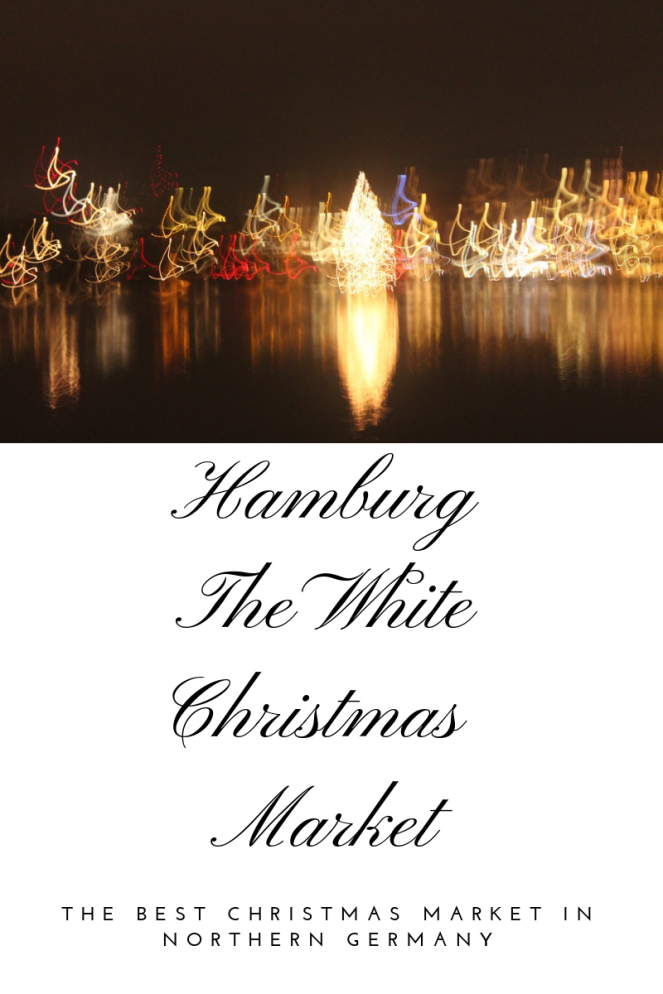
Hamburg.jpgI love a Christmas market. In fact, I have yet to meet a Christmas market that I didn’t like. I love the vibe, the decorations, the music. I love the bustle and the throngs of people all enjoying the season. And living abroad, I like learning about how each country celebrates the season a little differently. Hamburg’s White Christmas Market is a little different than the rest.  It is smaller, set along the water, themed with all white market stalls and quite tranquil in feeling. The reason that I loved Hamburg’s all white Christmas market was that it was peaceful and elegant.  I think it is Germany’s most elegant Christmas market.  It evoked a feeling of respect for the season. The all white stalls set against Alster Lake were breathtaking.  The glow of the white stalls and lights drew us in like moths to a flame.

GERMAN CHRISTMAS | A CELEBRATION OF FOOD
While I cannot profess to be an expert on German Christmas after three days, I can tell you that the predominant feature of every Northern German Christmas market (and we went to no less than 5 in 3 days) was food!

Food, food and more food. We sampled flame broiled bratwurst, grilled sausages, hams, currywurst – a fried or grilled sausage is cut into thick slices and seasoned with spicy ketchup and generous amounts of curry powder (usually served with french fries), fischbrötchen – a fish sandwich served with pickled or fried fish and onions and sauerkraut – fermented cabbage.  We also saw big vats of boiled potatoes, sausage in green cabbage.  Also for sale were potato pancakes served with applesauce.

GERMAN CHRISTMAS | A CELEBRATION OF SWEETS!!
After your main meal, one finds a vast array of desserts to satisfy your sweet tooth. My favorite was fried dough sprinkled with powdered sugar (called muzen in Lübeck and schmalzkuchen in Hamburg). We also tried marshmallow cremes dipped in chocolate (schaumkuss) which were surprisingly delicious as I am not a marshmallow fan usually.  These marshmallowy treats were not as sugary as their cousins in America. There were also lots of mini pancakes (profferjes) filed with your choice of Nutella, butter, sugar, marzipan, apples, mint, cherries, Grand Marnier, Baileys, Cointreau, Amaretto, vanilla to name a few.  We didn’t try those and I wish we had, especially with some Grand Marnier. Next time!!  Northern Germany is also famous for marzipan in every shape, color and form that you can imagine and these large gingerbread cookies with various messages of Christmas and other festivities written in hard frosting on them.

GERMAN CHRISTMAS | A CELEBRATION OF WINE
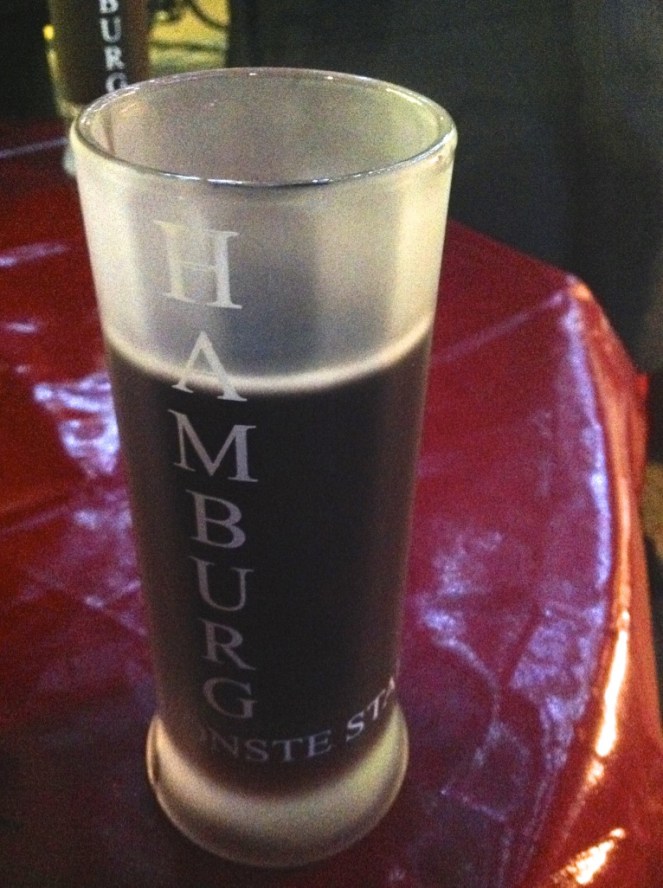
To wash it all down, one can stop at one of the many glühwein (mulled wine) forests constructed all over town.  Glühwein is usually prepared with red wine. It is heated with cinnamon sticks, cloves, star anise, citrus, sugar and vanilla beans. It is offered as is or mit schuss (with a shot), which means that rum or some other liquor is added.
stale_thumb_adf4N1XjKb1NSgGiwvCEXYZUPg_thumb_af18

GERMAN CHRISTMAS | A CELEBRATION OF DECOR
THE CHRISTMAS STAR

We noticed that the northern Germans also embrace the Christmas star as they do in Sweden, but more often than not, the German star is more three dimensional, resembling a thistle or bur.

THE CHRISTMAS PYRAMID
Another similarity to Swedish Christmas is the German 
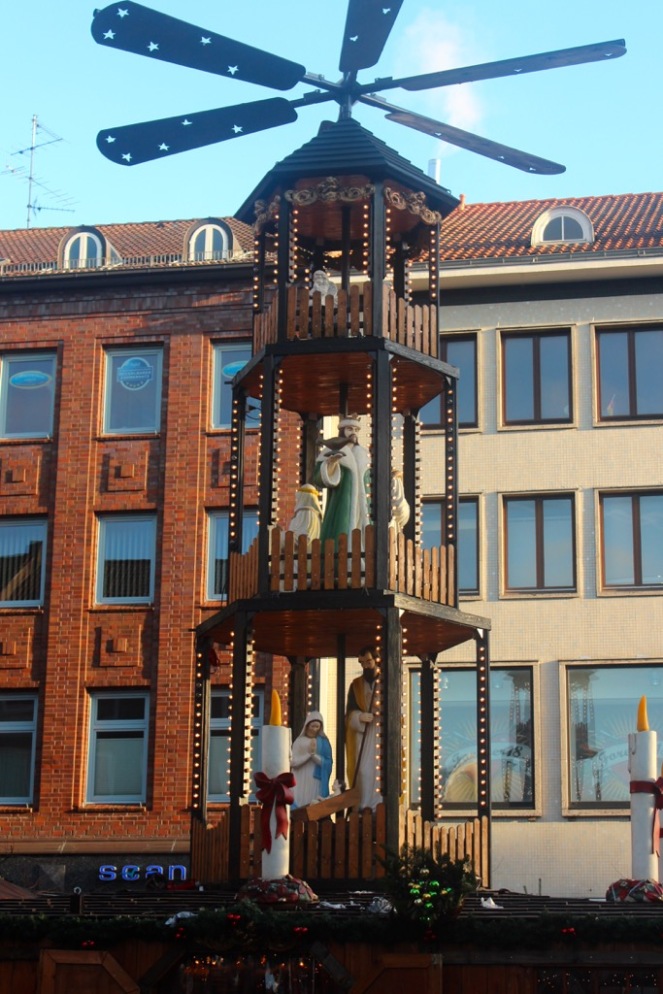
Weihnachtspyramide or the Christmas pyramid which is like the Swedish änglaspel in that the pyramid device works by generating heat from candles to turn the wooden blades. While these beautifully carved wooden pieces look nothing like what I was taught a pyramid looks like, they are called pyramids nonetheless. They reminded me of multi-leveled carousels. All of them depicted a Christmas theme such as the Nativity, angels and the Wise Men.  Much larger than their Swedish counterparts, the German versions are often 3 or 4 stories high and made entirely from wood as opposed to brass in Sweden. I was told by one woman in a shop that the German Christmas pyramid predates the Christmas tree. Fascinating!
mhA41fCLST2mNWI5fU9CHw_thumb_aade
CHRISTMAS TOWNS
Also wildly popular at every market were these miniature towns – very intricate miniature wooden carved people, houses, animals, trees – entire villages really complete with town halls and churches.

CHRISTMAS GNOMES
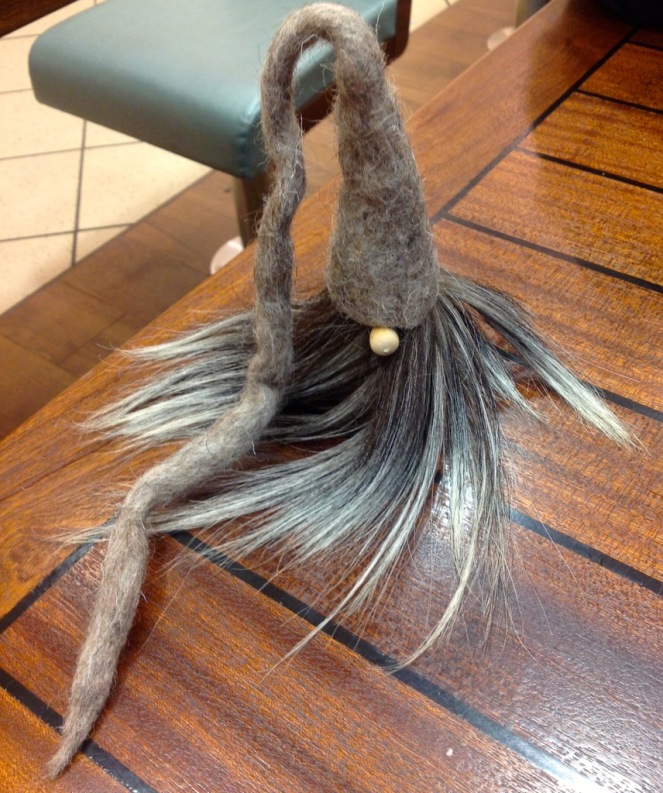
There also seems to be a German version of tomte, the Swedish elves that I have fallen in love with. Tomte are known to help you with your housework over the year if you leave them some porridge on Christmas Eve.  Unfortunately, I did not get an accurate name or story for their German relatives – the gentleman and I were trying our best to communicate across the language chasm. I did buy one and much to my daughter’s horror, I think his hair is real animal hair.  I love him and think he is adorable. Lena is creeped out by his hair. I only hope that bringing him into the house will not piss off the tomte in our basement as I am serious about wanting that help with the housework.
mNIMIztTSyWOw0vSTBGvqQ_thumb_adfe

Frohe Weihnachten jeder! Buon Natale! God Jul! Merry Christmas!

Americans abroad · art · European travel · ex-pat life · ex-pat reality · France · Germany · Honeymoon travel · Insider Tips · international travel · Maastricht · Modern Art · Off The Beaten Path · pastel de nata · restaurant · The Netherlands · The Unique and Unusual · Travel

Holland Off The Beaten Path | Marvelous Maastricht

Visiting Holland, most people head to Amsterdam or The Hague. A little bit off the beaten path lies Marvelous Maastricht. The first adjective that comes to mind when I think of Maastricht is charming. Cobblestoned streets, Baroque, Romanesque and Renaissance architecture, large market squares, cafes and a riverfront all add to its appeal.

MAASTRICHT | STEEPED IN HISTORY

One thing that the locals are quite proud of is that the EU was officially formed and ratified as a result of the Maastricht Treaty of 1992. A pretty big development in European history.

“But Maastricht was not the end of history. It was a first step towards a Europe of growth, of employment, a social Europe.

That was the vision of Francois Mitterrand.”

Laurent Fabius

Maastricht also claims to be the oldest city in the Netherlands. The town of Nijmegen also makes that claim, but either way, Maastricht was the site of archeological relics dating between 8,000 to 25,000 years old!

The name Maastricht is derived from Latin and means “crossing at the Meuse.” The crossing being an ancient Roman bridge built in the 1st century AD over the River Maas. Unfortunately, the ancient bridge is gone, but this delightful town still straddles the Maas river and boasts of being walking distance to Belgium, cycling distance to Germany and a quick drive to France. A true international crossroad.

And international it is. It is not uncommon to hear Dutch, German, French, and English on the streets and in the many cafes. Maastricht’s proximity to 3 other countries together with the international student population of Maastricht University has birthed a vibrant, multi-cultural population bustling with the palpable energy that comes with youth and diversity. 

MAASTRICHT SIGHTS | THE MARKET SQUARE AND HET VRIJTHOF

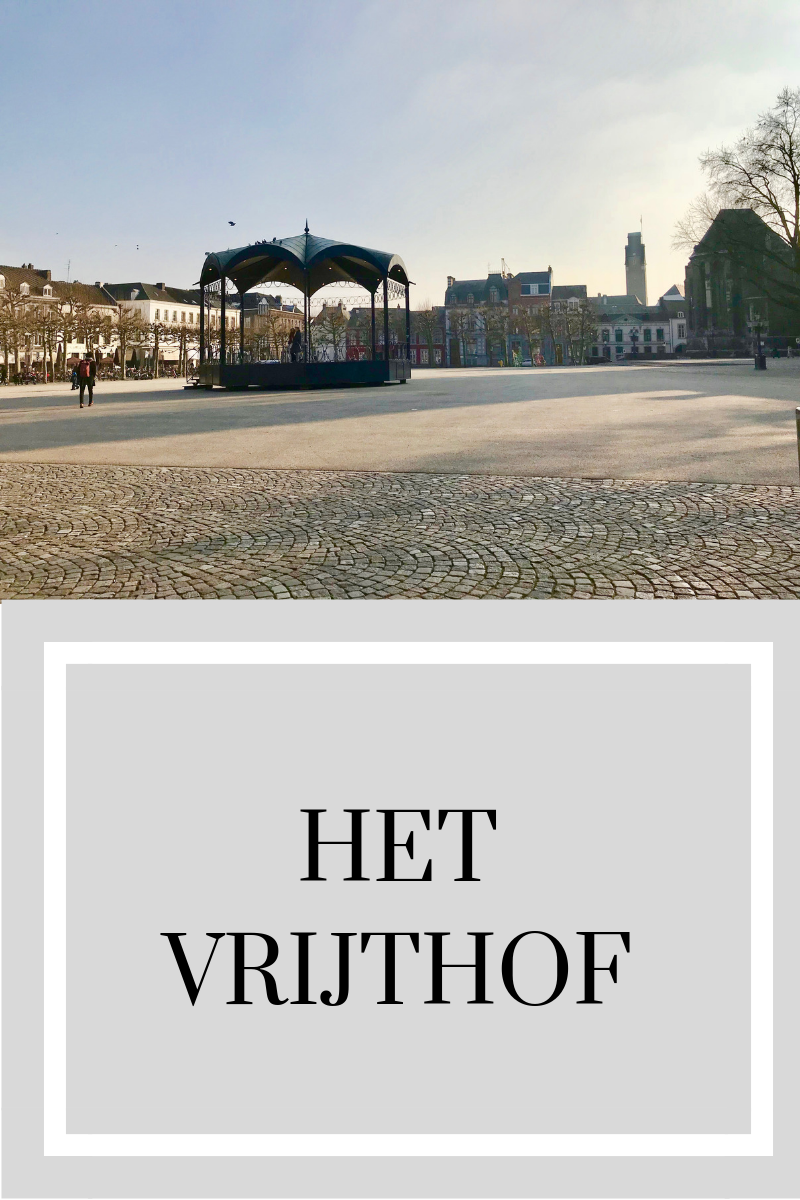
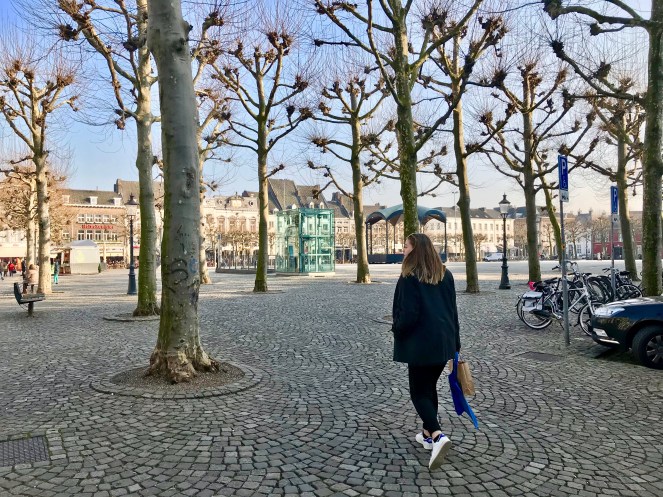
At the heart of the city lie 2 distinct squares. The largest square, called Het Vrijthof, is a large space surrounded by restaurants and cafés with outdoor seating, a pavilion, and public art.  It is one of the larger public squares I have seen in Europe. It is home to the Sint-Jan and Sint-Servaas churches, and the Generaalshuis. Het Vrijthof is also home to most of the public events happening in Maastricht – summer concerts, and the annual Christmas market. 

Het Vrijthof. Maastricht.

About a 6-7 minute walk from Het Vrijhof, is Maastricht’s Market Square or Markt, home to the city’s weekly food markets, flea market and the city hall – a large white building that evokes a wedding cake.

Town hall on the Market Square of Maastricht. Photo credit: iStock

Both squares lie in the heart of the city and either is a good place to begin your tour. If you are anything like my family, the first thing we typically do is taste the local cuisine. And Maastricht does not disappoint. 

MAASTRICHT FOOD | FIRST ON THE AGENDA, GO EAT!

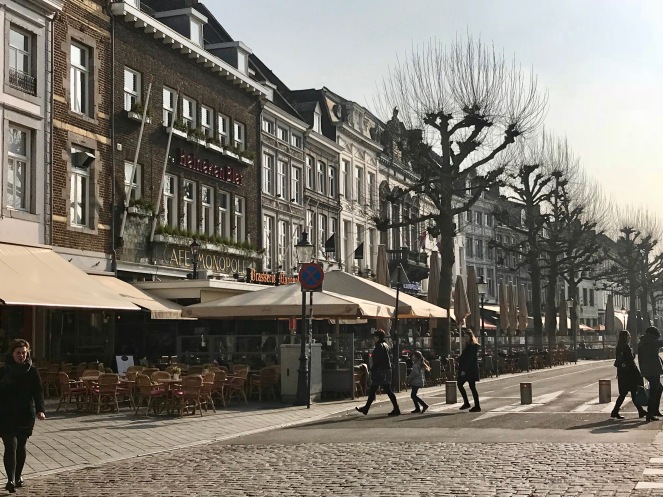
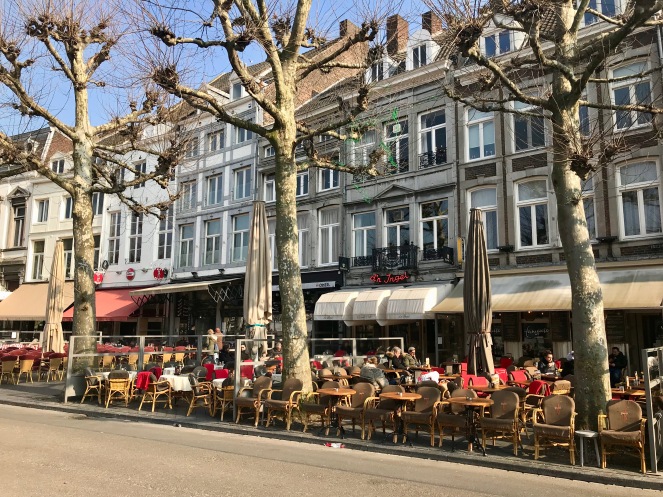
As mentioned previously, the rich and diverse culture in Maastricht means a rich and diverse selection of food. Known as the culinary capital of The Netherlands, one can find restaurants and food shops with Dutch, French, German, Belgian, and Portuguese influences. Surrounding Het Vrijthof, one finds a plethora of cafes and restaurants with outdoor seating perfect to sip a coffee, people watch, and have a fantastic bite to eat.

The many cafes surrounding the large public square Het Vrijthof. Maastricht.

MAASTRICHT FOOD |AMAZING DELICATESSENS

While Maastricht offers many amazing restaurants and varied cuisines, it is also home to some incredible delicatessens.  If the weather is cooperating, a really pleasant way to enjoy your lunch is to visit one of the many specialty food stores and take a picnic in the Stadspark Maastricht. 

The 2 delis that peaked our interest were Saveurs Traiteurwinkel Maastricht and Caravela Delicatessen.

Saveurs is a one-stop gourmet heaven. Saveurs offers specialty food, catering, take-out meal prep, and a food truck. Food is prepared daily and they are famous for their meatloaf. Yes, meatloaf made by combining minced Limousin beef and Duroc pork, then hand wrapping the meatoaf in bread paneer from the bakery Bisschopsmolen. It is like a Meatloaf Wellington.

Caravela Delicatessen is another incredible food store specializing in products from Portugal – Portuguese wines and Port, olive oil, piri piri, cheese and my favorite Portuguese treat, pastel de nata. Since I love everything about Portugal, we opted to get our picnic here. And it did not disappoint.

MAASTRICHT TO DO | A SHOPPER’S DELIGHT

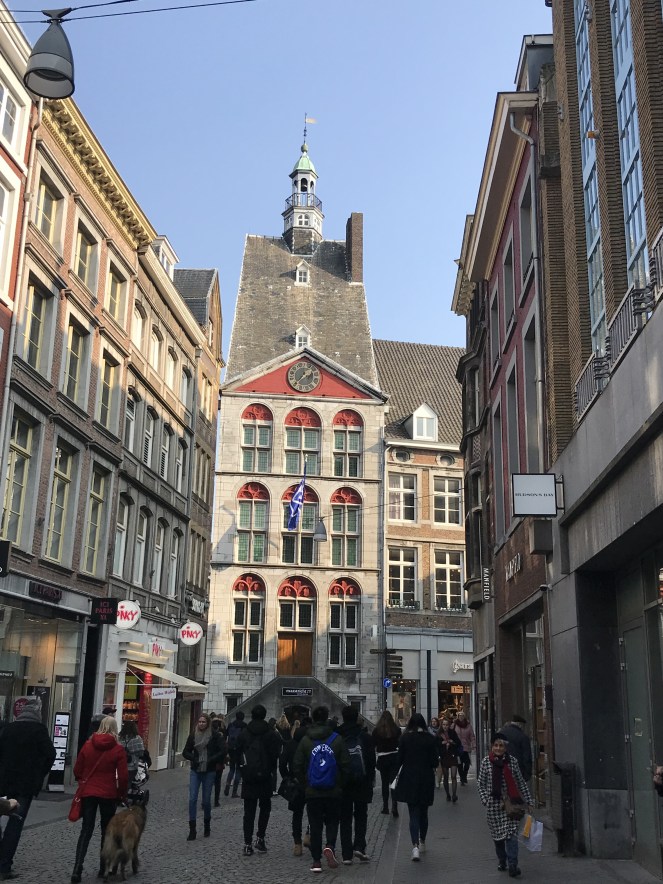
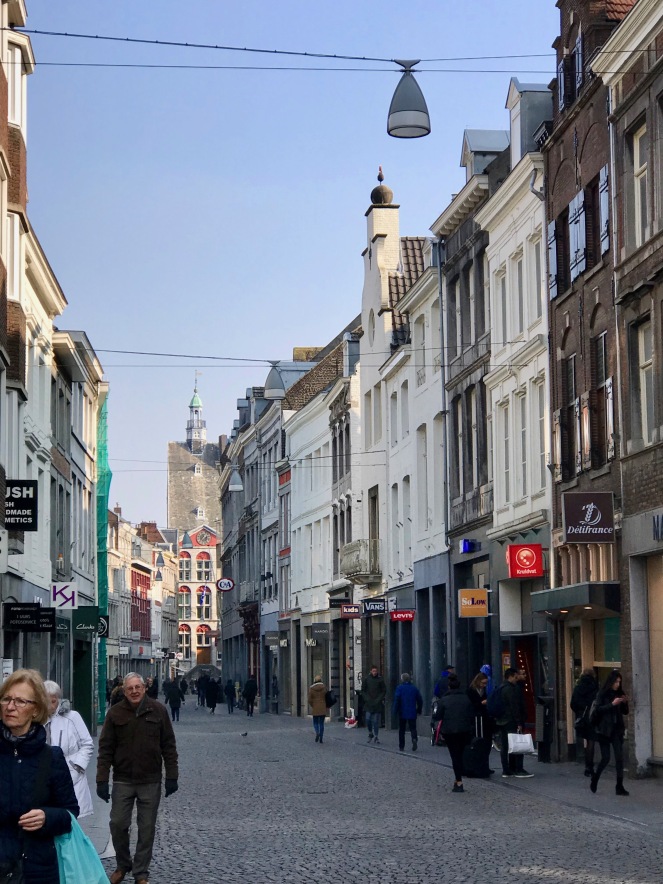
Once you have finished your meal, you can easily walk it off. The town is an architectural delight and walking around is a treat for the eyes. And, there is ample shopping on both sides of the river with lots of interesting, independent boutiques. No matter where you wander, you will be a stone’s throw from shopping heaven. There were so many stores and boutiques on every street that we lost count.

Shopper's Paradise. Maastricht.
Shopper’s Paradise. Maastricht.
Shopper's Paradise. Maastricht.
Shopper’s Paradise. Maastricht.

MAASTRICT TO DO | VISIT THE MOST BEAUTIFUL BOOKSTORE

If you are shopping on the western side of the river, be sure to stop by the Dominicanen bookstore. This glorious bookstore is housed in a repurposed,
700 year old church. Over the years the building was utilized for a variety of functions, finally settling on an identity as a bookstore, coffee bar, and event center for lectures, debates, and exhibitions.

Photo credit: http://maastrichttourism.nl

Even if you are not looking for a book, it is worth a visit. The combination of books and cathedral features are stunning. CNN Travel named this bookstore one of the coolest bookstores in the world. 

MAASTRICHT TO DO | REST YOUR BARKING DOGS ON A BOAT CRUISE

If your dogs are barking (an American idiom meaning your feet are tired) rest them while you cruise the Maas River on one of the many boat tours. One can cruise in groups, rent an individual boat, or go on pre-arranged cruises. Prices vary according to the theme and the length of the trip. You can tour the locks, have brunch, a pancake breakfast, a historical tour or an evening cocktail tour. There are options to suit just about every interest and some of the evening options have a different theme each month. Maastricht clearly embraces the river as part of its culture.

Unfortunately, we did not have time to actually take a boat cruise, thus, while I cannot make a recommendation, I can provide you with some basic information on the available tours. The 2 main tour companies are GetMyBoat and Stiphout Tours

MAASTRICHT TOURS | OTHER WAYS TO EXPLORE

If boating is not your thing, not to worry, Maastricht offers many options for touring. One can rent bikes or Segways, take a train, or join a walking tour or architectural tour.

MAASTRICHT TOURS | GO TO HELL

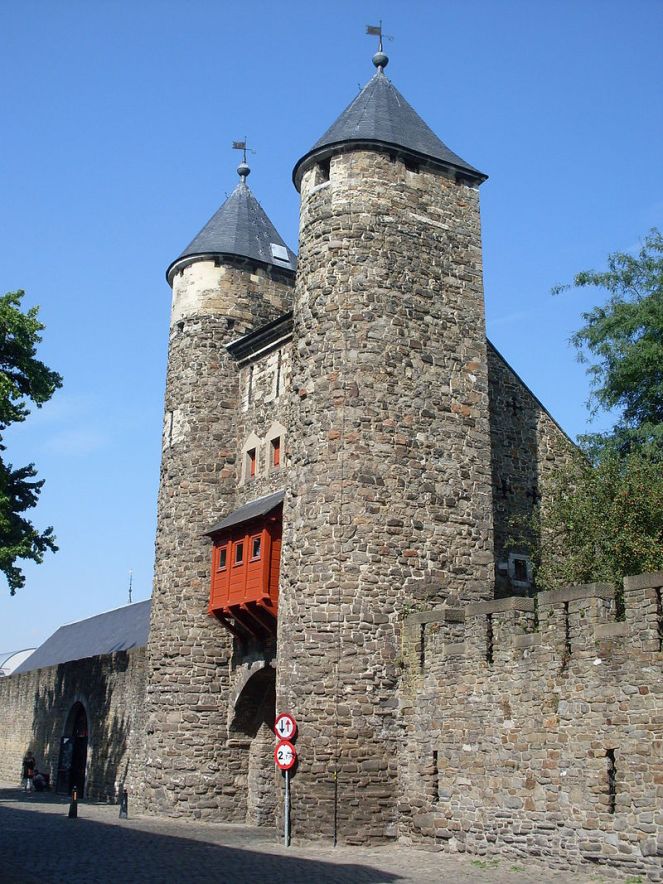
While there is nothing hellish about Maastricht, one can also literally go to Hell’s Gate. Hells Gate or Helpoort is one of the last standing remnants of the medieval city walls constructed in the 1200’s. The gate served as the southern entrance to the city and was so named due to the fact that prisoners were actually locked away in the tower of the gate. Thus, it was the Gate to Hell for the prisoners. 

Helport. Maastrict. Photo credit: http://maastrichttourism.nl

Inside one finds a museum detailing the history of Maastricht with insights into the city’s history as well as its prominence in the region.

MAASTRICHT TOURS | GO UNDERGROUND 

One of the most interesting things about Maastricht to me, was the 80 km of tunnels and caves under the city.

This labyrinth of caves and tunnels have served many important functions vital to the city since their inception. These man-made tunnels were the result of the underground quarrying of stone. The St. Pietersberg caves and tunnels were formed as stones were harvested and used to literally build the city of Maastricht on its shoulders.

The caves and tunnels have also shouldered some heavy historical responsibilities. During WWII, the caves housed Jewish people hiding from the Nazis. Hidden deep inside the damp, dark tunnels, fighting to survive each day, the Jewish inhabitants somehow managed to create a water supply, a bakery and a temple inside the tunnels. Despite the horrors of war, the human spirit survived and made life in the cold dark tunnels as comfortable as they possibly could. While not an ideal living situation, the tunnels saved the lives of many.

The caves and tunnels also saved the most famous Dutch art from man’s folly. On the tour of the tunnels, one can see National Storage Location Number 9 also known as The Kluis. The Kluis, was built at the beginning of WWII to hide the most important Dutch art from destruction and theft. An estimated 800 works of art were housed in the Kluis for over 3 years. Some of the works that were saved include Rembrandt’s Night Watch, Potter’s The Young Bull, and Vermeer’s Little Street. Fascinating stuff.

MAASTRICHT COFFEE CULTURE | GRAB A CUPPA’ JOE 

After all the eating, shopping and touring, it is time for one last coffee. Given this is a university town, there are a plethora of coffee shops to chose from.

The locals will all tell you that a visit to Maastricht must include a coffee at Blache DaelThe oldest coffee house in the province of Limburg, Blache Dael opened in 1878. Their claim to fame is that every day they have a different freshly roasted coffee. 

I would say that the second most talked about coffee shop is Alley Cat & BikesAlley Cat Bikes & Coffee is a coffee bar, a social hub, a creative workspace, and a bicycle repair shop. An important stop for the large student community. They also serve fresh food made from local suppliers.

If you get a chance to visit Maastricht, I hope that you enjoy it as much as we did. Maastricht truly is a food, history, shopping, and architectural paradise. 

Het Vrijthof. Maastricht.
Americans abroad · Dalsland · European travel · ex-pat life · Honeymoon travel · Insider Tips · international travel · national parks · nature · Off The Beaten Path · Skåne Sweden · The Unique and Unusual · Travel

The Glass Cabins of Sweden

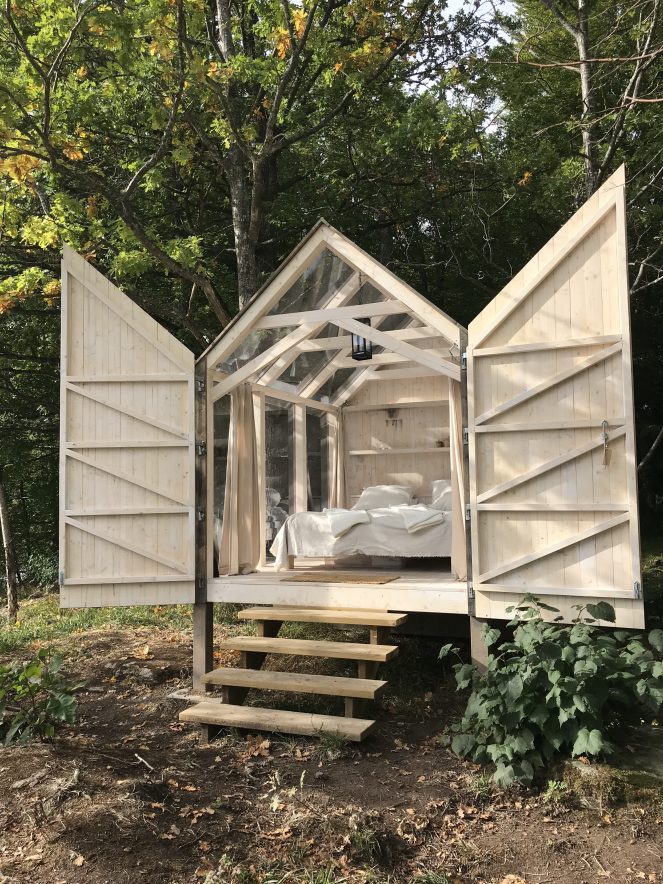
Looking for a place to unwind, recharge, and commune with nature, but still want the comforts of a bed, a down comforter, and a gourmet meal? Look no further than The Glass Cabins at Baldersnäs Herrgård

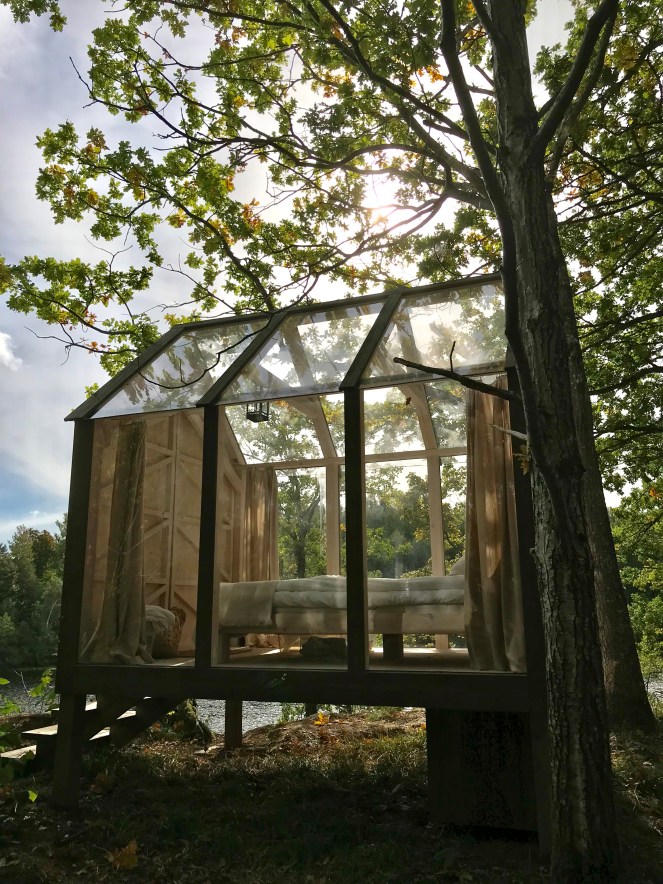
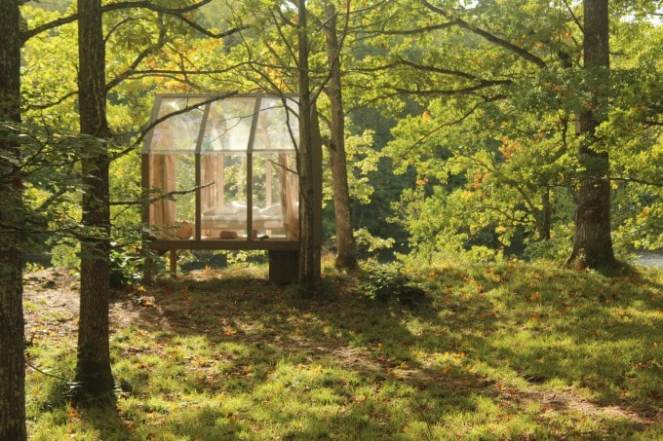
Afternoon. Glass Cabin at Baldernäs Manor
Sunlight peeking through. The Glass Cabins at Baldersnäs Herrgård

THE SECRET TO HAPPINESS

Sweden is often rated as one of the happiest countries in the world. Living a balanced life between work and play is a key factor in that rating. And part of living a balanced life in Sweden has to do with making nature a part of your life. Swedish people love, and appreciate nature. Swedes like to be outside biking, walking, skating, hiking or camping. This connectedness to nature is a significant part of Swedish culture.

This connection to nature is so significant to the Swedish way of life, that in 2017, Swedish researchers decided to try to measure the precise effects of nature on a person’s happiness and health.

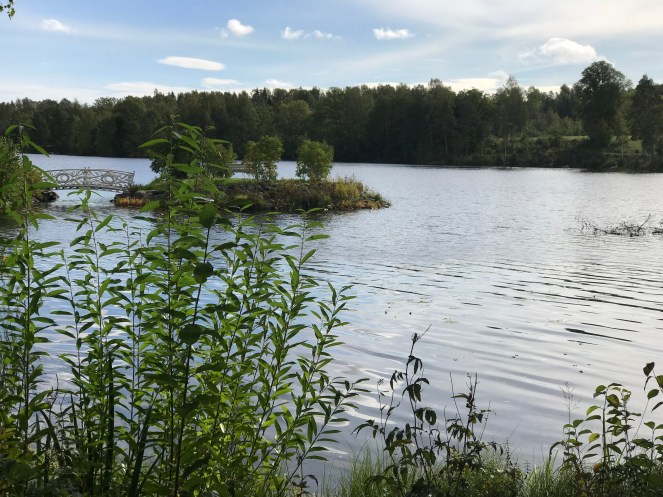
Lake view from the Glass Cabin at Baldernäs Manor.
Lake view from the Glass Cabin at Baldersnäs Manor.

THE 72 HOUR CABINS

The Glass Cabins (also known as the 72 Hour Cabins), were the brainchild of two researchers in the field of stress management. Walter Osika and Cecilia Stenfors developed a program were they brought together 5 people from different backgrounds, different countries and different stressful jobs. The idea was to place the individuals from all walks of life into nature for 72 hours.

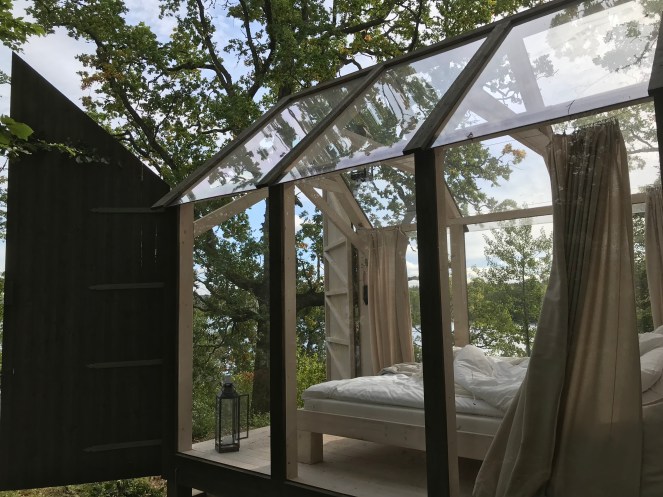
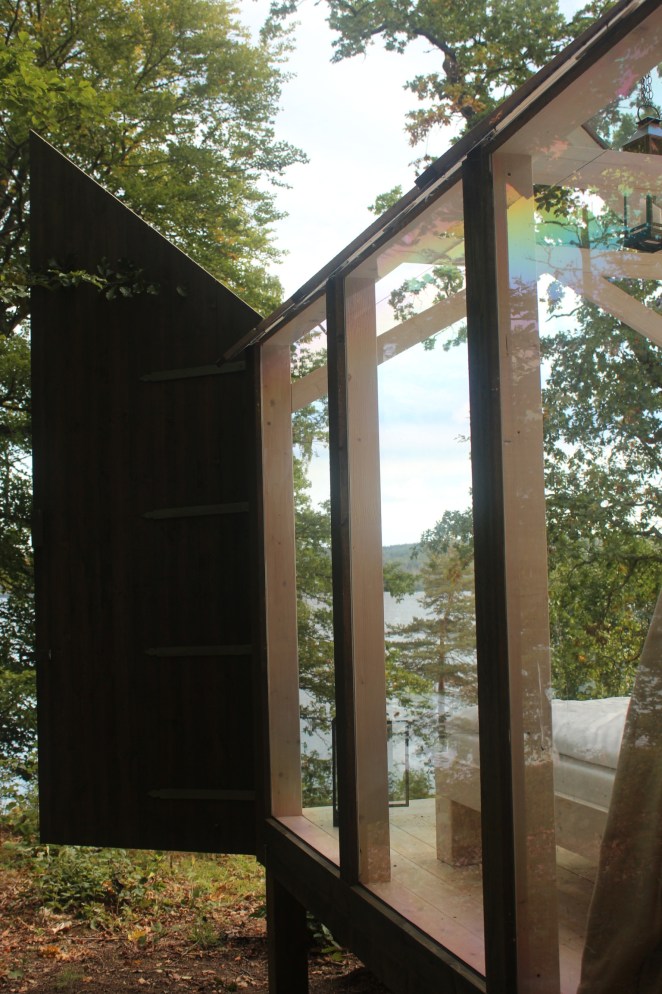
For 3 days, or 72 hours, the subjects lived in cabins made of glass. The subjects  unplugged their technology and engaged in simple outdoor activities, such as skipping stones on the lake, hiking, swimming, fishing and cooking over a fire. The purpose of the glass cabins was twofold – the researchers wanted people to be comfortable enough to relax, but they also wanted to make sure that nature was always present. The comfortable beds inside cabins with glass walls allowed participants to sleep under the stars and wake to the natural rhythms of the Earth.

The Glass Cabin inviting nature inside

THE RESULTS

Good news!  All 5 participants in the 72 hour study demonstrated a decrease in anxiety, blood pressure and heart rates. They relaxed. They de-stressed. Participants reported a better overall sense of well being and peacefulness. Those results alone would be sufficient to render the experiment a success, but in addition, participants also reported an increased feeling of creativity and improved problem-solving.

Incredible right? What fantastic news. It only takes 3 days for each us to become healthier and happier. With a simple prescription of some nature in your life, you too, can reduce stress and find more joy.

I had to see the cabins for myself.

The Glass Cabin
The Glass Cabin

DALSLAND, SWEDEN

I headed up to Dalsland in western Sweden to the Glass Cabins located on the Baldersnäs Herrgård country estate in Dals Långed.

I was met by the lovely and charming, Susanne Björk Jensen who showed me around the estate and then gave me a tour of these amazing, innovative glass cabins.

Baldersnäs Herrgård is a beautiful country estate from the turn of the century that has been transformed into a luxury hotel. It sits on a peninsula surrounded by nature’s bounty.

Lake Låxsjön
Lake Låxsjön

The estate sits adjacent to a nature preserve where The Glass Cabins are located.

The first cabin sits on a small bluff overlooking Lake Låxsjön. The first cabin is a quick jaunt from the country estate offering an easy journey up for a gourmet meal, a massage or a delicious cup of morning coffee in the English garden.

The cabin has many lovely large trees and offers a sweeping view of the lake. My tour guide, Susanne spoke of waking up there with a mist on the lake, the sounds of birds greeting the dawn, a hint of sunlight peeking up from behind the forest trees. It sounded like a little slice of heaven.


Lake view from the Glass Cabin

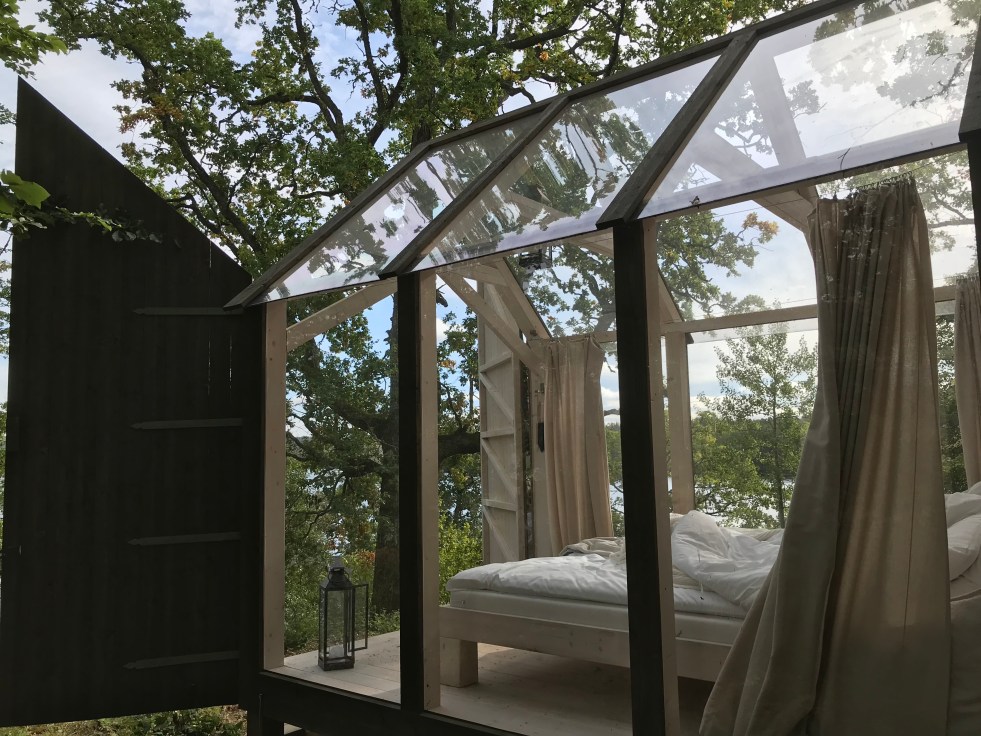
The property and nature preserve are both spectacular and the cabins ease gently into the landscape. The cabins are inviting with simple decor and muted soft colors. The simplicity evokes a Zen like feeling. Very inviting. Very relaxing. I wanted to jump right in the bed and take a nap. Curtains are provided along the glass walls to allow for privacy. Even with the curtains pulled, however, the glass ceiling still allows nature to envelope you.

The soft relaxing interior of the Glass Cabins
The Glass Cabin. Interior.
The Glass Cabin. Interior

The second cabin is approximately 200 meters away and sits atop a small hill surrounded by trees. The second cabin was more secluded than the first cabin, yet it too sported a lovely view of Lake Låxsjön. The second glass cabin also has the added bonus of being steps away from the sauna on the lake.
gc2

Lakeside sauna. Baldernäs Manor
Lakeside sauna. Baldersnäs Manor.
The Glass Cabins at Baldernäs Herrgård
The Glass Cabins at Baldersnäs Herrgård

The original glass cabins used in the experiment are located on a private island  of Henriksholm, in south-east Dalsland.  These glass cabins are remote, accessible by boat and should be booked well in advance.

A second set of glass cabins can be found in the center of Dalsland region near Lake Iväg.  Those cabins must be booked through Dalsland Activities.

The reason I like the glass cabins at Baldersnäs Manor is that in addition to unplugging and unwinding by inviting nature into your room, one can also relax by golfing, taking a yoga class, enjoying a massage and/or partaking in a gourmet food and wine experience featuring local foods.

The Glass Cabins are just a 2 hour drive from Gothenburg.

The Glass cabins at Baldersnäs Manor can be booked by contacting;

Susanne Björk Jensen
Baldersnäs Manor
Baldersnäs Herrgård
Baldersnäs 22
600 10 Dals Långed
http://www.baldersnas.com
info@baldersnas.com
+46 531 412 13


Americans abroad · art · European travel · ex-pat life · Holland · Honeymoon travel · Insider Tips · international travel · Modern Art · Off The Beaten Path · The Netherlands · The Unique and Unusual

The Stedelijk – The Goldilocks of Museums

Things Don’t Always Go As Planned

This past February the Beast From The East descended upon Amsterdam just as we arrived to visit. It was cold. Really cold. In fact, it was miserable walking around the city and bikes seemed like it would only make it worse as we would have to cut through the cold wind.

So what to do Amsterdam when it is colder
than a Polar Bear’s toenails outside?

Head inside. Thankfully, my daughter loves art and plans on studying art history, so off we went to the Van Gough Museum. The next day there was a discussion of going to the Rijksmuseum. I opted out. No offense to anyone, but Dutch Masters aren’t my favorite period of art and I’ve seen it. I said I’d find something else to do.  But my mind wandered to the modern building we had seen the day before. Hidden in the shadow of the Rijksmuseum and the Van Gough museum is the Stedeljik.  

The Stedelijk is the Goldilocks of museums. It is not too small, not too big. It is just the right size.

The collection is primarily modern art, but it also houses quite a few paintings from other artistic genres. For a medium sized museum we all agreed that it is packed full of great art.

The Stedelijk Building

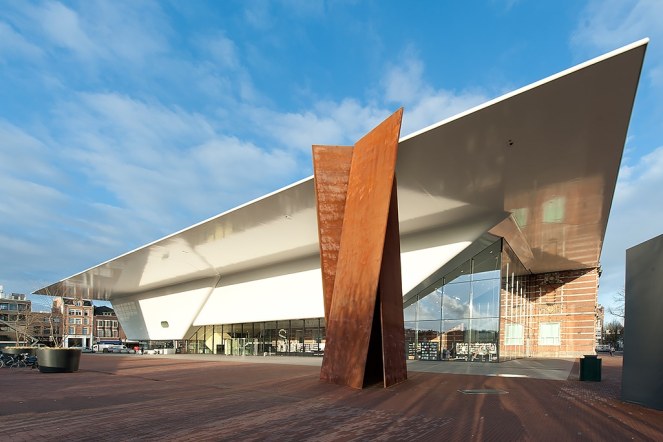
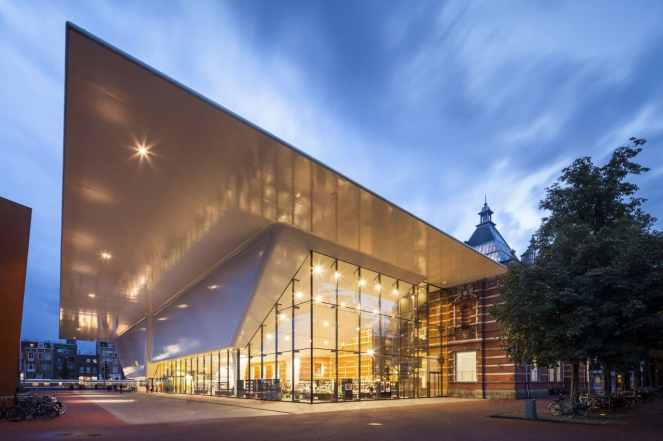
As I mentioned, the Stedelijk can be found tucked behind the Van Gogh Museum and the Rijksmuseums on Museumplein.  The Stedelijk is a contemporary art museum and thus, it is fitting that the building itself,  a modern glass and steel structure, is a stunning piece of architectural art on its own.

Benthem-Crouwel-Architects-Lensvelt-Stedelijk-Museum-Amsterdam
The Stedelijk Museum Amsterdam. Photo credit: http://www.lensvelt.nl
Stedelijk Museum
The Stedelijk Museum Amsterdam. Photo credit: ArchDaily by Jannes Linders

The Original Building

The original collection was made up of art and antiques that were donated to the city of Amsterdam by Sophia Augusta Lopez Suasso de Bruyn, a wealthy widow who wished to have a museum opened in her home and in her name upon her passing. Indeed, the Stedelijk was originally called The Suasso Museum and was housed in her home.
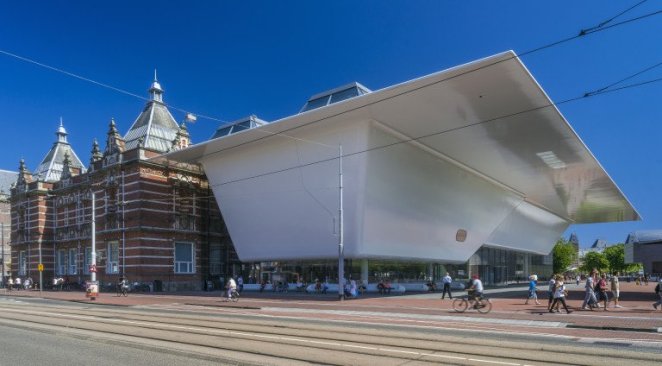
Eventually, Madame Suasso’s home was deemed too small and a new building was designed by A.W. Weissman, a local architect. The new museum building designed by Weissman has a neo renaissance façade with several ornate, figurative sculptures. When the new, modern, wing was added many of the flourishes were lost to modernization and renovations. The Stedelijk´s original and main building was constructed between 1891-1895 at Paulus Potterstraat, at the short walking distance from the Rijksmuseum.

The New Building – aka The Bathtub

Stedelijk Museum Amsterdam
Stedelijk Museum. Photo John Lewis Marshall

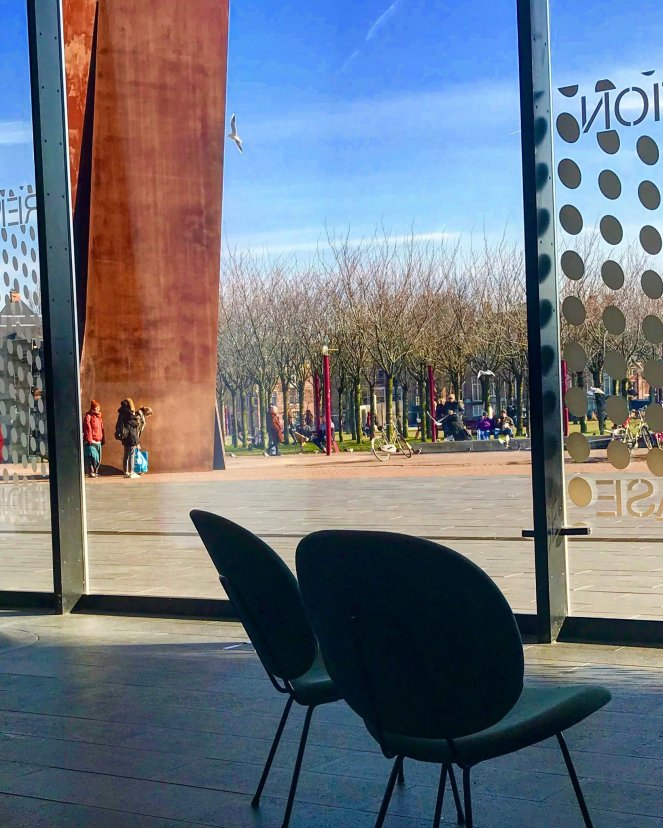
A more modern and more functional building was opened in 2012 after almost a decade of renovations. The modern addition, designed by Dutch architects Adriaan Willem Weissman and Benthem Crouwel Architect, is a pretty sharp contrast in style to the Weismann building. After the unveiling of the new addition, many locals thought that the modern aesthetic clashed with the old Stedelijk building, The Concertgebouw, the Van Gogh Museum and the Rijksmuseum. Essentially, they didn’t think the modern style went well with the other buildings in the neighborhood. Locals took to calling the new addition “the bathtub.” In my opinion, the new building fits its purpose of showcasing contemporary art and, an added bonus, it offers amazing views of the Museumplein. I sat and people watched through those big beautiful windows for 40 minutes as I sipped my coffee, warm and toasty away from the cold. It was lovely.

Stedelijk Museum Amsterdam
Overlooking Museumplein

The museum’s purpose has changed many times over the years – going from a private collections of art, collectibles, furniture, and antiques to medical instruments and finally resting on contemporary art and design.

Along with the masters of modern painting genres such as Impressionists, Fauvism, Cubism, Expressionism, the Stedelijk also has a unique collection of furniture, and, photography.

The Collection

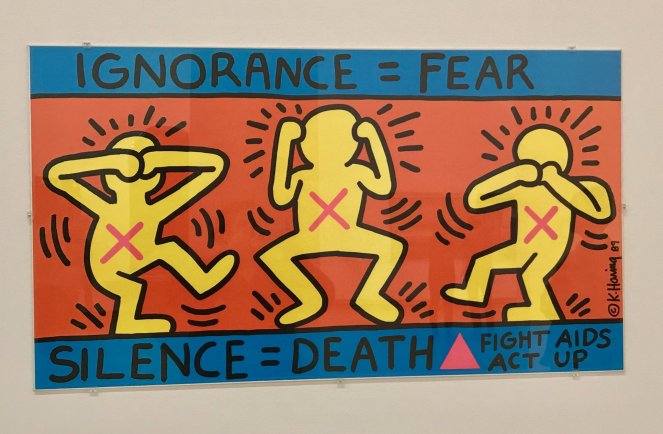
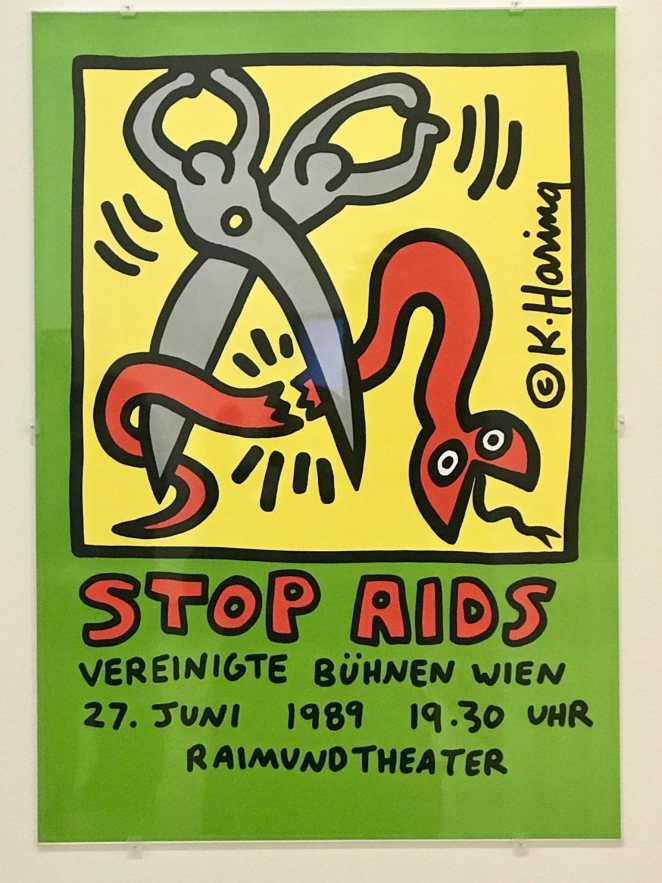
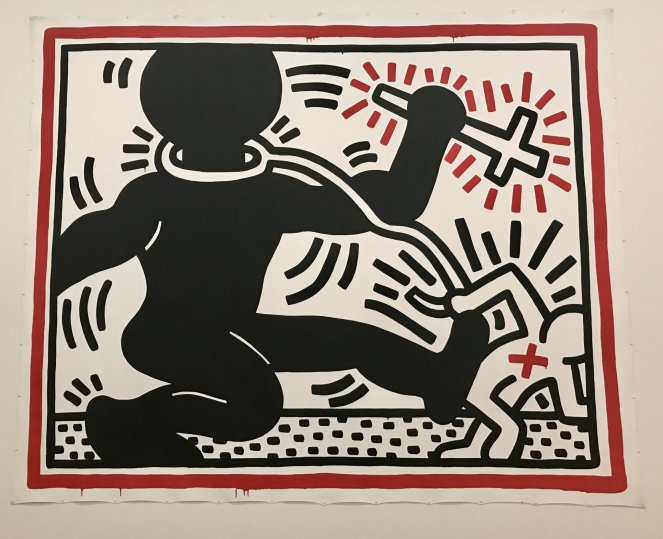
The collection includes modern and contemporary art and design from the early 20th century up to the 21st century and features famed masters such as Vincent, van Gough, Wassily Kandinski, Marc Chagall, Henri Matisse, Jackson Pollack, Andy Warhol, Willem de Kooning, and Keith Haring.

Highlights From The Collection

The Stedelijk has everything from quirky artists previously unknown to me . . .

to the masters of the modern movement . . .

The Water Bull. Jackson Pollack. 1946.

to the masters:

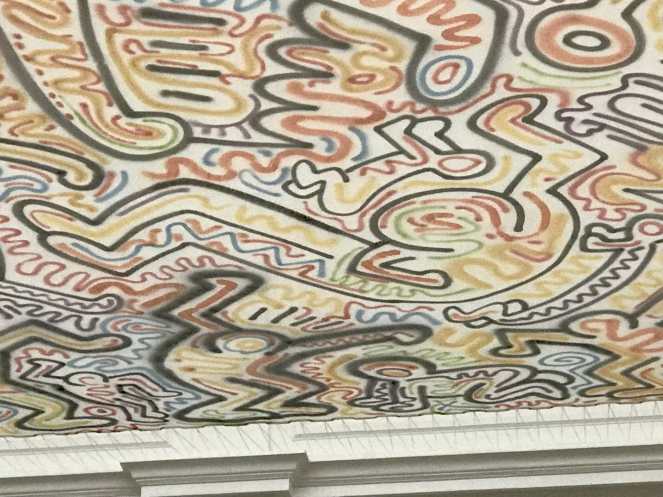
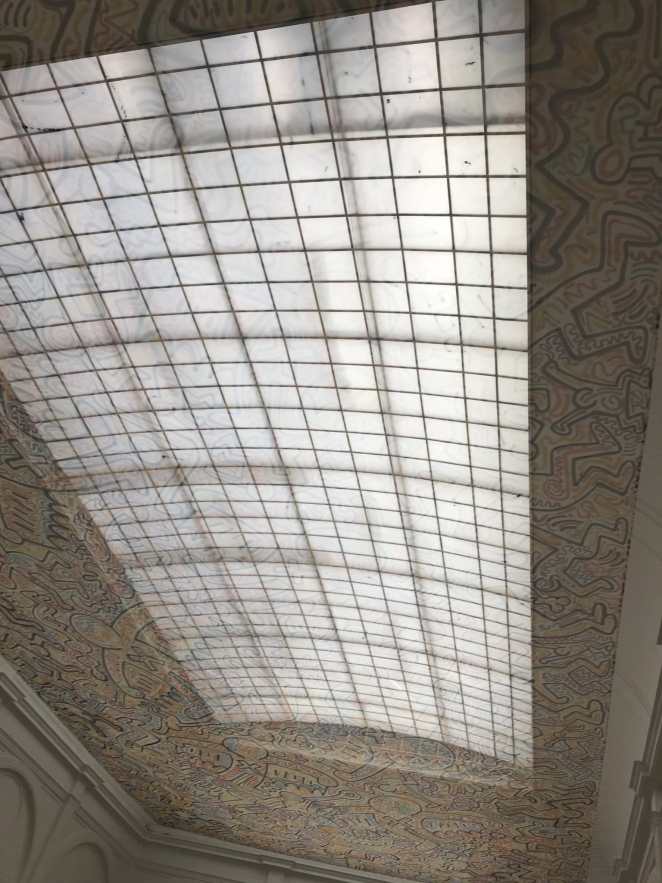
And, The Keith Haring Velum

American artist, Keith Haring, began his career in 1980, drawing graffiti in the New York subway.  During a brief, but intense, career that spanned the 1980s, Haring’s work was featured in over 100 solo and group exhibitions. In 1986 alone, he was the subject of more than 40 newspaper and magazine articles.

In 1986, at the heigh of his career, Haring agreed to create a special piece for The Stedelijk.  From The Stedelijk website: “The American artist painted the canopy, which filters daylight into the grand hallway, especially for his solo exhibition at the Stedelijk in 1986. For this show, Haring didn’t simply want to present artwork he’d already made – he insisted on making new work. Laying out the velum (which measures almost 40 x 66 feet, 12 x 20 meter) on the floor of one of the museum galleries, he painted it in just one day, using spray paint. Haring turned the event into an energy-fueled performance: while photographers and journalists looked on, he painted rapidly and rhythmically, moving over the canopy, hip-hop playing in the background. He filled the canopy with dancing, waving figures, crawling babies and squirming animals. Known as the ‘Keith Haring velum’, the painting was stretched below the monumental glass cupola above the historic staircase. The painting was an instant hit. Now, more than thirty years later and restored, the velum is back for everyone to enjoy.”
The photos do not do the velum justice. It was beautiful in person with the light slipping through and contrasting the parts untouched by sun.
Keith-Haring-Stedelijk-Museum-Amsterdam
Keith Haring. Stedelijk Museum Amsterdam
Keith-Haring-Stedelijk-Museum-Amsterdam
Keith Haring. Stedelijk Museum Amsterdam
Keith-Haring-Stedelijk-Museum-Amsterdam
Keith Haring. Stedelijk Museum Amsterdam
Keith-Haring-velum-the-Stedelijk-Museum-Amsterdam.
The Keith Haring velum. The Stedelijk Museum, Amsterdam.
Keith-Haring-velum-the-Stedelijk-Museum-Amsterdam.
The Keith Haring velum. The Stedelijk Museum, Amsterdam.

Practicalities

Hours:
Monday – Thursday and Saturday and Sunday:  10:00  – 18:00
Friday:  10:00 – 22:00

Tickets:
You can buy your tickets in person or online at Stedelijk museum tickets.

Adults: €17,50
Children under 18: free
Students (29 yrs or younger),
Cultural Youth pass (CJP)
€9

Address:
Stedelijk Museum
Museumplein 10
1071 DJ Amsterdam
The Netherlands


If you get a chance to visit the Stedelijk, I hope that you enjoy it as much as we did. Maybe because we had not planned on going, in fact none of us had even heard of it, it turned out to be one of those serendipitous moments where things did not go as planned, but we ended up with a lovely surprise. 

Americans abroad · European travel · ex-pat life · Honeymoon travel · Insider Tips · international travel · Italy · nature · Off The Beaten Path · Saturnia · spa · The Unique and Unusual · Thermal baths · Travel · Tuscany

Secret Tuscany – The Thermal Baths of Saturnia

Locals Only

A few years ago some Italian friends told me about some natural thermal baths in Saturnia, Tuscany.  They explained that there was a famous spa one could go to, but that there was also a natural occurring, free version very near the expensive spa, “IF you can find it!”

You see, the trick was that the locals will not tell outsiders how to find the natural thermal baths as they don’t want the natural baths overrun with tourists.

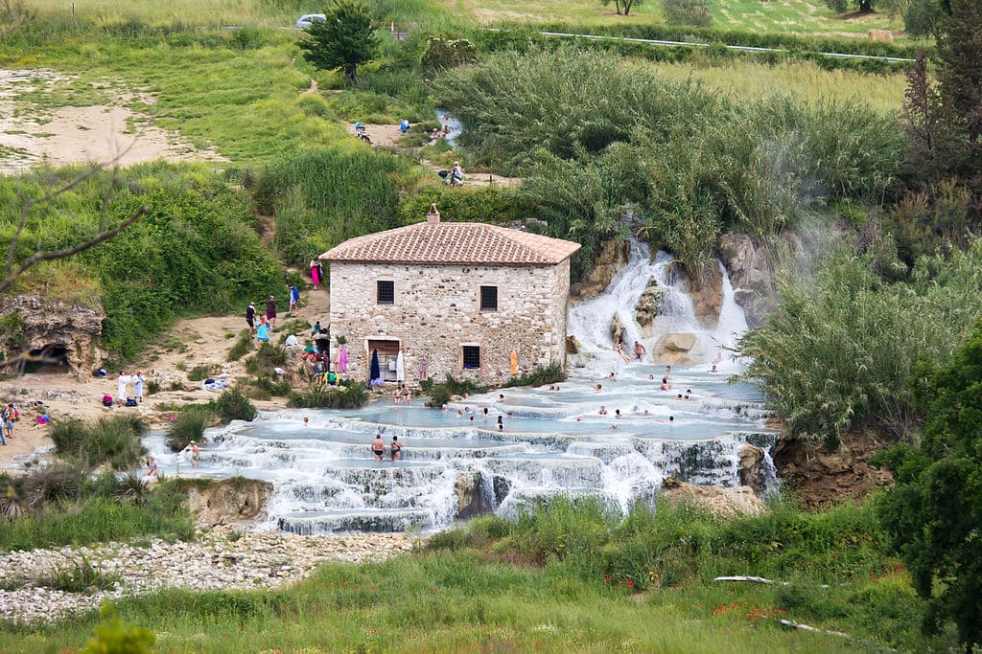
Since we lived In Italy I figured we qualified as locals of sorts. I was determined to find the free thermal baths. Unfortunately, at that time, the natural baths were not part of the standard GPS menu. The only information that we had was that they were near the famed Terme di Saturnia Spa and Golf  Resort.  Armed with an old fashioned map, American grit and a stubborn streak, we set out to explore.

It was not easy to find. There were no signs and there are a multitude of country roads to chose from. I am nothing, if not persistent though, and eventually we found it.

IMG_0709
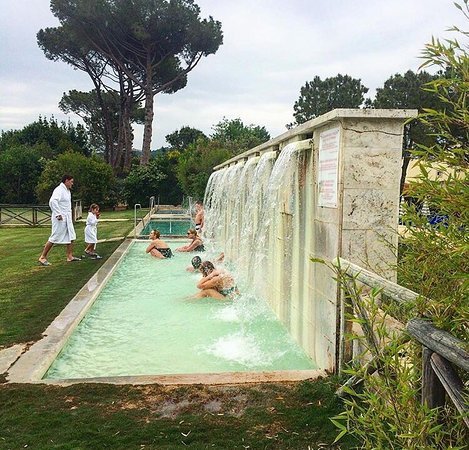
The kids and me in the front pool – Cascate del Mulino

After visiting Cascate del Mulino, I can see why the locals want to preserve this special place. Until now, I have never written about the baths out of respect for the local’s wish to keep it secret and special.  Today, good or bad, what the locals feared has come to pass and one can input the location on your GPS. Back then it was such a local secret that when we asked our hotel for directions and they gave us some vague instructions about the general direction to go. Today they advertise the baths on their website.

Two Very Different Experiences

Luxury

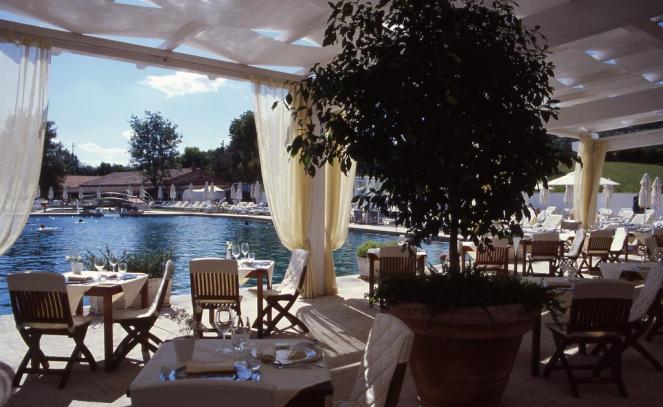
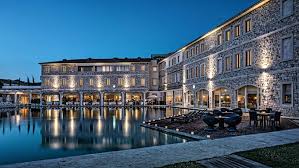
If nature is not your thing, rest assured that one has choices when visiting the thermal baths. The resort, Terme di Saturnia Spa and Golf Resort, offers golf, spa treatments, yoga, massage, restaurants and accommodation in addition to thermal baths. It looked amazing and relaxing. The atmosphere is pure luxury. Room rates start at 300 Euros a night.

termedisaturnia

terme-di-saturnia-spa
Photo Credit: Trip Advisor
tds
Photo Credit: Premium Europe

Rustic

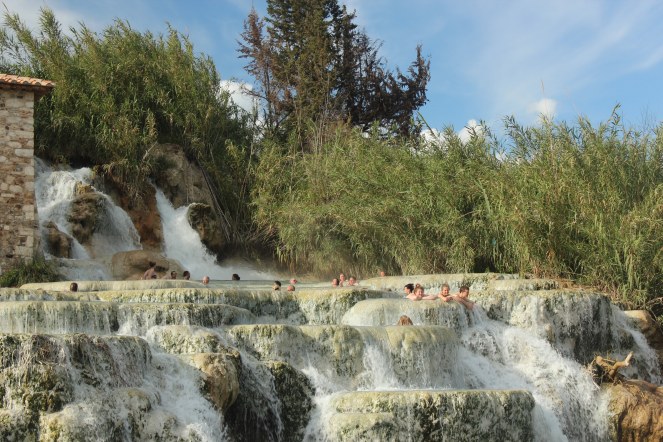
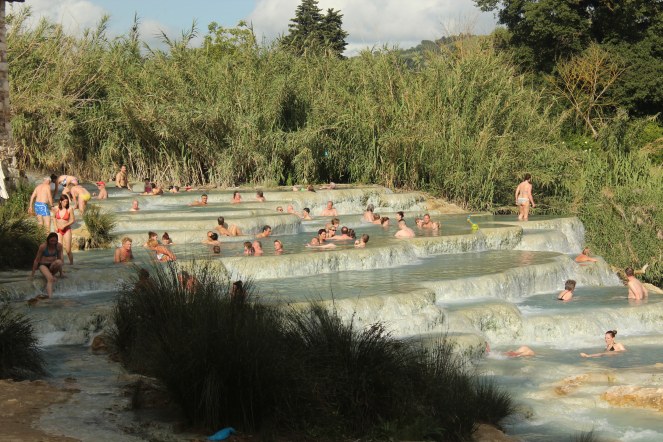
In contrast, the natural (i.e. free) baths, Cascate del Mulino, just down the road, are the complete opposite. At the time that we visited there were no signs and we drove down many a dirt road searching for the mill.  The area is unattended by any staff.  There were no parking attendants, lifeguards or wait staff serving cocktails and sparkling water.  The area was unpaved and dusty. Nearer the mill and falls, it was quite gravely and the actual pools and falls were quite slippery. Water shoes are a must. 

The Legend

According to Italian lore the gods Saturn and Zeus were arguing about mortals’ penchant for fighting each other.

At some point during the argument, Zeus threw a lightening bolt (or a thunderbolt depending on who you ask) at Saturn (or at the mortals depending on who you ask).

The power of this lightening bolt went straight into the Earth and resulted in warm water gushing out, overflowing and enveloping the mortals. Essentially, Zeus gave the mortals a warm bath to calm them down. And it worked, the warm hot springs calmed the mortals, healed their ailments and generally made everyone happier. And it still works today.

The Healing Properties

Who wouldn’t want to heal themselves in waters divined by the gods?  These thermal waters have been in use by local Italians since the Etruscan and Roman period.  Natural pools have formed out of travertine as a result of 3,000 years of flowing water. The pools are perfectly formed and comfortable. The pools are so perfectly formed and smooth that my husband did not believe that they were naturally made.

IMG_0698

The water is a consistent 37.5 °C/99.5 °F which may seem like it would be too hot, but trust me, it is not. It was oh.so.nice. We visited in the spring and I couldn’t help thinking that visiting on a crisp autumn or winter evening would be heaven. 

The thermal water contains a myriad of minerals that offer healing powers.  A few of the minerals are sulfur, sulphate, sulfide, carbon, bicarbonate, hydrogen, alkaline, thermal plankton, and 2 gasses – hydrogen sulphide and carbon dioxide. The gases give off a rather pungent smell similar to hard boiled eggs.  We did not mind the smell, but I was told some people do not like it.

The minerals in the water have been used as a natural therapeutic spa since the the Etruscan and Roman periods. The waters were so revered that the Romans built thermal baths in many of the little villages surrounding the falls. Some of those baths still remain.

What can be cured by soaking in the thermal baths? All kinds of ailments including eczema, psoriasis, respiratory infections, and rheumatoid arthritis, to name a few.  The water is also said to detox the body, and improve circulation, cell oxygenation and immune function. For me, the simple relaxation it provided was enough. And an added bonus, the minerals left my skin feeling soft and supple.

monteamiato.JPG
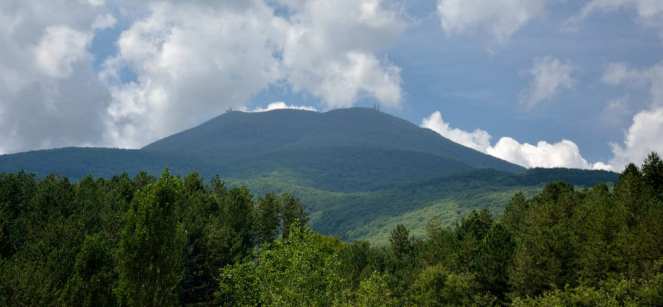
Monte Amiata.  Photo credit: gps-tour.info

The source of the incredible healing water begins at Monte Amiata. Monte Amiata is a dormant volcano, which despite its dormant status, still pumps in excess of  800 litres/211 gallons of water a second from its depths into the falls. The water begins 200 meters/656 feet below the earth and is heated by the thermal activity of the dormant volcano. I am not a geologist. I admit that I don’t understand how a dormant volcano is still generating this much heat and hydraulics, but, who cares why. I am just glad it does. 

Practicalities

  • Parking is limited.  Many people park along the road and in fact that was how we ended up finding the place. There is one small car park at the end of the access road, however, it was jammed packed with cars so don’t count on finding a place.
  • Never leave valuables in your car.
  • Water shoes – you must take water shoes. Not only for your comfort on the rocky shore, but for safety in the slippery pools.
  • The usual bathing suits, towels, a sun umbrella, and sun screen, but you may also want to bring a change of clothes as your bathing suit will smell of sulphur after you get out. Changing occurs under the cover of your towel – again, this is a no frills natural spa and it is Italy where people don’t get hung up about changing on the beach, etc.
  • Food – bring a picnic, snacks, fresh water, etc. as there is only a tiny snack bar that sells things like ice cream, but not a full service restaurant or store in the area. Also, what a fantastic place for a picnic!

fullsizeoutput_b62e.jpeg

Accommodation

There are many hotels and B&B’s in the area. We stayed at the darling Relais Ciavatta in Maremma and I cannot recommend it more.

Relais Ciavatta offers beautiful Tuscan grounds,

fullsizeoutput_b629

fullsizeoutput_b631

rooms with traditional Tuscan country decor,

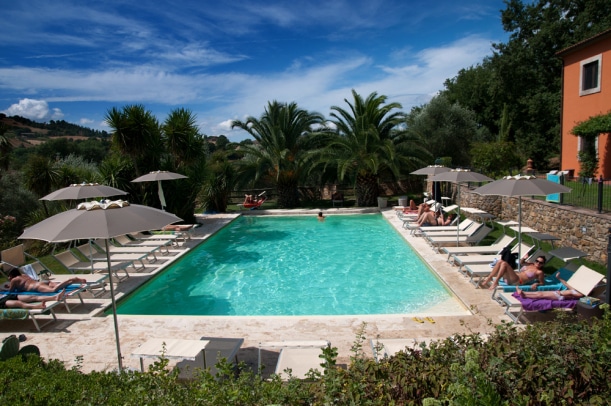
an inviting pool,

rcpool
Photo credit: http://www.czemplik.com

a delicious restaurant on site, Osteria la Frasca,

osterialafrasca

and amazing, friendly staff. One staff member in particular was very attentive and sweet. Luigi, the Jack Russell. 

Our day at Cascate del Mulino remains one of my most treasured memories of living in Italy. I like that we had to work to find it. It made it feel like a treasure at the end of a hunt. Like we had made it into the elite club of locals.

Cascate del Mulino is such a unique place that my heart is torn. I want to share it with others and yet, I really hope it does not end up developed and overrun with people. I am hoping that because the baths are a bit off the beaten path, the majority of tourists will not make the trek and the natural thermal baths may retain their natural allure. 

While I totally appreciate the spa with its services and luxurious treatments, for me, soaking in ancient, naturally carved pools, with the sound of waterfalls that have been flowing for over 3,000 years, the incredible Tuscan countryside all around me, was an experience of a lifetime.