
“The world is a book,
and those who do not travel
read only one page.”
~ St. Augustine ~
~ St. Augustine ~

Prosciutto translates from Italian into English as “ham.” This is not an accurate and complete translation, however, as Prosciutto di Parma indicates a dry-cured pork that is unique to Parma, Italy. To call it ham does not do it justice. This is not the ham one sees in the supermarket that comes in a gelatinous covering. Prosciutto di Parma is the result of culinary artistry and strict guidelines.
 By law ham bearing the name Prosciutto di Parma may only be produced and cured in and around the countryside near Parma, Italy. And, only Italian pigs are allowed. Each step in the production, from the breeding of the pigs to the final packaging is controlled by the Istituto Parma Qualità (I.P.Q.). Only the I.P.Q. has the authority to brand the finished ham with the seal of Parma’s five-pointed crown, indicating that the meat has cleared the rigorous standards required in production.
Prosciutto di Parma has been awarded the Protected Designation of Origin by the European Community designating it as a high-quality European food made according to traditional methods in a defined geographic region.
Prosciutto di Parma is all natural and as such, it is one of the first adult foods that babies are given to eat in Italy. There are no additives or nitrates. Even water is restricted from the process. The only ingredients are pigs, salt, air and time. And only the hindquarters are used in the curing process. No shoulder meat. No pork bellies.
Producing Prosciutto di Parma is not for the impatient and can take up to 3 years. The process is documented and traceable from the birth of the pig to the market.
The first step requires Italian pig breeders to place a mark on both rear legs of a young pig within 30 days of it’s birth. The mark indicates the pig’s place of birth, month of birth and a breeder’s code. This is to insure that only Italian pigs are utilized.
After slaughter, each leg is marked with a code identifying the slaughter house and a metal seal, attached to each ham during the salting stage, bears the Consorzio’s acronym (CPP) and the date at which processing began.
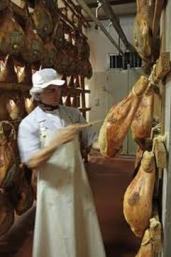 To begin the curing process, the legs are salted by a professional salt master or “maestro salatore.” The “first salt” uses two types of salt depending on the portion of the leg. After salting, the leg is refrigerated (1°C – 4°C) at a humidity level of 80% for a week. The “second salt” occurs after the week of cold hanging. After the second salting the leg hangs in cold storage for another 15 to 18 days depending on the size and weight of the leg. Salt is the only preservative allowed. No chemical additives. No nitrates. No sugar. No water. Only salt.
After the second salting and curing, the legs are cleaned to remove the excess salt. The legs are then hung on frames called “scalere” in a drying room for 7 months. The drying rooms must have large windows to allow the outside temperature and humidity to gradually dry the legs. Prosciutto producers will tell you that this open air drying period is crucial to the process. The combination of the Parma area air, temperature and humidity cannot be replicated elsewhere in the world.
The salting process is monitored to insure that the ham absorbs the minimum amount of salt needed to preserve it. At the end of the curing process the ham may loose more than a quarter of its weight through moisture loss. The process helps to concentrate the flavor and leaves the meat tender and aromatic.
In the 7th month, the legs are transferred to the cellars. The reduced air, light and humidity complete the curing. By law Prosciutto di Parma is cured for a minimum of 1 year from date of the first salting. Some are cured for as long as 3 years.

Every step of the curing process is documented. At the end of the curing process (400 day minimum) the ham and the documents of production are inspected.
Finally, inspectors test each ham with the horse bone needle to determine whether the appearance, color, and aroma of the final product meets the quality standards.
After clearing the standards, an inspector then brands each leg with the five-pointed crown signifying the ham as Prosciutto di Parma.
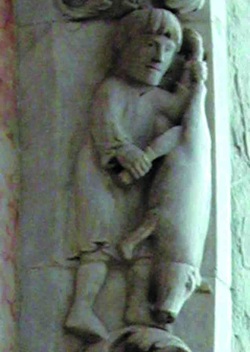
The main door of Parma’s 13th-century cathedral portrays depictions of each month of the year. The month of November is identified by the slaughtering of a pig. To this day November is known as “November Porc” and all over the Emilia-Romagna region you will find festivals celebrating pork, pork products and particularly, Prosciutto di Parma.
Italians serve Prosciutto di Parma in thin slices. It can be uncooked (dry cured) which is called prosciutto crudo or cooked, called prosciutto cotto. it is typically served as a starter to the meal. In Parma, it comes with ‘torta fritta,” parmesan cheese, fruit and wine. It is usually served as a starter to the main meal. It is delicious and after you have had it, I think it will be difficult to eat any other imposter.
Buon appetito!
 Outside our apartment is a pathway that goes between a park and a mall. It is a pedestrian street that is hidden from main traffic. It has a nice seating area and it is a perfect place for teenagers and twenty-somethings to hangout, eat, drink, smoke, buy drugs and leave mounds of trash. It is a constant irritation for me. We live in a nice neighborhood, but this pathway is a problem.
One day on the way home from school, Lena and I took a different route. I thought it may be shorter and I just felt like exploring. As we were walking along, I noticed a number of women and what appeared to be transvestites hanging around. I heard a few “pshhht, pshhtt’s.” I looked up and encountered a woman in the window above. I slowly began to notice a number of men in parked cars talking with other men at their driver’s side windows.
It took me minute to realize that this was Parma’s red light district. These were ladies (and men) for hire.
Prostitution is legal in Italy, but I still do not want my children around it. I told Lena that we should not walk that way anymore and explained why. She replied that she did not feel unsafe at any time and that she actually felt safer on the street with prostitutes than she did outside our apartment when the drug dealers were present.
She went on to say, “Mommy, at least the prostitutes are polite and pick up their trash. The drug dealers don’t do that.”
I had to laugh. How far she had come from age 10 to 11. I was reminded of my original post where I discussed how I wanted my children “to see and experience the underbelly of life – the poverty, trash and homelessness that one sees in a city – because if they never see these things, they will never know that these things are problems that our world faces. If they don’t see these things, they will never know humanity and how to face a problem head on.”
Ah, Karma, you got me.
Fast food is almost non existent in Italy. They do have Autogrill which is basically a rest stop. But Autogrill is no Stop-N-Go. Autogrill has delicious panini, brioche, espresso, wine, cheese and bathrooms. And other than the occasional McDonald’s, you don’t see fast food in Italy. The reason is simple. Food is an experience here. Food is not to be hurried. Food is not to be artificial. Food is to be enjoyed, slowly at a table.
Even drinking water is to be enjoyed. Slowly. At a table. When we first arrived it was so hot and humid that I walked to and from school with an ice water in a reusable hard plastic glass with a lid and straw. I noticed people were staring at me. Really staring and giving me side eye. I could not figure out what possible affront I had inflicted on the Italians with the simple act of walking my kids to school. Finally, an Italian mom explained to me that you simply do not walk and drink in Italy. Nor do you walk and eat. It is simply not done. Not even water on an incredibly hot day. When you want to enjoy a meal or a drink, you must sit and enjoy it. Oh my. I had some things to learn.
Now we were all for tasting all the new wonderful foods we encountered in Italy, but our son was really unhappy about moving. He was down and missing home. He wanted “American food.” He wanted McDonalds. We acquiesed. If a crappy hamburger would bring him a smile, it was worth ingesting the crap.
The first thing we noticed was that Italian McDonalds served beer on tap. They even served it at the drive through window. The corner of Aleks’ mouth lifted slighty. He had cracked a small grin. Progress.

The next thing we noticed was that the menu was different. The burgers had names like Manhatten Classic, Chicago Supreme, California Melt and the Mythic Chicken burger. They also served pizzarotto (little pizza pockets), zucchini bites, Las Vegas fries (basket weaved fries), fried shrimp, Parmesan cheese snacks, baby carrots and kiwi (who knew that Italy is a large kiwi producer?).
Aleks immediately detected something was different about his hamburger. The meat was not as juicy. Not as greasy. We later learned there are strict rules about beef production in Italy that McDonalds adheres to. Thus, the burgers at Italian McDonalds are healthier for you. Unfortunately, Aleks was craving good old American crap quality beef. He was disappointed.
The kids next noticed that something tasted funny about their milkshakes. I did a taste test. “That is a real ice cream product” I say. Lena was happy. Aleks was disappointed in the real food.
Aleks did enjoy one thing about Italian McDonald’s though. They have an entire dessert case with really nice desserts. Desserts like profiteroles, crème caramel, cheesecake, panna cotta and eclairs.

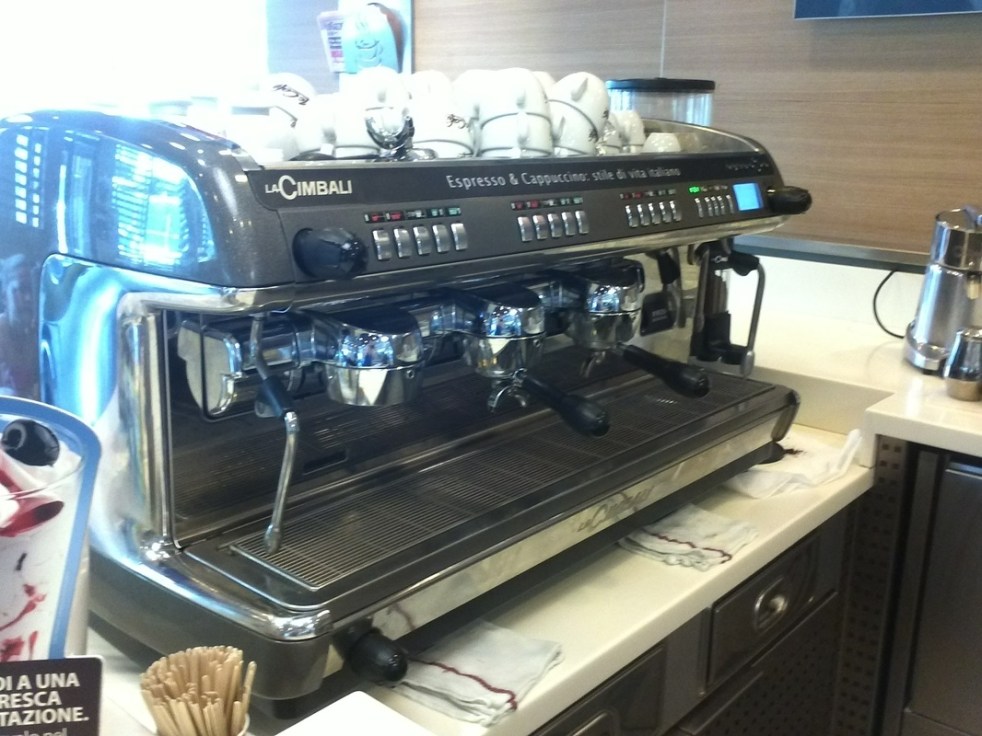
The most Italian thing, though about Italian McDonalds is the ever present, very large, espresso machines. You cannot end your meal in Italy without an espresso – not even a meal at McDonald’s.


When adapting to a new life in a foreign land, I think Dame Judy Dench put it best:
“Initially, you are overwhelmed. But gradually you realize it’s like a wave. Resist and you’ll be knocked over. Dive into it and you’ll swim out the other side. This is a new and different world. The challenge is to cope with it. And not just cope, but thrive.”
Dame Judi Dench
The Best Exotic Marigold Hotel
In the USA, a Guido is a slang (some would say pejorative) word for an Italian American. In Italy, however, Guido is a boy’s name or when used as a verb it literally means “I drive.”
We had been in Italy for a week when my husband had a work conference in Florence. Would the kids and I like to come along? School had not started yet. We could not move into our apartment yet and it was Florence, so Hell yeah! The only hitch, Joe would be taking a bus with the other employees so I would have to drive the hour and half on my own with the kids or take the train. Since I spoke no Italian I figured driving would be easier than trying to buy train tickets, figure out schedules, etc.
Besides, I had been driving around Parma and back and forth to the local Ikea (pronounced hilariously to my children as ‘eee’ kay- yuh‘) with no problems. Plus, we had a GPS in the car. How hard could it be? It is only 1.5 hours away. Driving to Florence was no problem!
Armed with the overconfidence that comes with 30 years of driving, we set out. On the ride down I became acquainted with the Italian driver. For a large portion of the autostrada (highway) between Parma and Florence, there are only two lanes. One lane is perpetually occupied by semi trucks. Semi trucks which travel at a very high speed and get right up your bum. Thus, the only option if you don’t want to be a semi sandwich is to go around them in the other lane. This is an option equivalent to playing Russian Roulette.
The cars travel at speeds far faster than the semi trucks. They also drift across the entire autostrada paying no attention whatsoever to lane lines. At first I thought they must be drunk they way they were swerving, but it was happening so often that I realized it was just the way they drive here.
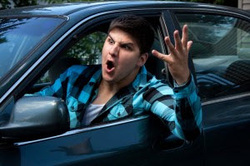
Now, I am a responsible driver with my two precious kids in the car so I am going to drive responsibly. Apparently, driving responsibility is a personal affront to Italian drivers. My driving habits bring on a host of activity from the Italians – honking, fist shaking, lights flashing, swerving to see if they can squeeze their car between me and the semi in the next lane. At one point the driver behind me was so close to me that when I looked in my rear view mirror I could see the part in her hair. I can still remember the pink hair clip she was wearing.
So after an hour and a half of pure white knuckle driving we arrived in Florence. Finally, I was going to park the car and relax. Ha! It took us 1.5 hours to get to Florence and another 2.5 to find the hotel.
The GPS kept trying to send me down one way streets or streets that were blocked off. I was driving in circles and now the autostrada seemed like the bumper cars at the fair. Imagine the same speed, drifting and erratic driving but now on ancient narrow streets with people and scooters added to the mix. And no where at all to stop or park. The streets that I needed to get to the hotel were either blocked or too narrow for a car to fit.
After 1.5 hours of trying to find the hotel on my own, I was in the middle of a full blown, all out, screaming at the kids, nervous breakdown. I pulled over as best I could and simply stopped. I called Joe. He sweetly tried to help and offer suggestions over the phone from the bus. He called the hotel for me. I cried and screamed at him. He didn’t understand how awful it was.
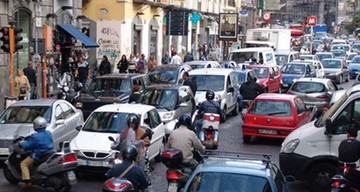
Through my tears I noticed a crowd of police men and women directing traffic. Surely they could help me. I eased over and once again decided to block traffic like an Italian native. The police woman thankfully spoke English. She asked me where I was from. I explained that we had just moved to Italy a week ago and that we were joining my husband for a work trip. She told me that tourists should never drive in Florence. My husband’s work should have told us that. The hotel should have told us that. She explained that it is difficult for the locals to drive in Florence because the streets change almost on a weekly basis according to politics. That explained why the GPS was having such a hard time. She asked where my husband was. I told her he was on the bus with his office mates. “Hum.” she said with a raised eyebrow.
“Allora” she tells me, “you must drive over that bridge there. Once you are across the bridge you go straight and your hotel is very close. Another right turn and there you will find it.”
“I can’t go across the bridge. It is one way traffic going the opposite direction. And the street is blocked with a chain,” I respond.
“Ignore the traffic. It is the fastest way and I will have my colleague meet you at the chain, He will unlock it and you can drive through,” she tells me.
“Huh?!” I am stricken with terror at the thought but I am also so close to having a permanent breakdown that I decide it is worth it.
I grip the steering wheel and proceed to drive against traffic across the Ponte Santa Trinita. Everyone, justifiably this time, is once again honking, screaming, shaking fists at me, but damn it, we made it across. We pulled up to the chained street. We waited for 30 minutes. No one came. I negotiated the terrors of Firenze traffic again to wind my way back to the police woman. She instructs me to do the same thing again. I tell her that I already did what she suggested but no one came to meet us at the chain. She tells me I must be patient. I cross the Ponte Santa Trinita again. Against traffic. Against all reason and sanity.
This time, however, I noticed a city bus lumbering along. I thought to myself, “if that bus can fit, then so can I.” I threw caution to the wind. I ignored the chain and decided to follow the bus. It worked! I swear I heard angels sing when I finally found the street that our hotel was located on. We were close. All I had to do was find the piazza to park in as the hotel had instructed me.
I pulled up to what is, to this day, the tiniest piazza that I have ever seen. There were a few of the teeny Smart electric cars parked, but even they were parked all akimbo because space was so tight. I didn’t want to leave the car double parked only to come back and find it towed away. So I stayed with the car, our luggage, a distraught Lena and the passports while Aleksander ran to the hotel and asked what to do.
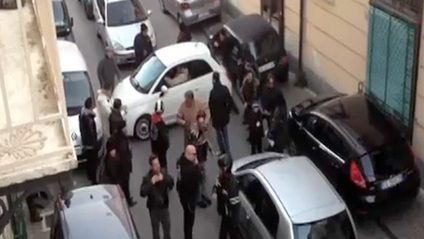
Aleks returned and said that the hotel advised us to just leave the car double parked until we checked in. That was all I needed to hear. At the front desk I asked where the piazza for parking was that they kept telling me about over the phone.
“It is just there. Where your car is.”
“That is the hotel parking? There is nowhere to park in the piazza.”
“We know. There is never any parking there. Just leave it there with the keys. We will take care of it.”
With pleasure!
In the USA, a Guido is a slang (some would say pejorative) word for an Italian American. In Italy, however, Guido is a boy’s name or when used as a verb it literally means “I drive.”
We had been in Italy for a week when my husband had a work conference in Florence. Would the kids and I like to come along? School had not started yet. We could not move into our apartment yet and it was Florence, so Hell yeah! The only hitch, Joe would be taking a bus with the other employees so I would have to drive the hour and half on my own with the kids or take the train. Since I spoke no Italian I figured driving would be easier than trying to buy train tickets, figure out schedules, etc.
Besides, I had been driving around Parma and back and forth to the local Ikea (pronounced hilariously to my children as ‘eee’ kay- yuh‘) with no problems. Plus, we had a GPS in the car. How hard could it be? It is only 1.5 hours away. Driving to Florence was no problem!
Armed with the overconfidence that comes with 30 years of driving, we set out.
THE ITALIAN DRIVER
On the ride down I became acquainted with the Italian driver.
For a large portion of the autostrada (highway) between Parma and Florence, there are only two lanes. One lane is perpetually occupied by semi trucks. Semi trucks which travel at a very high speed and get right up your bum. Thus, the only option if you don’t want to be a semi sandwich is to go around them in the other lane. This is an option equivalent to playing Russian Roulette.
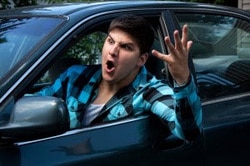
The cars travel at speeds far faster than the semi trucks. They also drift across the entire autostrada paying no attention whatsoever to lane lines. At first I thought they must be drunk they way they were swerving, but it was happening so often that I realized it was just the way they drive here.
Now, I am a responsible driver with my two precious kids in the car so I am going to drive responsibly. Apparently, driving responsibility is a personal affront to Italian drivers. My driving habits bring on a host of activity from the Italians – honking, fist shaking, lights flashing, swerving to see if they can squeeze their car between me and the semi in the next lane. At one point the driver behind me was so close to me that when I looked in my rear view mirror I could see the part in her hair. I can still remember the pink hair clip she was wearing.
So after an hour and a half of pure white knuckle driving we arrived in Florence. Finally, I was going to park the car and relax. Ha! It took us 1.5 hours to get to Florence and another 2.5 to find the hotel.
The GPS kept trying to send me down one way streets or streets that were blocked off. I was driving in circles and now the autostrada seemed like the bumper cars at the fair. Imagine the same speed, drifting and erratic driving but now on ancient narrow streets with people and scooters added to the mix. And no where at all to stop or park. The streets that I needed to get to the hotel were either blocked or too narrow for a car to fit.
After 1.5 hours of trying to find the hotel on my own, I was in the middle of a full blown, all out, screaming at the kids, nervous breakdown. I pulled over as best I could and simply stopped. I called Joe. He sweetly tried to help and offer suggestions over the phone from the bus. He called the hotel for me. I cried and screamed at him. He didn’t understand how awful it was.
Through my tears I noticed a crowd of police men and women directing traffic. Surely they could help me. I eased over and once again decided to block traffic like an Italian native. The police woman thankfully spoke English. She asked me where I was from. I explained that we had just moved to Italy a week ago and that we were joining my husband for a work trip. She told me that tourists should never drive in Florence. My husband’s work should have told us that. The hotel should have told us that. She explained that it is difficult for the locals to drive in Florence because the streets change almost on a weekly basis according to politics. That explained why the GPS was having such a hard time. She asked where my husband was. I told her he was on the bus with his office mates. “Hum.” she said with a raised eyebrow.
“Allora” she tells me, “you must drive over that bridge there. Once you are across the bridge you go straight and your hotel is very close. Another right turn and there you will find it.”
“I can’t go across the bridge. It is one way traffic going the opposite direction. And the street is blocked with a chain,” I respond.
“Ignore the traffic. It is the fastest way and I will have my colleague meet you at the chain, He will unlock it and you can drive through,” she tells me.
“Huh?!” Did the police woman just instruct me to break the law? I am stricken with terror at the thought, but I am also so close to having a permanent breakdown that I decide it is worth it. Jail would be a welcome relief from Italian drivers.
I grip the steering wheel and proceed to drive against traffic across the Ponte Santa Trinita. Everyone, justifiably this time, is once again honking, screaming, shaking fists at me, but damn it, we made it across. We pulled up to the chained street. We waited for 30 minutes. No one came. I negotiated the terrors of Firenze traffic again to wind my way back to the police woman. She instructs me to do the same thing again. I tell her that I already did what she suggested but no one came to meet us at the chain. She tells me I must be patient. I cross the Ponte Santa Trinita again. Against traffic. Against all reason and sanity.
This time, however, I noticed a city bus lumbering along. I thought to myself, “if that bus can fit, then so can I.” I threw caution to the wind. I ignored the chain and decided to follow the bus. It worked! I swear I heard angels sing when I finally found the street that our hotel was located on. We were close. All I had to do was find the piazza to park in as the hotel had instructed me.
I pulled up to what is, to this day, the tiniest piazza that I have ever seen. There were a few of the teeny Smart electric cars parked, but even they were parked all akimbo because space was so tight. I didn’t want to leave the car double parked only to come back and find it towed away. So I stayed with the car, our luggage, a distraught Lena and the passports while Aleksander ran to the hotel and asked what to do.
Aleks returned and said that the hotel advised us to just leave the car double parked until we checked in. What? What was this new world where the rules just do not apply?
But, it was all I needed to hear. We abandoned the car, blocking people in. At the front desk I asked where the piazza for parking was that they kept telling me about over the phone.
“It is just there. Where your car is.”
“That is the hotel parking? There is nowhere to park in the piazza.”
“We know. There is never any parking there. Just leave it there with the keys. We will take care of it.”
With pleasure!

When learning Italian, it is important to remember that inflection and emphasis on a particular syllable can make all the difference between getting your point across and really offending someone.
A slight turn of phrase can change the meaning of a word entirely. I believe in trying to speak the language. I try to speak the language. I butcher it regularly and generally frustrate Italians, but it is the only way to really learn and I feel that it is respectful to at least try to speak the official language of the place that I live. But Lord knows, I have really made a mess of it at times.
In the beginning, we were meeting all kinds of people and lots of new kids at school. In Italian, much like Spanish, instead of asking “how old are you?” you ask a child how many years they have. The phrase in Italian is “Quanti anni hai?” I was pronouncing the word anni (years) like “ah knee.” My friend Dena, an American who has lived in Italy for over 20 years, was kind enough to tell me “Oh, be careful how you pronounce anni.” See, I was pronouncing anni like ani. Ani means anuses. This explained the strange looks and giggles I got when I asked children at the school how many anuses they had. The correct pronunciation for anni is (ahnn knee) with an emphasis on the double n’s.
Then, at language circle one day my friend Paola was discussing the little yellow structure near the stadium. I said, Oh, you mean the casino?” She looked at me shocked. “No, it is not a casino.” “Sure it is, it says so right on the building. “aah, you mean casino’ ‘” Apparently, there is the casino where one gambles and then there is the casino’ which is a brothel. Oh and casino can also mean a big mess depending on context. In this context I made a casino of the word casino.
And then one time Paola did an entire lesson on the difference between papa’, Papa and pappa. The first, papa’ (pa·pà) is pronounced with a short emphasis on the first syllable then a hard accent on the second syllable. This is one’s father.
Next there is Papa (pà·pa) with a capital letter. This indicates the Pope and is pronounced by keeping an equal emphasis on both syllables, but with a slighter stronger emphasis on the first syllable. But only a slightly stronger emphasis. Too strong an emphasis and you’ve blown it.
And finally, there is pappa. The double consonant ‘p’ requires us mush mouthed Americans to linger for a time on the two p’s. Pappa is baby food. A small snack for babies.
To this day, I cannot hear the difference between them all.
But my biggest and most famous gaffe happened right after we arrived. It was Christmas and I was determined to keep up our holiday tradition of a new ornament in the kid’s stockings. I really wanted to find ornaments that said “Buon Natale.” Unfortunately, all the ornaments that I saw said “Merry Christmas” in English.
We were out on our last Christmas shopping excursion and Joe was having a coffee. I tried one last store. Low and behold I saw exactly what I was looking for. I went up to pay. I said my few phrases in Italian and the clerk instantly recognized I was not Italian. She asked where I was from in English. I told her and complimented her English. She said she needed to practice. I told her I really needed to practice my Italian as I had only been in the country for 3 months. We decided that she would ask me questions in English and I would respond in Italian.
She asked me why I was buying the ornaments. I replied that I was buying the ornaments for my children’s stockings. She turned bright red. Her eyes opened wide. I had clearly said something wrong. I felt the need to explain further – to fix what I had said incorrectly. I told her that I was buying the ornaments for the stockings of Father Christmas. At that point the clerk emphatically said “basta basta” or “enough, stop.” She held her hand up to make sure I got the point. The little boy behind me let out a guffaw and a snicker. The clerk told the other patrons that I was new and didn’t speak Italian. The mother of the boy said, “Certamente!”
So, let me explain. I was trying to say ‘calza’ which is the word for stocking. I put the wrong ending on it and instead said ‘calzo’ which, with my bad American pronunciation, sounded like ‘cazzo’ – the slang term for the male genitalia. So, in the first instance I had told the clerk that I was buying the ornaments for my son’s willy. When I tried to explain further, I only made it worse by dragging Santa Claus’ willy into the discussion. Everyone in the store had a good laugh about it.
Then months later at the school I was introduced to a friend’s family from England. My friend said to her nephews, “This is the lady that said she was buying ornaments for Father Christmas’ willy!” They all laughed and told me that the story had gone around London. Oy!
But, hey, the mistakes are half the fun and the things that we will remember for years to come.




 Niche Travel Design