Americans abroad · Beauty Essentials · Emilia Romagna · European travel · ex-pat life · Insider Tips · international travel · Italian style · Italy · Thanksgiving abroad · The Unique and Unusual · Travel

The Secret To Italian Style – Fare La Bella Figura

“The Creator made Italy from designs by Michelangelo.”
Mark Twain


Have you ever wondered what is the secret to Italian style? How Italians manage stilettos on cobblestones or how they look chic and elegant at all times? After moving to Italy I discovered the secret to Italian style. The secret to Italian style is more than just dressing well. Looking good is a cultural norm learned from birth. In Italy, one learns from an early age the importance of fare la bella figura.
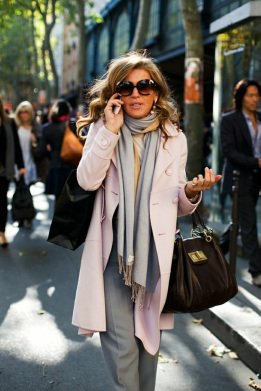
Italian style. A quintessential Italian woman dressed elegantly.
The quintessential Italian woman. Stylish and elegant. Photo credit: https://www.walksofitaly.com/blog/how-to/what-italians-wear-in-spring


FARE LE BELLA FIGURA | A GOOD FIRST IMPRESSION

Fare la bella figura” literally means ‘to make a beautiful figure.’ The phrase refers to the Italian ideal of looking your best at all times, making a good impression and is at the core of the secret to Italian style. For this casual Californian, this concept may be the biggest challenge that I faced living in Italy.  Northern Italy is the home of Milano, the seat of fashion houses and world famous designers. People are stylish there.

After moving to Italy, I was jet lagged and coming down off of an emotional roller coaster of a year. I was unaccustomed to humidity and was sopping wet every time I stepped outside.

There I was the first day of school in Italy, bedraggled, exhausted, and definitely not stylish. I hadn’t felt the need to dress up for the ten minute walk to school when I was just going home to unpack dirty, dusty boxes. I felt good about myself that I had managed to brush my hair, put on some makeup, and don my fancy Taryn Rose flip flops.

I arrived at my children’s school. I looked at all the Italian mothers and thought “uh oh.”  Not only were they thin and physically beautiful, they were stylish in an understated elegant way. Northern Italian women don’t wear a lot of makeup. They don simple, high quality, finely tailored clothes. They wear dresses, skirts and lots and lots of stilettos. And boots – year round. And scarves – year round.  I stood on the sidewalk, hair in a ponytail, wearing California athleisure wear and flip flops. Needless to say, I stood out like a sore thumb.

MUSINGS AND OBSERVATIONS | HOW DO THEY DO IT?

I pondered the secret to Italian style. Was the secret to Italian style simply having enough money to buy the best clothes? Was the secret to Italian style some special hair product that stopped your head from sweating all day long and looking like one just got out of the shower? I was determined to find out the secret to fare la bella figura.

I had a conversation with my English friend Diana about the Italian women’s seemingly effortless style. Diana noted that if you went to the supermarket in England dressed like an Italian woman does, everyone would think, “what is she trying to prove?”  I thought about how people would react if you showed up at Safeway in stilettos, a dress, a scarf – Diana was right.  Americans too would think you were putting on airs. The only reason you would wear high heels to the supermarket in America was if you were on your way to or from work or an event. In Italy, however, it a common occurrence.

I will admit, from my California perspective, it seems like a lot of work to get dressed up just to run to the supermarket, go to the gym, or walk the kids to school. But dress up Italians do. I was no longer in California and if I didn’t want to stand out I was going to have to make some changes. Wearing exercise clothes on the street is just not done in Italia, and flip flops (my shoe of choice in California) are reserved for the pool or the health club.  If I continued my disregard for la bella figura, I may offend someone or at the very least confuse them.  My American friend Sarah told me that once she went out in her “tuta” or her exercise suit with no makeup. She ran into her landlady who promptly contacted Sarah’s Italian in-laws to inquire if Sarah was feeling ill since she had been out of the house looking so casual.  In Italy, being ill is the only excuse for failing fare la bella figura.

LESSON NUMBER ONE | KNOW THY SELF

The first week I sat back and observed. I saw one woman ride up to school on her bicycle in a tight pencil skirt, gorgeous blouse and stilettos. There was a light summer rain. She rode her bicycle while holding an umbrella, one child on the back of her bike and another in the front.  She arrived, floated off of her bike, got the kids out of their seats, grabbed her Louis Vuitton bag and glided into school. Not a hair out of place. I watched – mouth agape. She couldn’t be a real mother of two small children. She looked like a super model. I looked around for a film crew. This had to be fake.

The one thing that stood out to me was her air of confidence. She was comfortable in her own skin.

So, first on the list toward achieving Italian style – feeling confident that you look good and not caring what others think. Now this seems to be incongruent with the concept of fare la bella figura, but it is not. Putting your best face forward means different things to different people. As long as you carry yourself with the confidence of an Italian woman in stilettos on a 1,000 year cobblestone street, all will be fine.

LESSON NUMBER TWO | KNOW THY PRODUCTS

I soon came to accept that not only are Italian women stylish, they don’t seem to be affected by weather. Italian women’s hair is never out of place. The weather wreaks havoc on my hair regularly. In the summer the humidity leaves my body and head wet and it renders my hair a wet, frizzy, wonky mess. In the spring, the pollen makes my eyes water and my nose run constantly leaving me looking like W.C. Fields. The wet winter rain and fog makes my eyes water resulting in black raccoon eyes from runny mascara. And again, my hair becomes a frizzy wonky mess. Why don’t Italian women suffer as I do? Is it genetics? How do they do it?

The second lesson on achieving Italian style, know your hair and powder your face. There are a number of hairstyles that one can wear to combat the weather and a number of hair products that can tame the wildest of manes.  One thing that I noticed is that it is not uncommon for Italian women to don a scarf on their heads while they are traveling. Think Sofia Loren in a convertible on the Amalfi coast. A headscarf can be tied around your hair to protect it from the weather, and then upon arrival, it can be stylishly tied around your neck, shoulders or handbag.

Also, one Italiana informed me that one simply must invest in a high quality face powder to ensure that your makeup does not melt off. And carry face blotting towelettes.

LESSON NUMBER THREE | COMMIT

Fare la bella figura is not limited to young women either. I have seen many an older Italian woman doddering along, holding on to her companion for support in stilettos! Stilettos! They can barely walk anymore, but damn it if they aren’t going to look good. I will admit that I have yet to attain this level of fare la bella figura.

Lesson number three on achieving Italian style, you are never too old to care about how you look. The third secret to Italian style – commit to fare la bella figura for life.

The older women also love their hats, fur coats, scarves and handbags. I particularly like to watch the older ladies during the Christmas season as Italians dress up to do their Christmas shopping. At the beginning of December, the older Italian women put on their finest attire as they stroll around the main piazza and shopping streets showing off their coats, hats and handbags  It is a far different atmosphere than the images you see of people clawing and fighting over items at WalMart.  This is a slow, deliberate shopping experience.  A chance to show off your best face.

Another difference between Italy and the USA, no one in Italy is afraid of PETA. Fur and leather abound, particularly among the older crowd. Fur hats, fur coats, fur trimmed scarves, fur lined leather gloves, fur lined leather boots, leather pants, and leather skirts are commonplace.

LESSON NUMBER FOUR | TEACH THY STUDENTS WELL

Lesson number four on achieving Italian style, teach the males in your life the importance of fare le bella figura as well. Italian women are not alone in pursuing la bella figura. Italian men spend an equal amount of time on their appearance. Italian men’s clothes are often tailored. It is unusual to see baggy clothes on men here. Italian men also wear sweaters quite a bit. Not just pullover sweaters, but cardigans. And they like to roll up the cuffs of their pants, jeans, shorts.  Italian men wear scarves as often as women do and they pay a lot of attention to their shoes. They also carry bags made of beautiful leather – or what we would call a man purse, a ‘murse.’

Older men frequently wear suits, bow ties, fedoras, and a scarf. They dress this way all the time – just to go to the post office or the vegetable market.  And where the Italian women tend to be understated, Italian men have a flair for bold style. They are not afraid to wear colors and patterns. Lord knows they love a brightly colored pant.

I have observed the Italians for over three years now. I will admit that while I have learned a thing or two, I am still amazed at how they pull off la bella figura every single day. They make being stylish and elegant look effortless and easy. I still cannot navigate cobblestones in stilettos and I still do not dress up to run to the supermarket across the street, but, I have improved. I no longer wear flip flops.

Fare la bella figura is part of the Italian culture. It is expected, and I have come to appreciate it. The attention to style makes one feel a bit better when you are out and about. And it makes for great people watching.

The Italian author Beppe Severgnini summed it up best. “Being Italian is a full-time job. We never forget who we are, and we have fun confusing anyone who is looking on.”


The photos of Italian style are not my own. I got these off of the internet because it is not good form to take photos of strangers, but I assure you that I have seen some version of each of these outfits on a regular basis.
Adventure travel · Americans abroad · Croatia · European travel · Honeymoon travel · Insider Tips · international travel · luxury travel · Off The Beaten Path · swimming with horses · The Unique and Unusual · Zadar

Swimming With Horses | Zadar, Croatia Off The Beaten Path

Are you looking for a unique travel experience? Something off the beaten path? Swimming with horses in Croatia may be just the thing you are looking for.

STABLES NEAR ZADAR | Riding Club Vencil

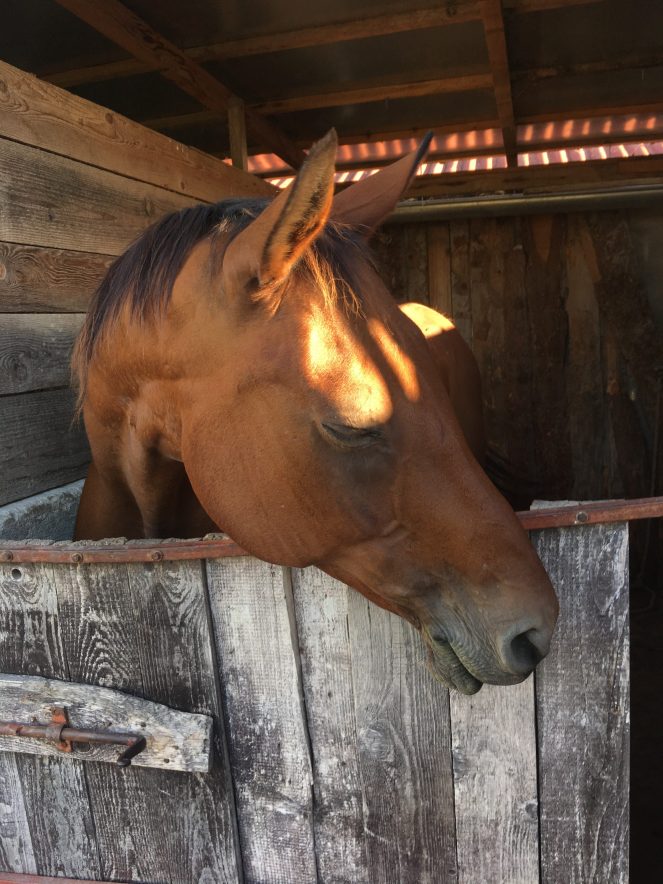
A horse at the stable in Zadar, Croatia. Ready for swimming with horses.
Ready to go swimming.

There are a number of stables throughout Croatia for riding horses in lakes, rivers, and the sea.

We happened to be spending a month in Zadar so we chose Riding Club Vencil located just outside Biograd na Moru.

The whole experience was beyond all of our expectations. We arrived at the stable which was located in the spectacular Croatian countryside. The grass was Jade green. The cerulean sky was spotted with the occasional fluffy white cloud. The sun was shining and the morning surrounded us with a steady drumbeat of nature sounds.   

The owner of the riding club was quite careful with each of us to determine our level of skill and any fears we may have. In the end, they chose the perfect horse for each of us. 

Then our adventure began. We eased into it with an hour long ride through the rolling hills to Lake Vrankso. The ride was mostly a slow walk for the beginners. We did have some more experienced riders in the group and they were allowed to gallop off so long as they stayed within eyesight of the guide.

SWIMMING WITH HORSES | Lake Vransko

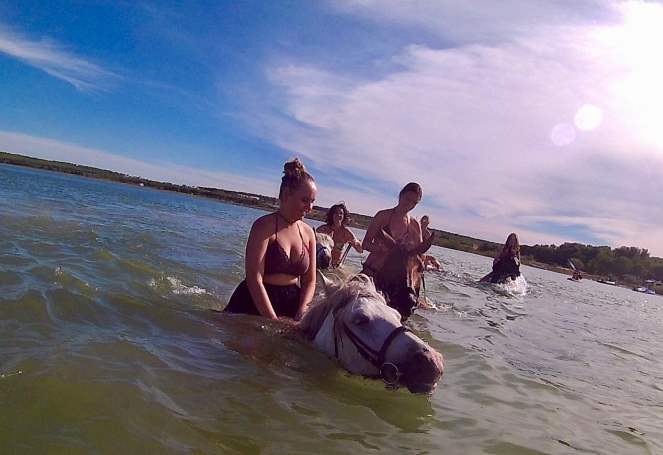
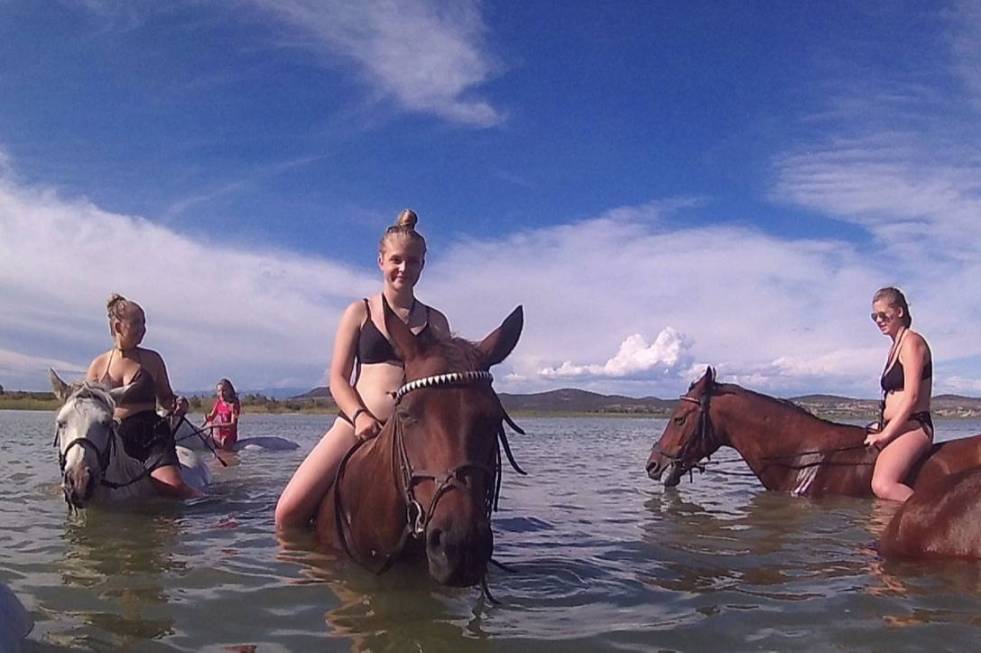
Young women sitting atop horses that are swimming near Zadar, Croatia
The horses are swimming!

As the sun beat down, we eased closer to our swimming spot, Lake Vransko. Summers in Croatia are hot. That day it was 38 C/100 F. We were all ready to cool off. And no creature was more ready than the horses. The lake called to us like a siren of the sea.  The horses began to show their excitement. They had done this journey before and they knew that they were about to cool off.  Each horse began to trot a little faster and they started talking to one another like a group of teenage girls. One horse even did a little dance of excitement. Once in the water, he began to play.


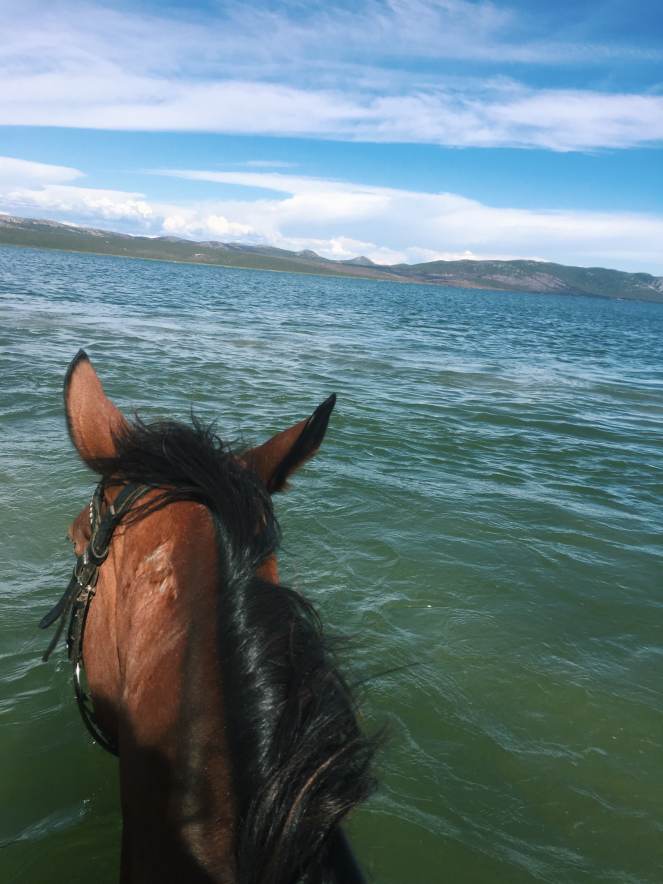
And this is the part where the ride became my favorite experience in Croatia.  Here is where it gets interesting. Where it went from being a simple horse ride to a very unique experience. Sitting there atop our horses, they entered the water. The cool water hit our legs and the horse stopped for a moment to enjoy their respite from the heat. Then, as if guided by an unseen force, they moved farther out into the lake and began to swim. It felt like a cross between floating and being powered by a paddle boat.

This was our chance to bond with animals in a whole new way.

SWIMMING WITH HORSES | What To Expect

Now I have been swimming with dogs in the past, but s
wimming with a dog is just not the same as swimming atop a horse. A dog is, of course, smaller than a horse and a dog swims alongside you. One would never sit atop a swimming dog. And simply put, a dog is not as powerful as a horse. 

I think that was the coolest feeling of the whole experience – feeling the horse’s sheer power. While you sit atop the horse as it swims you feel every one of its powerful muscles engage. It felt like you were united with the horse like some sort of centaur. I was at its mercy and had to give over to its expertise at navigating the waters. 

The horses and our group played in the water for over an hour. Once we tired out, we promptly laid ourselves out on the field of grass and wildflowers to warm up and dry off. Then we enjoyed a picnic of Dalmatian food.  

The entire adventure was about 4 hours round trip. Given the uniqueness of the experience as well as the picnic and photos which were included in the price, we felt that we scored quite the bargain. The entire cost was only 720 HRK or $109/€97 per person. 

About Riding Club Vencil

I highly recommend swimming with horses if you get the opportunity. If you happen to be in Dalmatia, check out Riding Club Vencil. They were ever so helpful and professional.

GPS coordinates:  N43.9622 ° E15.4962 °.


Adventure travel · Americans abroad · European travel · Honeymoon Planning · Honeymoon Questionnaire · Honeymoon travel · Insider Tips · international travel · luxury travel · Off The Beaten Path · Travel

Planning The Perfect Honeymoon

THE PERFECT HONEYMOON – MYTH OR REALITY?

Just Married. Photo credit: NikolayFrolochkin on Pixabay

THE PERFECT HONEYMOON | THE KEY IS COMMUNICATION

Your honeymoon . . . the stuff that dreams are made of . . .  and second only to your wedding day in terms of expectations.  The key to planning the perfect honeymoon?  TALK! TALK! TALK! TALK! And then talk some more.

There is no sense in planning the perfect beach resort vacation if your spouse hates the beach.  What if your spouse’s idea of the perfect beach vacation is camping and you had an all-inclusive resort in mind?   Nothing is insurmountable though and you can both have your ideal honeymoon if you sit down and have a conversation.

Additionally, while the internet has made trip planning easier, there still is no substitute for a professional travel agent when planning a trip as important as your honeymoon.   For any other trip besides your honeymoon the DIY approach may be just fine, but because there is so much expectation placed on a honeymoon, using a professional travel agent can save you from that dreaded moment years down the road when one of you, in the heat of an argument says “This is JUST LIKE OUR HONEYMOON.  You screwed that up too!”

Before meeting with a travel expert, schedule some time with your intended to cover the intended topics.  Take time to go over these honeymoon planning questions. You can print out a copy here to fill out and take with you to your travel expert

HONEYMOON PLANNING QUESTION NO 1. | WHAT IS THE BUDGET?

Discussing your budget is key to a successful trip. Do you want to start your life together on the vacation of a lifetime or are you more comfortable saving for a house?  Financial discussions are the cornerstone of all good marriages so you may as well begin your life together on the right foot by discussing realistic budget concerns for your honeymoon.  Additionally, consider registering for your honeymoon to help offset the cost.  That way you may just get the dream honeymoon and be able to save for your first house.

HONEYMOON PLANNING QUESTION NO. 2 | DESCRIBE YOUR IDEAL VACATION?

A beach vacation may not be for everyone. Photo credit: tigertravel on Pixabay
City adventures may be too tiring after a big event like a wedding. Photo credit: gellinger on Pixabay

Does one of you like exploring cities, art galleries, theater, and the best restaurants while the other just wants to sleep late, lounge by the pool and drink umbrella drinks?  Discuss your ideas and see if there is a destination that offers activities that both of you enjoy.

HONEYMOON PLANNING QUESTION NO. 3 |WHAT TYPE OF ROOM DO YOU LIKE OR NEED?

Some people could not care less about the room they are in as they anticipate being outdoors, on the go, etc. Other people need a certain thread count before they are happy.  Others still, need a certain hotel floor, to be away from the elevators, air conditioning, etc. before they can get a restful night’s sleep.  No one wants to be sleep deprived and cranky on their honeymoon.

HONEYMOON PLANNING QUESTION NO. 4 | ARE YOU COMFORTABLE VISITING COUNTRIES WHERE ENGLISH IS NOT COMMONLY SPOKEN?

Photo credit: Tumisu on Pixabay.If one of you is a seasoned traveler with an explorer’s soul and the other is terrified to be somewhere they cannot communicate effectively, you need to compromise. Perhaps an all inclusive resort or a cruise would be the way to introduce your spouse to international travel. Of course in this day and age with technology, one can easily translate on the go. Perhaps a dry run with translation is in order to ease your fiancee’s fears.

HONEYMOON PLANNING QUESTION NO. 5 | WHAT CLIMATE ARE YOU MOST COMFORTABEL IN? 

Definitely discuss sun versus snow, but also tackle questions you may not have thought of. Example, are you comfortable when it is humid and there is no air conditioning? Many condos in Hawaii. Costa Rica, and the Caribbean do not have air conditioning and this can pose a threat to a honeymoon if one of you cannot sleep in humidity.

HONEYMOON PLANNING QUESTION NO. 6 | DO YOU WANT TO COMBINE YOUR WEDDING AND HONEYMOON WITH A DESTINATION WEDDING?

Photo credit: Laughing Raven on PixabayDestination weddings are popular and look amazing in photos.  They also can save you a considerable amount of money as many hotels and resorts offer package deals.  And when you honeymoon in the same hotel, you can start the honeymoon immediately.  The other consideration, however, is that you are sharing your honeymoon with your guests who have also flown to the site to attend your nuptials so you may not have the privacy that you were hoping for on your honeymoon.

HONEYMOON PLANNING QUESTION NO. 7  | DESCRIBE YOUR HOEYMOON FANTASY TRIP.

Photo credit: Sonming4 on Pixabay.

The only way to guarantee that your honeymoon dreams become a reality is if you talk about them.  Like most things in life, perfect honeymoons don’t just happen. They take planning. The more you do your honeymoon homework, the more romantic – and the more fun – your honeymoon will be.


Americans abroad · aperitivo · Buon Natale · Christmas · Christmas cocktails · cocktails · day drinking · Emilia Romagna · Emilia Romagna · European travel · ex-pat life · favorite recipes · Insider Tips · international travel · Italian cocktails · Italian food · Italian recipes · Italy · Parma Italy · Travel

Italian Liqueurs | Day Drinking In Italy: The Italian White Russian.

ITALIAN LIQUEURS ARE NECESSARY | Our First Winter In Italy

Our first winter living in Italy was brutal. Snow for months.  My husband and I were snowbound, watching the movie, The Big Lebowski and dreaming of White Russians to keep us warm. A White Russian is a lovely concoction comprised of vodka, cream, and coffee flavored liqueur, Kahlua. The drink features prominently in the movie. Unfortunately, while Kahlua is very popular in the USA, it was impossible to find in Italy. Literally impossible. Our Big Lebowski dreams were shattered.

Then one day my husband walked in from work with a look on his face like a little boy with a frog in his pocket. He excitedly pulled out a bottle of Borghetti, a coffee based Italian liqueur. White Russians were back on the menu. And, we quickly realized that the regional Italian liqueurs, well, they are necessary to survive winter.

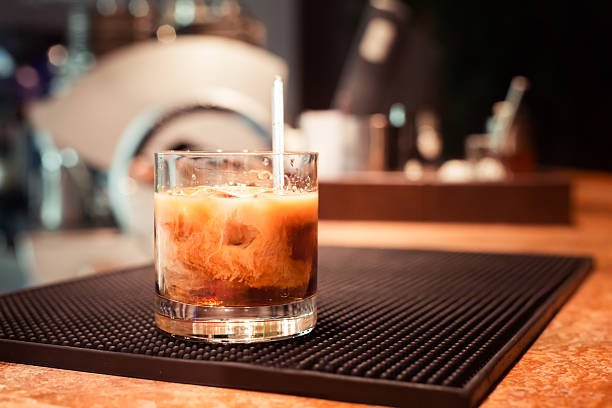
White Russian cocktail on the bar stand on rubber mat.
The classic White Russian cocktail. Photo credit: iStock Photos.

Now, after 2 or 3 White Russians,  you’d think that we would have been out cold. I am an insomniac, but my husband can literally sleep anywhere, at any time. Yet this night, no sleep was to be had. No sheep were being counted. At about 3:00 a.m., we were both wide awake with the edgy energy that only high amounts of caffeine have ever given me. We tossed. We turned. We tried to figure out why my husband couldn’t sleep. Eventually, it dawned on us to look at the Borghetti bottle.

ITALIAN INGREDIENTS | Hint, They Are Sticklers For Natural, Pure Ingredients. 

There it was right on the front of the bottle, “di vero caffe espresso.”  Arrgh. Our excitement had made us foolhardy. While Kahlua is a coffee “flavored” liqueur, Borghetti is made with pure espresso.  Italians do not believe in artificial ingredients. Not even in their liqueurs. We had essentially consumed 3 espressos each before bedtime.

ITALIAN COFFEE | Borghetti, Not Suitable For Evening

We concluded that Borghetti is only suitable for day drinking. Borghetti is a day drink because one cannot drink it in the evening and expect to get any sleep. If Borghetti bested my sleep connoisseur husband, a normal person doesn’t stand a chance. 

Borghetti is delicious. I like it even better than Kahlua. It has less of a sugary taste and more of a strong coffee flavor. So the conundrum. The stuff is tasty but there is no way we can drink after 12:00 noon and how many times a year does one sit around drinking during the daytime? Hum . . . when could we consume this lovely liqueur?

We decided that Borghetti is the perfect Christmas morning drink. A little Borghetti in with some cream and Nat King Cole singing Christmas carols is a pretty damn near perfect way to start your day.

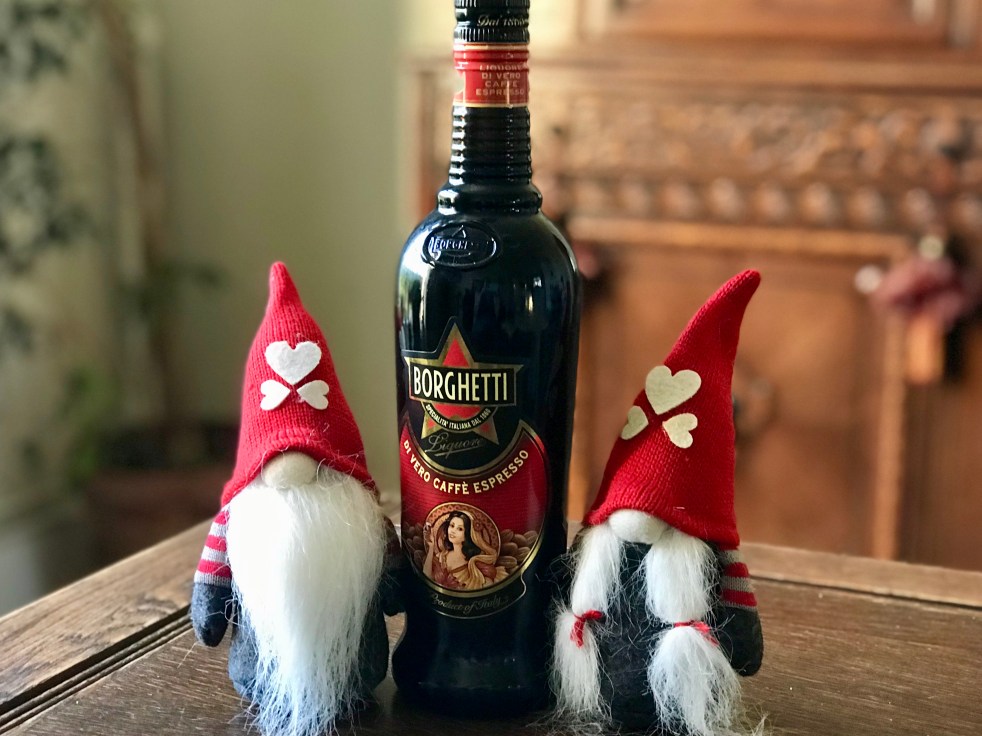
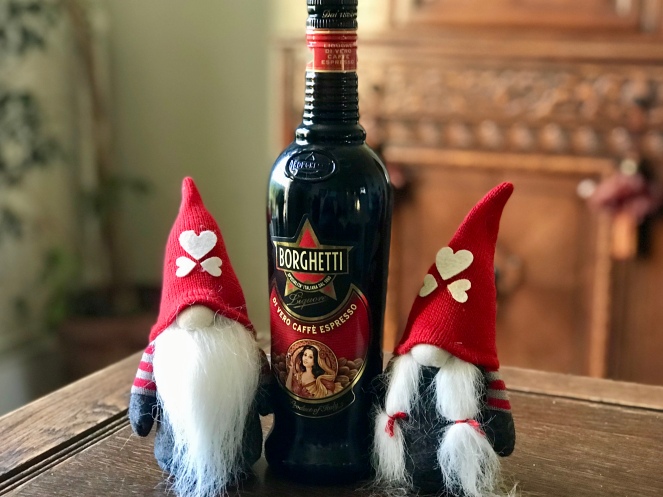
Two Christmas gnomes with a bottle of Borghetti.
The Italian liqueur, Borghetti. The necessary ingredient for an Italian Christmas White Russian.

ITALIAN RECIPES | The Italian White Russian

Despite the name, the White Russian was not invented in Russia. I suspect that the alleged inventor so named it due to the inclusion of vodka, but I have no proof (pun intended) of that.

Legend has it that Gustave Tops, a Belgian bartender, not a Russian, created the cocktail in 1949 at the Hotel Metropole in Brussels. The drink was quite popular initially and eventually spread across the globe. In the USA, the concoction hit the height of its popularity in the 1970s. Today, not too many people drink them and it is considered a retro cocktail.

Our recipe adds a new twist with the addition of the espresso liqueur. In our house, we have cross pollinated 2 cultures and now our cocktail’s official moniker is Il Russo Bianco di Natale Italiano or the Italian Christmas White Russian.  

Makes one drink:

  1. 2 oz vodka.
  2. 1 oz Borghetti
  3. 1/2 oz whole milk or heavy cream.
  4. Ice.

Buon Natale a Tutti!

Americans abroad · celebrity travel tips · concierge · European travel · ex-pat life · ex-pat reality · Fairmont Miramar Hotel & Bungalows · Insider Tips · international travel · luxury travel · spa · The Private Suite · Travel · travel safety · USA

How To Travel Like Matt and Oprah

I was watching Oprah Winfrey interview Matt Damon and I heard them giggling about all the ways they avoid the hassles of travel. Oh, those bougie A-listers and their celebrity travel.

Matt and Oprah spoke of mythical services where all they had to do was arrive and walk onto the airplane.  No stopping in lines, no security, no carrying their bags, and no hanging out in airport lounge chairs designed by Attila the Hun.

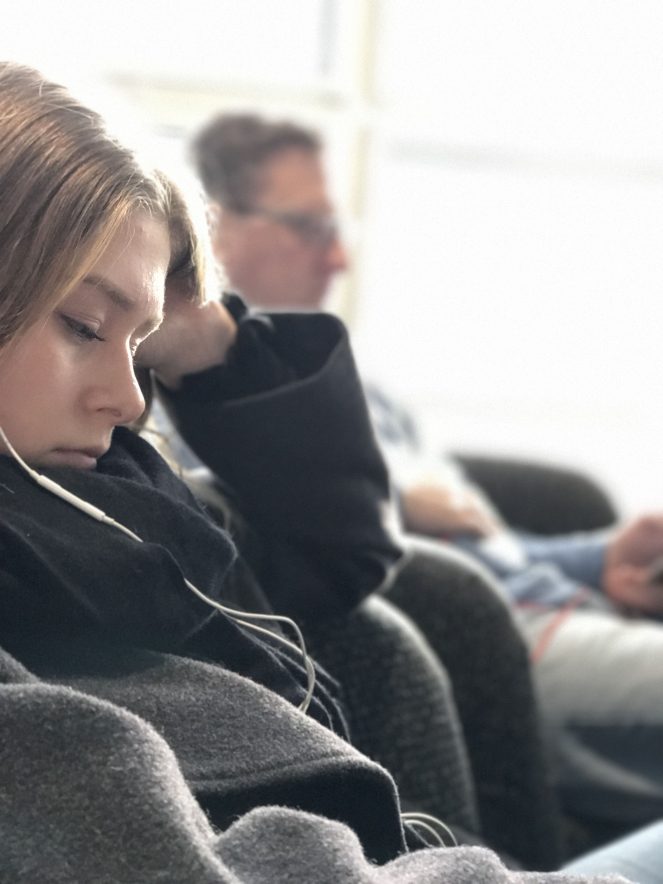
a young woman waiting in a chair at the airport. Not in the celebrity lounge.
Waiting in the general airport lounge. Not the celebrity lounge. 😦

I went to Oprah.com and poked around. I emailed her, and I researched airport concierges. While I never did identify the exact service referred to by Matt and Oprah, I did encounter a number of services certain to ease your travel woes and allow you to embrace your inner celebrity when you travel.

Can You Hear Me Now?
Before you leave on your trip program your airline’s toll-free reservation number into your cell phone. If your flight is delayed or canceled call your airline call center directly to rebook your flight instead of standing in line. The reservation agent at the airline call center is the one with the most current information. The gate agents get their information from the call centers too so cut out the middle man and possibly catch that next flight leaving in ten minutes.

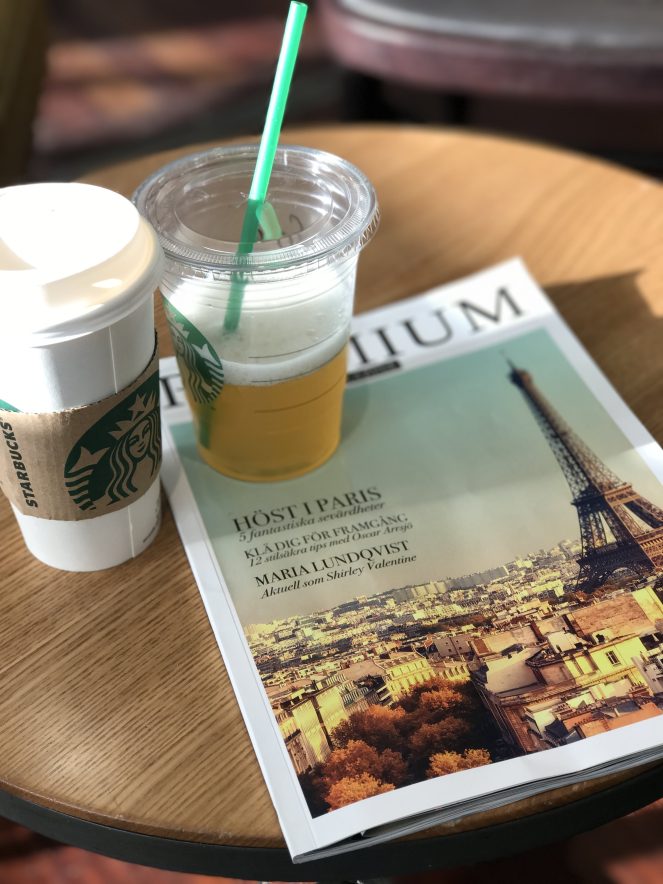
coffee to go and an airport magazine.
Airport Lounge.

Less Is More.
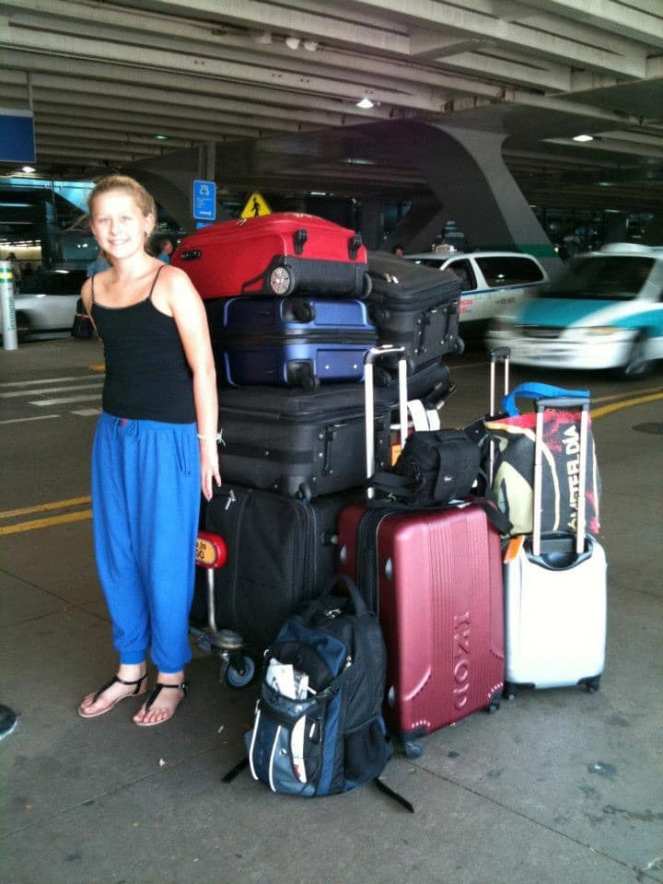
Try, try, try to fit all your belongings in your carry on luggage. Even as I write this I realize how impossible this is for 99% of the people out there (myself included). If you must bring along baggage, check it at the curb or send your luggage ahead of you through a luggage delivery service. Many of these services will ship golf clubs, skis, snowboards, surfboards, bicycles, and strollers all for your convenience allowing you to stroll on and off the plane in no time at all. I have not used any of these services myself . . . yet, so please let me know your experience with them if you have used them. www.luggageforward.com , www.luggageconcierge.com, www.luggagefree.com, www.theluggageclub.com.

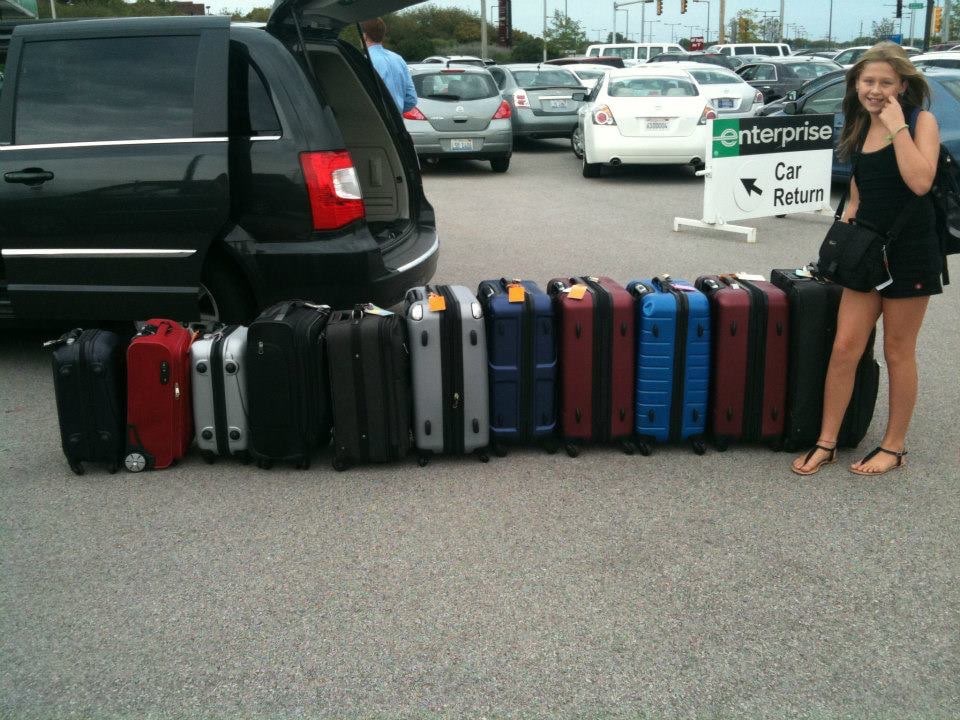
a girl with a lot of suitcases
Less is more? We needed that celebrity concierge.

Rock Star Parking.
To ensure that you have a parking spot in the airport lot many private lots will allow you to reserve a specific spot in advance. This not only saves you time as you depart, but you can ensure a spot close to the exit if you’re itching to get out of the lot in a hurry upon your return.  Many private lots are also less expensive than the airport run lots and some airports now offer valet service.  Check your individual airport for its specific parking services. And the bonus . . .  no more getting yelled at by the angry traffic cop in the loading and unloading zone.

I Wouldn’t Join Any Club That Would Have Me.
Many airports now offer registered traveler programs. Registration with these clubs allows travelers to breeze through security checkpoints because they and their luggage have been pre-screened and met all security standards.  To date, San Jose, Orlando, Indianapolis, Cincinnati and New York’s JFK airports offer the service. My brother uses www.clearme.com and swears by it.

Concierge and Ambassador Programs
Many airports also offer airport concierge services or ambassador programs.  These volunteers are at the airport simply to help you out with any problems that you may encounter.  Not all airports have them but if you are flying out of Los Angeles, Orange County, Ontario, San Diego, Boston’s Logan, Dallas, or Chicago O’Hare to be sure to ask for an Ambassador if you are encountering a problem at the airport. They are sure to help get you back on track. These are just a few of the airports that offer this service so be sure to check both your airports before leaving on your trip.

And, if you are staying in Los Angeles, one can also take advantage of the Suite to Suite program offered by the Fairmont Miramar Hotel & Bungalows. The package will make you feel like a celebrity at both the hotel AND the airport. Prices vary, but, on average are in the $2,000 range. The Suite to Suite package includes: your stay at the hotel; airport transfers for 4 people; $60 breakfast allowance; access to the famed hotel beach bungalows for 4; and use of BMW beach cruiser bicycles. When you are ready to head to the airport, that is where the real luxury kicks in as the package includes access to all the goodies that The Private Suite at LAX offers.

The Best For Last . . . Private Terminals!
And, of course, because Los Angeles is the land of celebrities and excess, they have one of the best airport concierge services around. Actually, it is more than a concierge service, it is a private terminal.  Yeah.  A private terminal just for people who can afford not to deal with the hassle of travel.

The Private Suite is a private terminal and gate at LAX.  Membership fees are not for the faint of heart, but how else do you keep the riff-raff and paparazzi out?

And membership, indeed, has its benefits. Private Suite members do not have to deal with waiting in any lines because private TSA screening is done at the building by an assigned staff member.

Moreover, each member gets a private suite to wait in before their flight. Because each suite is private, you only wait with the people that you are traveling with. No crying babies, or people taking their shoes off – unless they are part of your entourage. The suites have a team of eight staff people at your beck and call. Upon arrival at the airport, a team member helps the travelers into the compound, escorts them to their assigned suite, and, addresses any special needs, food allergies, etc. that any member of the group may have. While travelers wait, a team member makes sure that your bags are screened,  passed through TSA and loaded onto the plane.

Each suite is equipped with its own bathroom, pantry, daybeds, manicurist, on-call doctor, gourmet food, and masseuse.

When it’s time to board, Private Suite members are driven from the private terminal to the aircraft in a BMW Series 7 and delivered directly to their aircraft where a team member waits at the aircraft steps to assist travelers on to the aircraft.

an airplane
Private celebrity airplane delivery is only a membership fee away.

Fees vary depending on whether your route is domestic or international. The annual membership fee is $4,500 and covers the primary member as well as their immediate family. Corporate memberships are also available.

Admit it. It sounds a bit like heaven doesn’t it?

Even if The Private Suite is out of your price range, I hope that some of these tips may make your travel a wee bit more enjoyable. And if you partake in the celebrity bougie bits, please say hello to Matt and Oprah for me when you see them.

All Saints' Day · Americans abroad · art · Christmas · European travel · ex-pat life · festival of lights · Helsingborg · Insider Tips · international travel · Malmö · mys · mysig · nature · Skåne · Skåne Sweden · Thanksgiving abroad · Travel

All Saints’ Day – Lighting The Way to The Holidays

 WINTER CELEBRATIONS | ALL SAINTS’ DAY

We Americans love Halloween. Besides the candy filled extravaganza, the fun of dressing up and parties, Halloween also marks the beginning of the winter holiday season. In quick succession it goes, Halloween, Thanksgiving and then Christmas, Hannukah, Kwanzaa . . . In my adopted home of Sweden, however, Halloween is not the hallmark of the winter celebrations. All Saints’ Day, celebrated November 1, holds that title.

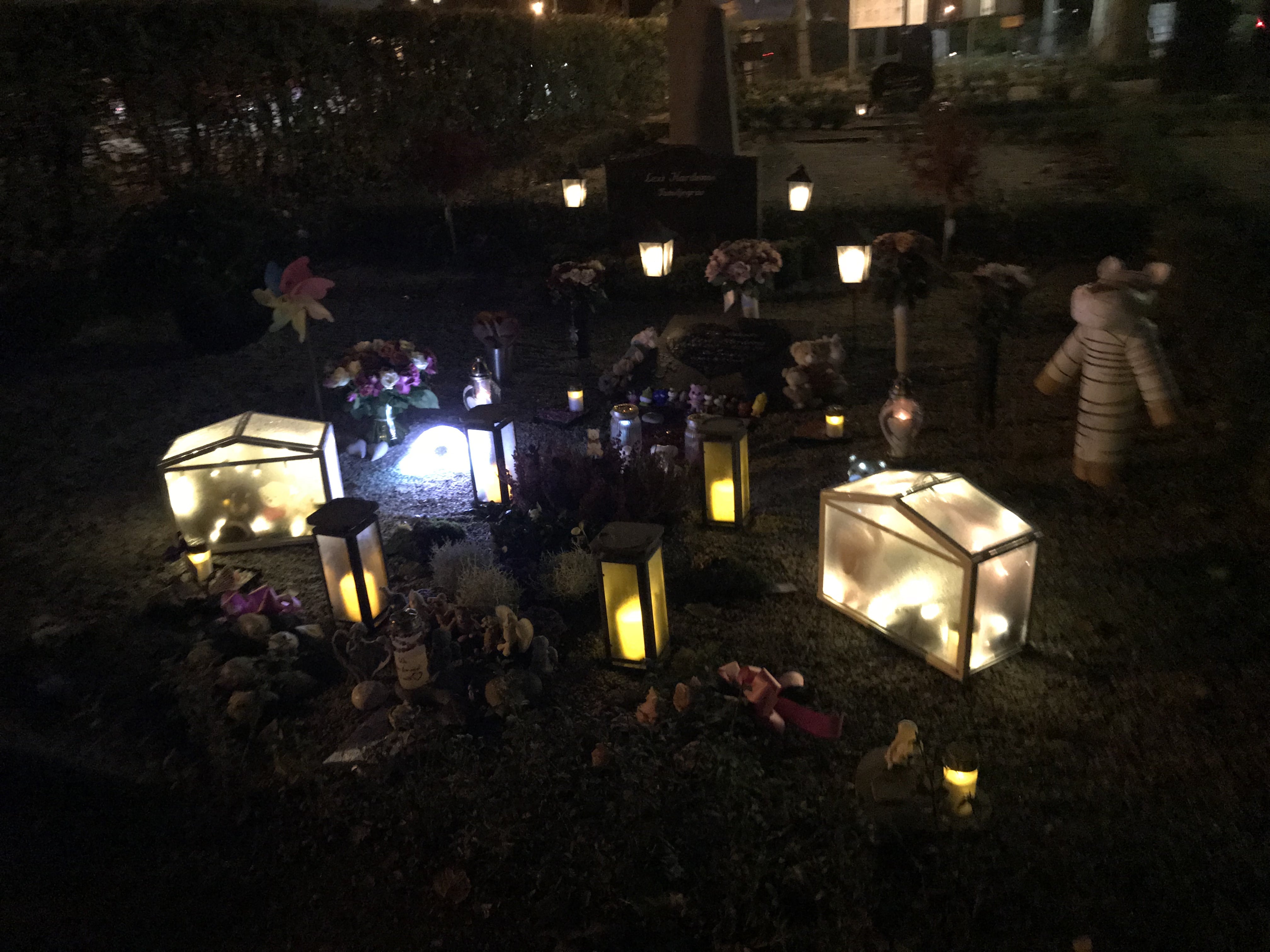
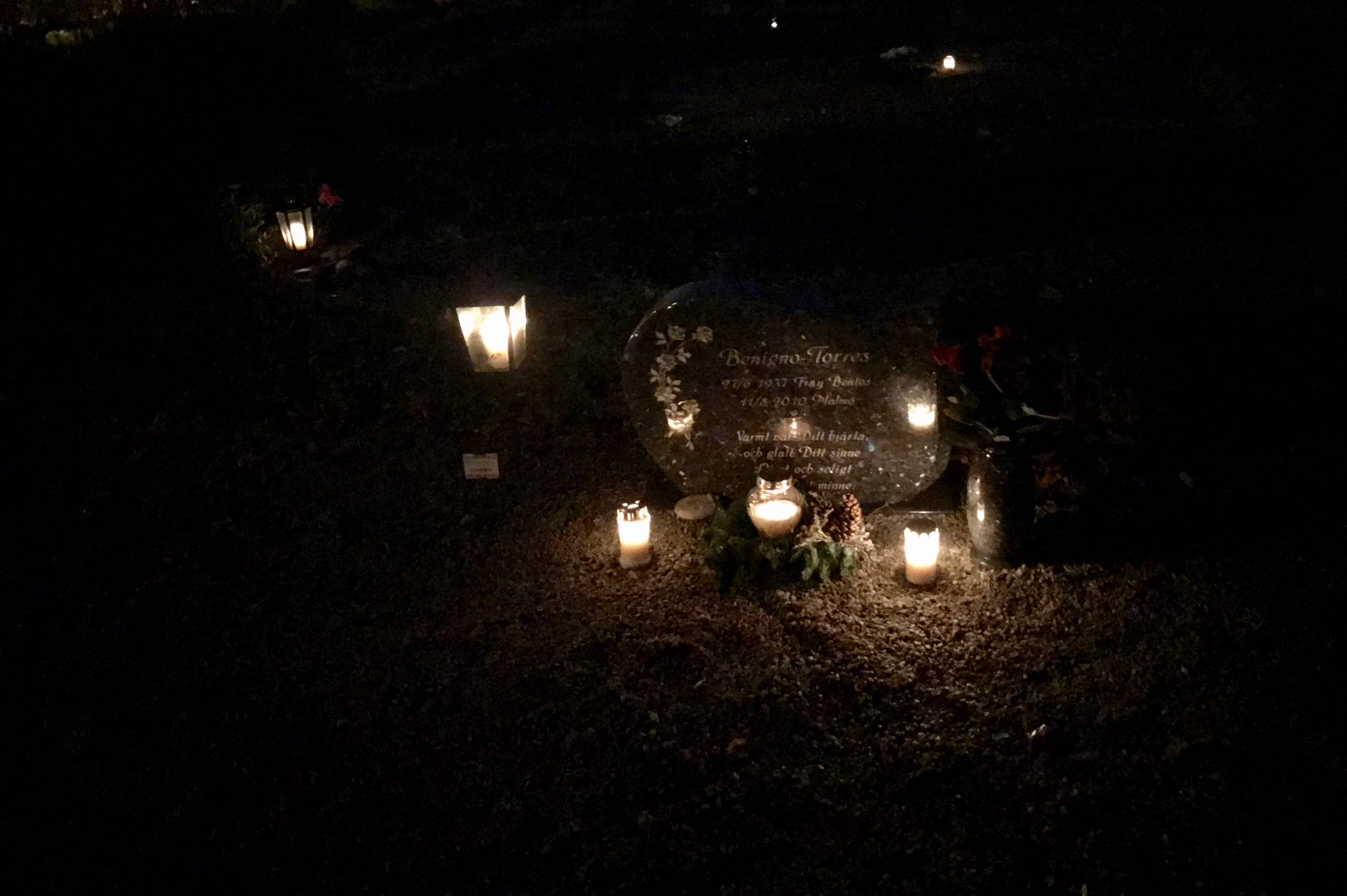
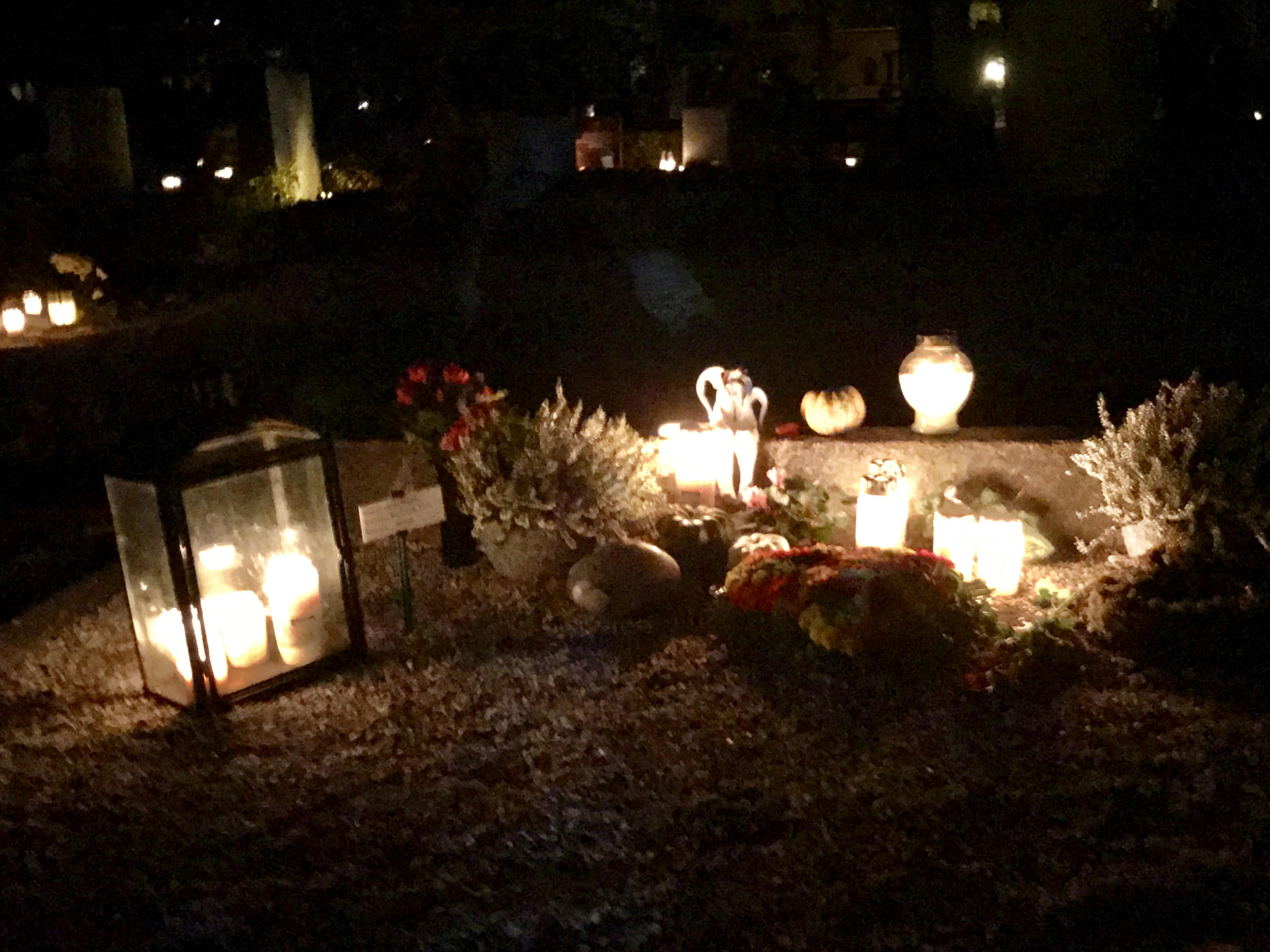
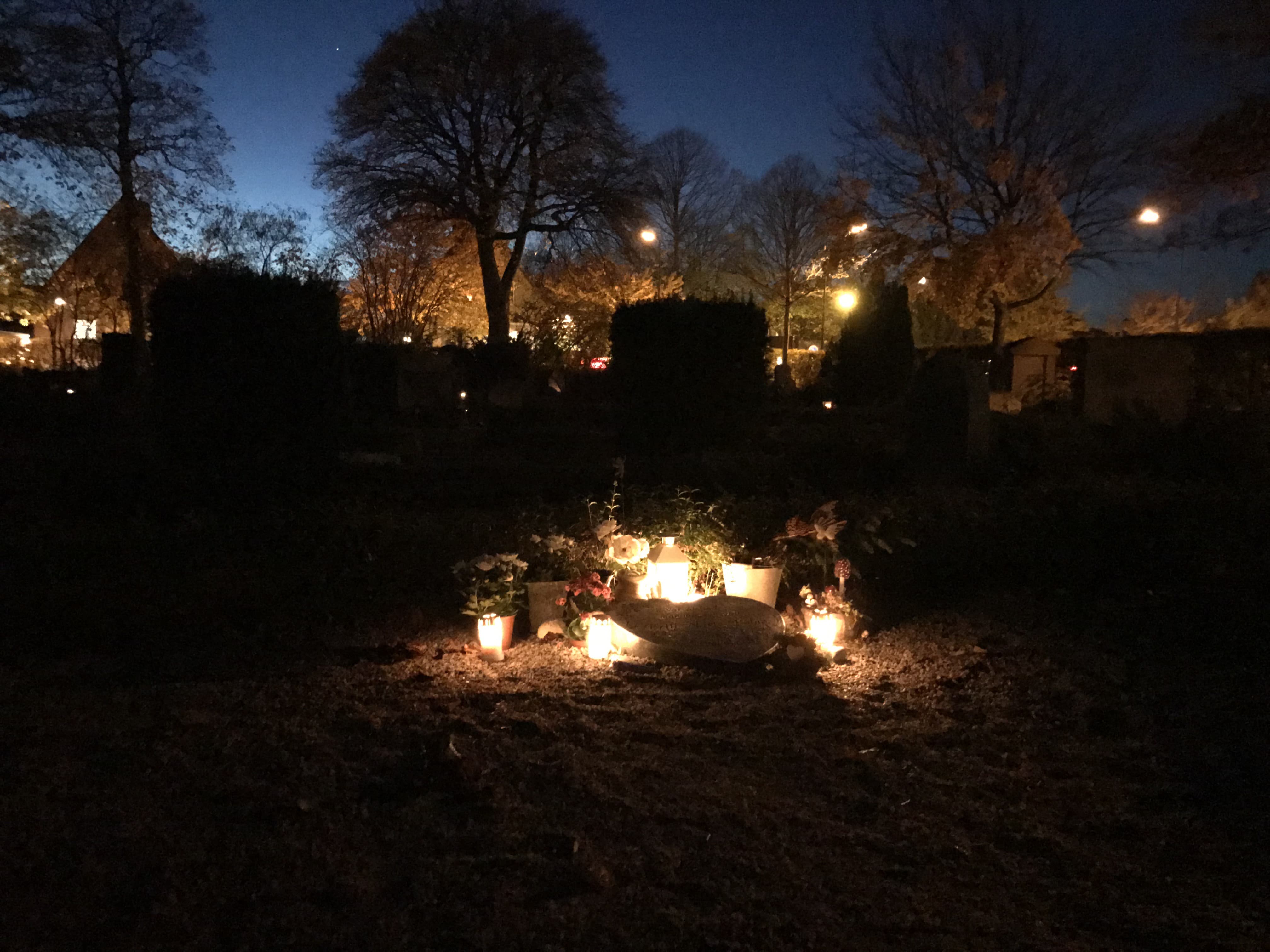
Unlike, Halloween though, All Saints day is a day of respect and reflection. All over Sweden cemeteries are illuminated with candles in remembrance of loved ones. The site is a beautiful one to behold. It is an elegant reminder that life is precious.

All Saints’ Day, also known as All Hallows’ Day, Hallowmas, the Feast of All Saints, is a Christian festival celebrated in honor of all saints and loved ones who have passed away. All Saints’ Day in Sweden also marks the first day of winter.

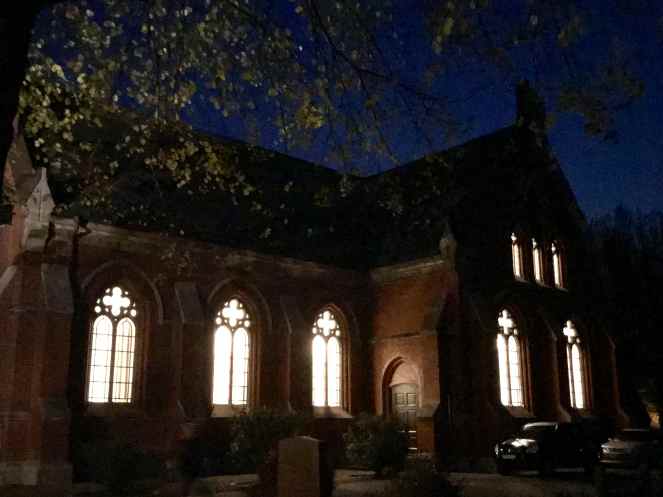
Limhamns Kyrka ready for the All Saints' Day observance mass and concert.
Limhamns Kyrka ready for All Saints’ Day observance mass and concert.

The tradition of lighting loved one’s graves began in Sweden in the 1900’s. Originally though, it was only the wealthy and upper classes who honored their dead on November 1st. For some reason, which I have not been able to track down, the practice slowly made its way to Swedes of all classes after WWII. Eventually, churches began holding services and concerts in conjunction with their flock’s practices and the day became an official holiday and harbinger of winter.

All Saints’ Day is a national Swedish holiday in modern times marked by: a day off of work if November 1 happens to fall on a weekday; a visit to the cemetery for the lighting of candles and the leaving of wreaths and other trinkets: a family gathering; and, a special meal.  

SOFIERO’S WINTER CELEBRATION | A FESTIVAL OF LIGHTS

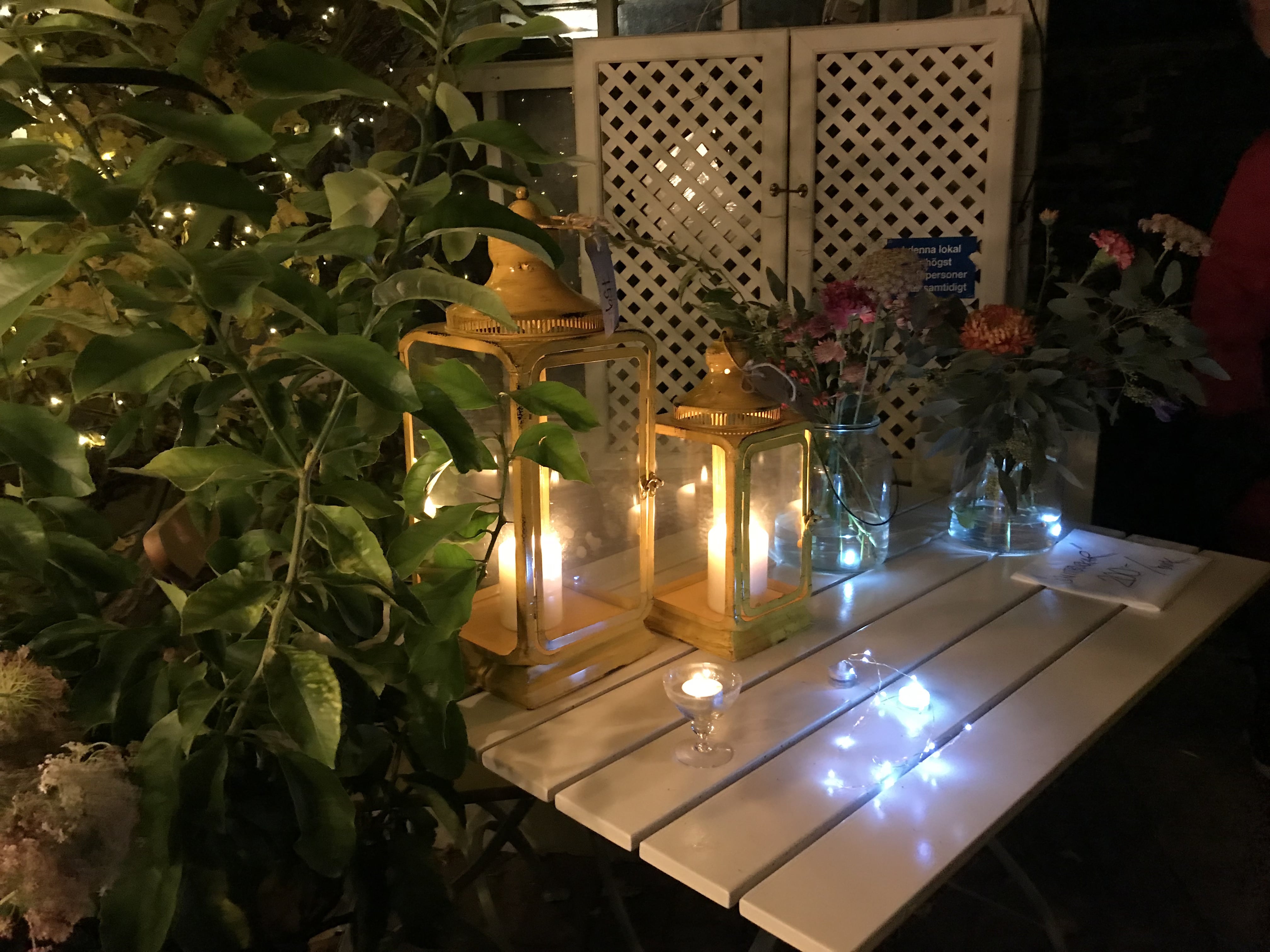
It is no surprise that Swedish winters are dark, damp and cold. So often when Swedes hear that I am a California native they immediately ask me how I am surviving the winters. I tell them, honestly, that I love Swedish winters. I mean, yeah, I have a week of adjusting when the early dark days begin, but I absolutely love how Sweden makes a great effort to achieve mysig or mys. Mysig is the creation of a feeling of coziness and warmth. Swedes use all sorts of tools to achieve mys – blankets, lanterns, fire pits around town, mulled wine, yummy food, and of course, lights and candles. Lights and candles are everywhere during the winter months. And they do indeed make a person feel cozy.

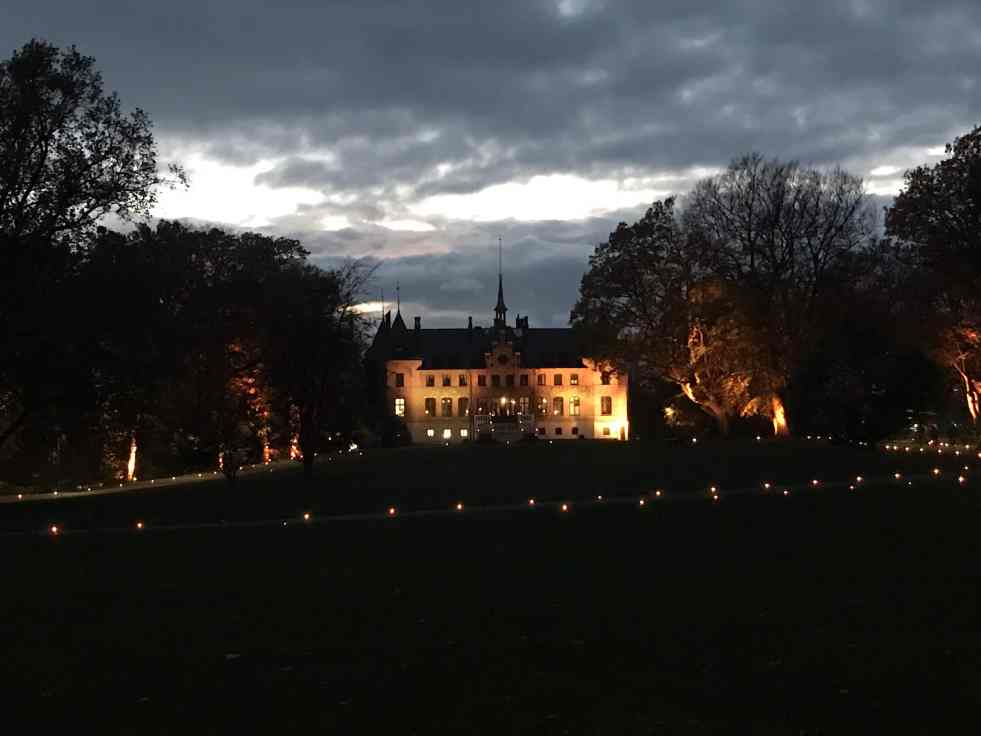
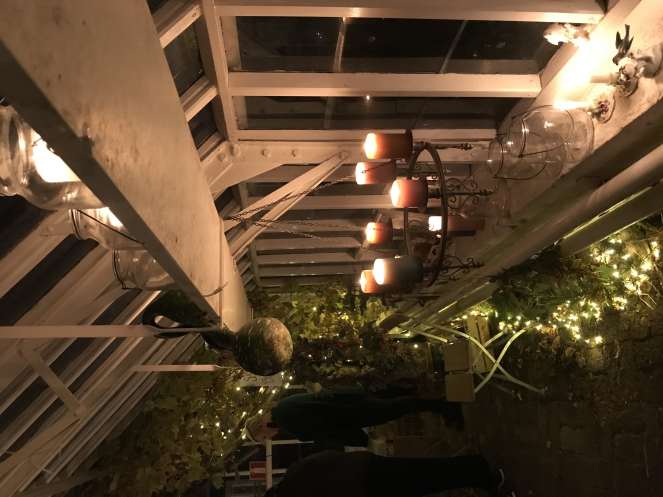
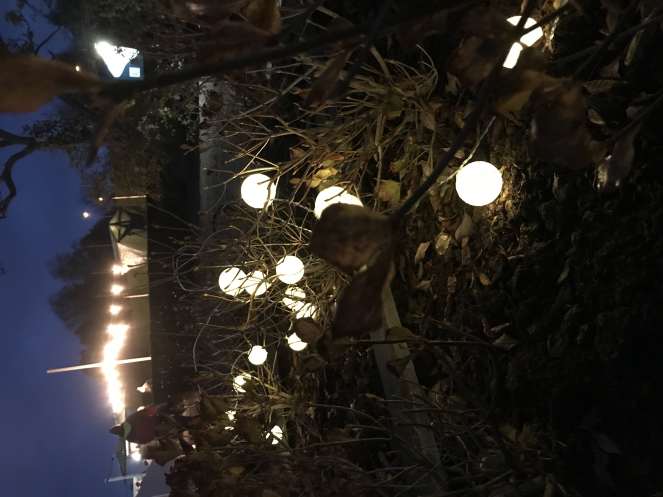
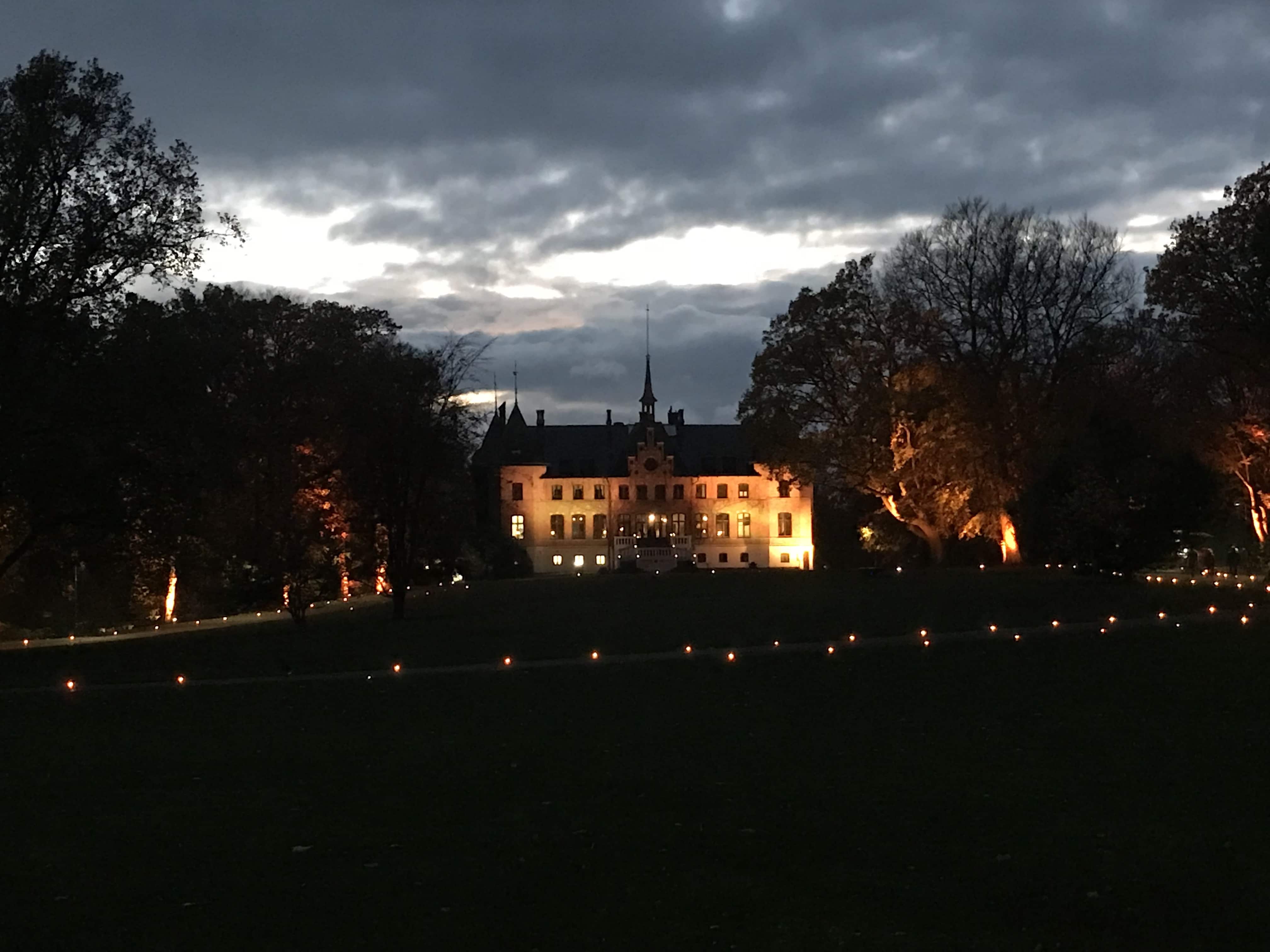
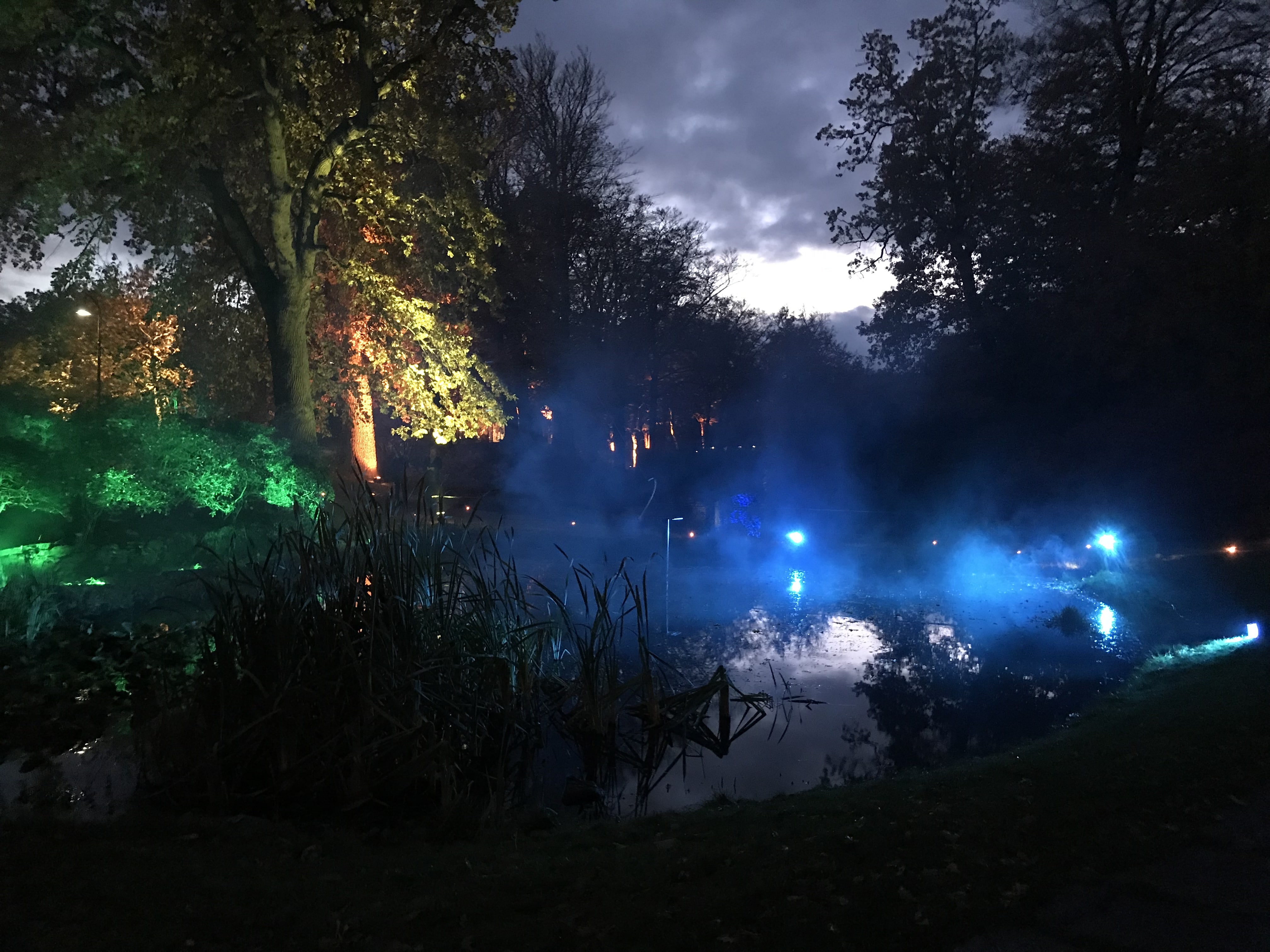
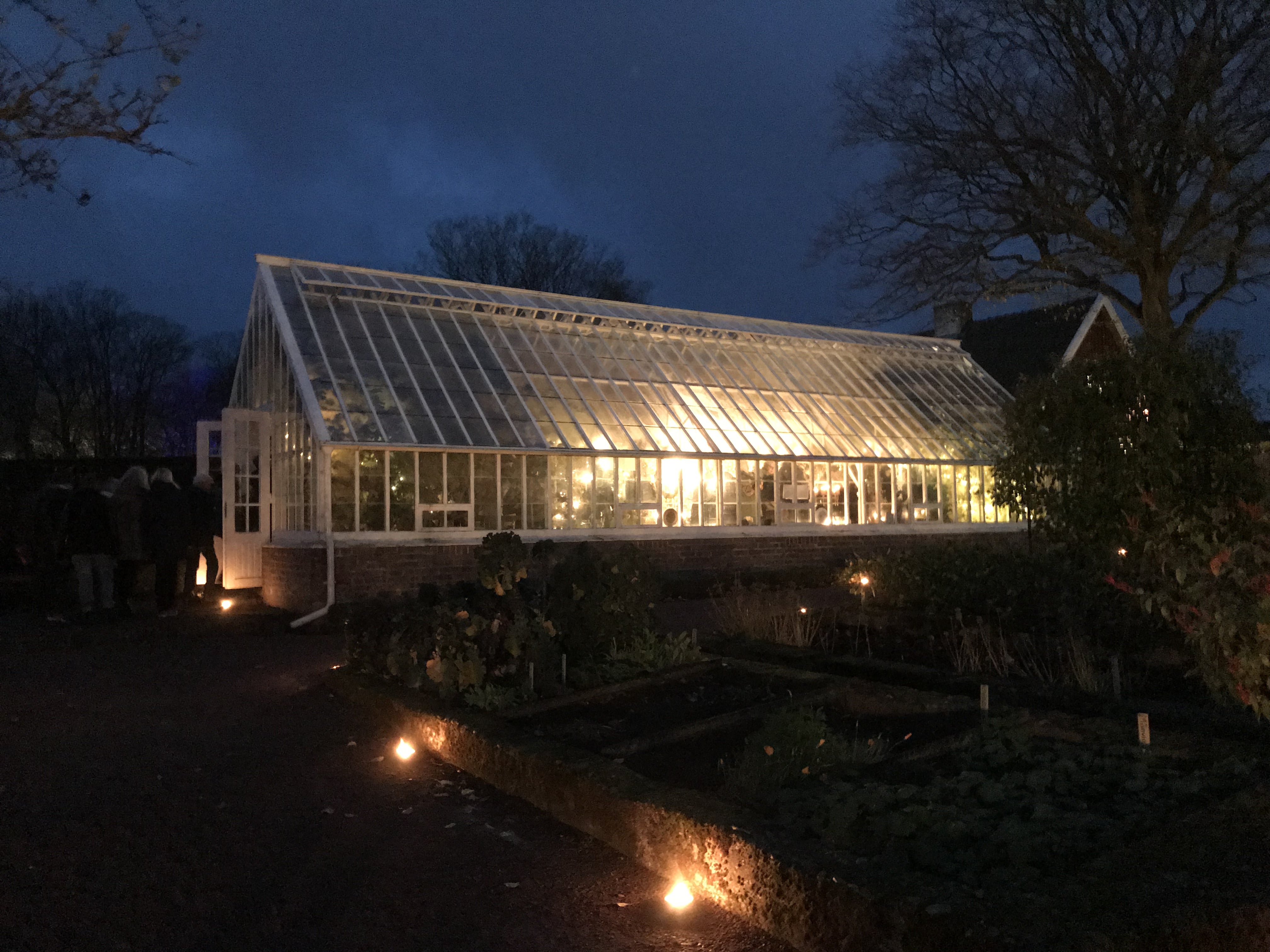
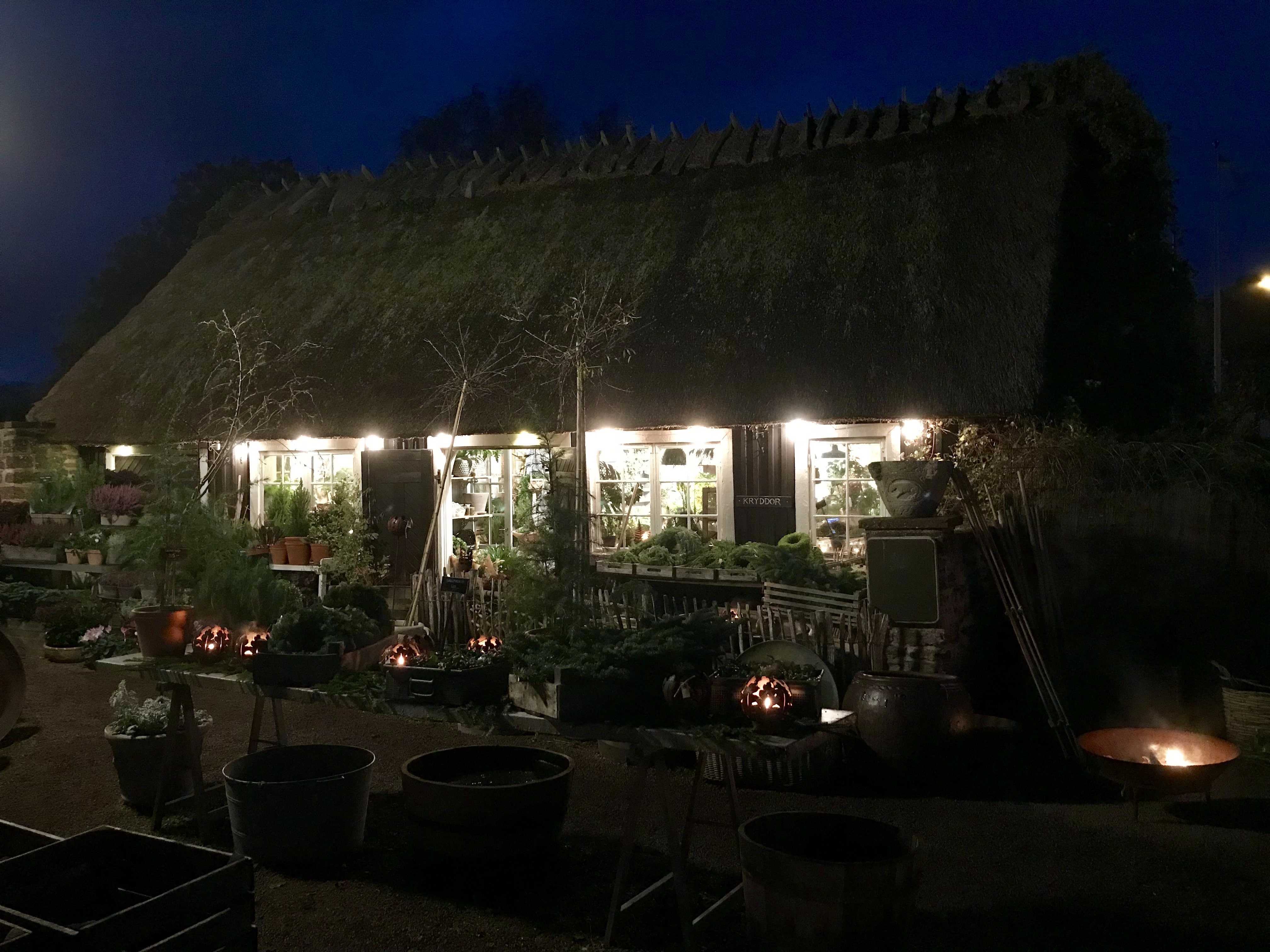
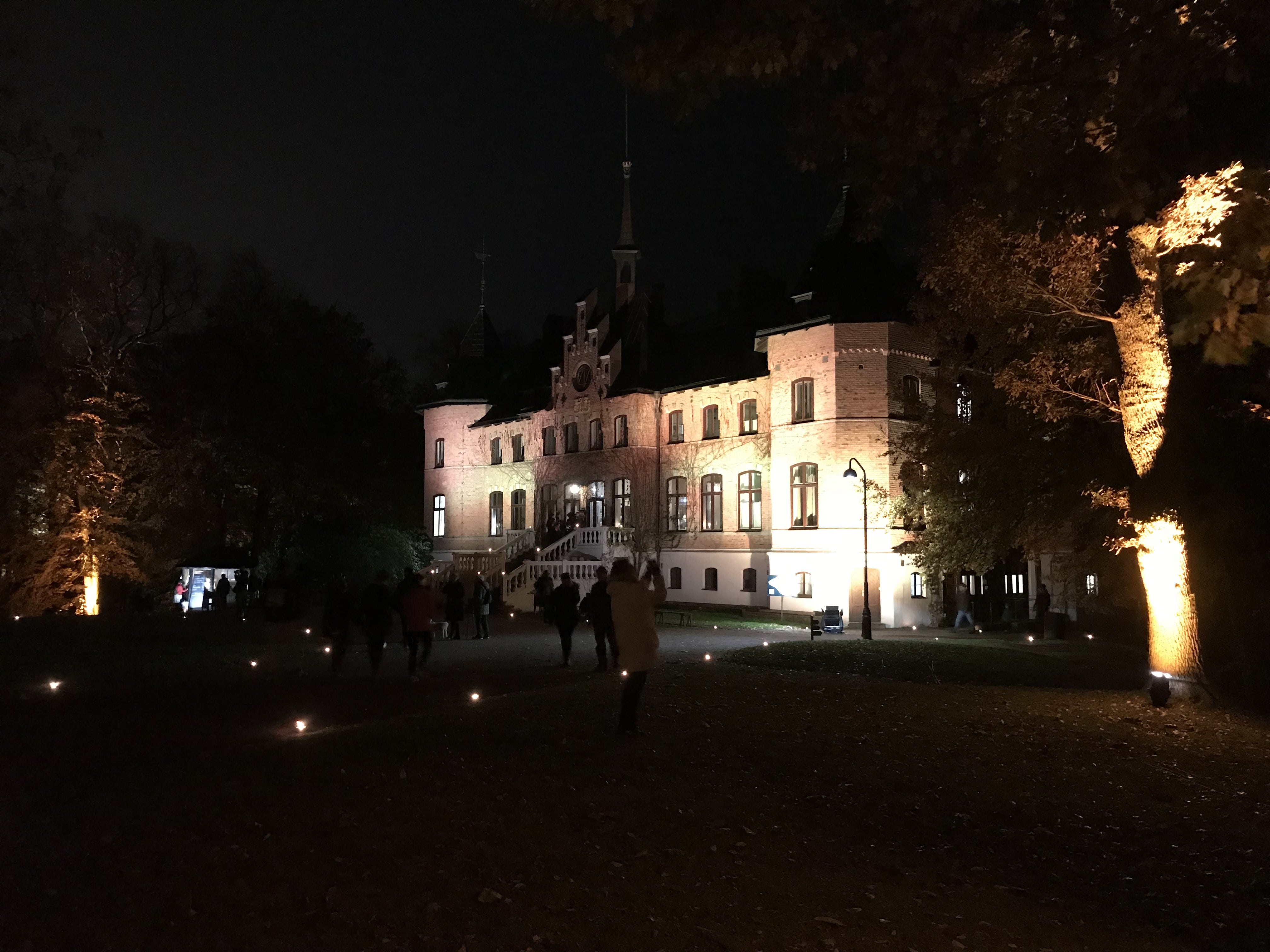
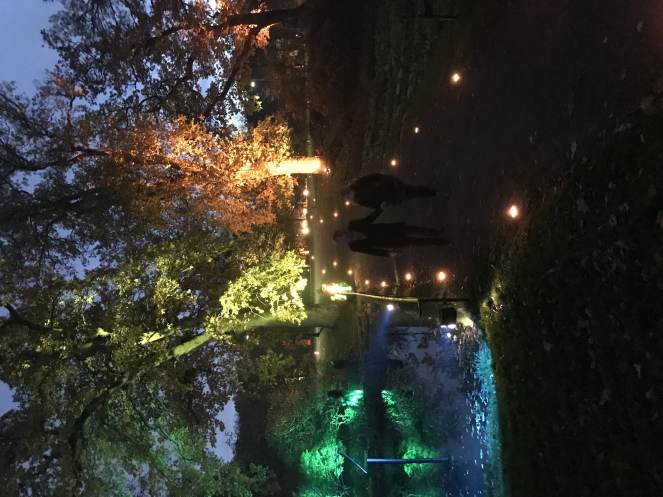
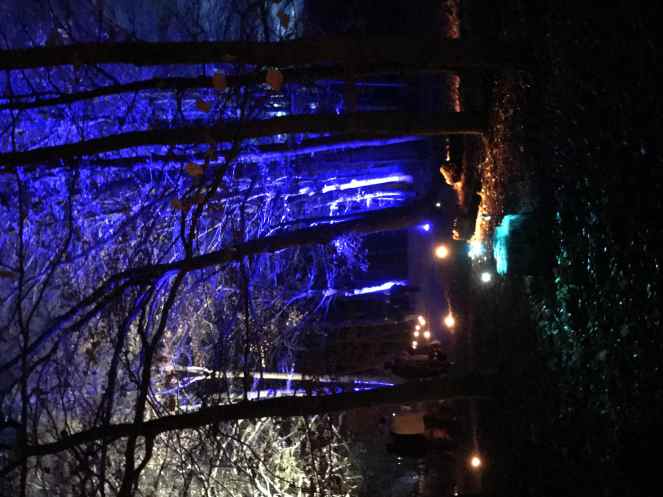
At Sofiero, the Swedish royal family’s old summer cottage in Helsingborg, they celebrate the beginning of winter each year with a festival of lights.

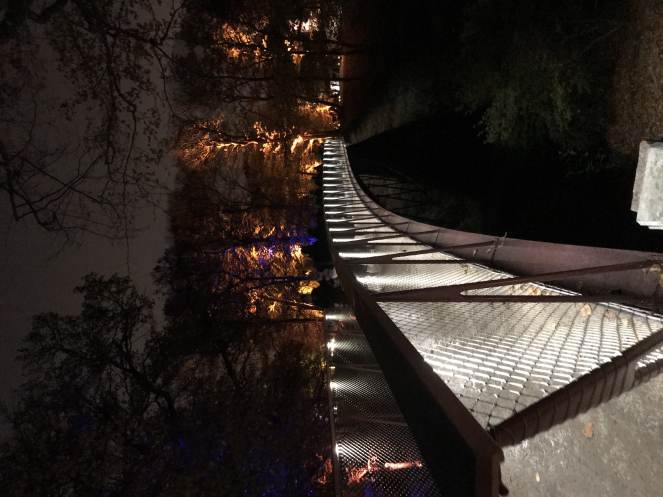
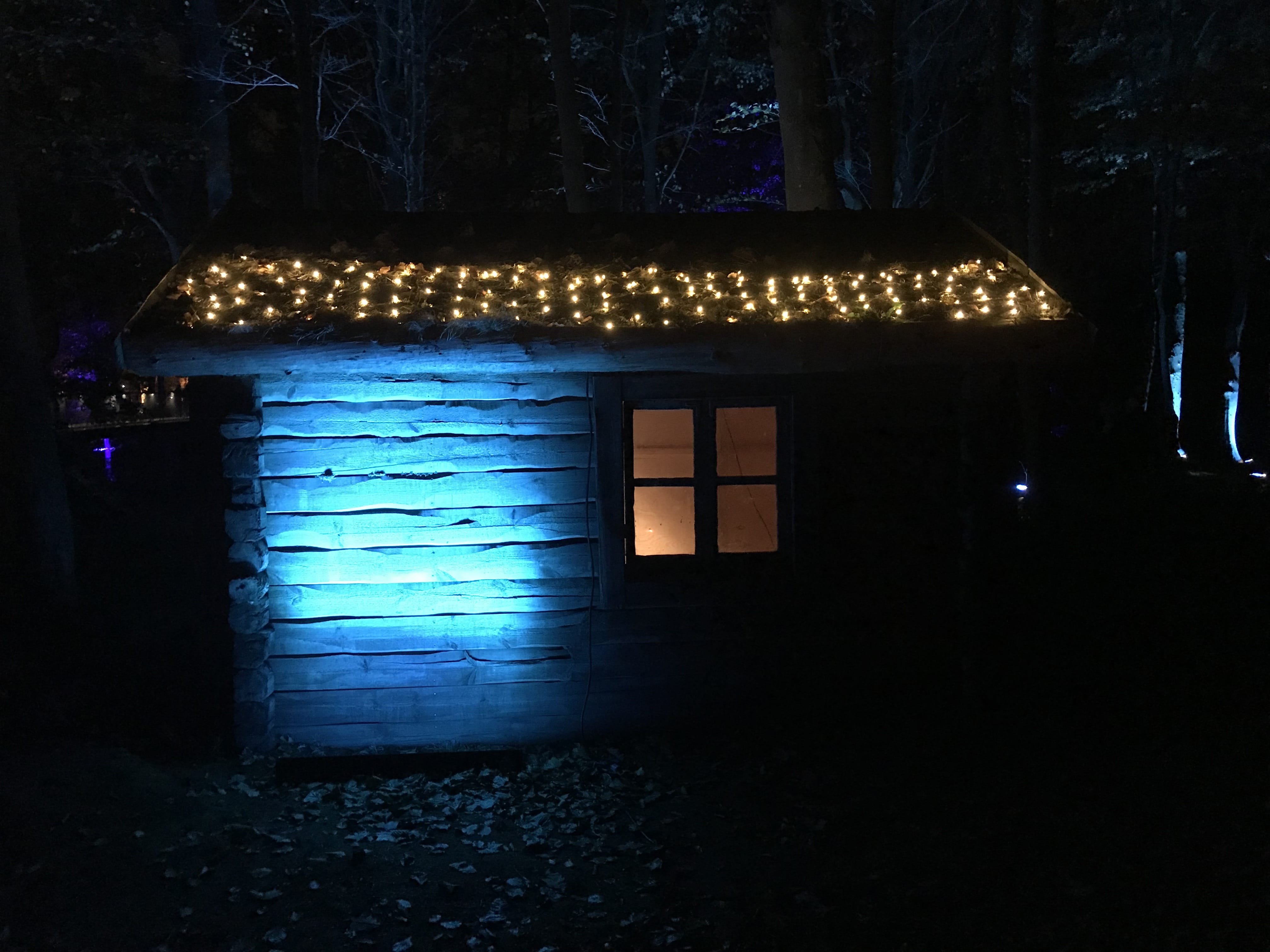
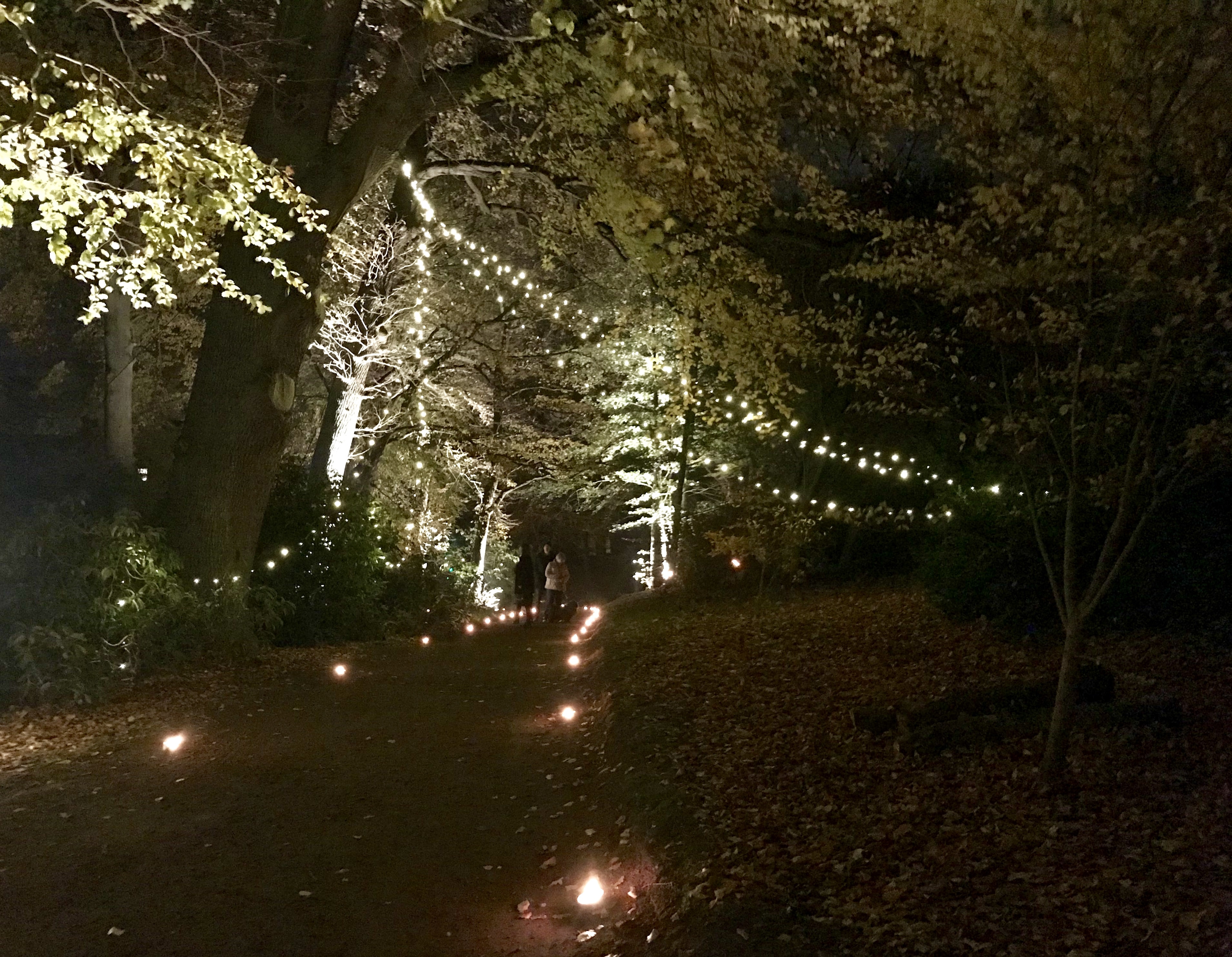
Sofiero is famous for its lovely garden. It is a gardener’s delight when in full bloom in the springtime, but it is just as magical in the winter. During Sofiero’s annual Festival of Lights, the entire grounds are awash with different colored lights and candles creating a mystical canvas. They also offer warm food and drinks at various stations throughout the grounds with everything from a full meal to sweets and warm drinks. If you visit with children (and I would recommend that you do) make sure to avail yourself and your kids of the enchanted forest. Rumor has it, they even have a marshmallow roasting pit.


A visit to Sofiero’s festival of lights is a great way to get your mys on, chase away the winter blues, experience the magic of a lighted forest, and say, “hello darkness my old friend.” 

Americans abroad · art · European travel · ex-pat life · ex-pat reality · France · Germany · Honeymoon travel · Insider Tips · international travel · Maastricht · Modern Art · Off The Beaten Path · pastel de nata · restaurant · The Netherlands · The Unique and Unusual · Travel

Holland Off The Beaten Path | Marvelous Maastricht

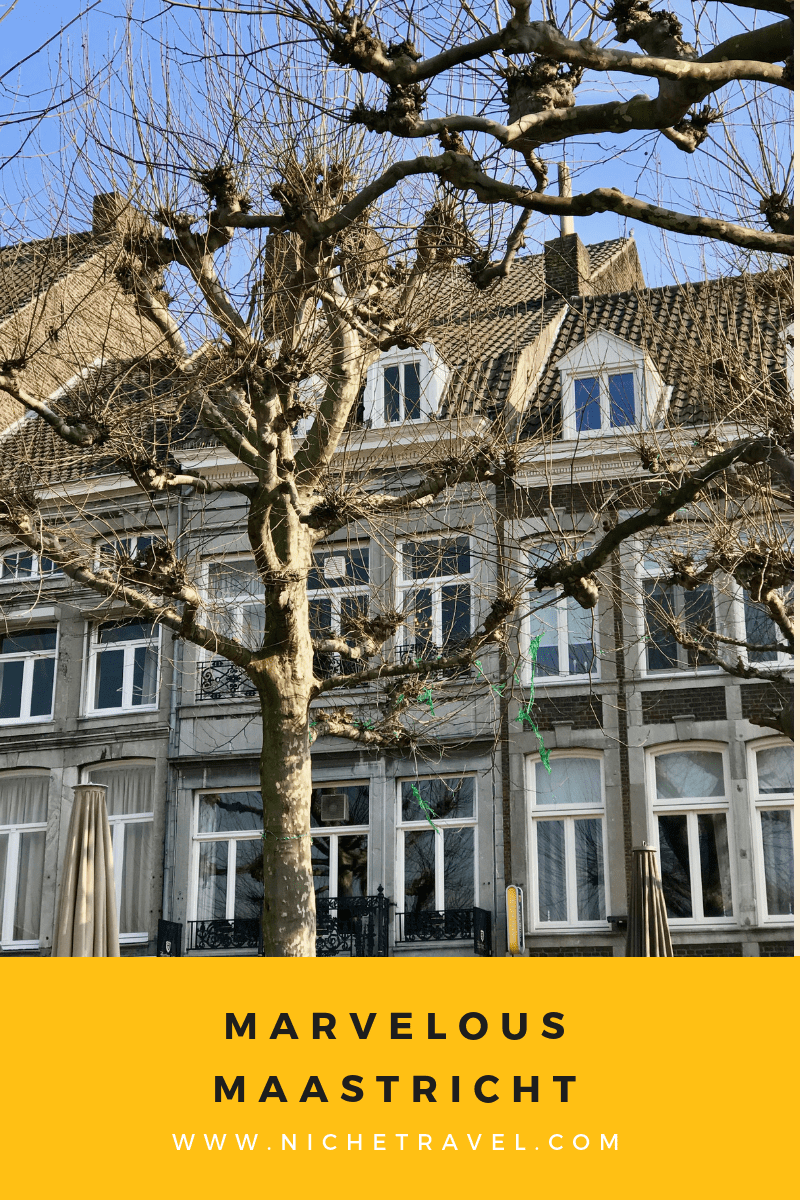
Visiting Holland, most people head to Amsterdam or The Hague. A little bit off the beaten path lies Marvelous Maastricht. The first adjective that comes to mind when I think of Maastricht is charming. Cobblestoned streets, Baroque, Romanesque and Renaissance architecture, large market squares, cafes and a riverfront all add to its appeal.

MAASTRICHT | STEEPED IN HISTORY

One thing that the locals are quite proud of is that the EU was officially formed and ratified as a result of the Maastricht Treaty of 1992. A pretty big development in European history.

“But Maastricht was not the end of history. It was a first step towards a Europe of growth, of employment, a social Europe.

That was the vision of Francois Mitterrand.”

Laurent Fabius

Maastricht also claims to be the oldest city in the Netherlands. The town of Nijmegen also makes that claim, but either way, Maastricht was the site of archeological relics dating between 8,000 to 25,000 years old!

The name Maastricht is derived from Latin and means “crossing at the Meuse.” The crossing being an ancient Roman bridge built in the 1st century AD over the River Maas. Unfortunately, the ancient bridge is gone, but this delightful town still straddles the Maas river and boasts of being walking distance to Belgium, cycling distance to Germany and a quick drive to France. A true international crossroad.

And international it is. It is not uncommon to hear Dutch, German, French, and English on the streets and in the many cafes. Maastricht’s proximity to 3 other countries together with the international student population of Maastricht University has birthed a vibrant, multi-cultural population bustling with the palpable energy that comes with youth and diversity. 
MAASTRICHT SIGHTS | THE MARKET SQUARE AND HET VRIJTHOF

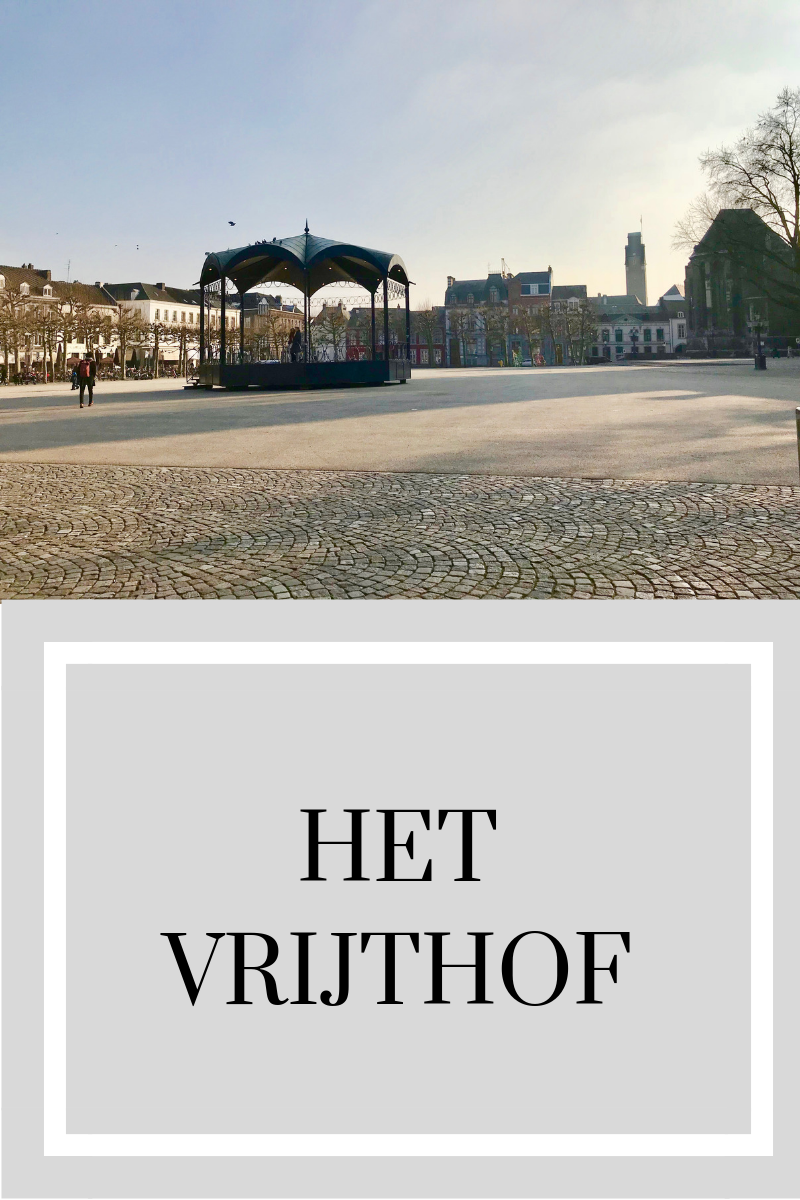
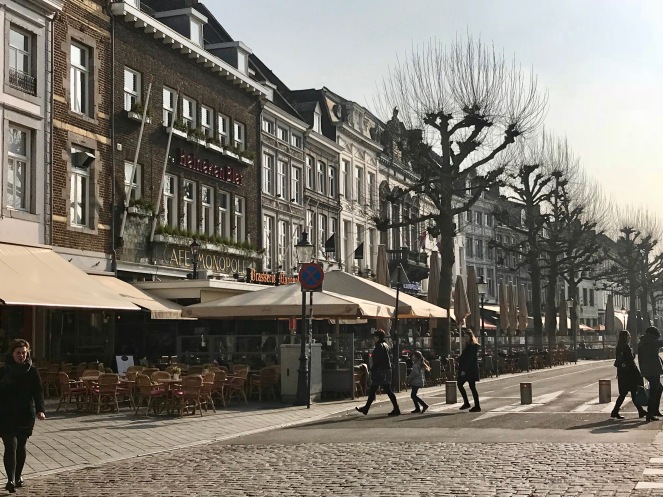
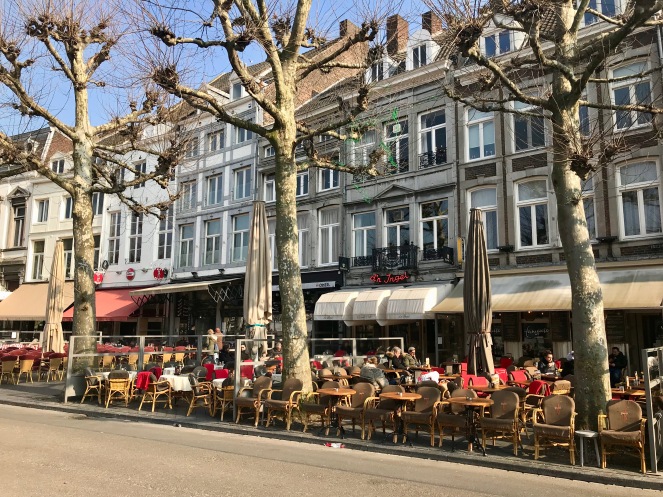
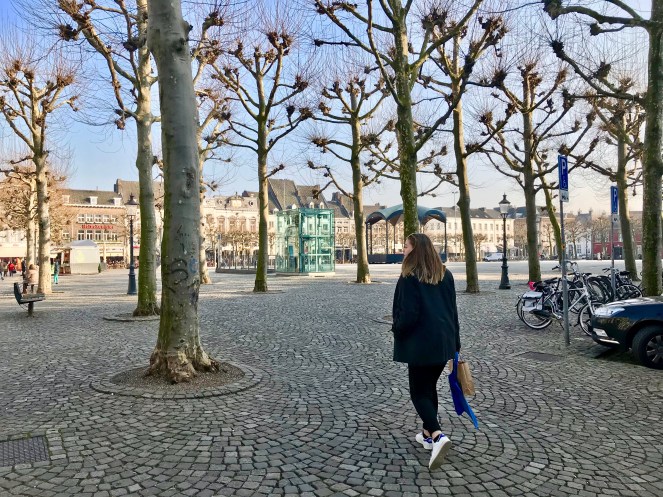
At the heart of the city lie 2 distinct squares. The largest square, called Het Vrijthof, is a large space surrounded by restaurants and cafés with outdoor seating, a pavilion, and public art.  It is one of the larger public squares I have seen in Europe. It is home to the Sint-Jan and Sint-Servaas churches, and the Generaalshuis. Het Vrijthof is also home to most of the public events happening in Maastricht – summer concerts, and the annual Christmas market. 

Het Vrijthof. Maastricht.

About a 6-7 minute walk from Het Vrijhof, is Maastricht’s Market Square or Markt, home to the city’s weekly food markets, flea market and the city hall – a large white building that evokes a wedding cake.

Town hall on the Market Square of Maastricht. Photo credit: iStock

Both squares lie in the heart of the city and either is a good place to begin your tour. If you are anything like my family, the first thing we typically do is taste the local cuisine. And Maastricht does not disappoint. 

MAASTRICHT FOOD | FIRST ON THE AGENDA, GO EAT!

As mentioned previously, the rich and diverse culture in Maastricht means a rich and diverse selection of food. Known as the culinary capital of The Netherlands, one can find restaurants and food shops with Dutch, French, German, Belgian, and Portuguese influences. Surrounding Het Vrijthof, one finds a plethora of cafes and restaurants with outdoor seating perfect to sip a coffee, people watch, and have a fantastic bite to eat.

The many cafes surrounding the large public square Het Vrijthof. Maastricht.

MAASTRICHT FOOD |AMAZING DELICATESSENS

While Maastricht offers many amazing restaurants and varied cuisines, it is also home to some incredible delicatessens.  If the weather is cooperating, a really pleasant way to enjoy your lunch is to visit one of the many specialty food stores and take a picnic in the Stadspark Maastricht. 

The 2 delis that peaked our interest were Saveurs Traiteurwinkel Maastricht and Caravela Delicatessen.

Saveurs is a one-stop gourmet heaven. Saveurs offers specialty food, catering, take-out meal prep, and a food truck. Food is prepared daily and they are famous for their meatloaf. Yes, meatloaf made by combining minced Limousin beef and Duroc pork, then hand wrapping the meatoaf in bread paneer from the bakery Bisschopsmolen. It is like a Meatloaf Wellington.

Caravela Delicatessen is another incredible food store specializing in products from Portugal – Portuguese wines and Port, olive oil, piri piri, cheese and my favorite Portuguese treat, pastel de nata. Since I love everything about Portugal, we opted to get our picnic here. And it did not disappoint.

MAASTRICHT TO DO | A SHOPPER’S DELIGHT

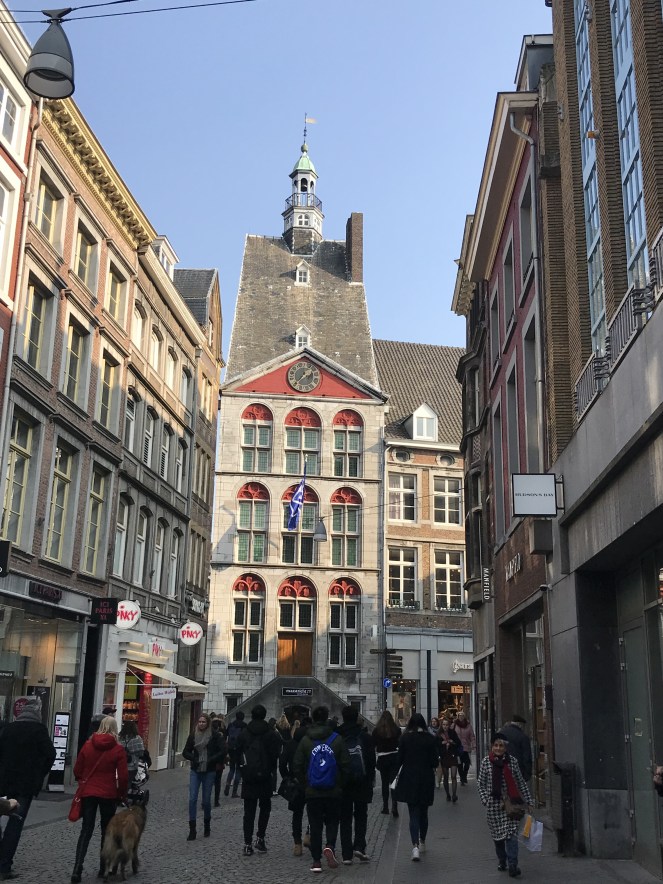
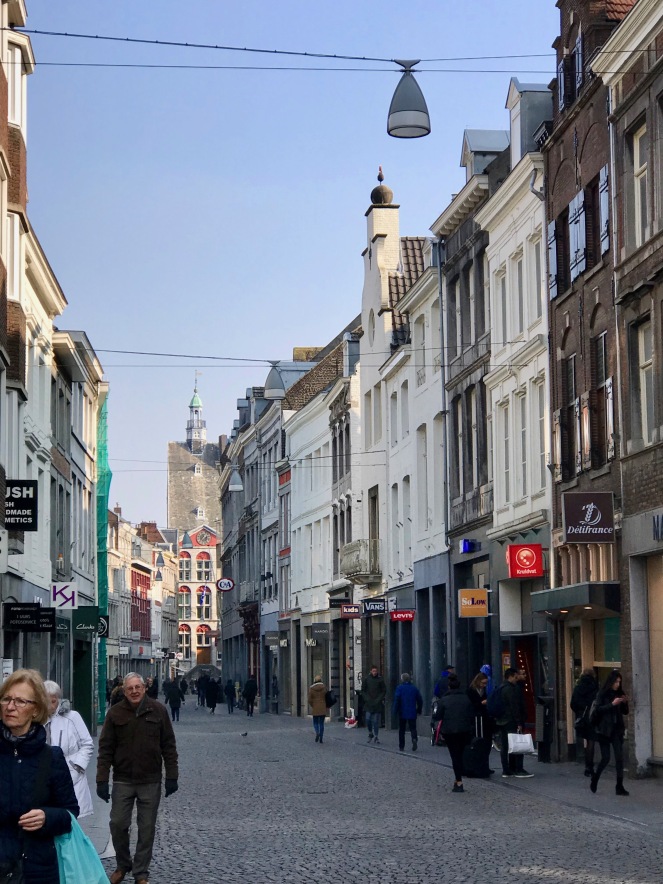
Once you have finished your meal, you can easily walk it off. The town is an architectural delight and walking around is a treat for the eyes. And, there is ample shopping on both sides of the river with lots of interesting, independent boutiques. No matter where you wander, you will be a stone’s throw from shopping heaven. There were so many stores and boutiques on every street that we lost count.

Shopper's Paradise. Maastricht.
Shopper’s Paradise. Maastricht.
Shopper's Paradise. Maastricht.
Shopper’s Paradise. Maastricht.

MAASTRICT TO DO | VISIT THE MOST BEAUTIFUL BOOKSTORE

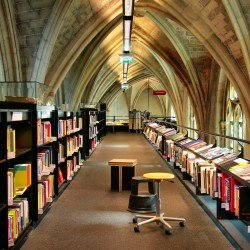
If you are shopping on the western side of the river, be sure to stop by the Dominicanen bookstore. This glorious bookstore is housed in a repurposed,
700 year old church. Over the years the building was utilized for a variety of functions, finally settling on an identity as a bookstore, coffee bar, and event center for lectures, debates, and exhibitions.

Photo credit: http://maastrichttourism.nl

Even if you are not looking for a book, it is worth a visit. The combination of books and cathedral features are stunning. CNN Travel named this bookstore one of the coolest bookstores in the world. 

MAASTRICHT TO DO | REST YOUR BARKING DOGS ON A BOAT CRUISE

If your dogs are barking (an American idiom meaning your feet are tired) rest them while you cruise the Maas River on one of the many boat tours. One can cruise in groups, rent an individual boat, or go on pre-arranged cruises. Prices vary according to the theme and the length of the trip. You can tour the locks, have brunch, a pancake breakfast, a historical tour or an evening cocktail tour. There are options to suit just about every interest and some of the evening options have a different theme each month. Maastricht clearly embraces the river as part of its culture.

Unfortunately, we did not have time to actually take a boat cruise, thus, while I cannot make a recommendation, I can provide you with some basic information on the available tours. The 2 main tour companies are GetMyBoat and Stiphout Tours

MAASTRICHT TOURS | OTHER WAYS TO EXPLORE

If boating is not your thing, not to worry, Maastricht offers many options for touring. One can rent bikes or Segways, take a train, or join a walking tour or architectural tour.

MAASTRICHT TOURS | GO TO HELL

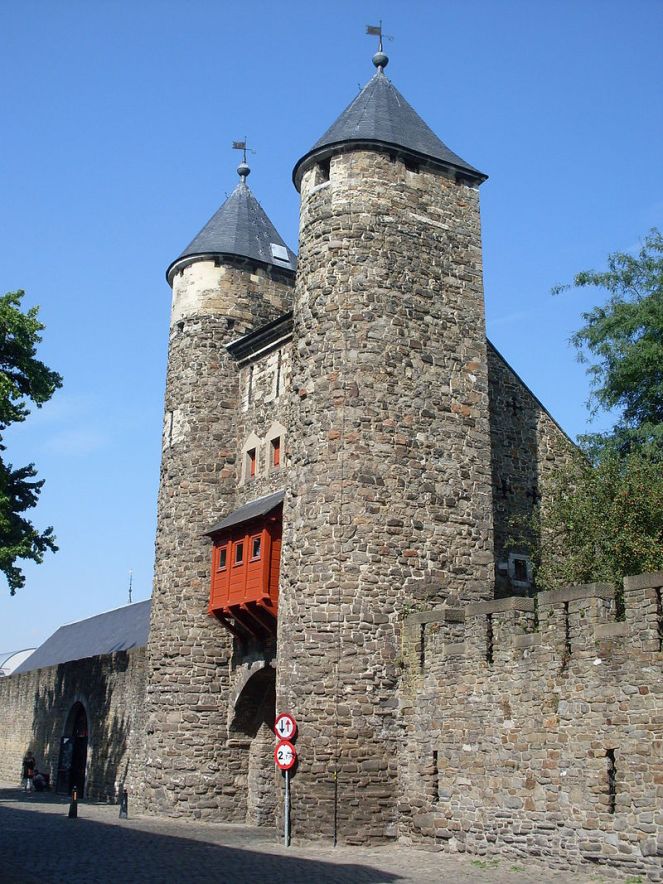
While there is nothing hellish about Maastricht, one can also literally go to Hell’s Gate. Hells Gate or Helpoort is one of the last standing remnants of the medieval city walls constructed in the 1200’s. The gate served as the southern entrance to the city and was so named due to the fact that prisoners were actually locked away in the tower of the gate. Thus, it was the Gate to Hell for the prisoners. 

Helport. Maastrict. Photo credit: http://maastrichttourism.nl

Inside one finds a museum detailing the history of Maastricht with insights into the city’s history as well as its prominence in the region.

MAASTRICHT TOURS | GO UNDERGROUND 

One of the most interesting things about Maastricht to me, was the 80 km of tunnels and caves under the city.

This labyrinth of caves and tunnels have served many important functions vital to the city since their inception. These man-made tunnels were the result of the underground quarrying of stone. The St. Pietersberg caves and tunnels were formed as stones were harvested and used to literally build the city of Maastricht on its shoulders.

The caves and tunnels have also shouldered some heavy historical responsibilities. During WWII, the caves housed Jewish people hiding from the Nazis. Hidden deep inside the damp, dark tunnels, fighting to survive each day, the Jewish inhabitants somehow managed to create a water supply, a bakery and a temple inside the tunnels. Despite the horrors of war, the human spirit survived and made life in the cold dark tunnels as comfortable as they possibly could. While not an ideal living situation, the tunnels saved the lives of many.

The caves and tunnels also saved the most famous Dutch art from man’s folly. On the tour of the tunnels, one can see National Storage Location Number 9 also known as The Kluis. The Kluis, was built at the beginning of WWII to hide the most important Dutch art from destruction and theft. An estimated 800 works of art were housed in the Kluis for over 3 years. Some of the works that were saved include Rembrandt’s Night Watch, Potter’s The Young Bull, and Vermeer’s Little Street. Fascinating stuff.

MAASTRICHT COFFEE CULTURE | GRAB A CUPPA’ JOE 

After all the eating, shopping and touring, it is time for one last coffee. Given this is a university town, there are a plethora of coffee shops to chose from.

The locals will all tell you that a visit to Maastricht must include a coffee at Blache DaelThe oldest coffee house in the province of Limburg, Blache Dael opened in 1878. Their claim to fame is that every day they have a different freshly roasted coffee. 

I would say that the second most talked about coffee shop is Alley Cat & BikesAlley Cat Bikes & Coffee is a coffee bar, a social hub, a creative workspace, and a bicycle repair shop. An important stop for the large student community. They also serve fresh food made from local suppliers.

If you get a chance to visit Maastricht, I hope that you enjoy it as much as we did. Maastricht truly is a food, history, shopping, and architectural paradise. 

Het Vrijthof. Maastricht.
Americans abroad · art · Beauty Essentials · European travel · ex-pat life · ex-pat reality · food · Insider Tips · international travel · Malmö · Malmo Sweden · restaurant · Skåne · Skåne Sweden · Travel

AbSmåland: Where The Unexpected Meets The Traditional

My New Favorite Cafe In Malmö

I went for coffee today with my daughter and discovered my new favorite cafe/store/space in Malmö, Sweden, AbSmåland.

Hard to describe, but oh so inviting, AbSmåland is a “lifestyle concept where the unexpected meets the traditional.” It is a gardening and plant store, a cafe, a furniture store, a home design store, a space for creating and a baby store. It takes up 1450 square meters. It is a big, luscious space. And it smells reeeaally good.

We started in the cafe. AbSmåland’s café is organic and fair trade. And, in my humble opinion, they have the best cardamom roll in Sweden. Unfortunately, as it was not gluten free, I could only have a nibble and appreciate it from afar.

My daughter and I both had pretty decent cappuccinos (after Italy it is hard to be impressed) but the nicest bit was free regular coffee refills. We were there long enough that the lunch crowd starting wandering in. The lunch smells began wafting out of the kitchen. Did I mention that it smells really good in there? The cafe serves soup, salad, and the famous Swedish smörgås (open faced sandwiches).

The Space

After coffee and buns, we wandered around the rest of the space. I read that the space wants to invite creativity and curiosity. As such, throughout the space, there have placed windows, plants and lots of color.  ​

This slideshow requires JavaScript.

They also offer bedding, clothing and baby items for the ever so modern and stylish Swedish babies.

The Workshop

As I was leaving I asked one of the employees what was upstairs. “Go explore and find out” was his response. Challenge accepted. I discovered that the upper floor houses a workshop that offers creative endeavors.

At the workshop one can create: your own textile to upholster the furniture that you purchased downstairs; your own seasonal bouquets with a professional florist as your teacher; macrame baskets; your own hanging garden. The workshop also facilitates sessions with local artists from time to time.

AbSmåland’s website says that their ambition “is to offer an inspiring venue with a creative atmosphere where everyone feels welcome.” I would say that they have succeeded. I, for one,  cannot wait to return.

​You can find AbSmåland at:
Södra Förstadsgatan 25/27
211 43 Malmö
072-248 89 20
hej@absmaland.com

Americans abroad · Emilia Romagna · European travel · ex-pat life · ex-pat reality · football · Insider Tips · Italy · Parma Italy · soccer · Travel · world cup

The Most Popular Game In The World

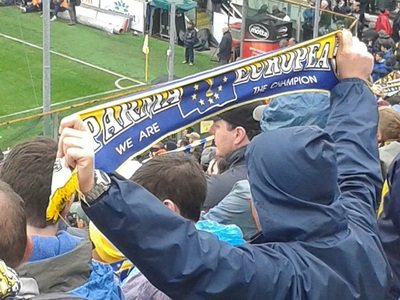
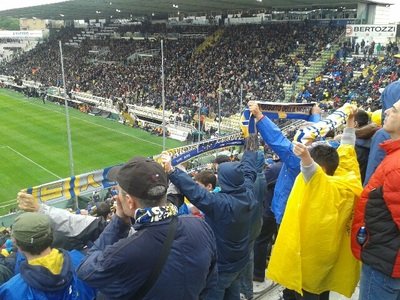
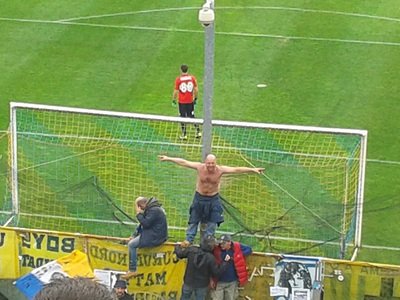
Football match in Italy. Parma vs. Inter Milan
Italian football match. Parma vs. Inter Milan

Italian Passion

Italians are a passionate bunch in general, and their passion for life can be triggered on a dime. Amazingly though, they also seem to make up with one another right away. I have seen them yelling and screaming at each other, faces reddened, spittle flying, arms waving and then shake hands and walk away five minutes later. Given this passionate culture, I was eager to attend a football match because one thing that Italians are very passionate about is football, the most popular game in the world.  You know, what we Americans call soccer.

Football, The Most Popular Game In The World

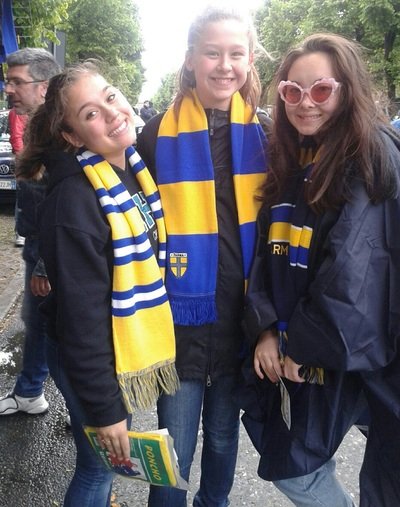
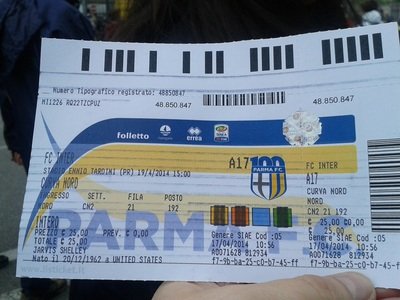
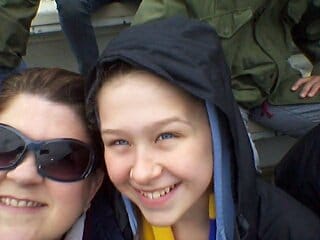
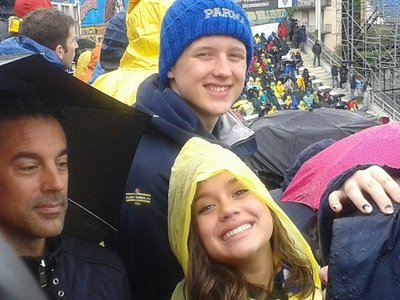
We decided to support our local football team and we went to watch Parma play against Inter Milan. I was a tad nervous because my husband had warned me that when Parma scores the crowd goes a little crazy – their passions are unfurled with yelling, screaming, shoving, running up and down the stands. Joe was actually knocked over at the last game he went to. He was not hurt, but that knowledge made me anxious as neither my daughter, nor I, do well in crowds. I was also anxious because Inter Milan was ranked fifth and Parma was ranked sixth, so tensions were indeed high. Ultimately. my desire to experience Italy to its fullest won out over my fear. We donned our blue and yellow and headed out to the stadium.

soccer2soccer1

Upon arriving, I noticed that there is no alcohol allowed at an Italian soccer game. Now, bear in mind that Italy is a place where one can find a full bar just about everywhere – the park, the movie theater, the shopping mall, the gym. But not at a football stadium. I have to say, that I support this practice.  I think it is a wise idea to prohibit alcohol at sporting events where passion and loyalties are on overdrive. One of my dear friends in California is a sweet, gentle guy unless you encounter him at the UCLA/USC football game. Then, he is a rabid dog. Give him some beer at the UCLA/USC game and he is a rabid bear. It may be a good thing for America to follow the Italian example in this case.

Something else that I noticed was that even stone cold sober, Italian fans are INTENSE about, and loyal to, their football team.  One of our Italian friends welcomed his second daughter into the world on the morning of the game that we attended, but he still made it to the match that afternoon!

Warning – Foul Language Ahead

The intense loyalty that they feel for their team is most often manifested by hurling insults at the other team. Through the entire game, Parma fans were chanting “Inter, Inter, vaffanculo, vaffanculo!” which literally translates as “Inter, Inter, up your a**,” but is used more as Americans use f^%k you.  Imagine half of a stadium chanting “f^%k you!”  Here were some of the antics I was hoping to experience.

Italians are a poetic people. They value the poetry of their art, food, fashion and language.  Given this love of language, a simple vaffanculo would not suffice and the fans occasionally intermixed the vaffanculo’s  with the chanting of an Inter Milan player’s name and then “pezzo di merda.”  As in, for example, “Zanetti piece of shit.”  They also broke into song once or twice singing along to the tune of Guantanamera but replacing the Guantanamera with “pezzo di merda” and then a player’s name so that the tune went something like this – “ pezzo di merda. Zanetti, pezzo di merda. ♪♪ peeeezzzzzo di merdaaa, ♫ Zanetti, pezzo di merda.”  Again, imagine a huge crowd all swearing together in song. Fascinating and entertaining stuff, I tell you.

The most perplexing expression of loyalty for me, however,  was the yelling of “cinesi vai via!”  or “non ci sono cinesi in Italia!”   This translates as “Chinese go away” and “There are no Chinese in Italy.” As factually incorrect, and as racially insensitive, as these comments were, the funny thing to me is that they were yelling these insults at Inter Milan player Yuto Nagatomo . . . who is Japanese.  I swear I saw Nagatomo looking around for the mysterious Chinese guy once or twice.

The final thing that I noticed about Italian football games is that the previously blogged about colpo d’aria – the dreaded hit of air – that Italians feel must be avoided at all times and at all costs for fear of ending up in the hospital –  seems to have a waiver for football matches.

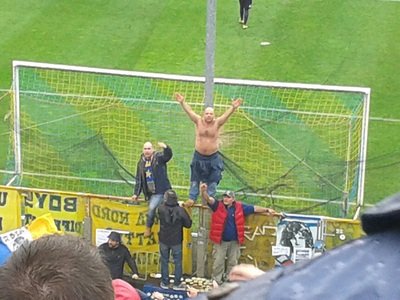
Football match in Italy. Parma vs. Inter MilanFootball match in Italy. Parma vs. Inter Milan

During our game, for example, the weather was rainy and cold and yet scores of fans were without umbrellas or rain gear.  And quite a few were without shirts. In the rain! There they were, standing in the freezing rain, getting hit by air for 2+ hours and not a one seemed to be concerned that they were going to end up in the hospital.  Once again, questions arise in my American mind about the colpo d’aria malady.

soccer6soccer5

Alas, for Parma fans, despite their best insults and choral talent, Inter Milan won.  Parma didn’t score a single goal so I didn’t get to see the post score craze of happy fans that I craved.  And despite the racist epithets, Nagatomo dominated the field.  But, you know what they say . . . karma is a Japanese Inter Milan player.

Americans abroad · Croatia · European travel · ex-pat life · Honeymoon travel · Insider Tips · international travel · Krka · national parks · nature · Plitvice · Plitvice Lakes · Travel · travel safety

Krka National Park – More Than Just The Blue Lagoon

DALMATIA

When we visited Croatia we opted to forego the more well known spots like Dubrovnik and Hvar in exchange for visiting Croatia’s many national parks. The biggest concentration of national parks lie in the northern part of the country so we made Dalmatia, namely Zadar, our home base as Zadar was within a few hours drive from each of the parks we wanted to visit. After Plitvice, Krka National Park was next on our Croatian bucket list. 

Krka National Park

I will say that in general, when cruising about Croatia and neighboring Bosnia Herzegovina, waterfalls are everywhere. You see them along the side of the road, but a few are standouts and Krka National Park offers 7 waterfalls (buk or slap) in one park. 

The Park

Krka is the second most visited national park in Croatia after Plitvice with over 1 million visitors each year.  Krka has become so popular in recent years that it has begun to limit the number of visitors each day to 10,000. My advice, get there early or book online to reserve space. And bring your swim suit, because unlike Plitvice, at Krka, you are allowed to enjoy the cool, refreshing waters. At least for now.

Even prior to being designated a national park in 1985, the area’s splendor was enjoyed for centuries.  The highlight of the park is its river and 7 major waterfalls. The Krka River, the source of the all the falls, is over 74 kilometers/46 miles long.

The protected flora and fauna is lush. The park is very clean and you will see fish, various birds, butterflies and dragonflies flitting about. 

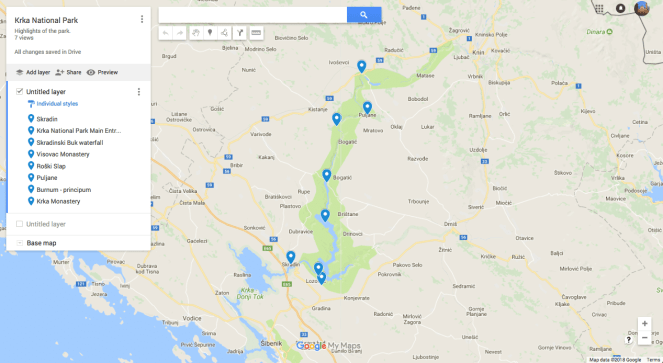
Within the park, Krka is accessible by a network of planked walkways, hiking trails, cycling trails, roads and boats. One can also add a 5 km/3.1 mile hiking and cycling path from Skradinski Most (Skradin Bridge) to Skradinski buk. Visitors who wish to hike or ride along the trail can purchase their tickets at the reception at Skradinski Most or online.

The park is unique in that in addition to its stunning topography, it also houses 2 monasteries and Roman ruins.  Both monasteries, Visovac and the Eastern Orthodox Krka Monastery, date back to the Middle Ages. Burnam, the Roman ruins, date back to 33 BC.

Getting There

From the nearest town along the highway, Šibenik, you will see signs for the park and a specific exit heading to Skradinski Buk.

The road will lead you straight into Lozovac and a large parking area. You will see a ton of tour busses, people, and parking attendants.

After you park, you will find a building where tickets are sold. You cannot miss it. The town is tiny. You will also see a very long line. Leave some of your people in the line and send someone else to get the tickets. The line is for either the bus or the boat (at Skradin) to take you to the falls. As this is one of the most visited sites in Croatia, in high season, the lines can be long so best to have someone saving your spot, while someone else queues for the entrance tickets.

Your entrance ticket includes the bus ride. It does not include the boat ride.  As we arrived late, we opted for the bus but I really wanted to take the boat up the river. If you want to take the boats then stop in the town of Skradin to purchase your tickets and catch your boat.

Once the bus or boat lets you off, you have a short walk to the planked walkway around the park on the Skadinski Buk trail. The trail is a 1900 meter/1.1mile long loop leading you around the most amazing spots, rapids, waterfalls and gorgeous flora and fauna. Bring water. The trail is not suitable fo those with limited mobility. The trail is not that difficult in terms of intensity, it is just crowded, hot, and hilly. And there is water on each side of you and no barriers.

INSIDER TIPIf you really just want to swim and see the falls, you can skip the trail and the crowds and walk in the opposite direction of the trail behind a building there are steps which go directly to the falls and lagoon.

Sites In The Park

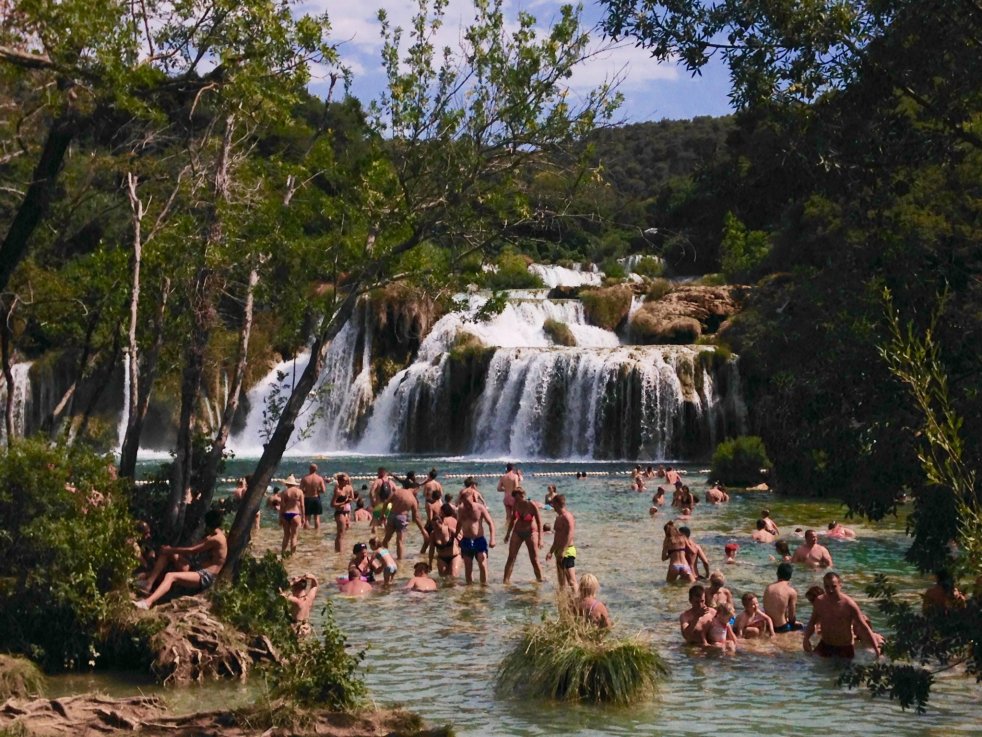
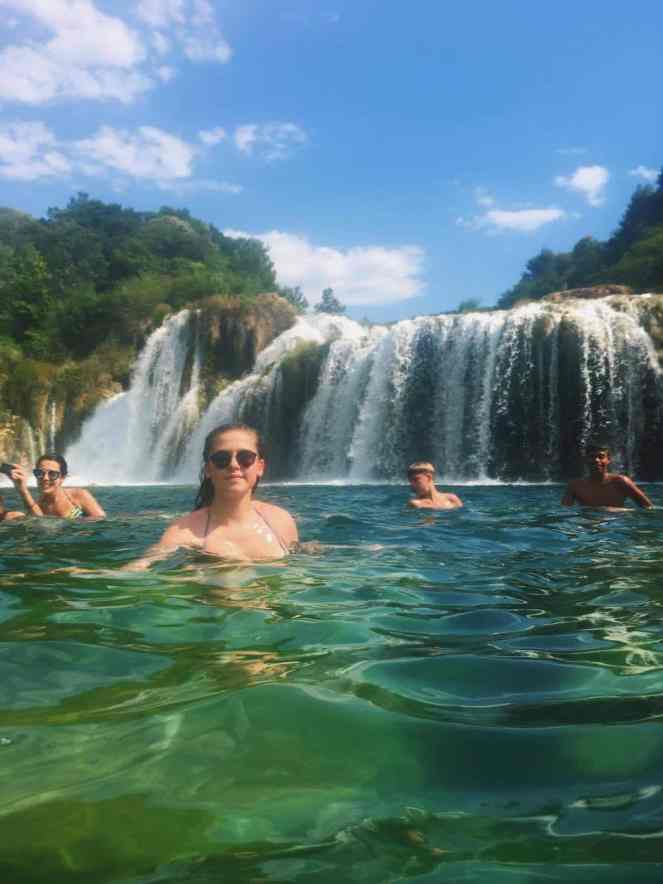
When people talk about Krka, they are usually referring to the famous Skradinski buk also known as Krka’s Blue Lagoon. Skradinski buk and its adjoining lagoon are the falls that you see on all the postcards and in Instagram stories. 

Most people do not explore the other parts of the park. I do recommend that if you have the time, you explore the entire park. To see it all properly plan for a minimum of 2 days.

SKRADINSKI BUK

On the way to the famous falls and lagoon, there is plenty to delight your senses.


The crowds move slowly, but that is ok, it means more time to enjoy your surroundings. After about 30 – 40 minutes you will reach Skradinski buk. Skradinski buk is insanely pretty. Again, it is the stuff of postcards and Instagram moments.

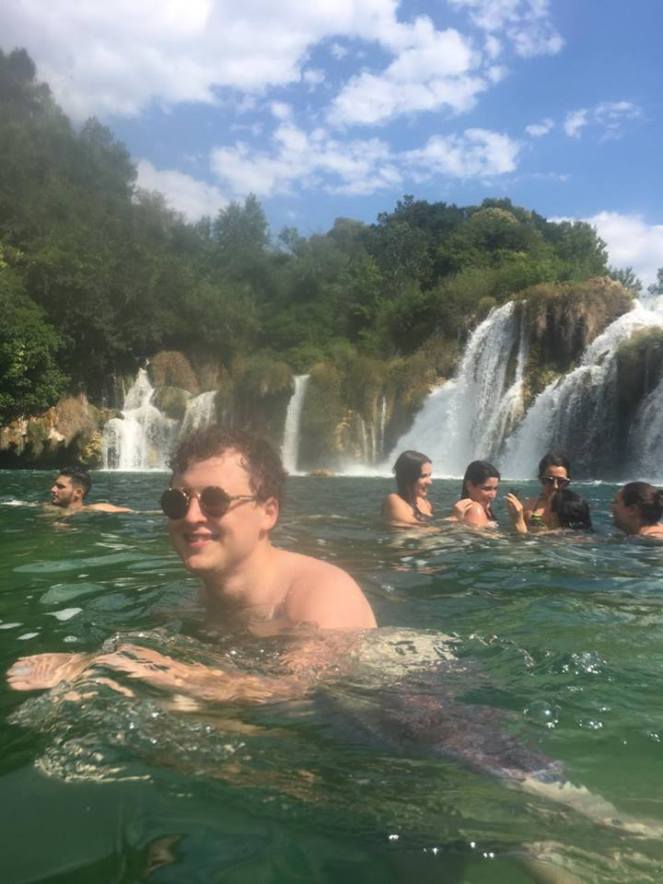
And note that Croatia is hot in the summer and the water is cool, refreshing, inviting. We were so hot that once we reached the falls we cold actually feel the cool air. Believe me, all you want to do is get in that water. But first, you have to carve out a spot among the crowds.

The area as you arrive at Skradinski buk is crowded and dusty. There are a lot of people roaming around and unfortunately on the approach side of the lagoon it is difficult to find a spot to leave your belongings where you can see them while swimming. This means that at least one member of your group must stay behind to watch your valuables. If you are traveling solo I suggest asking someone to watch your belongings. You should not leave valuables while you go for a swim with your group. It stinks that you cannot all go in at the same time, but you risk losing all of your belongings if you do.

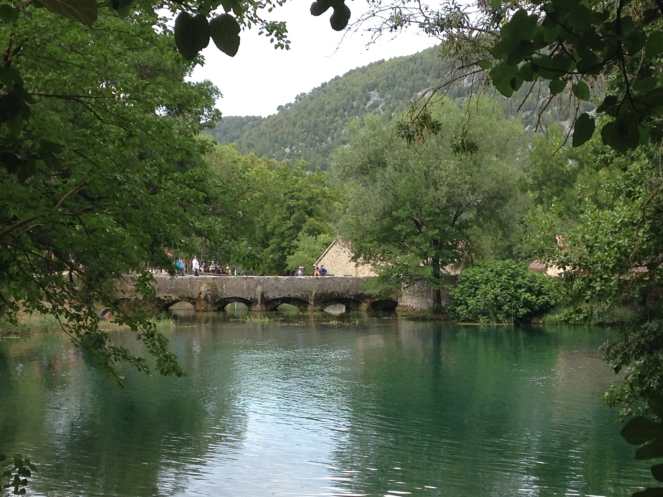
INSIDER TIPS:  You will see a bridge where everyone is taking photos. Cross the bridge and on the other side there is a lot more room to carve out your niche and spread out a blanket. The best part, it is in the shade and along the lagoon so you can see your people as they swim in the lagoon and you can take photos.

Also, bring water, water shoes, a blanket, a picnic. They sell all of it there, but you will pay tourist prices. 


VISOVAC MONASTERY

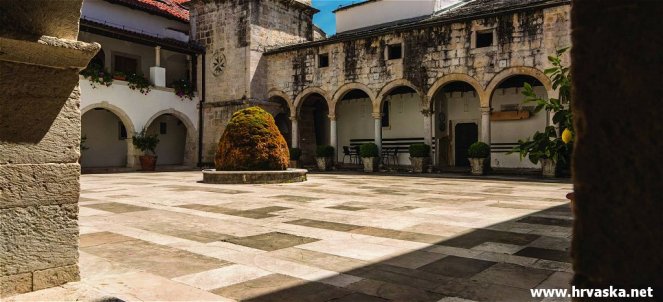
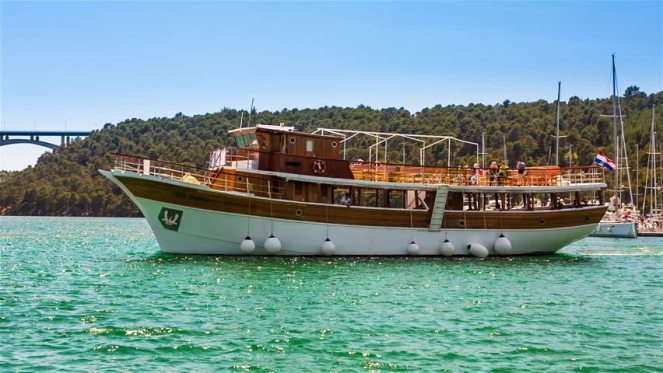
After your swim, you may want to take a boat up river to Visovac Island and monastery. Visovac first welcomed its religious inhabitants in the late 1400’s. At that time Franciscan monks decided the island location was perfect for a hermitage where monks could study in solitude.

By 1576 building of the existing monastery was complete. Over the centuries, the monastery acquired a rich collection of paintings, relics and folk art. The monastery also has a small museum featuring historic church clothes, manuscripts, and rare books, including an illustrated copy of Aesop’s Fables printed in 1487. 

Photo credit: hotelroomsearch.com

Visovac is still an active church and the priests who live there maintain a lovely flower garden worth having a look. They also perform mass if you are there on a Sunday. Mass is held at 11am every Sunday all year long.

Visovac Island is only reachable by boat. You can take the excursion boat from Skradin or special monastery mass boats from Brištane on Sundays.

ROŠKI SLAP

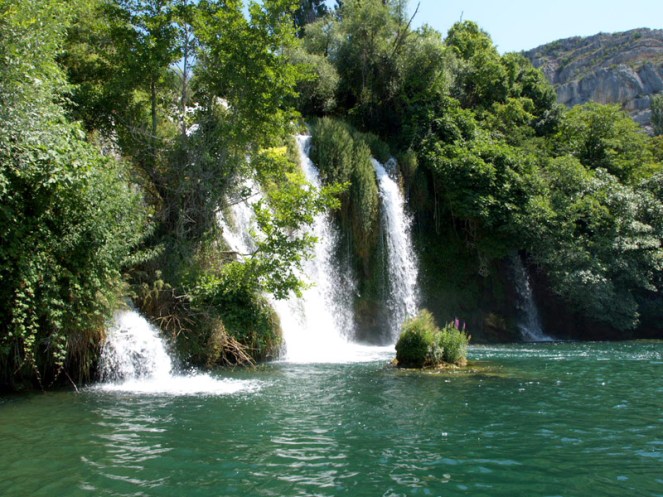
The waterfall Roški slap can be reached by road and by the excursion boats from Skradin. We drove into the park at Roški slap and then made our way down to the famous falls. The drive past Laškovika was stunning.

The natural beauty of Roški slap can be viewed year round.

Photo credit: np-krka.hr

BURNAM

If archeology is your thing, you have 2 sites to visit at Krka. The first, Burnum, was a  Roman military camp. The ruins and archaeological site are located above the canyon and waterfalls.

These Roman ruins officially date back to the year 33 BC, but many archeologists believe the site may be even older. Several Roman legions were located there in succession. the spot was chosen for its vital access to the river which was used for transportation. Also, its gorgeous!  

Today, one can visit the ancient amphitheater which still holds concerts on special occasions and a smaller museum which holds the artifacts found on site.

The closest entrance to Burnum is at the Puljane enterance and one must take a car to get there.

Photo credit: TotalCroatiaNews.com
Photo credit: np-krka.hr

OZIDANA PEĆINA CAVE

The second archeological site in Krka is the Oziđana Pećina cave. The cave is located near the very top of the canyon, on the left bank of the Krka River, just above the Roški slap. I could not get it to show up on Google Maps, but the park will have information on its exact location and whether it is open to the public or not. Because it is a working archeological site, it may be closed to the public at times.

Photo credit: http://www.np-krka.hr

The site displays artifacts and evidence of human settlement – things like ceramic dishes, stone artifacts, and human and animal bones dating back to the Neolitihic period from about 5000 BC to about 1500 BC. The Hvar and Danilo cultures are featured prominently. 

I am claustrophobic, thus, this was not on my list to see even though I’d love to see the artifacts.  The cave is 59 m long/7 m wide/2.5 m high tunnel. No thanks.

KRKA MONASTERY

The Krka Monastery is a Serbian Orthodox monastery dating back to the 12th century. The monastery has had several reincarnations over the centuries, but was originally built on top of a Roman site and has catacombs underneath that can be explored.

The monastery is dedicated to the Archangel Michael and is considered the best known example of the Serbian Orthodox Church in Croatia. The monastery is officially protected as a significant historical site.

Like Visovac, Krka Monastery is still in use, thus, visitors are limited to visiting the catacombs and the church in the company of a national park employee. There are also restrictions on what can be photographed. On site there is a tiny souvenir shop which sells religious artifacts and wine made by the priests.

To reach the Krka Monastery you can take a car or the boats from Skradin. When driving, follow the signs to  Kistanje. From there you will see additional signs for the monastery. Parking is limited.

INSIDER TIP: After your visit, if you head down toward the falls, you can stop at a newly constructed viewpoint stop for cars offering a different view and perspective of the monastery. Great photo op!

Prices

The park entrance ticket includes access to the entire park, including an expert  presentation at Burnum, another presentation at the mills at Skradinski buk, Roški slap and Oziđana Pećina Cave, access to all walking trails in the park, and bus transport from Lozovac to Skradinski buk and return.

Park entrance prices are subject to change so always check the website for the most recent prices.

Boat PricesThe Skradin excursion boats are not included in the price of your park entrance ticket. All visitors must acquire or purchase their tickets in a Krka National Park branch office in Skradin before boarding the boat. Visitors who purchased their tickets online can board the boat directly with their printed ticket or the bar-code on a smart phone.

As with the park entrance ticket, always check the website for the most recent boat prices. Also, your ticket price will vary according to the location within the park that you choose to visit.

Photo credit: Shutterstock

Rules

While swimming is allowed, and is a definite highlight, there are other rules inside Krka that are strictly enforced:

  • One must not stray from clearly marked bathing areas.
  • You are not allowed to dive into the swimming area.
  • You are prohibited from hunting, catching, frightening or disturbing the wild animals.
  • You must not pick or damage indigenous plants.
  • You must not break or damage the travertine.
  • You must not camp or light fires outside of clearly marked areas.
  • You must dispose of waste in clearly marked garbage bins.
  • You must not stray from the clearly marked trails.
  • All dog must be kept on a leash and have a muzzle on at all times. Dogs are not permitted on Visovac Island. 
  • Drones or other unmanned aerial equipment are not allowed in Krka National Park.

As you can see, Krka offers so much more than the one waterfall and lagoon. Skradinski buk is awe inspiring and it seems to stop visitors in their tracks, but it is shame that most people never explore Krka beyond Skradinski buk as there is so much to see and do. If you do visit Krka National Park, I hope that this information may inspire you to look beyond the waterfall.