

WIGILIA | THE VIGIL
Wigilia (pronounced: vee gee lee a) or “The Vigil” is the traditional Polish Catholic Christmas Eve celebration feast held on December 24th. The ceremony represents, and honors, waiting for the arrival of Joseph, Mary, and Jesus.
PREPARING THE FEAST | 12 DISHES
The celebration commences only after the first star has been sighted by the youngest person in attendance. This can be a bit of a problem if the youngest person is an infant or, if the weather is not cooperating, but somehow, it all gets worked out each year. The sighting of the first star is a reference to the Star of Bethlehem.
The meal takes all day preparation. While the adults prepare the feast . . .
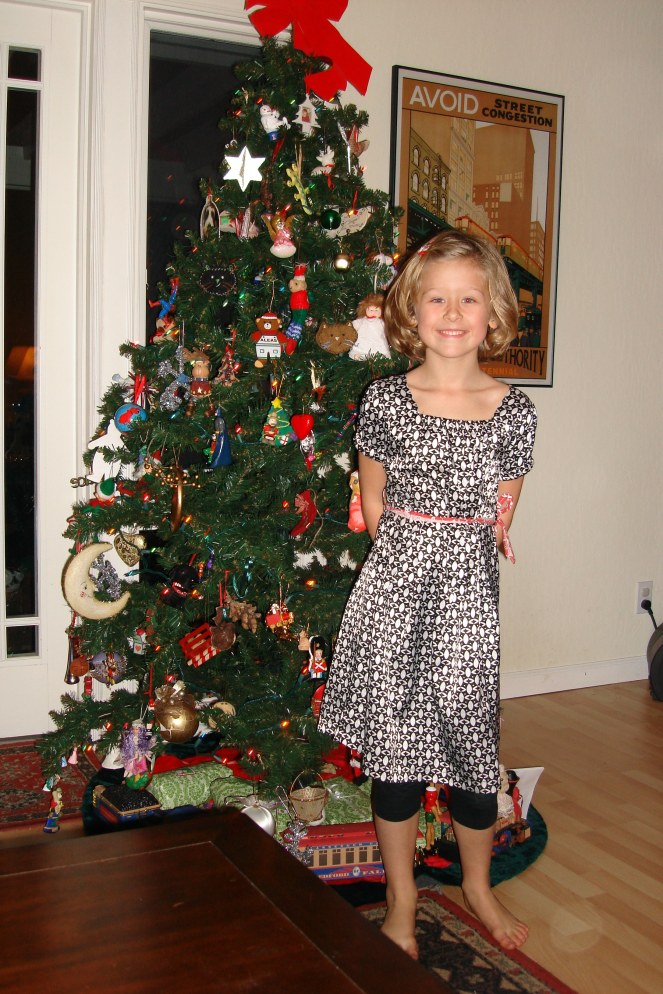
the children occupy their time by decorating the Christmas tree.
WIGILIA TRADITIONS | SETTING THE TABLE
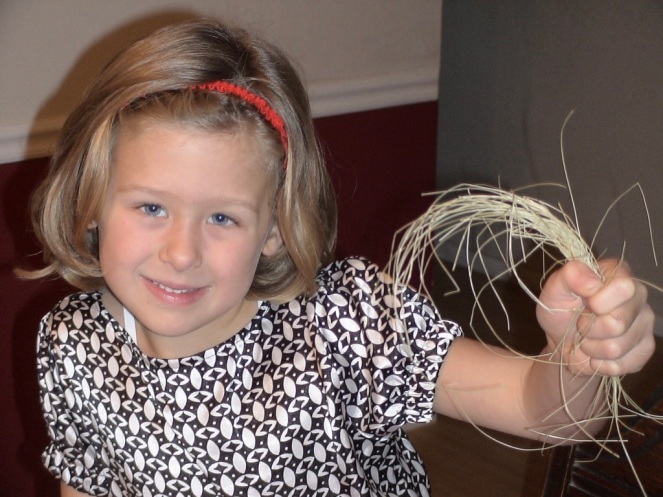
The children also place a bit of hay under the tablecloth to symbolize the hay present in the manger where Jesus was born.
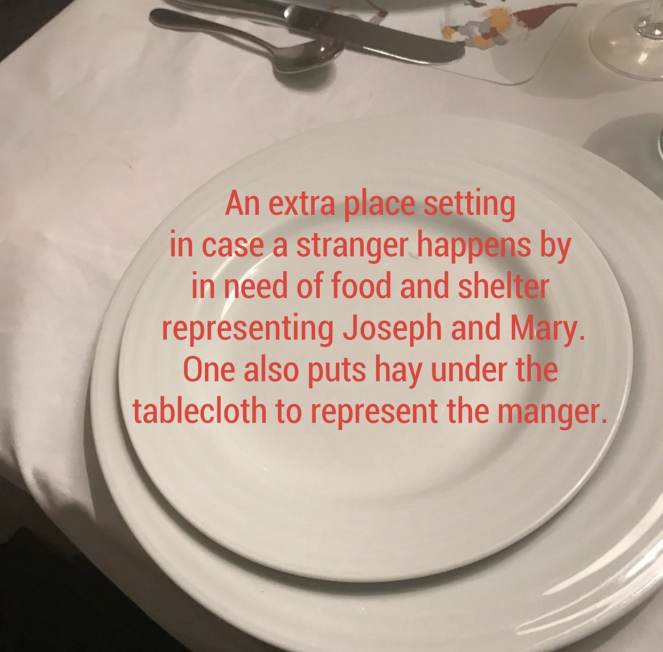
After placing the hay under the tablecloth, the table is set. An empty plate is set on the table in case a traveler should need sustenance. The extra place setting symbolizes hospitality in honor of Joseph, Mary and Jesus who were in need of help from strangers.
THE OPŁATEK | THE BREAD OF LOVE
Once it is time for the fest to begin, family members begin the celebration with a prayer and breaking of the Christmas wafer called the opłatek.
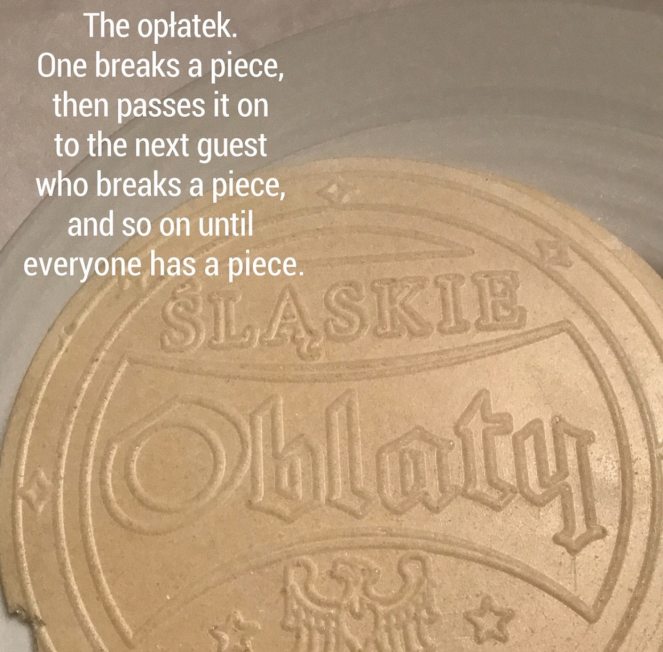
The opłatek is similar to the Catholic communion wafer. The opłatek is known as the bread of love because it is often sent to the family members wherever they may be. We receive some every year from relatives in Poland. After the prayer, the oplatek is broken and pieces are given to everyone attending. Each person breaks off a piece of their oplatek, and shares it with everyone else, wishing luck and joy in the upcoming year.
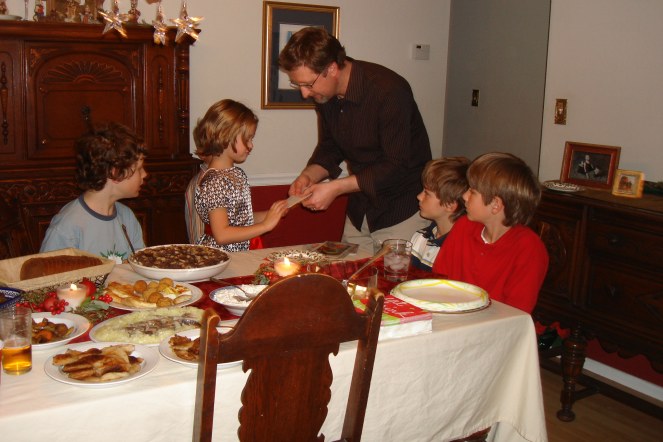
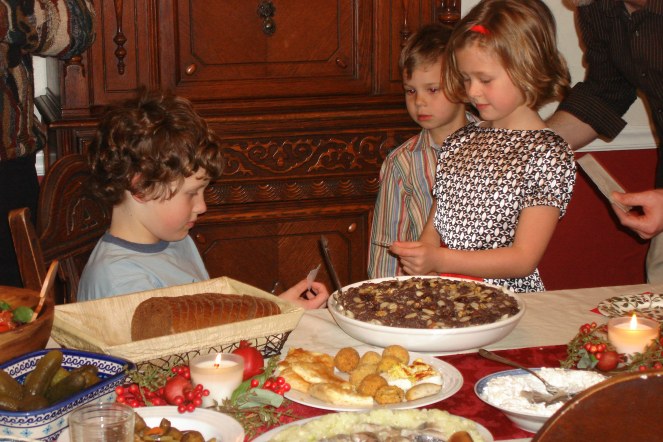
This wish is usually finalized by a kiss on the cheek and saying and Wesołych świąt or Merry Christmas in Polish. I admit I mumble through that one each year. It is also customary to feed one’s livestock a bit of the opłatek too. Livestock are to be respected that day since they were present at the birth of Jesus. Domestic animals do not get to share in the celebration.
THE FEAST | 12 MEATLESS DISHES
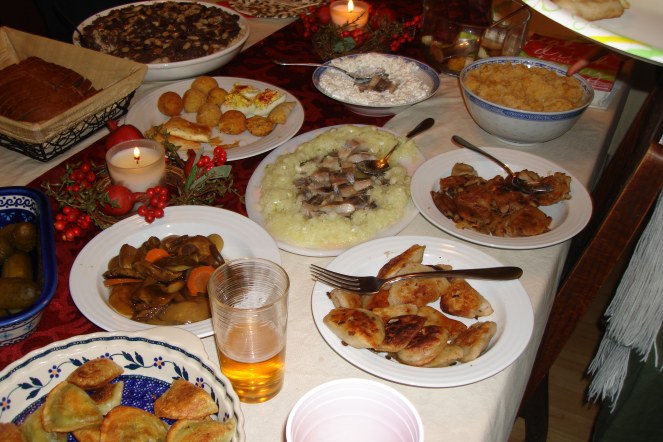
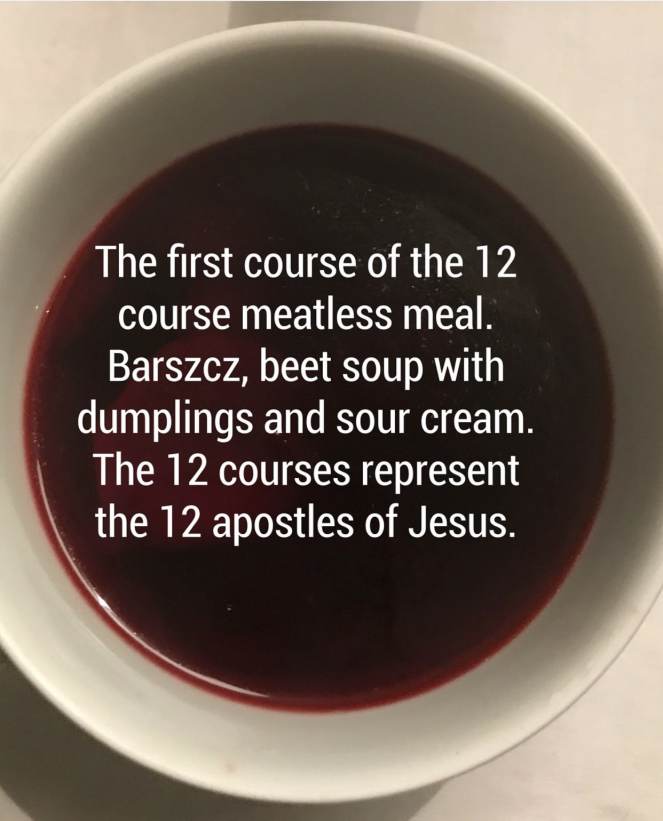
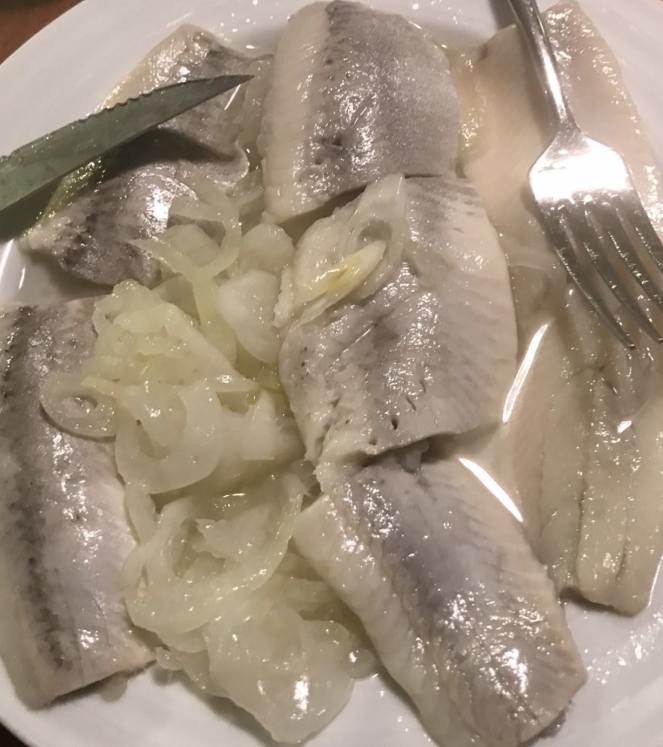
After sharing the oplatek the feast begins. People are expected to fast from meat to symbolize the suffering of Jesus and thus, the meal is meatless. There are 12 dishes representing the 12 apostles of Jesus. Traditional dishes include: barszcz (beet soup); carp filets; pierogi (dumplings) filled with potatoes, cheese, mushrooms and kapusta (cabbage); dried fruit compote; fried fish fillets; herring in oil; mushrooms; meatless gołąbki, (cabbage rolls): cucumber salad; potatoes with milk and herbs; pickles; noodles with a sweet poppy seed dressing; and Polish vodka.
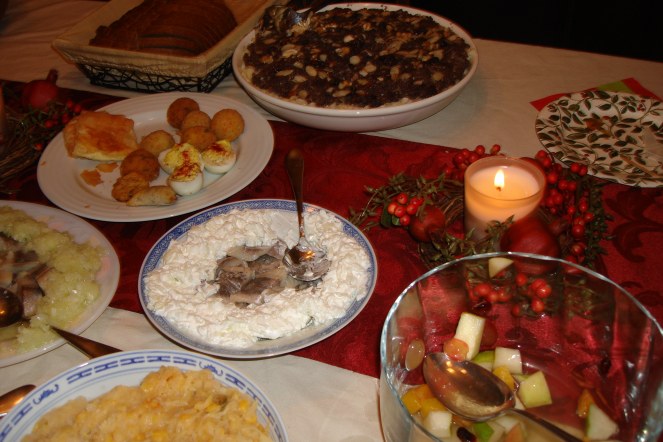
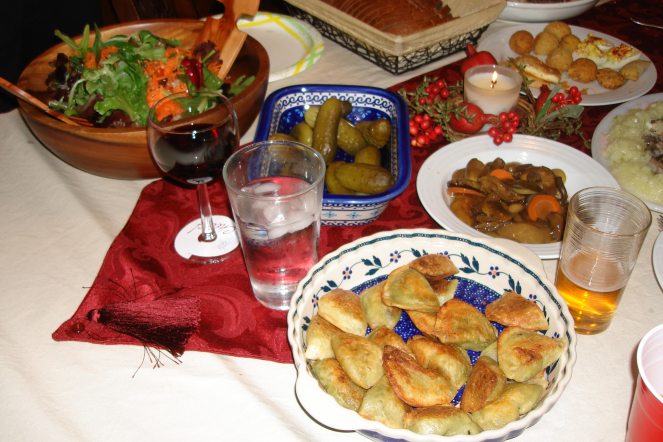
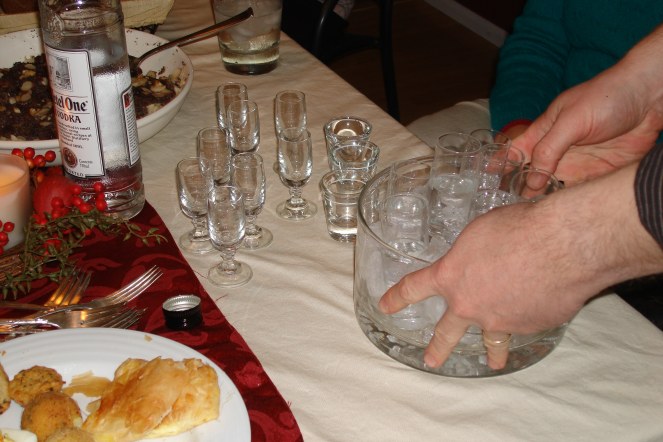
After supper families attend Pasterka or midnight mass. After mass, it is not uncommon for people to dine on a second meal which includes meat, particularly kielbasa (Polish sausage).
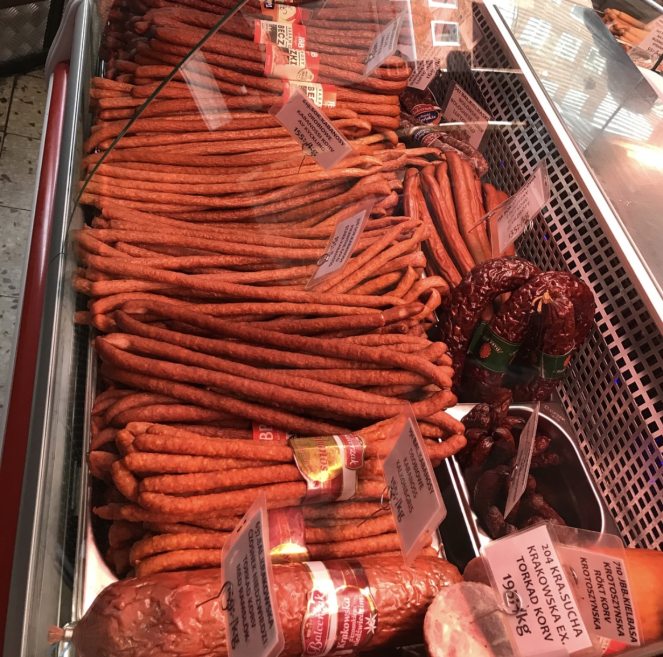
In addition to being a celebration of Joseph, Mary, and Jesus, It is also believed that Wigilia will foretell your future. Polish families believe that whatever happens on Wigilia day will affect one’s upcoming year. For example, if you quarrel with your sibling, you may well have a year filled with arguments and trouble. Thus, it is important to be on one’s best behavior on Wigilia.
Wesołych świąt dla wszystkich! Merry Christmas to all!
 Niche Travel Design